

A Cartel Boss on the FBI’s 10 Most Wanted List Is in Handcuffs After a Mexico Firefight
Mexican special forces, working off shared U.S. intelligence, took “Chapo Isidro,” his deputy and his money man in a Sinaloa raid. Washington has wanted him since 2012 and put up $5 million for him.
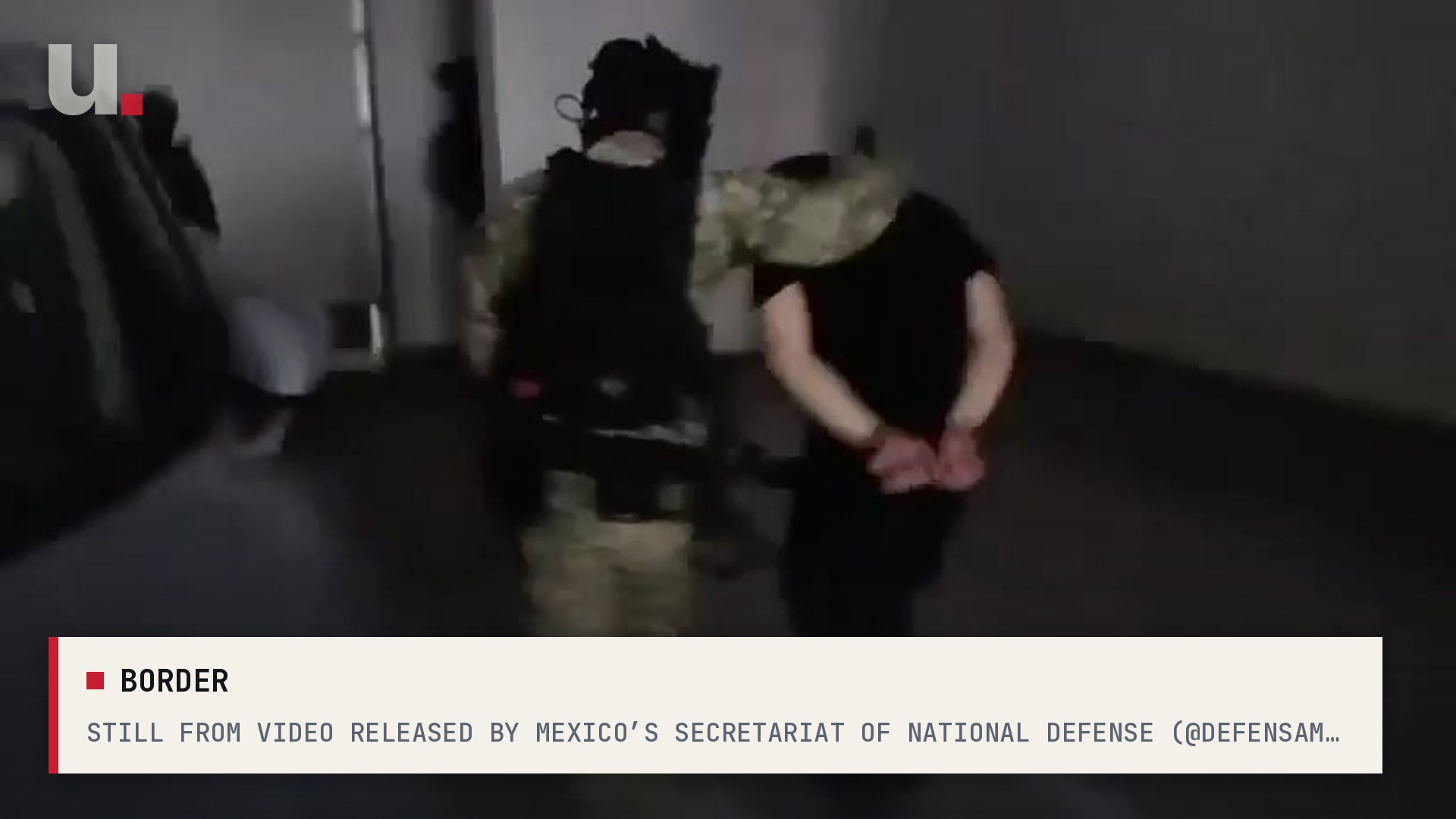
Fausto Isidro Meza Flores spent 14 years as a wanted man in an American courtroom and almost two years on the FBI’s Ten Most Wanted list. On Friday night he walked out of a house in Guasave, Sinaloa, with his hands cuffed behind his back and a soldier’s grip on his shoulder.
Mexico’s Secretariat of National Defense announced the arrest early Saturday in a statement on 𝕏 with 31 seconds of raid footage. The man known as “Chapo Isidro” is, in the ministry’s words, the boss of the Beltrán Leyva organization and an ally of the “Mayos” faction of the Sinaloa Cartel. Troops also took his second in command, Germán, known as “El Serafín,” and José, described as the group’s money man. Mexico gave only first names, as it usually does for people under arrest.
Mexico’s Secretariat of National Defense on 𝕏 — announcing the capture of “Chapo Isidro” in Guasave, with raid footage (Nov. 21, 2026)
— @Defensamx1 View on 𝕏
Gunfire, explosives and a plane to Mexico City
The ministry laid out the raid in three steps, and it reads like a manual for how to take down a kingpin without letting him slip away. First, after pinning down his exact location with what it called “various technological tools,” elite units moved in quietly by several different roads. Those were National Guard special forces known as the Lobos, or Wolves, and Army special forces called the Murciélagos, or Bats, backed by Army special forces assigned to Sinaloa’s state security office.
Second, they threw a ring around the target, one inside and one outside, so nobody could run and no reinforcements could get in. The cartel answered with gunfire and explosives. The troops went into the house anyway and came out with all three men.
Third, once the three were identified, a Mexican Air Force plane flew them to Mexico City and handed them to federal prosecutors. Sinaloa paid for it within hours. The ministry reported roadblocks in Ahome, Guamúchil, Guasave and Navolato, the cartel’s usual move to tie up the army after a big arrest, and said troops and local authorities moved to clear the roads and protect residents.
The American paper trail behind him
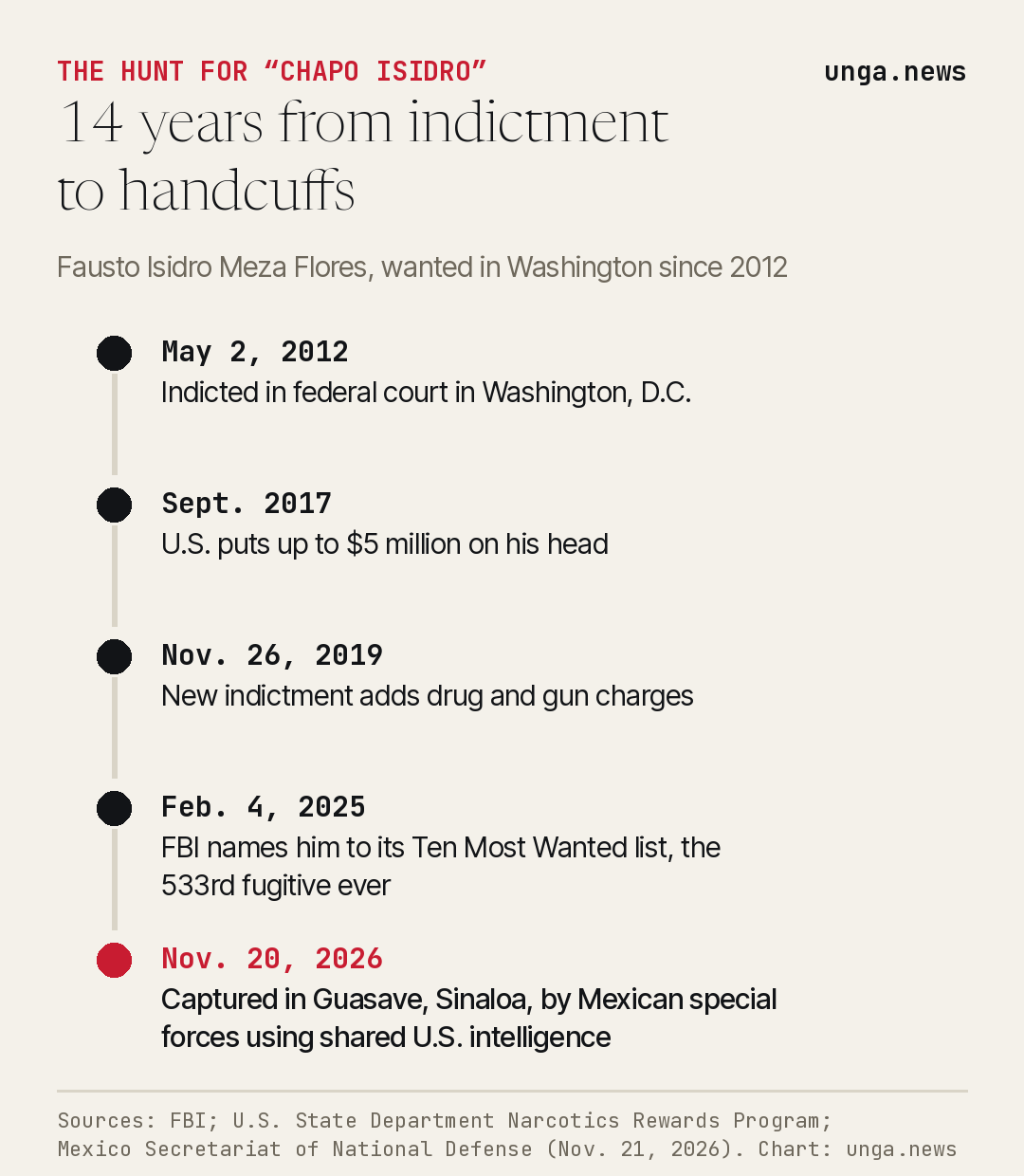
This was not some local enforcer. The FBI’s wanted poster calls him the alleged leader of a “heavily armed, major drug-trafficking organization” that moved heroin, meth, cocaine, fentanyl and marijuana into the United States. Prosecutors in Washington first indicted him on May 2, 2012. A grand jury added charges on Nov. 26, 2019, accusing him of conspiring to make and distribute cocaine, heroin, meth and marijuana for the American market from 2005 to 2019, plus a firearms count.
The State Department’s rewards page fills in the rest. It says his network ran planes, boats and tractor-trailers, smuggled “multi-ton quantities” of drugs north for more than 20 years, and was allegedly behind the deaths of numerous Sinaloa state police officers and Mexican soldiers and law enforcement officials. Some of those fights happened in Sonora, near the Arizona line. Washington first offered up to $5 million for him in September 2017.
When the FBI put him on the Ten Most Wanted list on Feb. 4, 2025, he became the 533rd fugitive named since the list began in 1950. Then-Acting Director Brian Driscoll didn’t mince words. He said Meza Flores was accused of “spending the last 20 years flooding the U.S. with fentanyl, cocaine, heroin, and other deadly drugs,” along with “heinous crimes ranging from kidnapping and extortion to torture and murder.”
Intelligence sharing that finally paid off
The line in Mexico’s statement that matters most north of the border is the first one. The ministry said the arrest came out of coordination between its intelligence services and those of the United States, “within the framework of bilateral cooperation.” That is the Mexican army putting American help in writing.
U.S. Ambassador Ronald Johnson confirmed it a few hours later and gave Mexico’s troops the credit for the hard part. “Strategic intelligence sharing between the United States and Mexico helped make this operation possible,” he wrote. “Results like these don’t happen overnight. They are built on sustained cooperation and trust.” He closed with a promise: “We will continue the hunt. Terrorist Cartels and criminals will be brought to justice.”
U.S. Ambassador Ronald Johnson on 𝕏 — crediting Mexico’s forces and U.S.-Mexico intelligence sharing for the arrest (Nov. 21, 2026)
— @USAmbMex View on 𝕏
That word “terrorist” is not loose talk. The State Department’s own wanted page lists him under the “FTO-designated Sinaloa Cartel,” the foreign terrorist label the administration put on the cartels last year. The designation changed the math for cartel bosses. It lets Washington go after their money, their suppliers and anyone who helps them as it would a terror network, and it has put steady pressure on Mexico City to deliver arrests instead of excuses.
Friday’s raid is what delivering looks like. It also lands in the middle of the Sinaloa Cartel’s civil war between the Mayos and the Chapitos, the sons of the original El Chapo, which has torn up the state since 2024. Pulling the top man, his deputy and his banker out of one Mayos-allied group at once leaves a hole, and Sinaloa’s roadblocks Friday night were a sign the cartel felt it.
Extradition is the next fight
Mexico holds him for now. The ministry said he faces a Mexican arrest warrant for organized crime and drug offenses and a separate extradition warrant from the United States on the drug conspiracy charges. The faster Mexico puts him on a plane to Washington, the less chance he has to run his business from a Mexican cell, as other kingpins have before.
The $5 million is a separate question. The reward pays for information that leads to an arrest or conviction, so it is not automatic, and no one has said whether anyone will collect. The FBI said in 2025 that 496 of the 533 people ever named to its list had been caught or found. One more name just came off it, and it took Mexican troops walking into gunfire, with American intelligence pointing the way, to do it.
Sources
- Mexico Secretariat of National Defense on 𝕏 — Mexico Secretariat of National Defense on 𝕏 — capture of “Chapo Isidro” in Guasave, Sinaloa (Nov. 21, 2026)
- U.S. Ambassador Ronald Johnson on 𝕏 — U.S. Ambassador Ronald Johnson on 𝕏 — statement on the arrest (Nov. 21, 2026)
- FBI — Fausto Isidro Meza-Flores Added to FBI’s Ten Most Wanted Fugitives List (Feb. 4, 2025)
- FBI — Ten Most Wanted poster: Fausto Isidro Meza-Flores
- U.S. Department of State — Narcotics Rewards Program: Fausto Isidro Meza-Flores
- FBI Washington Field Office — $5 Million Reward Offered for Information Leading to Arrest and/or Conviction of Fausto Isidro Meza-Flores (Sept. 27, 2017)
- Associated Press — Mexico detains top cartel boss ‘El Chapo Isidro,’ setting off a burst of violence in Sinaloa (Nov. 21, 2026)
- Milenio — Captura de El ‘Chapo’ Isidro: las fases que lograron detenerlo (Nov. 21, 2026)