

A Driver Cut Off an ICE Agent on the Highway. Minneapolis’ Top Prosecutor Charged the Agent.
No one was hurt. Gregory Morgan still faces two felony counts, and his lawyers are fighting to move the case to federal court before local prosecutors everywhere start charging the officers who enforce immigration law.
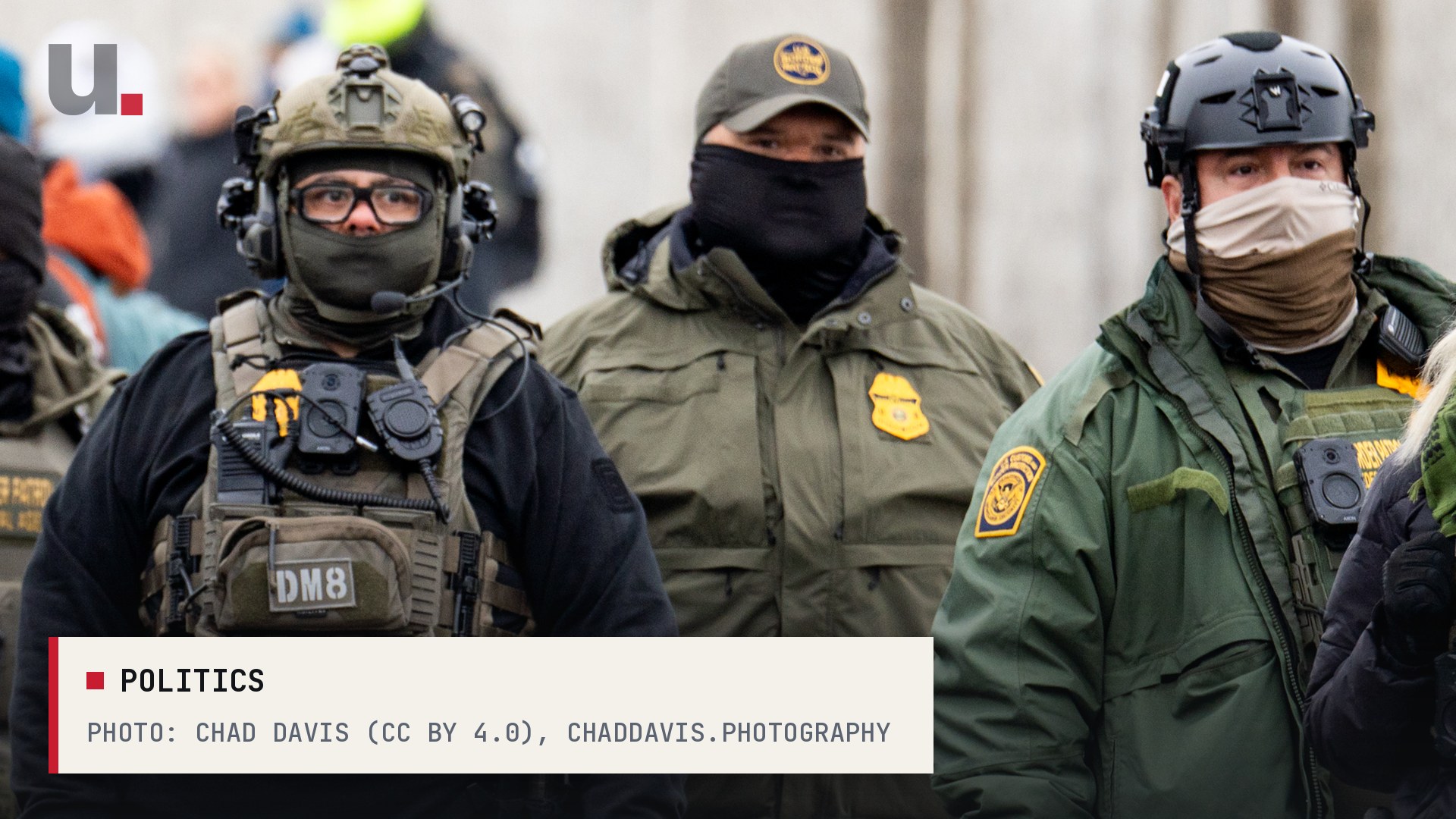
Gregory Morgan was finishing a shift in Minneapolis last February when a driver on Highway 62 swerved into his path, then pulled back into traffic. Morgan, an ICE agent in an unmarked rental SUV, raised his gun and shouted for the driver to back off. Then he drove back to the federal building. Nobody was hurt.
Ten months later, he is facing two felony assault charges from Hennepin County Attorney Mary Moriarty, each carrying up to seven years in prison under Minnesota law. And his lawyers say the fight over where he gets tried could decide whether every left-wing prosecutor in America gets to put federal immigration officers in the dock.
“We are the tip of the spear,” Rachel Paulose, a former U.S. attorney now at the Upper Midwest Law Center, told Fox News Digital in a story published Saturday. “And so what happens here is going to impact what woke, politically motivated district attorneys around the country are doing to persecute law enforcement agents who are simply doing their job and carrying out the orders of an administration with which they disagree.”
Even the charges say he was cut off
The county’s own charging announcement says Morgan was on the shoulder of eastbound Highway 62 near the Portland Avenue exit on Feb. 5, and that the other driver “briefly moved into the shoulder to slow him down.” According to the criminal complaint, the driver told investigators he moved over to “cut him off.” Morgan then pulled alongside the car and pointed his duty weapon at the two people inside.
Morgan’s version adds what the county leaves out. His lawyers say he was heading back to base under direct orders after leaving a hostile neighborhood where a protester had threatened to kill him. He didn’t know the roads. The Cadillac swerved into his path twice, they say, braking hard the second time and bringing him within inches of a crash. With his partner in the passenger seat, Morgan yelled, “Police, back off,” and held his gun in what his attorneys call a “low-ready” position.
The driver himself has admitted to the “not so bright decision to try to stop” Morgan, according to the defense, and told investigators he “got the ICE vibe from him at first.” Moriarty has conceded that cutting off the agent was not a good idea, but said it might add up to a petty misdemeanor at most. She charged the agent with two felonies.
When the two people in the Cadillac had their chance to tell their story under oath at an evidentiary hearing, both took the Fifth, according to Morgan’s latest filing. Morgan testified and was cross-examined.
A warrant for a man who wanted to surrender
The timeline says plenty about how this case has been run.
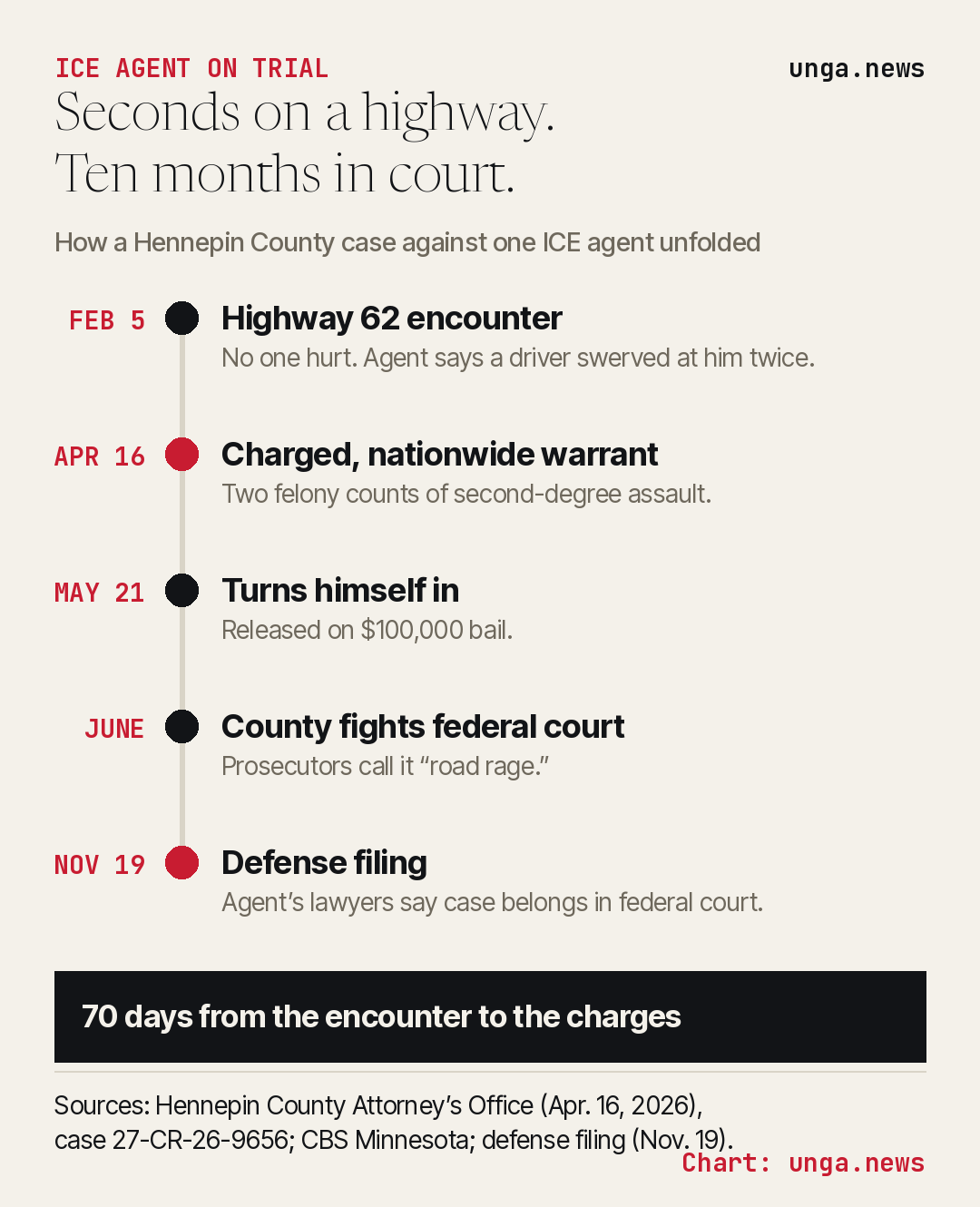
Moriarty waited 70 days to file charges, then announced a nationwide warrant for Morgan’s arrest, even though his lawyers say he was willing to turn himself in. When he did surrender on May 21, he was released on $100,000 bail and ordered not to carry any weapons.
“If that’s the argument, you wouldn’t sit on it for two months before you charge it, right?” defense attorney Ryan Pacyga told Fox News Digital, calling the warrant a “stunt.” Paulose put it more bluntly: “I think it underscores that the purpose of this prosecution is not about justice, it’s about political grandstanding.”
Moriarty hasn’t hidden where she stands. Her own office’s April release called the charges “an important milestone in our efforts to seek accountability for the harms inflicted on community,” and said she “drew daily inspiration from the care Minnesotans showed for each other during Metro Surge,” the federal operation that sent immigration officers into the Twin Cities this year. She has called that operation an “occupation,” and Morgan’s lawyers are using her words against her. “A prosecutor’s hostility is the most direct form that prejudice can take, because the prosecutor decides whom to charge,” they wrote.
A shield written during the War of 1812
The real fight now is over which courthouse hears the case. Morgan wants it moved to federal court under a law with roots in the War of 1812, written so states hostile to federal policy couldn’t use their own courts to punish federal officers. Paulose said it exists “to insulate federal officers from vindictive prosecutions by local and state officials who simply disagree with federal policy.”
The modern version, 28 U.S.C. § 1442, lets an officer move a state case to federal court when it’s brought “for or relating to any act under color of such office.” Congress added the words “or relating to” in 2011 to widen that door. Hennepin County argues Morgan wasn’t enforcing immigration law on that highway, and in a June filing prosecutors wrote that he “attempts to transform his moment of road rage” into “a federal enforcement action.”
Morgan’s team answered in a Nov. 19 filing that the county is leaning on the narrower standard Congress threw out 15 years ago. “Nothing in the State’s briefs explains why the federal authority to protect federal officers disappears when the officer is on a highway rather than at a target address,” they wrote. He was on duty, he stayed on duty for hours afterward, and he reported the incident to his supervisor right away, his lawyers have said.
U.S. District Judge Nancy Brasel, a Trump appointee, will decide. If the case stays in federal court, Morgan’s lawyers plan to ask her to throw it out under the Supremacy Clause, which shields federal officers from state prosecution for actions authorized by federal law and reasonably necessary to do their jobs. Moriarty could still prosecute, but in front of a federal judge and, his lawyers argue, a jury drawn from a wider swath of Minnesota.
Pacyga also faulted ICE for sending agents out in ordinary rental cars with no lights or sirens, leaving a man like Morgan few ways to show he was law enforcement in a split second. “He didn’t want this guy hurt. He didn’t want to get hurt. He had his partner in the car with him,” Pacyga said.
That is the part that should worry anyone who wants immigration law enforced. If a county prosecutor can wait two months, issue a nationwide warrant and try a federal officer in front of a local jury for a few seconds of what he says was self-defense on a highway, every officer working a sanctuary city is one bad commute away from a felony. Morgan’s case is the first test. Moriarty’s office has vowed to keep digging into other agents’ conduct from the surge.
Sources
- Fox News — ICE agent faces six years in prison in case that could open ‘floodgates’ for prosecutions, lawyers warn (Nov. 28, 2026)
- Hennepin County Attorney’s Office — Hennepin County Attorney’s Office charges ICE agent with two counts of second-degree assault for February incident on Hwy 62 (Apr. 16, 2026)
- CBS Minnesota — ICE agent accused of pulling gun on 2 people on Twin Cities highway turns himself in, is released on bond (May 21, 2026)
- Minnesota Star Tribune — ICE agent charged with assault during Operation Metro Surge released after posting $100,000 bail
- Minnesota Revisor of Statutes — Minn. Stat. § 609.222, Assault in the second degree
- Cornell Legal Information Institute — 28 U.S. Code § 1442, Federal officers or agencies sued or prosecuted