

A Pay Dispute Used to Freeze a Soldier’s Paycheck. Hegseth Just Ordered the Pentagon to Stop.
Under the old rules, the Pentagon held back a service member’s usual pay until a payment dispute was settled. Hegseth’s new rule: pay the warfighter first, then figure out what went wrong.
Picture a young sergeant whose paycheck comes up short. She calls finance, files the paperwork and waits. Under the rules the Pentagon has run on for years, if her pay was tied up in a dispute, the department could hold back her usual pay until somebody figured out who was right. Rent was still due. So was the car payment.
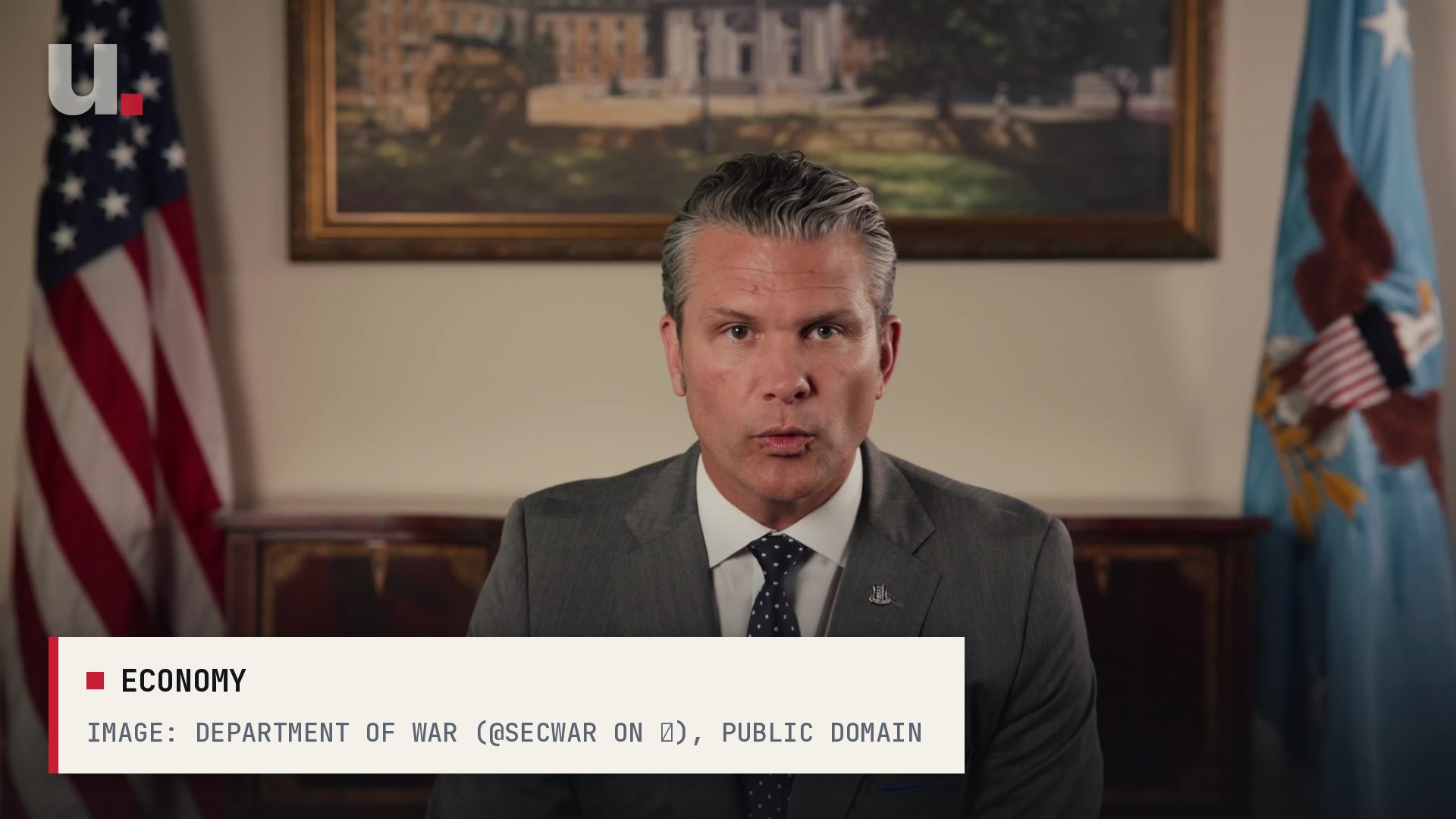
Secretary of War Pete Hegseth says that ends now. In a 97-second video posted to 𝕏 on Friday afternoon, Hegseth said he is directing the department’s comptroller, its chief financial officer, “to begin a comprehensive transformation of our military pay systems.” The new rule fits in five words: pay the warfighter first.
Secretary of War Pete Hegseth on 𝕏: “We will ensure that America’s warriors get all the benefits they deserve. That is why I am directing @DOWCFO to begin a comprehensive transformation of our military pay systems. We will put patriots over paperwork.”
— @SecWar View on 𝕏
Pay first, sort it out after
The heart of the order is simple. “Under the old process, when there was a dispute about the payment, the department actually withheld the usual pay until it was resolved,” Hegseth said. “We’re not doing that anymore. Now, our rule is pay the warfighter first in principle. We’ll make sure our warriors receive their hard-earned pay so they can focus on their mission while we figure out what went wrong.”
That flips who carries the burden. Before, a pay error was the service member’s problem until the bureaucracy cleared it. Now it’s the bureaucracy’s problem while the service member keeps getting paid. For a junior enlisted family living paycheck to paycheck, that is the difference between a stressful week and a missed rent check.
Hegseth didn’t sugarcoat how the current system got here. “The current process, which dates to 2009, has resulted in a growing backlog of pay challenges, increasing manual tasks,” he said, adding, “We shouldn’t be doing manual tasks on pay at this point.” He also named “delayed benefits, and an unacceptable number of payment errors.” Then: “That ends today. This is a different department and our warriors deserve much better.”
He closed with the line most troops will remember: “The best troops in the world deserve the best pay system we can provide, especially in a world where you can do anything with a click on an iPhone.” Most Americans can move money in seconds from their phones. A soldier shouldn’t need a month and a stack of forms to get what the government already owes her.
The 𝕏 post put it in four words: “patriots over paperwork.” By Saturday it had been viewed more than 780,000 times, with about 17,700 likes and nearly 2,900 reposts.
The paper trail on late money
Pay problems in the ranks aren’t new, and they aren’t imaginary. The government’s own auditors have been counting them.
In a 2025 report on moving expenses, the Government Accountability Office looked at what happens when troops get orders to a new base, pay for the move out of pocket and then wait to be paid back. From fiscal 2021 through 2023, the Army processed 586,417 of those reimbursements. GAO found 40,798 of them, about 7%, were paid more than 30 days after the Army got the approved paperwork. The Marine Corps processed 176,216 and paid 17,134 of them, nearly 10%, after its own 10-business-day standard.
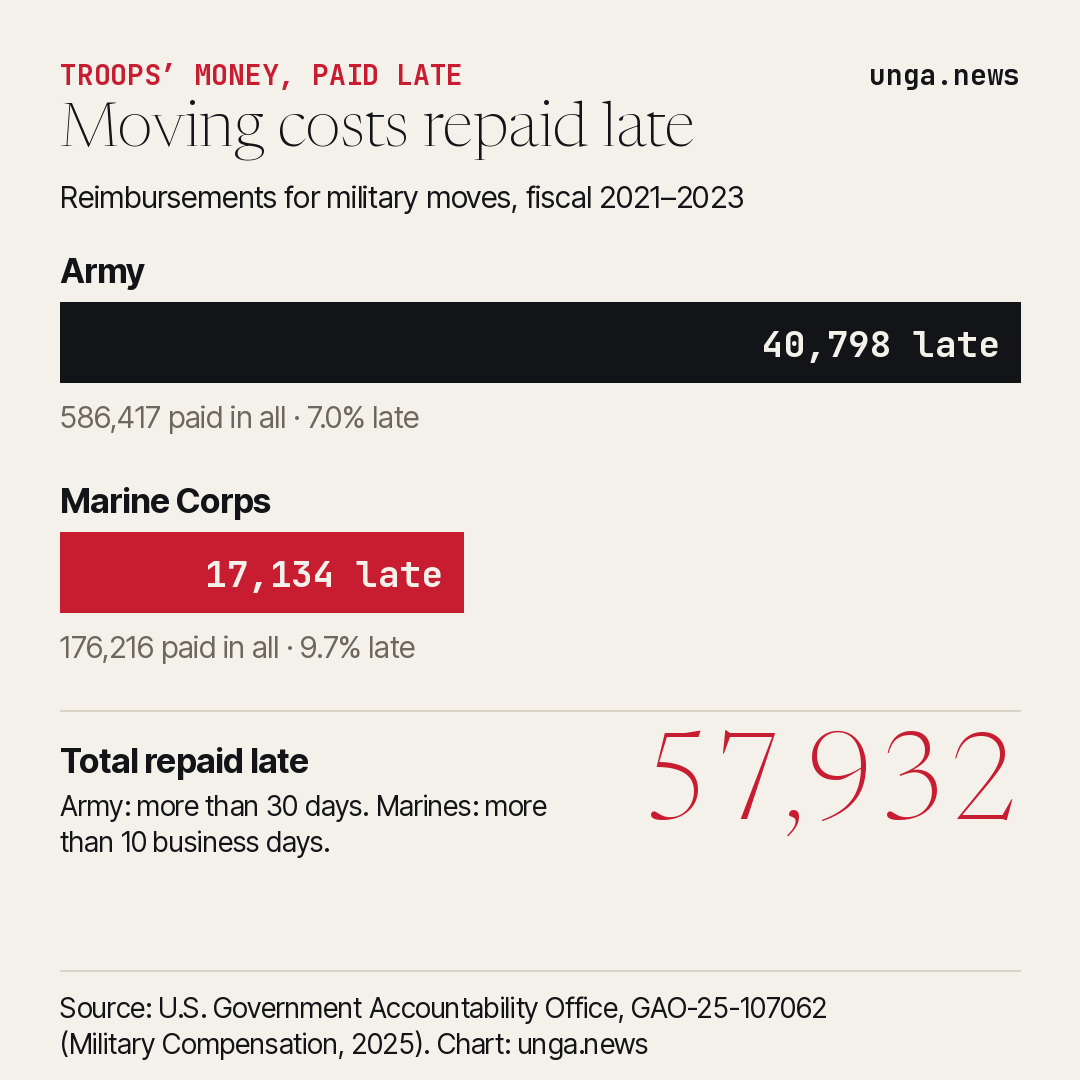
That adds up to nearly 58,000 late payments to service members and their families in just three years, for just one kind of payment, in just two branches. Moving reimbursements are a different pipeline from the regular paycheck Hegseth was talking about. But they show the same pattern he described: money the troops already earned, stuck in a slow, manual system.
GAO also found the Pentagon’s own financial rules weren’t clear about how fast those reimbursements had to be paid, and it recommended the department fix the guidance and tighten oversight. In other words, part of the problem was that nobody had been told plainly that late was unacceptable. Hegseth just told them.
Old code, new orders
The order also lands on top of a modernization job the department had already started. The Defense Finance and Accounting Service, the agency that actually cuts military paychecks, asked for $216.5 million in its fiscal 2027 budget request to modernize the Defense Joint Military Pay System. The budget documents describe replacing the core pay engine and legacy COBOL code, the decades-old programming language still running much of the government’s back office.
What Hegseth added on Friday is the policy that sits on top of the software: whatever the system gets wrong, the troops get paid while it gets fixed. That part doesn’t have to wait for new code.
There are fair questions about how it works in practice. Hegseth didn’t release a written memo, a deadline or a price tag. He didn’t say exactly how the rule will handle overpayments, where the department might later need to claw money back, or how payroll offices across the services will be told to apply it. Those details will come from the comptroller’s office, and service members will judge the order by whether their next pay problem plays out differently.
But the direction is right, and it is overdue. The military asks its people to deploy on short notice, move their families every few years and accept a level of risk no civilian employer would ask for. The least the Pentagon can do is make sure the direct deposit shows up, and that a clerical mix-up never becomes the service member’s financial emergency.
For years, the default answer to a pay dispute was to wait. As of Friday, the default answer is to pay.
Sources
- Secretary of War Pete Hegseth on 𝕏 — — video announcing the military pay transformation (Nov. 13, 2026)
- U.S. Government Accountability Office — Military Compensation: Clearer Guidance Needed for Timely Reimbursement of Moving Expenses (GAO-25-107062)
- Under Secretary of War (Comptroller) — FY2027 Budget Justification, Defense Working Capital Fund (DFAS military pay modernization)