

A Russian Agent Crossed the Southern Border Illegally to Stalk American Defense Workers, Feds Say
Prosecutors say Igor D’iu was recruited on Telegram, smuggled in through Mexico, and sent to Silicon Valley to photograph workers’ laptops, track their homes and tail one woman nearly 30 miles.
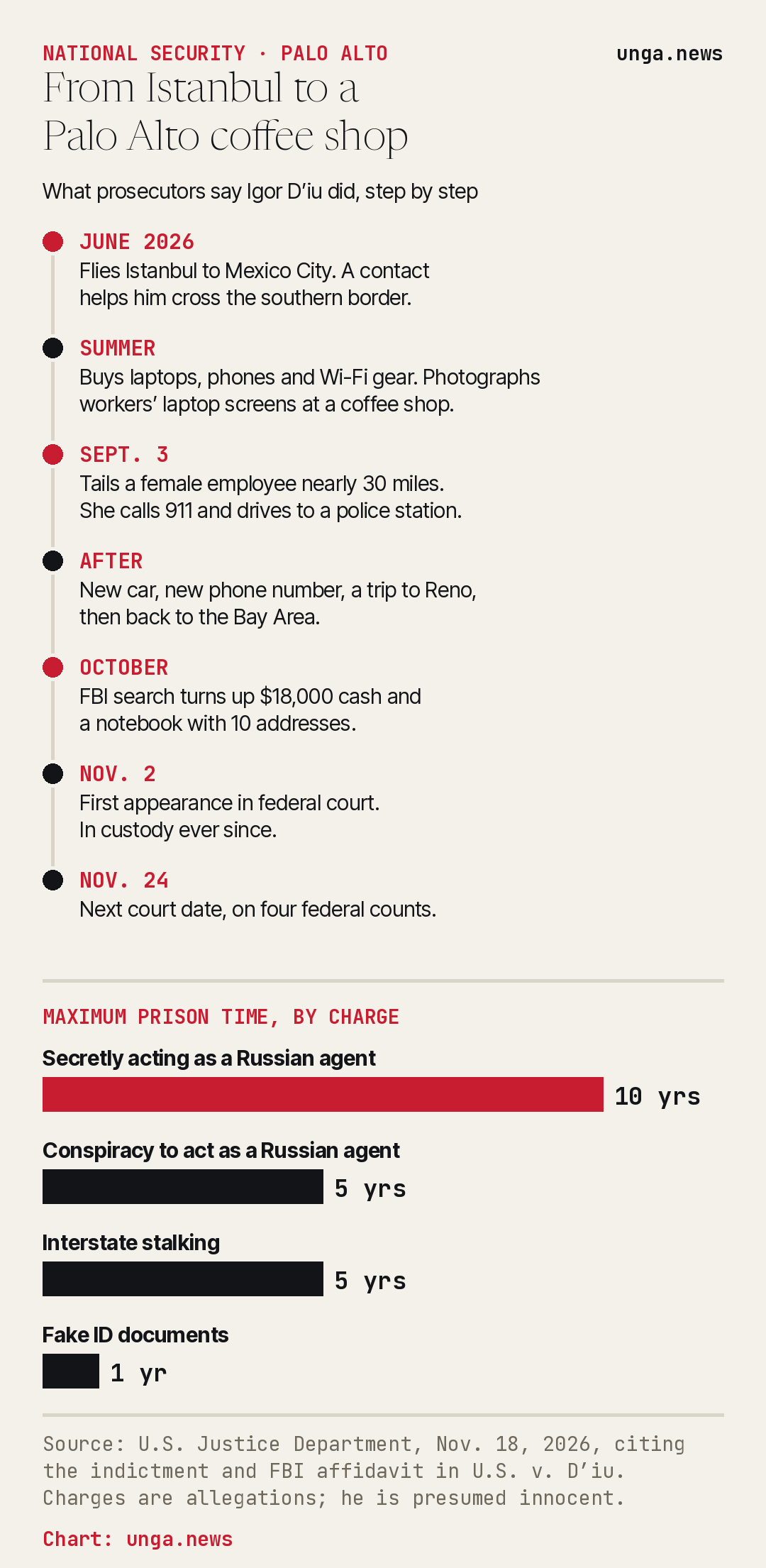
On the afternoon of Sept. 3, a woman left her job at a defense technology company in Palo Alto and started the drive toward San Francisco. A silver Lexus SUV stayed behind her. She took irregular turns, cut down back roads and ducked into a grocery store parking lot. The Lexus kept coming, through U-turns, illegal left turns and a red light. Nearly 30 miles later, scared for her safety, she called 911 and was told to drive straight to the San Francisco Police Department’s Mission Station. Only when she reached an officer did the SUV give up.
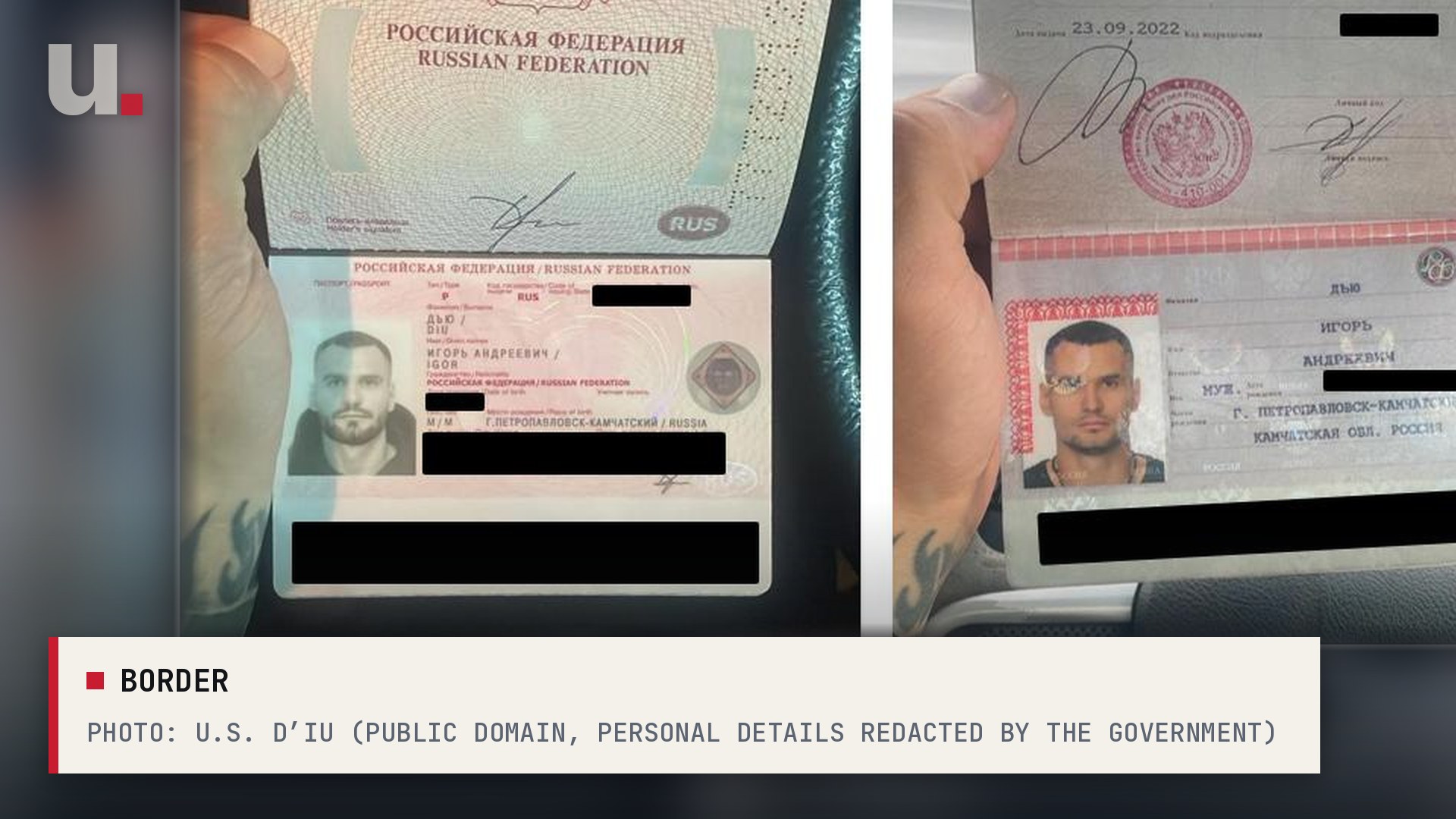
The man behind the wheel, federal prosecutors say, was working for Moscow. On Wednesday the Justice Department announced the indictment of Igor D’iu, a Russian national charged with conspiring to act as an agent of a foreign government, acting as one without notifying the attorney general, interstate stalking, and fraud involving identification documents. According to the indictment and an FBI affidavit, he got into the country by crossing the southern border illegally.
Recruited on Telegram, smuggled in through Mexico
The government’s account reads like a spy novel with a very American plot hole in the middle. Handlers recruited D’iu through the messaging app Telegram, told him the work was for “the Motherland,” and sent him after a single target: a large technology and defense company with an office in Palo Alto. The reason, prosecutors say, is that the company was supplying weapons used against Russia in Ukraine.
In June 2026, D’iu allegedly flew from Istanbul to Mexico City. His co-conspirators there connected him with someone who helped him get across the U.S.-Mexico border. No visa, no screening, no record of a Russian operative arriving to watch the people who build American weapons. He just walked in, the way millions of others did when the border was wide open, and went to work.
“As alleged, D’iu entered our country illegally at the direction of foreign handlers to surveil, follow, and gather information about some of those who work in this vital industry,” said M. Scott Proctor, the acting principal deputy assistant attorney general for national security. “Such conduct, if proven, is a flagrant violation of U.S. sovereignty and an unacceptable attempt at intimidation.”
A coffee shop, a laptop and photos of other people’s screens
Once he was in, the handlers allegedly went shopping through him. They told him to buy laptops, cell phones, wireless networking equipment and remote access software, and he did. His first assignments were almost mundane. Sit in a coffee shop near the company’s office. Spot the employees. Photograph their laptop screens while they work.
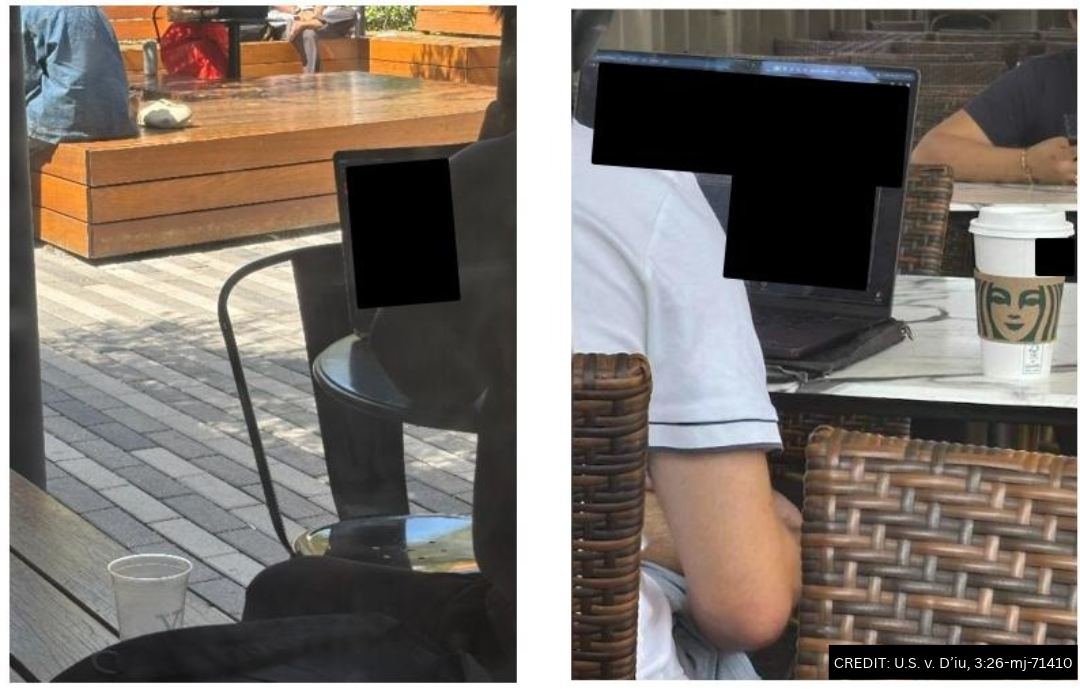
Then it got more technical. According to the affidavit, the handlers had him leave his own laptop at chosen spots near the company so they could log into it from afar and try to pull information from employees nearby.
From there the job moved from offices to homes. D’iu allegedly searched online for the home addresses of several employees, including a senior executive. The Sept. 3 chase was not a one-off, either. Investigators say they found evidence he had tailed other employees on the days before.
Fake passports and a quick trip to Reno
To keep going, he needed a new name. Investigators intercepted two international packages with identification documents hidden inside: a falsified California ID card, an altered U.S. passport and a Social Security card, all under the assumed name “Hugo Landry Johns.” The passport was a real U.S. passport issued to someone else elsewhere in the country, then modified to show D’iu’s photo, the affidavit says.
After Palo Alto police contacted him about the Sept. 3 incident, D’iu allegedly switched cars, got a new phone number and headed to Reno on orders from his Telegram contacts. He came back to the Bay Area to keep working. In October, FBI agents searched him and his home in East Palo Alto. They found about $18,000 in cash, two laptops, two iPhones, two Russian passports, networking gear and the fake documents.
They also found a notebook. It held 10 handwritten addresses, many of them matching the homes of company employees, plus detailed profiles of at least three workers. The profiles listed personal information, family members’ names, schooling and job histories, and assessments of each person’s strengths and weaknesses. That is not idle curiosity. That is the kind of file someone builds when they are looking for leverage.
The company nobody named
The charging papers never name the company. CBS News reported that the details point to Palantir Technologies, which has an office in Palo Alto and has said publicly that its software is used in Ukraine. Palantir CEO Alex Karp said in 2023 that the company is “responsible for most of the targeting in Ukraine.” Palantir did not immediately answer CBS when asked whether it was the target.
Whichever company it was, the message from Moscow is plain. If you build tools that help Russia’s enemies, Russia may send someone to learn where you live. That is why this case matters to people who never set foot in Silicon Valley. The engineers in that coffee shop are the same people writing the software and building the hardware American troops rely on.
The FBI wants that message to cut the other way. “Russia may rely on covert operatives and criminal intermediaries as it attempts to gain an edge in its war against Ukraine, but those tactics do not place its government or its collaborators beyond the reach of the law,” said Roman Rozhavsky, assistant director of the bureau’s Counterintelligence and Espionage Division. U.S. Attorney Craig Missakian of the Northern District of California put it more bluntly: his office will not let anyone “turn Silicon Valley into a base for foreign intelligence operations.”
Up to 10 years on the top count
D’iu has been in federal custody since his first court appearance on Nov. 2. He is due back in court on Nov. 24. The most serious count, acting as a Russian agent without notifying the attorney general, carries up to 10 years. Conspiracy and interstate stalking carry up to five years each, and the ID fraud count up to one year. Those are maximums set by Congress. Any sentence would be up to a judge, and the charges are allegations until they are proven in court.
The FBI ran the investigation with help from the Palo Alto and San Francisco police, and the case is being prosecuted by the Northern District of California and the National Security Division’s counterintelligence section. Credit goes to a frightened employee who did exactly the right thing, too. She called 911, she drove to the police, and a Russian operative’s cover started coming apart in a station parking lot in the Mission.
Sources
- U.S. Department of Justice — Russian National Indicted for Acting as a Foreign Agent of Russia to Target Silicon Valley Technology and Defense Company (Nov. 18, 2026)
- CBS News — U.S. indicts alleged Russian agent for spying on Silicon Valley defense firm
- Associated Press — Russian national accused of spying on employees of Silicon Valley defense and technology company
- ABC News — Feds arrest alleged Russian agent they say stalked employees of Silicon Valley tech and defense firm