

A Texas Democrat Quit Her Race When Her Fraud Record Surfaced. She Won Anyway and Wants the Seat.
Ericka Lomick dropped out in September, then edged Republican Alan Blaylock by 810 votes. His lawyer has asked Texas to declare her ineligible by Monday, saying no pardon exists.
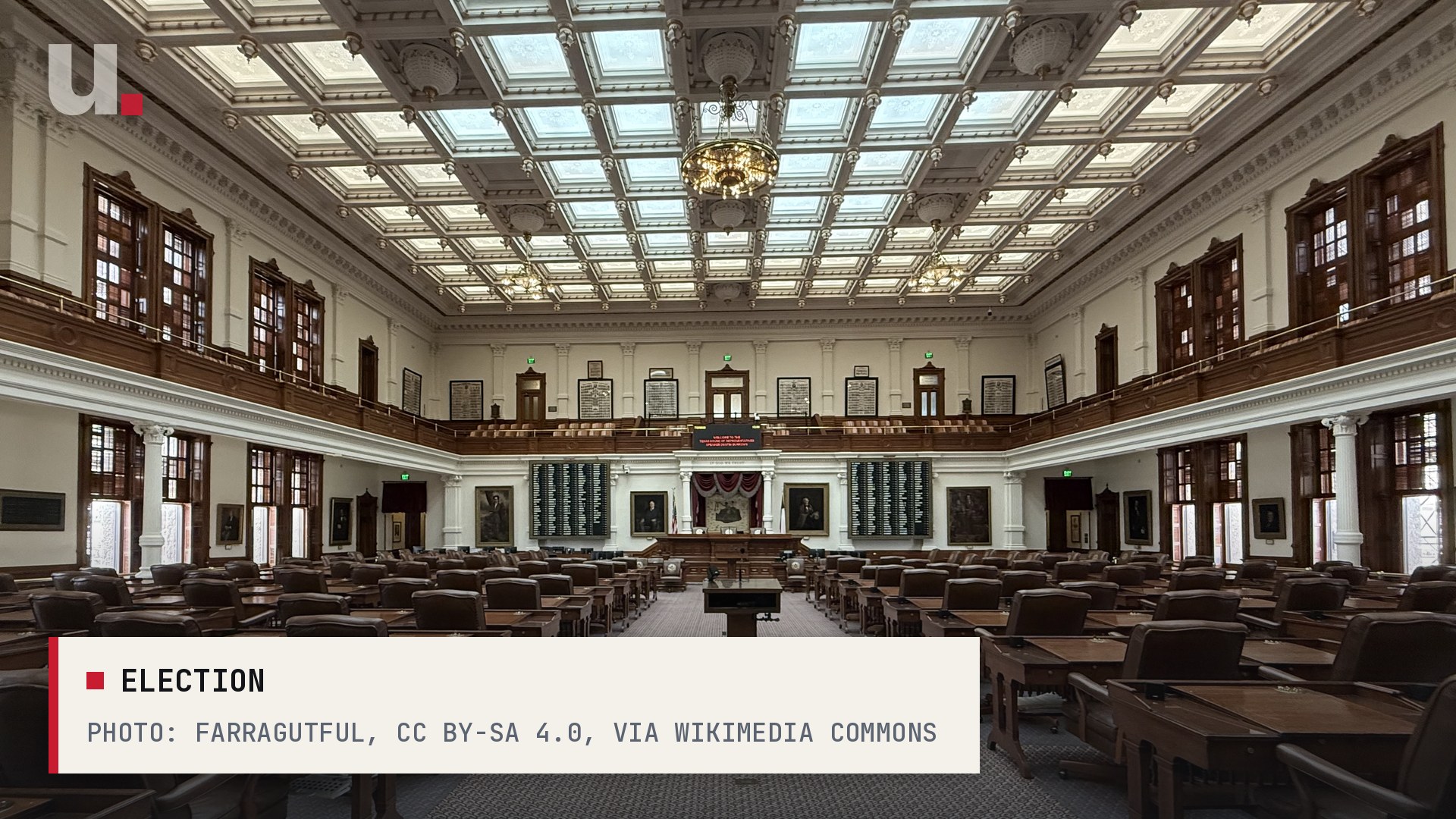
In September, Ericka Lomick told the voters of a Fort Worth-area Texas House seat to pick someone else. Her own campaign said she was stepping aside so the district could “elect someone who can serve.” Her name stayed on the ballot anyway, and on Nov. 3 she got more votes than the Republican still running.
Now she says she’s taking the seat. Her opponent, former Fort Worth City Council member Alan Blaylock, went to the state on Friday to stop her, armed with a federal court record: three felony convictions for mortgage fraud, bank fraud and money-laundering conspiracy, and a 63-month prison sentence.
Texas law is not shy about this. “A person convicted of a felony is ineligible to become a candidate for public office unless the person has been pardoned or otherwise released from the resulting disabilities,” the Texas Secretary of State’s office says on its own website. Finishing a sentence doesn’t clear the bar. The question is whether Lomick ever got the kind of release that does, and so far she hasn’t shown anyone.
A letter with a Monday deadline
Blaylock’s lawyer, James E. “Trey” Trainor III of Dhillon Law Group, sent Secretary of State Robert Howden a formal request on Nov. 13 to declare Lomick ineligible, according to the submission obtained by The Dallas Express and a letter reviewed by The Texas Tribune. Trainor is a former chairman of the Federal Election Commission.
He wants Howden to withhold the certificates of election for both races Lomick won: the leftover months of former Rep. Nate Schatzline’s term, which runs through January, and the full term that starts in January 2027. He points to Section 145.003 of the Texas Election Code, which lets the official who runs the final canvass declare a winner ineligible after the polls close and before a certificate goes out, when public records settle the question.
“We have found no pardon and no order releasing Ms. Lomick from the disabilities of her conviction in any record we have reviewed,” Trainor wrote.
He asked for an answer by noon Monday, ahead of the Nov. 17 state canvass for the special election. That deadline is his request, not one written in law. A spokesperson for Howden’s office told the Tribune it had no comment “at this time.”
Here is the part that matters for anyone yelling about stolen seats. Blaylock is not asking the state to hand him the job. “We do not ask you to change any vote count or to declare Mr. Blaylock elected,” Trainor wrote. Lomick’s votes would still count. If an ineligible candidate wins, the seat sits empty and the governor calls a new special election, which the Texas Constitution requires for a House vacancy.
Trainor also wrote to Tarrant County Judge Tim O’Hare and the commissioners, who canvassed the county results on Friday without ruling on eligibility. He asked only that they note the challenge in their minutes and preserve the ballots and records.
What the court file shows
The federal judgment attached to the challenge identifies the defendant as Ericka L. Flood, also known as Ericka Lomick. She pleaded guilty in North Carolina in January 2011 to mortgage-fraud conspiracy, bank fraud and money-laundering conspiracy. The judge sentenced her to 63 months in prison and three years of supervised release, and the Tribune reports she owed $300,000 in restitution. Federal prosecutors recorded a lien for that same amount in Tarrant County in 2024.
“We haven’t found any record of a pardon,” Blaylock told the Fort Worth Report. “And the restitution she owes still isn’t paid.” He also said Lomick never disclosed the conviction on her application to run.
The record surfaced in September, when a political action committee backing Blaylock, Protect and Serve Texas PAC, published the court documents. Lomick’s Sept. 21 statement didn’t confirm or deny them. She said she was suspending her campaign to let the people of District 93 “elect someone who can serve the district without the burden of defending against attacks that would threaten to derail the business of the people.” By then it was too late to pull her name off the ballot.
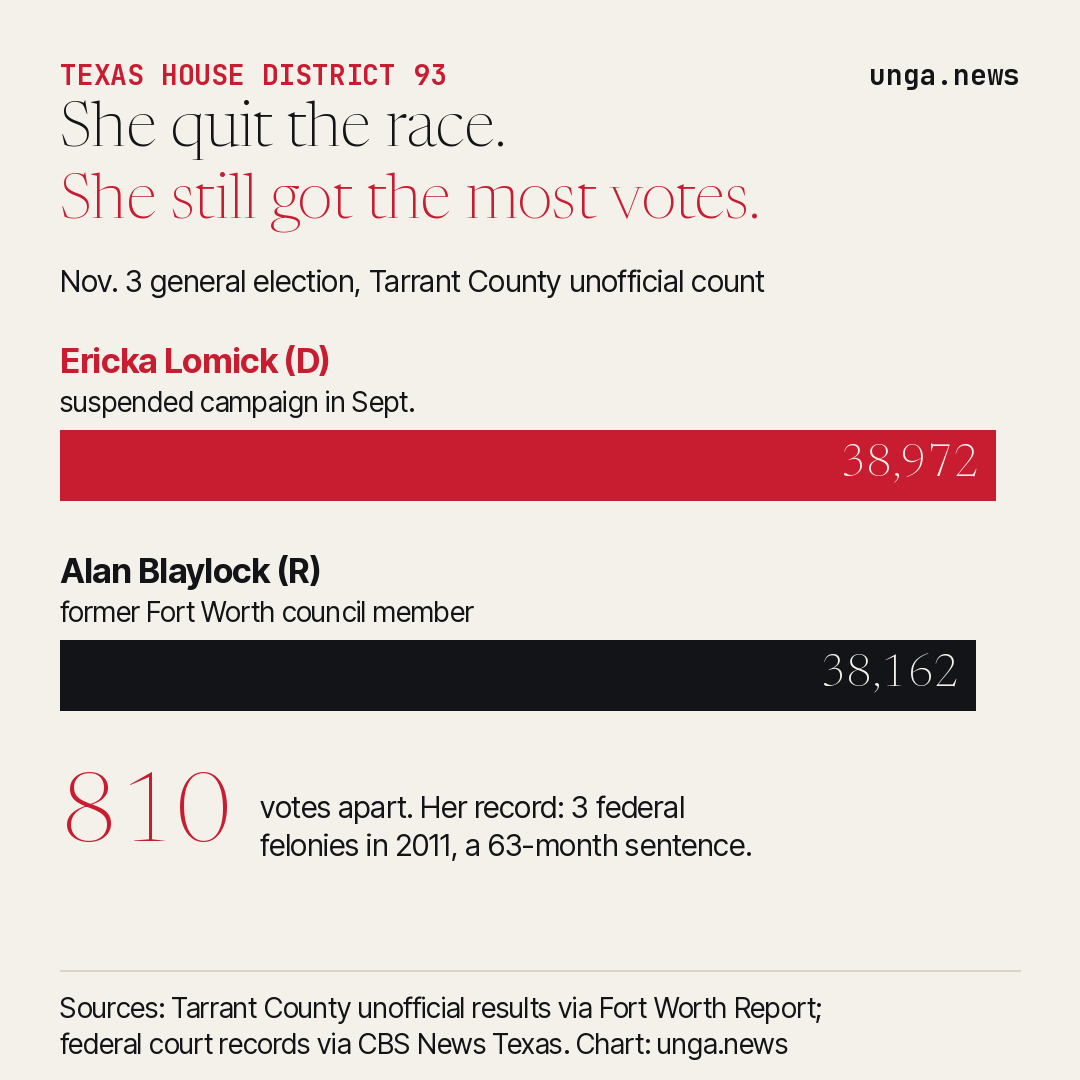
Then the votes came in. Lomick finished with 38,972 to Blaylock’s 38,162, an 810-vote edge, and she also led the special election for the rest of Schatzline’s term with 51.11%. A week later, she changed course.
“I am fully qualified to take the office to which I was elected,” she said in a statement to the Fort Worth Star-Telegram. “Although I was convicted of a felony in North Carolina many years ago, I was fully released from the resulting disabilities. I am preparing to represent the residents of my district.”
She didn’t say how. No pardon, no court order, no document. The Dallas Express says it hasn’t seen one.
Who gets the last word
Lomick’s side has an argument, and it isn’t only about paperwork. The ban the Secretary of State cites lives in the Election Code, and the Star-Telegram notes it appears to exempt offices whose qualifications are set by the Texas Constitution, as House seats are. The constitution also says each chamber “shall be the judge of the qualifications and election of its own members.” Tarrant County Democratic Party Chair Allison Campolo says that puts the call with the Texas House.
Trainor argues the state’s review before a certificate issues doesn’t step on the House’s power at all. And the same constitution tells lawmakers to pass laws excluding from office people convicted of “bribery, perjury, forgery, or other high crimes.” Bank fraud sits comfortably beside forgery.
Outside lawyers have read it the same way. “The law in Texas is pretty clear that anyone who has been convicted of a felony cannot serve in public office unless they were pardoned,” Texas trial lawyer Ruben Garcia told CBS News Texas two days after the election.
The seat has weight. Schatzline, one of the most conservative members of the Legislature, left it in July to advise Gov. Greg Abbott on election policy. With control of the Texas House changing hands in January, every vote in that chamber counts more than it did a year ago.
Blaylock says he’ll take his chances with voters if it comes to that. “This isn’t about party or about me,” he said. “If that means a new election, I’m ready to make my case to the voters again.”
That is a reasonable offer. Lomick asked voters in September to choose someone who could serve. If she can prove she’s that person, she should put the document on the table before Monday. If she can’t, the district gets the clean race she once said it deserved.
Sources
- The Dallas Express — Exclusive: Texas Democrat’s House Win Faces Felony Challenge; Attorney Says No Pardon Found (Nov. 13, 2026)
- The Texas Tribune — GOP candidate seeks to block Dem’s win amid eligibility question (Nov. 13, 2026)
- Fort Worth Report — Race for Fort Worth’s Texas House 93 seat remains in legal limbo after Nov. 3 election (Nov. 13, 2026)
- Fort Worth Star-Telegram — A Tarrant Dem exited a Texas House race, then won. Now she plans to take office. (Nov. 12, 2026)
- CBS News Texas — Democrat who withdrew from Texas House race wins despite felony convictions (Nov. 5, 2026)
- Texas Election Code — Chapter 145, Candidate’s Ineligibility (Sec. 145.003)
- Texas Constitution — Article 3, Legislative Department (Secs. 8 and 13)
- Texas Constitution — Article 16, General Provisions (Sec. 2)