

Amazon Warns New Yorkers Their Orders Could Cost Up to $5 More Under a Mamdani-Backed Bill
A pop-up in the Amazon app says a City Council bill would shut out the small firms that deliver your packages. Mamdani calls it greed. Here’s what the bill actually does.
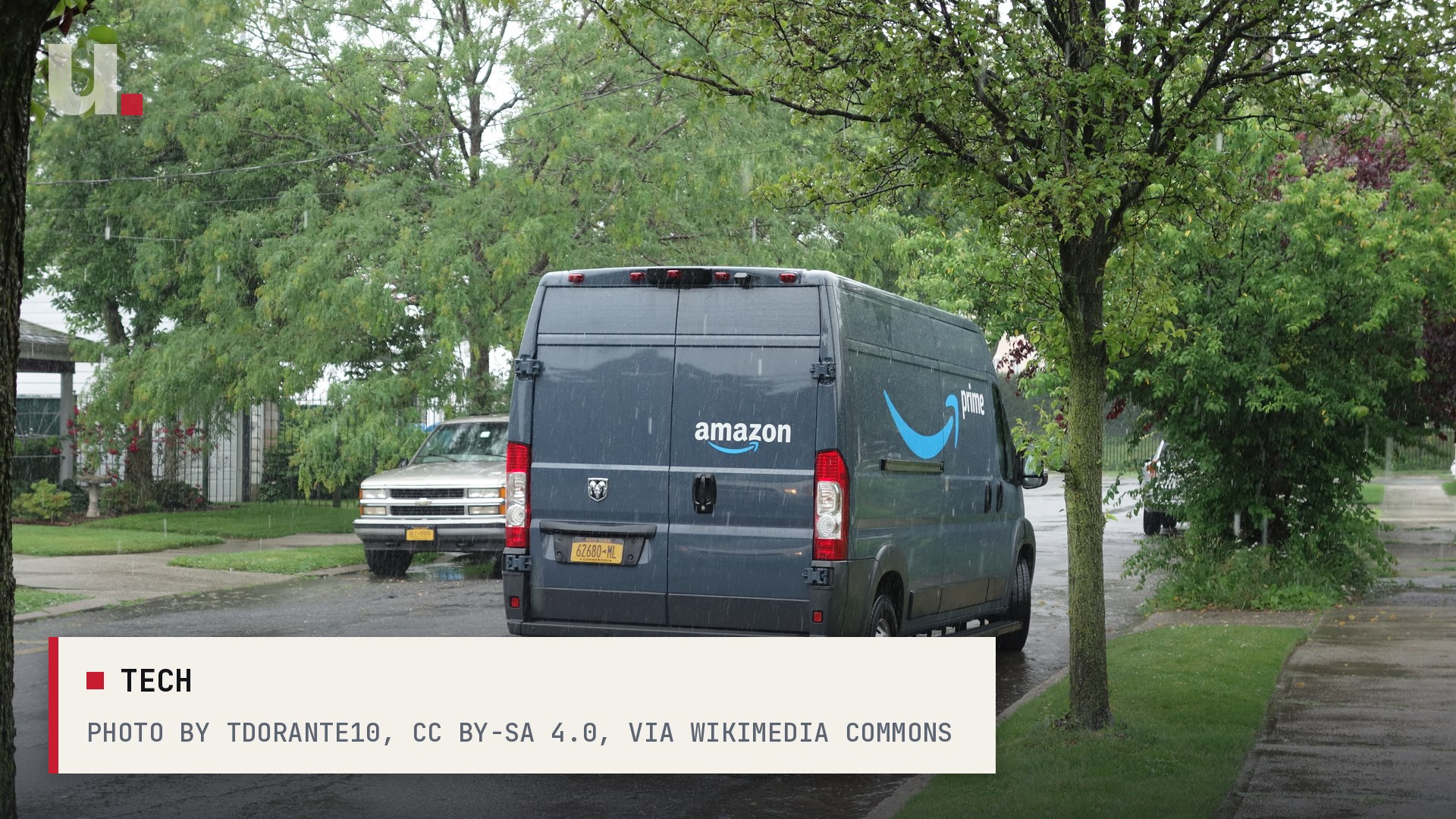
New Yorkers who opened the Amazon app this week to reorder dish soap or a kid’s vitamins got something extra on the screen: a bolded, red-highlighted warning. “ATTENTION: NYC Council could add up to $5 per order,” it reads. Below that sits an “Act Now” button that fires off an email to your City Council member.
The target is Intro 518, a bill the sponsors call the Delivery Protection Act. Mayor Zohran Mamdani endorsed it back in August. Amazon says that if it passes as written, the small delivery companies that bring packages to millions of doorsteps across the five boroughs would be shut out, and the company would have to “consider moving our operations outside of the city.”
Amazon posted the full message on its own company news site Thursday. It doesn’t mince words: the bill “could eliminate their businesses, displace thousands of New Yorkers from their jobs, and hurt people who count on fast and affordable delivery every day.”
What the bill would actually force
Strip away the slogans and Intro 518 is a licensing law. According to the bill’s file on the City Council’s own site, any operator of a warehouse or storage site that sends goods out to final customers in the city would need a business license from the Department of Consumer and Worker Protection. To keep that license, the operator would have to meet safety, training and employment rules, and the bill sets up enforcement that both the city and workers can use.
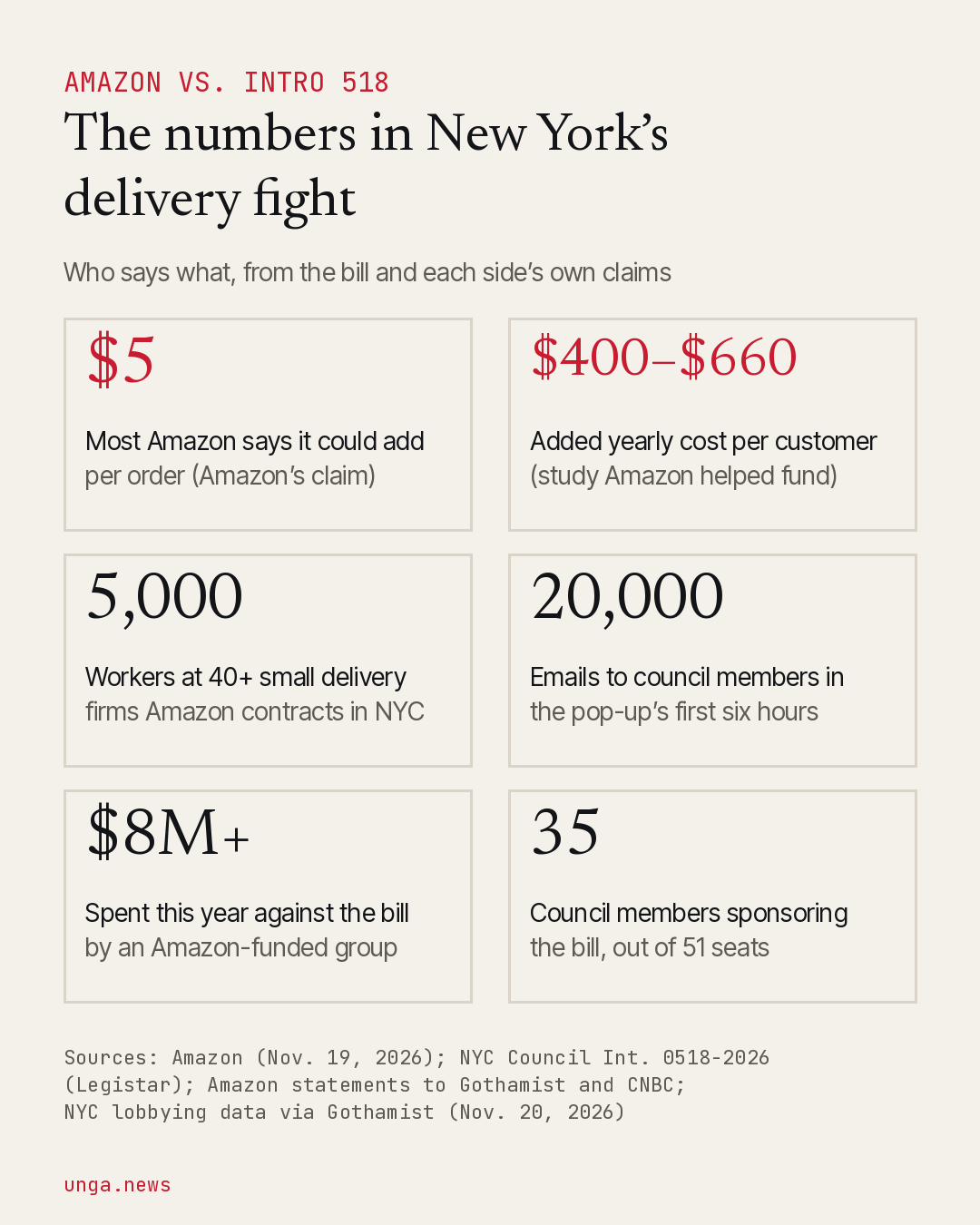
The employment piece is the whole fight. Most of the drivers in blue Amazon vests and Amazon-branded vans don’t work for Amazon. They work for independent firms the company calls delivery service partners. Amazon told Gothamist there are more than 40 of those firms in New York City, employing about 5,000 people. The bill would generally require the company running the facility to employ its core delivery workers directly, which ends that contractor setup inside city limits.
Councilmember Tiffany Cabán of Queens introduced it on February 12. It drew 35 council sponsors out of 51 seats, plus the public advocate. The Committee on Consumer and Worker Protection held a hearing in April and laid it over. It has never had a committee vote or a floor vote. Cabán’s office says it expects a vote by the end of the year.
The $5 question
Here is where readers deserve a straight answer. Amazon has not shown publicly how it got to “up to $5 per order.” What it points to is a study it helped pay for, which estimates the bill would cost a customer about $400 to $660 a year. Treat both numbers as Amazon’s case, not settled math.
The other side’s numbers aren’t free of spin either. Supporters, led by the Teamsters, who have spent years trying to unionize Amazon drivers and warehouse workers, insist the bill won’t touch prices at all. “There’s no world where this common-sense bill would cost Amazon $5 for every single delivery,” Cabán told Gothamist. “This is just an example of corporate bullying.”
Common sense sits somewhere in the middle. When a city tells a company it can’t use contractors, has to license its buildings and has to put thousands of drivers on its own payroll under city rules, costs go up. Someone pays for that. In New York, it is rarely the politicians.
A $3 trillion company versus City Hall
Mamdani, a Democratic Socialist, answered on 𝕏 with a shot at Jeff Bezos.
NYC Mayor Zohran Mamdani on 𝕏 — his response to Amazon’s in-app warning, Nov. 19, 2026.
— @NYCMayor View on 𝕏
Council Speaker Julie Menin, a moderate who business groups had seen as a possible ally, went harder. She told CNBC the price warning “defies logic” and said the council is “crafting legislation that regulates Amazon and protects workers, without impacting prices or jobs.” At a Thursday press conference she spoke straight into the camera: “If you think that that is going to deceive New Yorkers and intimidate the City Council out of passing basic worker and consumer protections, you are dead wrong.”
Menin also slowed things down. She says the bill needs changes to survive legal challenges, which is a polite way of admitting the current draft has holes. Logistics and business groups have already warned they may sue if it passes.
Your shopping app is now a lobbying tool
This is the part tech watchers should notice. Amazon rarely spends space on its storefront, the most valuable screen it owns, on politics. This week it turned the homepage banner and an in-app pop-up into a campaign office. Amazon says customers sent about 20,000 emails to council members in the first six hours.
It has worked before. In 2015, Uber fought Bill de Blasio’s cap on ride-hail cars by adding a “de Blasio view” to its app that showed riders the long waits they could expect. De Blasio pulled the bill. Amazon is not new to this fight either: city lobbying records show the Five Borough Jobs Campaign, a group funded almost entirely by Amazon, has spent more than $8 million this year opposing Intro 518.
Whether a pop-up wins over a council run by the left is another matter. Bradley Tusk, the operative who ran Uber’s 2015 campaign, told Gothamist he doesn’t think it will. “Nobody believes that Amazon’s going to stop delivering in New York,” he said.
Maybe not. But 5,000 people driving for small local firms have a real stake in whether the city lets their bosses stay in business, and the customers paying New York prices for everything else have a stake in whether a few more dollars get stacked on every box. The council owes both groups a bill that has been checked for costs before anyone votes, not after.
Sources
- Amazon — A message from Amazon to customers about New York City delivery costs (Nov. 19, 2026)
- New York City Council — Int. 0518-2026, Requiring the licensing of last-mile facilities (Legistar file)
- NYC Mayor Zohran Mamdani on 𝕏 — NYC Mayor on 𝕏 — response to Amazon’s warning (Nov. 19, 2026)
- Speaker Julie Menin on 𝕏 — Speaker Menin on 𝕏 — statement on Amazon’s price warning (Nov. 19, 2026)
- Gothamist — ‘They’re blowing this’: Amazon’s push against NYC delivery worker bill may be backfiring (Nov. 20, 2026)
- CNBC — Amazon app warns New York of higher costs if Mamdani delivery law passes (Nov. 19, 2026)