

Americans Got 4 Billion Robocalls Last Month. Trump’s FCC Wants Them Blocked Before Your Phone Rings
FCC Chairman Brendan Carr wants phone companies required to block calls that are likely illegal and to give landline and flip-phone users free blocking tools. He’s also moving to make sure Starlink and other American satellite companies get a fair deal abroad.
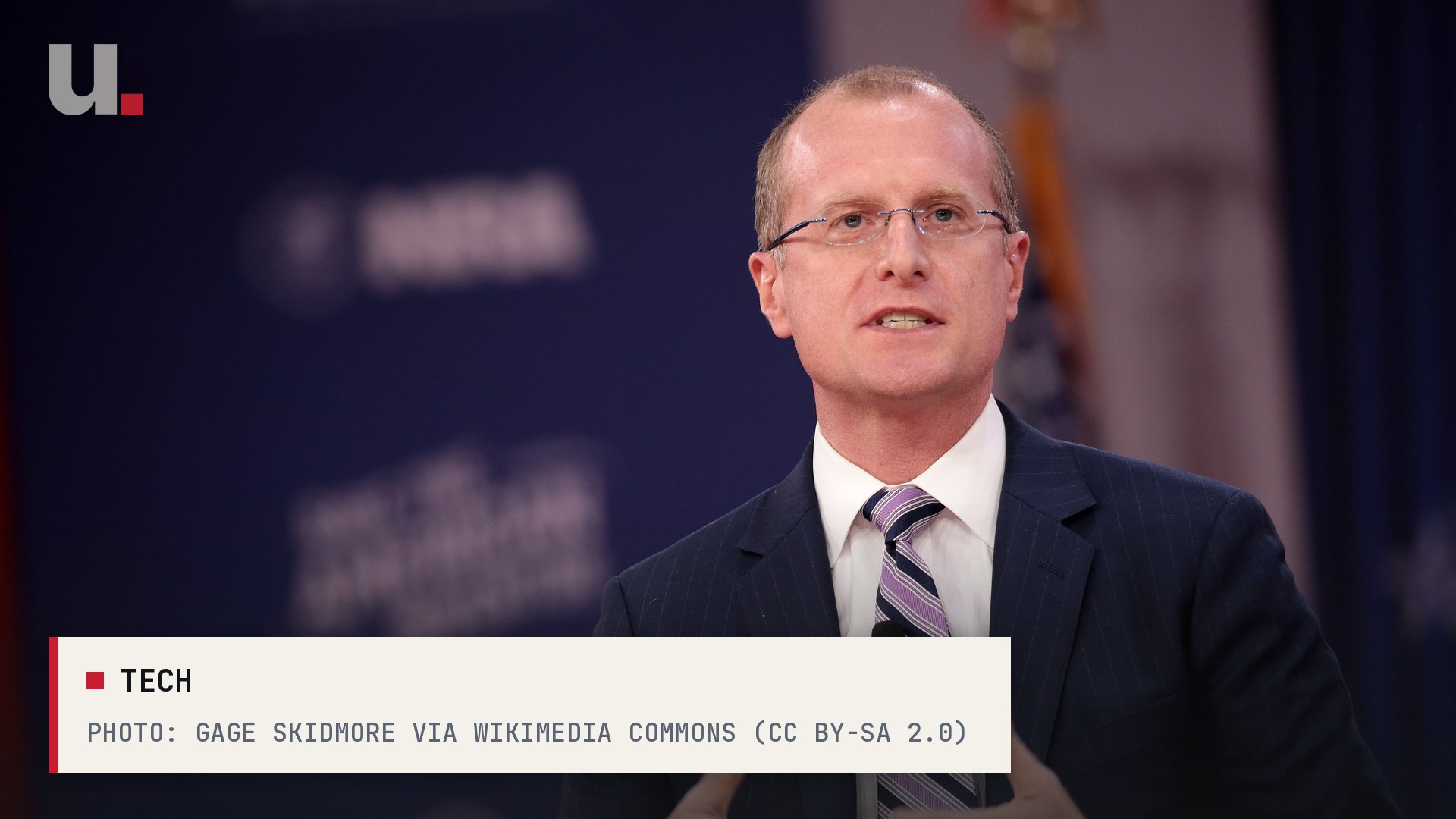
Every month, somebody in your house picks up a call about a “pre-approved hardship loan” nobody asked for. FCC Chairman Brendan Carr wants the phone companies to start killing those calls before they ever ring.
On Monday, Carr put a proposal on the agenda for the Federal Communications Commission’s Dec. 17 meeting that would require many phone carriers to block calls that are “highly likely to be illegal” before they reach customers. It would also make sure people on landlines and basic flip phones get better call screening and blocking tools without a new line-item charge stuck on their monthly bill.
“Fighting illegal scam calls remains a top consumer protection priority for the Commission,” Carr said in a statement. “All consumers, regardless of the device they use, should have access to network-based blocking and screening tools, without being hit with another line-item charge on their monthly bill. We believe providers can, and should, do more to stop bad actors from reaching consumers and this item proposes how.”
From permission to obligation
Phone companies already block a lot of junk calls, and they’ve been allowed to for years. The difference here is the word “require.” Under Carr’s plan, many of the carriers that deliver the final leg of a call to your phone would have to block traffic their own analytics flag as highly likely to be illegal. The FCC isn’t telling them which software to use. It says “reasonable analytics,” which leaves room for carriers to use whatever works best and keeps Washington from freezing one technology in place.
There’s a second piece that goes after the middlemen. Carriers would have to weigh whether the company handing them a call is a known bad actor when deciding what to block. Scam calls almost never come straight from a scammer to you. They bounce through a chain of small, often offshore voice providers that look the other way. Make the last carrier in the chain responsible, and those shady wholesalers start losing their customers.
The free-tools piece matters more than it sounds. Smartphone owners can download blocking apps or flip on built-in filters. Grandma on a landline can’t, and older Americans are exactly who these loan and fraud scammers love to reach. Requiring network-level screening for landlines and basic phones, with no surprise fee, puts the protection where the targets are.
The numbers behind the push
The scale of the problem is hard to wrap your head around. The YouMail Robocall Index, a running estimate the FCC itself regularly cites, counted 4.02 billion robocalls in the United States in October alone. That’s 129.8 million a day, or about 1,502 every second.
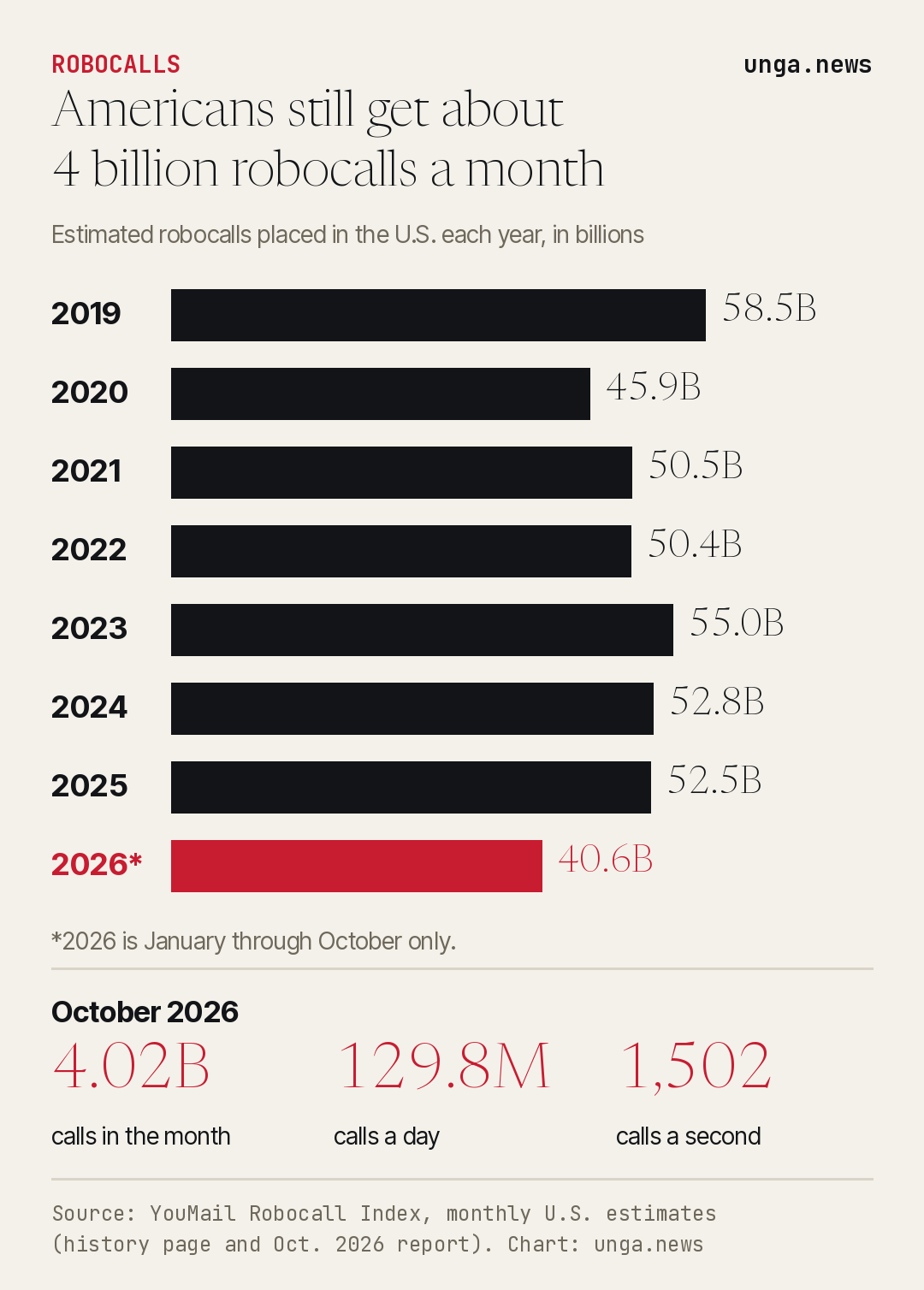
Not every robocall is a crook. About 41% of October’s calls were notifications, a chunk of them political calls ahead of the midterms, and another 15% were payment reminders, YouMail reported. But the biggest slice, 44%, or about 1.75 billion calls, was telemarketing and scams. The worst offenders all year have been fake debt-consolidation offers that rotate through tens of thousands of phone numbers, change the caller’s name and dangle five-figure loans.
There is some good news in the trend line. Robocalls peaked at 58.5 billion in 2019. The 12 months through October came in at 48.4 billion, close to the lowest 12-month total since April 2021, and YouMail CEO Alex Quilici said 2026 has “a good chance” of ending 5% to 10% below 2025. He also warned that Americans still get nearly 2 billion unwanted calls a month “and fraud losses continue to grow.” That’s the gap Carr is aiming at. The trend is heading the right way, just way too slowly.
This is also the next step in a fight Carr has been waging all year. In April, he moved to kick voice providers that enable robocalls off American networks entirely and to tighten the caller ID system that’s supposed to stop scammers from faking local numbers. Monday’s proposal moves the fight to the last stop before your phone, the point where a blocked call never reaches you at all.
Starlink and American satellites get a fair shake
Robocalls weren’t the only thing on Carr’s list. He also proposed new rules to make sure American satellite companies get the same treatment overseas that foreign satellite companies get here.
FCC Chairman Brendan Carr’s own post, Nov. 23, 2026, announcing the satellite reciprocity proposal. (@BrendanCarrFCC)
— @BrendanCarrFCC View on 𝕏
For years, Carr wrote in his Monday blog post, the FCC has welcomed foreign satellite operators into the U.S. market on a level playing field. But other countries have started “applying one set of regulations to their own satellite companies and a very different one to American satellite providers operating in those nations.” His proposal would ask whether to hit foreign operators here with the same kinds of restrictions their home governments put on American companies there.
American providers “are or may be burdened with regulatory and spectrum limitations that their competitors in foreign nations simply do not face,” Carr said in a statement reported by Bloomberg Law. The biggest American player abroad is SpaceX’s Starlink, which has pressed the FCC to act on foreign protectionism. Countries that want their own satellite companies to sell in America would now have a reason to open their doors to ours.
The December agenda also includes a “light licensing” system to help satellites and ground networks share airwaves, an update to decades-old local TV and radio ownership rules, and the deletion of almost 30 outdated regulations under Carr’s “Delete, Delete, Delete” push.
The full commission votes Dec. 17. If it approves the robocall plan, it becomes a formal proposal open for public comment before any final rule. For the 129.8 million calls a day hitting American phones, that clock can’t start soon enough.
Sources
- Federal Communications Commission — Chairman Carr Proposes Stronger Robocall Blocking Rules to Prevent More Scam Calls from Reaching Consumers (Nov. 23, 2026)
- Federal Communications Commission — Brendan Carr, “The Good and the Bad,” FCC blog (Nov. 23, 2026)
- Brendan Carr on 𝕏 — FCC Acts to Ensure Reciprocity and Fair Deals for American Satellite Providers (Nov. 23, 2026)
- Federal Communications Commission — FCC to Vote on Requiring Carriers to Take Stronger Actions to Combat Illegal Robocalls (Apr. 28, 2026)
- YouMail Robocall Index — United States Robocalls by Month
- YouMail (PR Newswire) — U.S. Robocalls Exceed 4 Billion in October, According to YouMail Robocall Index
- Communications Daily — SpaceX Urges FCC Action on Foreign Space Protectionism (Apr. 20, 2026)
- Bloomberg Law — FCC to Vote on New Rules for Foreign Satellite Systems in US (Nov. 23, 2026)