

Anyone Can Now Turn One Photo Into a 3D World You Can Walk Through
Stanford’s Fei-Fei Li and her startup World Labs opened their Atlas system to the public, letting regular users build explorable 3D places from pictures or a rough sketch, and developers do it for about $5 a scene.
Take a picture of your kitchen. Now imagine stepping inside that picture, turning around, and seeing the fridge behind you that never made it into the frame. As of Thursday, that’s something anybody with a web browser can try.
World Labs, the San Francisco startup run by Stanford computer scientist Fei-Fei Li, opened its Atlas system to the public on Nov. 12. Atlas takes a photo, a handful of photos, a rough sketch of a room or a blocky layout and builds a 3D place you can move a camera through, film, or export into the design software people already use. Until this week, making your own worlds with it took invite-only test access. Now it’s open to everyone.
“We’re opening up access to Atlas to everyone today,” the company posted on 𝕏. “Bring your ideas for building a 3D world and come away with keyframes, video clips, or 3D Gaussian splats.”
World Labs on 𝕏, Nov. 12, 2026: “We’re opening up access to Atlas to everyone today.”
— @theworldlabs View on 𝕏
That last term sounds like lab talk, so here’s the plain version. A “splat” file is a 3D scene stored as millions of tiny, soft colored blobs. Seen together they look like a real room or street, and you can fly a camera through them on an ordinary laptop or phone. What Atlas adds is the guessing: it fills in the parts of the scene no camera ever saw.
One picture in, a whole room out
The main app is called Viewfinder. Upload a single image and Atlas imagines the rest of the scene around it. Upload more, up to 64 pictures of a real place, and it rebuilds that place instead of inventing one. You can then plot a camera path and render a video, or save the whole thing as a 3D file.
The company was candid about the trade-off in its September write-up when Atlas was first shown to select partners. With one photo, the model leans on what it has learned about how the world usually looks. In one World Labs example it guessed there should be a grassy lawn beside a pool it couldn’t see. Give it more pictures and it stops guessing. “The more it sees, the less it imagines,” the company wrote, adding that Atlas “typically gives faithful reconstructions with as few as two or three images.”
A second app, Chisel, flips the process around. Instead of starting from a picture, you block out a scene with rough shapes, a wall here and a staircase there, and Atlas paints in a finished world that follows your layout. Move a box and every camera view updates. Two smaller tools turn the blob scene into solid geometry for games and change the lighting after the fact.
“Not pulling the lever of a slot machine”
Most SI video tools work like a slot machine: type a prompt, pull the lever, hope the camera does what you pictured. World Labs is selling the opposite.
Atlas treats camera position as an exact instruction instead of a vague request, so a filmmaker can set every move ahead of time. The company says it can turn out up to a minute of video at 1440p, a notch above standard HD, while keeping the room consistent from shot to shot. “This puts you in the director’s chair,” the September post said. “You are staging the scene, not pulling the lever of a slot machine.”
In one demo, World Labs filmed scenes with three to five ordinary phones and action cameras on tripods, then used Atlas to freeze the moment and swing the view around it, the “bullet time” look from The Matrix, from gear that fit in a backpack.
Who wants this? World Labs pitches it to three crowds: film and effects shops that need sets, architects and designers who want to walk a client through a space before anything is built, and robot makers who need endless practice rooms. In one robotics demo the team captured two large buildings with a phone video, using just 24 frames each, then simulated robots driving through them while Atlas generated what the robots’ cameras would see.
Five bucks a scene
For developers, the price is low enough to tinker with. The 3D-scan service in the Atlas API charges 500 credits, about 50 cents, for a quick draft run on up to 32 frames, and 5,000 credits, about $5, for a refined run on up to 512, according to Radiance Fields’ review of the rate card. Failed runs are free. A typical job takes 15 to 25 minutes; in the company’s own example, eight frames of a potter’s studio became a 2-million-blob scene in 18 minutes.
Timing helped too. Blender, the free 3D program used by hobbyists and studios alike, added built-in support for splat files in version 5.3 on Nov. 10, two days before Atlas went public, so Atlas files open there without an add-on. World Labs also offers its own Blender extension, plus a set of instructions that lets a coding agent drive it. The company hasn’t published final usage limits yet, and its rate card still lists them as to be announced.
The people behind it
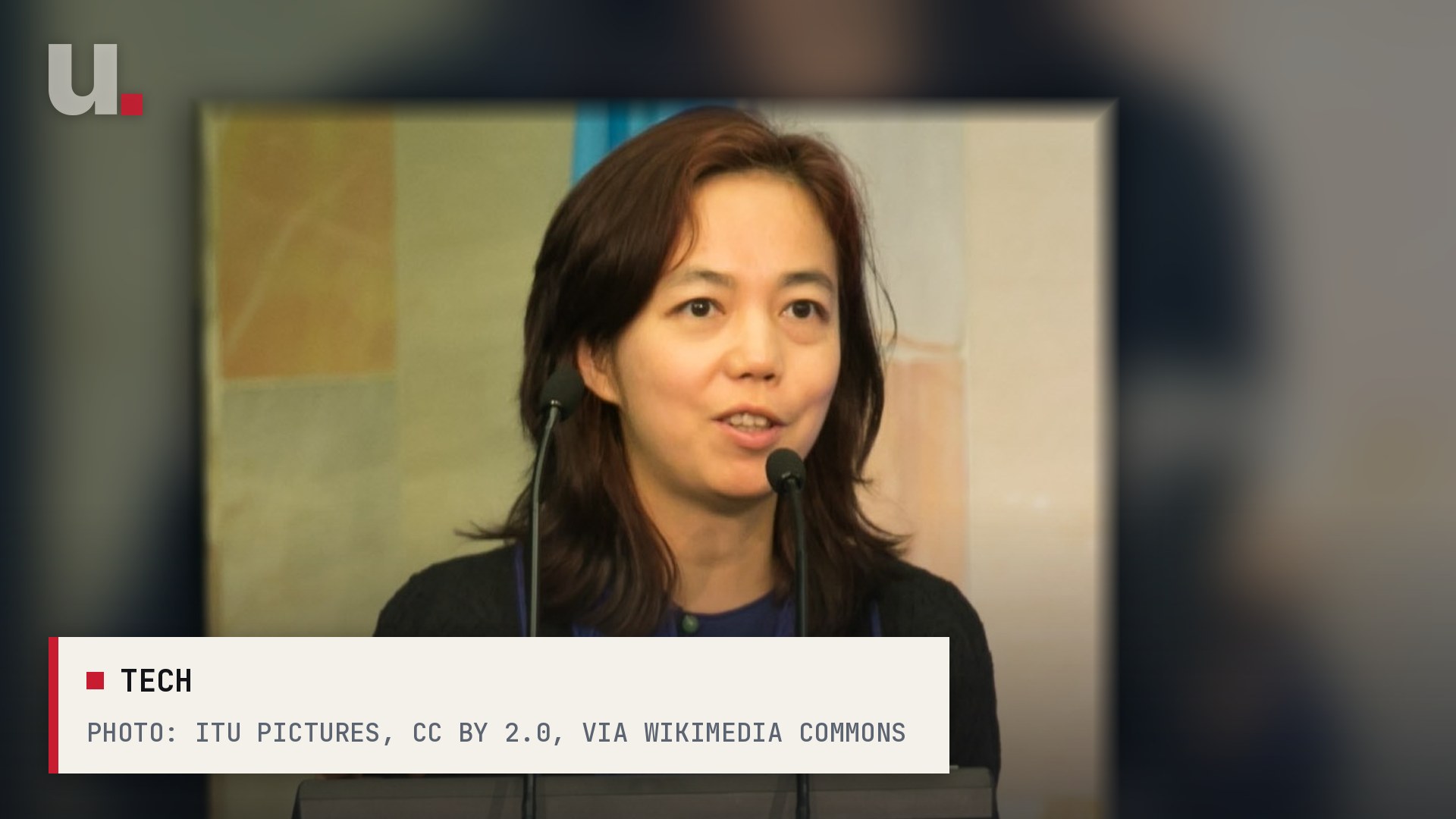
Li is about as close to royalty as SI research gets. Her ImageNet project, a giant labeled photo collection, helped kick off the modern era of computer vision more than a decade ago, and she has spent years arguing that machines won’t really understand the world until they understand space: where things are, what’s behind them, how they fit together. World Labs is her bet on that idea. In February it raised $1 billion from backers including NVIDIA, AMD, Autodesk and Fidelity.
Fei-Fei Li on 𝕏, Nov. 12, 2026: “Atlas is now available to everyone!! I’m very excited to see what users can build with our newest world model!”
— @drfeifei View on 𝕏
Co-founder Justin Johnson said he “can’t wait to see what everyone builds.” Martin Casado, a partner at Andreessen Horowitz, the venture firm that backs the company, went further: “I really think this is the largest step in 3D generation / reconstruction since the beginning of gen AI.”
Keep the source in mind on that one. Casado is an investor, and the claim that Atlas beats specialized 3D tools comes from World Labs’ own testing. No outside lab has published a head-to-head yet. Early user posts are glowing, but the people posting are the ones who got good results.
Still, the shift here is real. A year ago, building a walkable digital copy of a real room meant expensive scanning gear or a team of 3D artists. Now it’s a few phone pictures and, for developers, a few dollars. A contractor can show a homeowner the finished basement while it’s still bare studs, and a teacher can walk a class through a place they’ll never visit. Plenty of what people build will be junk, as with every new creative tool. Some of it won’t, and that part starts this week.
Sources
- World Labs on 𝕏 — We’re opening up access to Atlas to everyone today (Nov. 12, 2026)
- World Labs on 𝕏 — In Viewfinder, create worlds from images using the spatial intelligence of Atlas (Nov. 12, 2026)
- World Labs on 𝕏 — We’re also releasing all of the API endpoints powering these apps (Nov. 12, 2026)
- World Labs — Atlas: Releasing our next generation world model (Nov. 12, 2026)
- World Labs — Atlas: A World Model for Spatial Intelligence (Sept. 1, 2026)
- World Labs — World Labs Announces New Funding (Feb. 18, 2026)
- Fei-Fei Li on 𝕏 — Atlas is now available to everyone!! (Nov. 12, 2026)
- Justin Johnson on 𝕏 — Everyone can use Atlas starting today! (Nov. 12, 2026)
- Martin Casado on 𝕏 — I really think this is the largest step in 3D generation / reconstruction since the beginning of gen AI (Nov. 12, 2026)
- Radiance Fields — World Labs Opens Atlas World Model to Everyone, Michael Rubloff (Nov. 13, 2026)