

Appeals Court Sides With Trump and Revives His Bid to Erase the Hush Money Conviction
Three federal judges said a lower court was wrong to block Trump from moving Alvin Bragg’s New York case into federal court, and they asked state courts to pause his appeal while it’s decided.
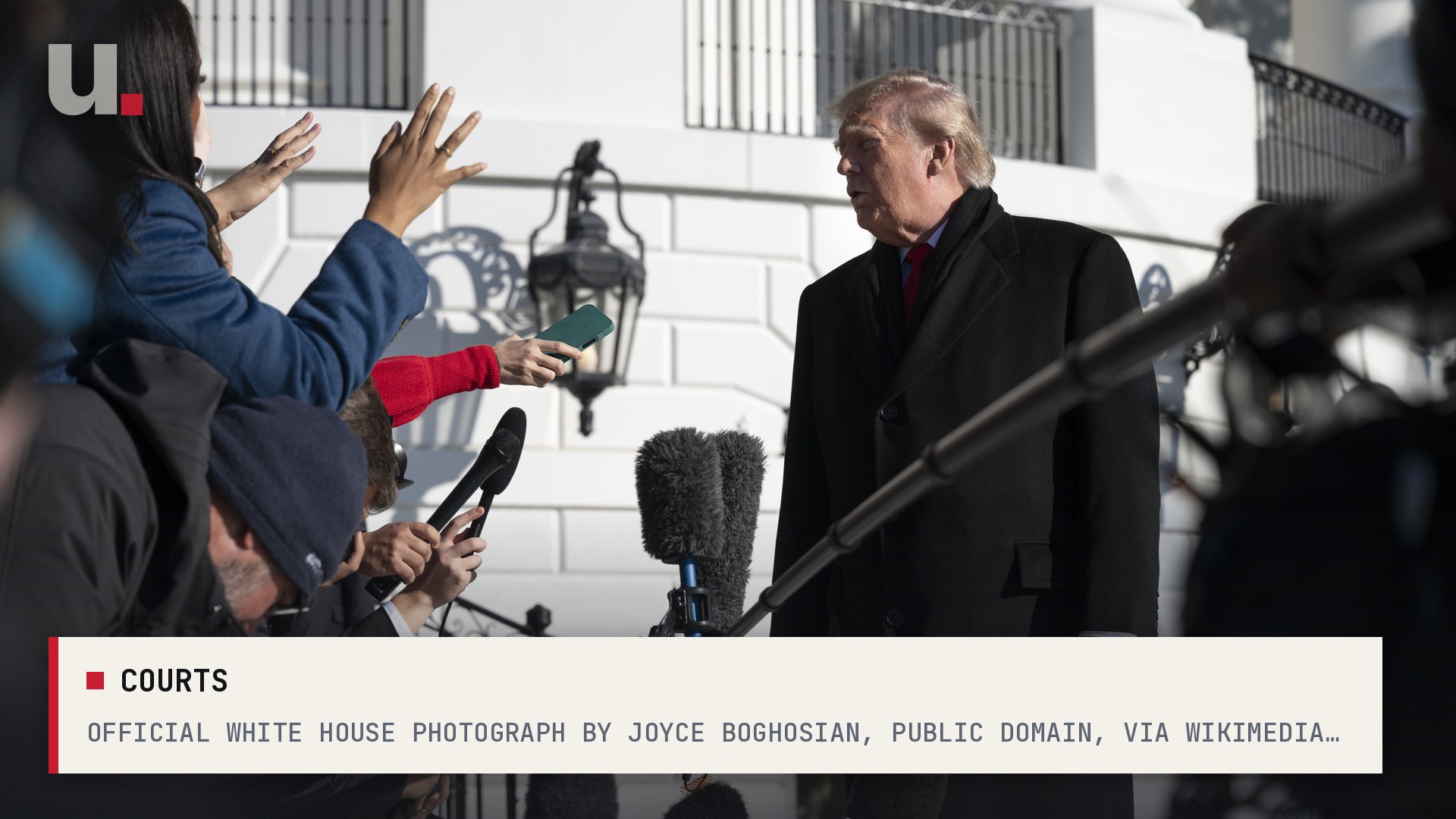
Alvin Bragg’s case against Donald Trump was always supposed to end in a Manhattan courtroom, in front of Manhattan jurors, under Manhattan rules. On Monday, a federal appeals court opened the door to taking it somewhere else.
In a two-page order, a three-judge panel of the 2nd U.S. Circuit Court of Appeals said a federal judge got it wrong when he refused to let Trump try, for a second time, to move his New York criminal case into federal court. “We disagree with the district court,” wrote Chief Judge Raymond Lohier and Judges John Walker and José Cabranes. The panel threw out that judge’s ruling and ordered the lower court to let Trump file. You can read the full order here.
That matters because federal court is where Trump can press the argument New York’s courts have brushed aside for two years: that the Supreme Court’s 2024 immunity ruling should have kept a big chunk of the evidence away from his jury in the first place.
Two mistakes, one order
The panel named two errors by U.S. District Judge Alvin Hellerstein, who turned Trump down on Aug. 28. First, Hellerstein had said a case can’t be moved to federal court at all once a federal officer has already been convicted in state court. The appeals court said that was wrong. Second, he had found Trump didn’t show “good cause” for filing late. The appeals court said that was wrong too.
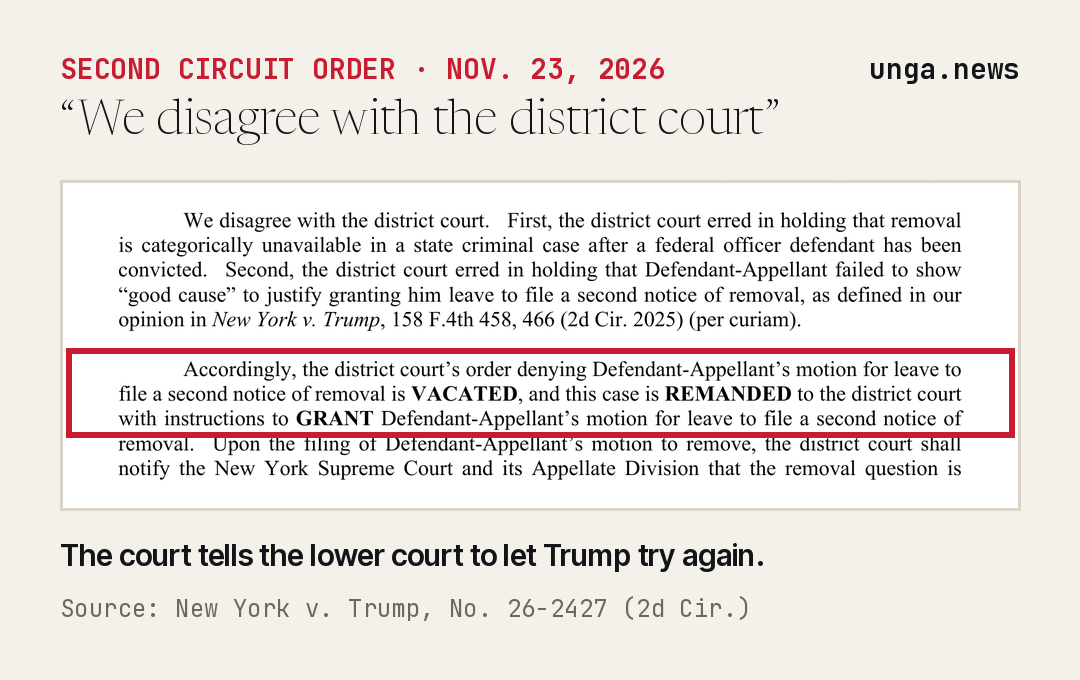
The order goes further than a polite do-over. Once Trump files, the district court has to tell New York’s Supreme Court and its Appellate Division that the removal question is pending, and “respectfully request that no further proceedings occur in the state courts” while it is decided. Then the federal judge must “promptly issue a decision.” If removal is allowed, the federal court “shall adopt the state court judgment,” which would put the conviction itself in front of federal appeals judges. The panel said a written opinion explaining its reasoning will follow.
Trump’s legal team called it a “prompt and correct ruling.” In a statement reported by NBC News, a spokesperson said the order shows the case brought by “the Manhattan DA be removed to federal court, and immediately overturned and dismissed,” adding: “President Trump will keep defeating the Liberal Hoaxes at every turn.” Bragg’s office declined to comment.
Why a federal courtroom changes the math
Federal law has long let federal officers who are prosecuted in state court over things tied to their official duties ask to move the case to federal court. The idea is simple: a local prosecutor and a local jury shouldn’t get the final word on what a federal official did on the job. The law sets a 30-day window after arraignment but lets a judge allow a later filing for “good cause.”
Trump’s good cause arrived in July 2024, about five weeks after the jury came back. In Trump v. United States, the Supreme Court held that presidents have immunity for official acts, and it said prosecutors can’t use evidence of a president’s official conduct even in a case that is supposedly about private conduct. Trump’s lawyers have argued ever since that the Manhattan trial leaned on exactly that kind of evidence, including testimony from former White House aides and posts he wrote as president.
Bragg’s office says none of that matters. At the Nov. 16 argument, Steven Wu, the office’s chief appellate lawyer, told the judges Trump was prosecuted for falsifying business records, not for official presidential acts, and that he dragged his feet. “Nothing prevented this defendant from seeking leave to remove at least two earlier points than when he actually did,” Wu said, according to Courthouse News.
Trump lawyer Robert Giuffra answered that the filing came within 60 days of the Supreme Court’s ruling, and that the case raises federal questions Congress wanted heard in federal court. He also argued Bragg took a misdemeanor that was already past its deadline and turned it into a felony by leaning on federal election law. “The appeal of this unprecedented criminal case brought by the state of New York against the president of the United States belongs in federal court,” Giuffra said. He admitted it is unusual to try to move a case after a conviction, but added, “Everything about this case is unprecedented.”
The panel took one week to side with him.
A conviction with no punishment
Remember what Bragg actually won. A Manhattan jury convicted Trump in May 2024 on 34 counts of falsifying business records tied to a payment to adult film actress Stormy Daniels before the 2016 election. When the sentence finally came, 10 days before Trump took the oath for his second term, it was an unconditional discharge: no jail, no fine, no probation. What stayed was the felony label, and that label is what this fight is about.
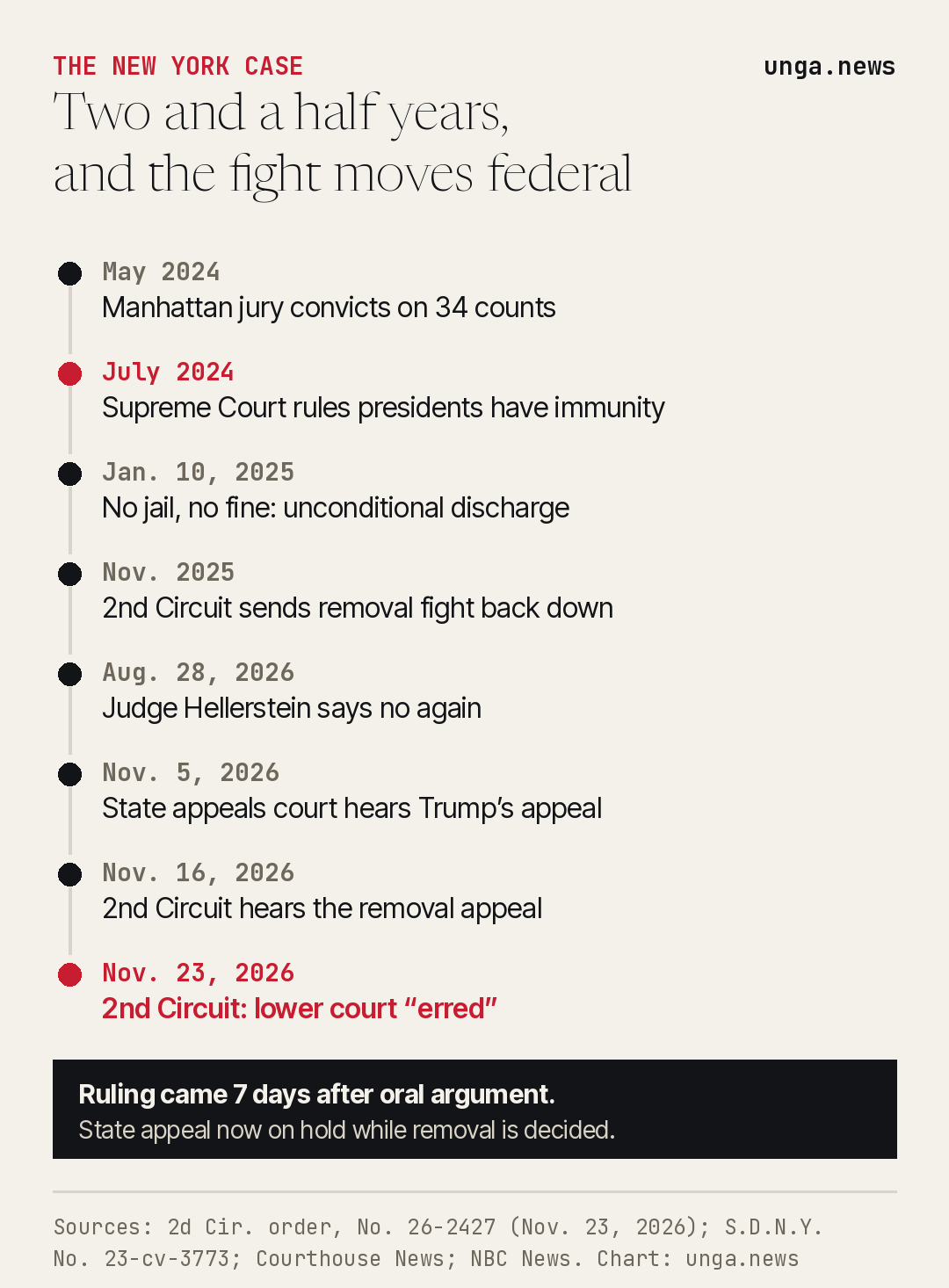
This is the second time the 2nd Circuit has sent the removal question back. In November 2025, it told Hellerstein he had not properly weighed whether the trial used evidence of official acts. He looked again and said no again in August. This time the panel ordered the lower court to grant the filing outright, and the judge won’t be Hellerstein. Hellerstein, a Bill Clinton appointee who had rejected Trump’s earlier tries by writing that a hush money payment “is not related to a President’s official acts,” died last month at 92. The case hasn’t been reassigned yet.
Meanwhile, Trump’s regular state appeal has been sitting with New York’s Appellate Division, First Department, which heard arguments Nov. 5 and has not ruled. If the state courts honor the federal request, that appeal now waits.
What Bragg’s side is up against
None of this erases the conviction yet. A new federal judge still has to decide whether the case can be moved, and New York can fight that and appeal again. If removal is granted, the conviction would land in federal court for the first time, where the immunity question would get a hearing that New York’s judges have so far refused to give it.
For Bragg, who spent years building a felony case out of record-keeping entries, that is a real problem. For everyone else, it is a reminder that the Supreme Court drew a line in 2024 around what a president’s official acts can be used for, and Manhattan tried a former president without waiting to see where that line would fall. Three federal judges just said Trump deserves a real chance to make that case.
Sources
- U.S. Court of Appeals for the Second Circuit — People of the State of New York v. Trump, No. 26-2427, order (Nov. 23, 2026)
- NBC News — Appeals court gives Trump another chance to move his hush money conviction case to a federal venue (Nov. 23, 2026)
- Courthouse News Service — Trump back at Second Circuit to dump hush money verdict (Nov. 16, 2026)
- Courthouse News Service — NY appellate judges question Trump’s latest bid to toss hush money conviction (Nov. 2026)
- Associated Press — Trump’s hush money appeal gets new life in federal court (Nov. 23, 2026)
- New York Law Journal — Second Circuit Says Hellerstein Erred in Trump Criminal Case Removal Fight (Nov. 23, 2026)