

Candy-Flavored Pot Is Weeks From Leaving Gas Stations, and 14 Republican Senators Want No More Delays
A federal ban on THC gummies and candy sold at gas stations kicks in Dec. 11. Sen. Ted Budd and 13 GOP colleagues are telling Washington to keep its promise and let it happen.
Walk into almost any gas station in America and you can find it by the register: gummies, chocolate bars and chips packed with THC, the stuff that gets you high, sold in bags made to look like Skittles, Oreos and Cheetos. In 16 days, a federal law is set to wipe most of it off the shelves. Fourteen Republican senators want to make sure nobody in Washington blinks.
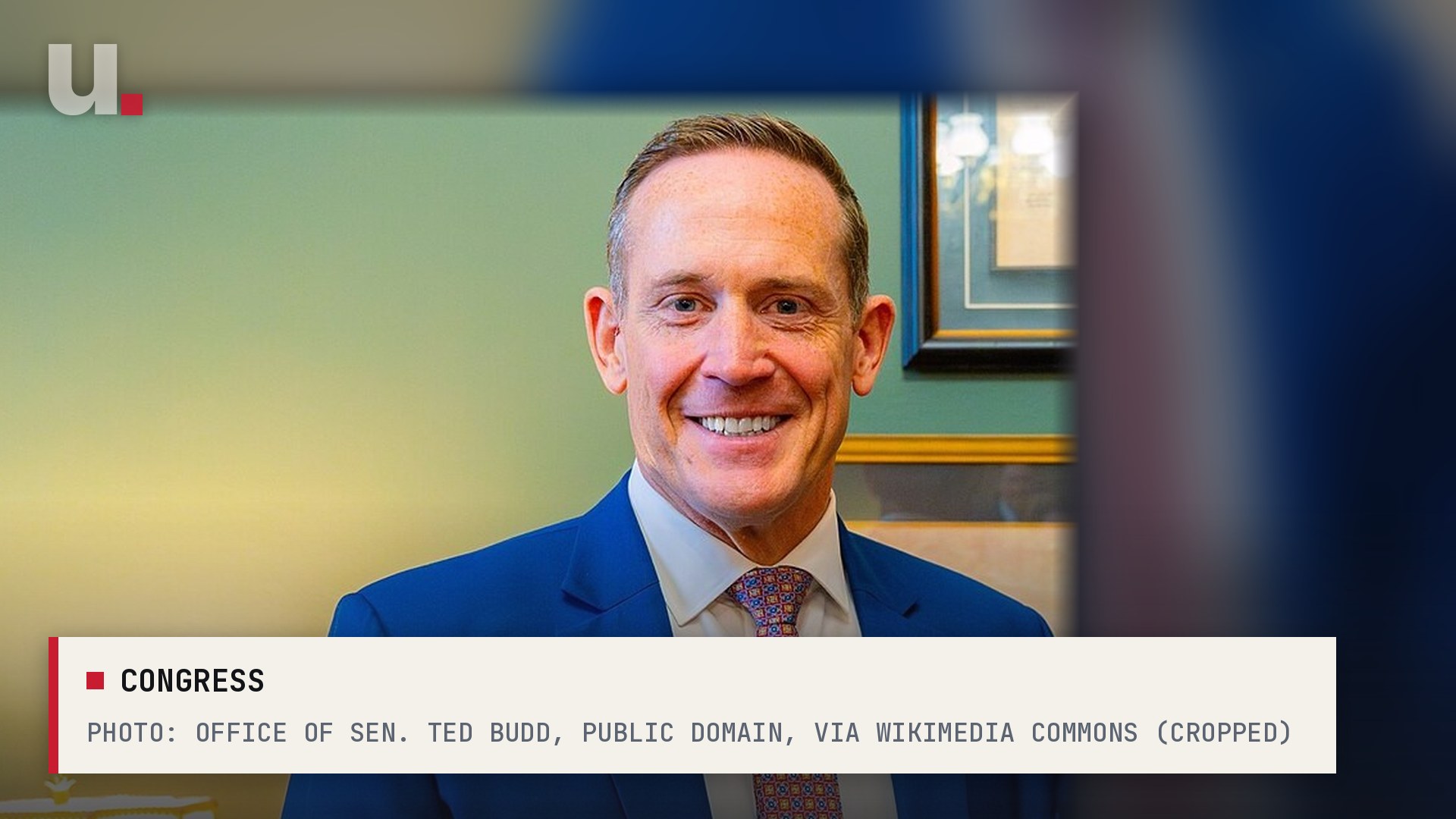
Sen. Ted Budd of North Carolina led a letter to President Trump, dated Nov. 20 and released by his office Monday, asking him to hold the line and let the ban take effect on Dec. 11 as written. No extension, no last-minute rewrite, no “framework” that keeps the products on sale.
“The choice is simple: stand with American families who don’t want candy-flavored drugs sold in gas stations or with the cartel who profits from addiction and devastation,” the senators wrote. “On December 11, this dangerous experiment must end.”
Senator Ted Budd on 𝕏 — “Congress voted to close the hemp loophole to keep unregulated, dangerous intoxicants from feeding addiction…” (Nov. 24, 2026)
— @SenTedBuddNC View on 𝕏
The signers: Budd, Pete Ricketts of Nebraska, Tom Cotton of Arkansas, Kevin Cramer of North Dakota, Marsha Blackburn of Tennessee, James Lankford of Oklahoma, Joni Ernst of Iowa, John Cornyn of Texas, Mike Rounds of South Dakota, Mitch McConnell of Kentucky, Rick Scott of Florida, Chuck Grassley of Iowa, Jim Banks of Indiana and Cynthia Lummis of Wyoming.
A farm law that turned into a drug store
The fight goes back to the 2018 Farm Bill. Congress legalized hemp so farmers could grow it for rope, fiber, grain and seed. Hemp and marijuana are the same plant, and the law drew the line at how much THC the plant itself held. Sellers found the gap fast. They pulled compounds out of legal hemp, cooked them into intoxicating versions like delta-8 and delta-9 THC, and sold the result anywhere that would stock it, with little federal regulation.
Last November, Congress closed that gap. When Trump signed the bill that ended the 43-day government shutdown, it carried Section 781, which rewrote the federal definition of hemp. Under the new rule, a legal hemp product can hold no more than 0.4 milligrams of total THC per container, The Hill reported. That is a tiny fraction of what most gas-station gummies carry, which is the point.
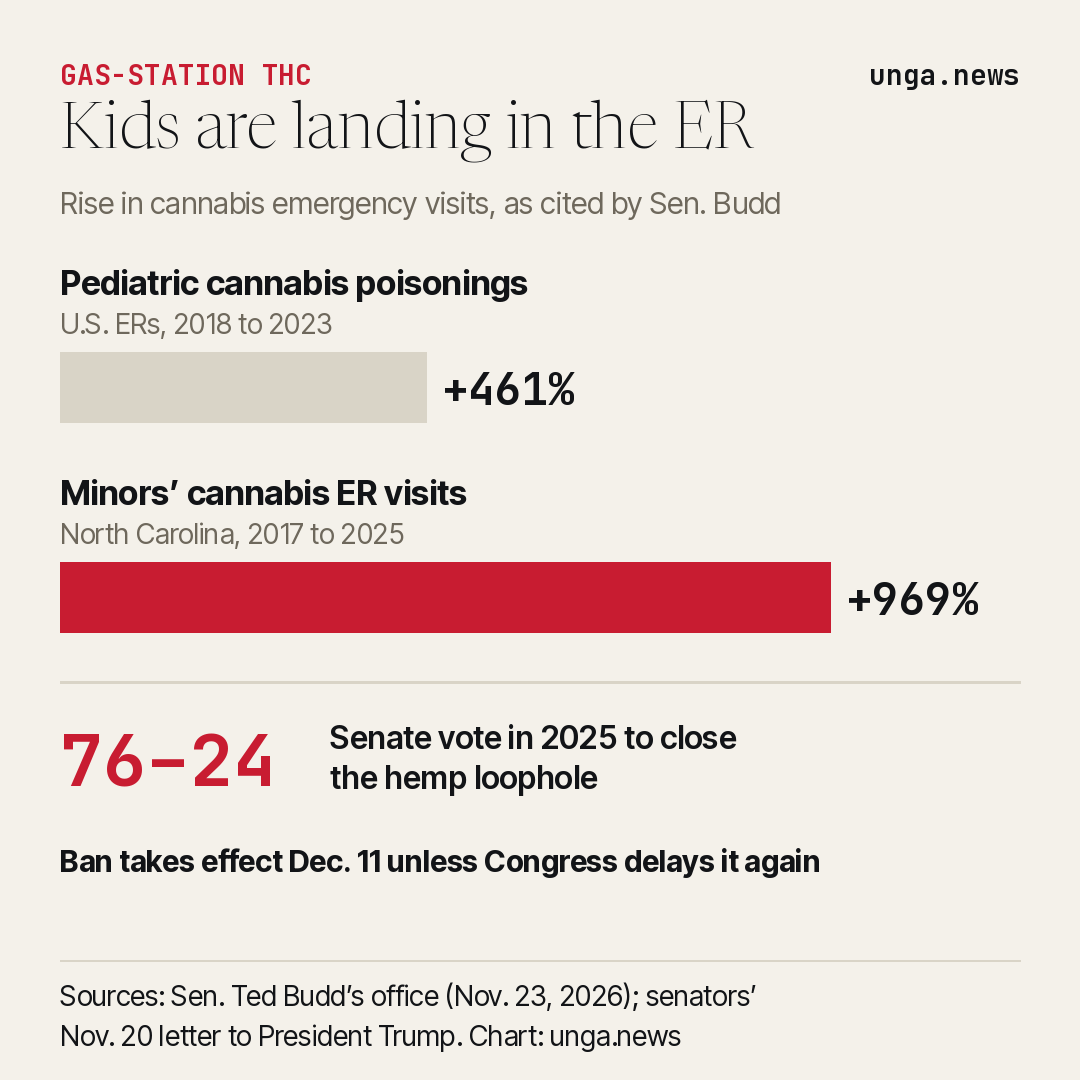
The senators’ letter says the Senate backed closing the loophole 76 to 24 in 2025, a lopsided bipartisan vote. The ban was supposed to bite on Nov. 12 of this year. Instead the industry won a one-month reprieve in the September stopgap funding bill, pushing the date to Dec. 11, the same day government funding runs out again.
That timing is the whole ballgame. Whatever bill Congress passes to keep the government open past Dec. 11 is also the easiest place to slip in another delay.
Cotton’s warning shot
On Monday, the White House sent Congress its list of requests for the next short-term funding bill, which would run through March 31. It includes a new class of battleships and $5 billion for the Golden Dome missile shield, according to The Hill. One item covered hemp. The administration asked for language to “allow Americans to benefit from access to nonintoxicating full-spectrum CBD products” while restricting products “that pose serious health risks.”
Plenty of Americans use CBD oils and lotions that don’t get anyone high, and the administration’s stated aim is to protect them while keeping the dangerous stuff away from kids. The senators’ worry is that any carve-out written in a hurry turns into a door the THC sellers walk right through.
Cotton, the No. 3 Republican in the Senate, told The Hill that any further delay tucked into a stopgap could “threaten the entire bill.” Coming from a member of leadership, that’s a vote count, not a talking point.
Tom Cotton on 𝕏 — “American families don’t want candy-flavored weed sold in their gas stations…” (Nov. 24, 2026)
— @SenTomCotton View on 𝕏
Ricketts piled on Tuesday, pointing to a New York Times investigation of gas-station drugs that he said found “a pattern of deception, efforts to fool law enforcement, and dangerous unlabeled substances.” He wants kratom banned along with manufactured THC. Budd went further, saying many products sold as hemp are “actually just black market marijuana sold by criminal enterprises.”
The kids in the emergency room
Budd’s office backed the push with numbers. From 2018 to 2023, his office said, U.S. emergency departments saw pediatric cannabis poisonings climb 461%. Nine in 10 of those patients were 4 years old or younger, and 45% of the children 11 and under were admitted to the hospital. In North Carolina, cannabis-related emergency visits among minors jumped 969% from 2017 to 2025.
A 4-year-old does not go looking for a high. A 4-year-old finds a bag that looks like candy on the kitchen counter. The letter calls the packaging “deliberately designed to appeal to children,” and anybody who has seen a THC bag dressed up as a bag of Cheetos knows they have a point.
The senators also took care to say who is not a target. “Non-intoxicating hemp farming, fiber, grain, and seed remain fully protected under Section 781,” they wrote. “American farmers growing real industrial hemp are not at risk.”
A Republican bill pulling the other way
Not every Republican is on board. Sen. Tim Sheehy of Montana and Democratic Sen. Amy Klobuchar of Minnesota have introduced a bill to regulate intoxicating hemp under a federal framework instead of banning it,.
The 14 senators aren’t buying it. A framework, they wrote, would be “a permanent legal license for an industry that has spent years marketing drugs to kids,” and it would create a federally blessed THC market that states could not police on their own. Their alternative is simple: the law already passed, so enforce it.
They framed the fight as unfinished business for the president’s own health agenda. “Closing the hemp loophole once and for all, on December 11, 2026, is an immediate path to Make America Healthy Again,” the letter says. They also reminded the White House of its own promise from September. “Your Administration made clear at the time that there would be no further extensions,” they wrote. “We ask that you hold to that commitment.”
Senators come back from Thanksgiving on Monday with less than two weeks to pass a funding bill. If that bill says nothing about hemp, the ban takes effect on its own on Dec. 11. Budd, Cotton and a dozen colleagues are betting the cleanest win for parents is the one already on the books.
Sources
- Sen. Ted Budd — Budd Urges Trump to Close Dangerous Federal Hemp Loophole to Keep Intoxicating THC Products Out of the Hands of Children (press release, Nov. 23, 2026)
- U.S. Senate (via Agri-Pulse) — Letter from Sen. Budd and 13 senators to President Trump (Nov. 20, 2026)
- Senator Ted Budd on 𝕏 — “Congress voted to close the hemp loophole…” (Nov. 24, 2026)
- Tom Cotton on 𝕏 — “American families don’t want candy-flavored weed sold in their gas stations…” (Nov. 24, 2026)
- Senator Pete Ricketts on 𝕏 — “The NYT investigated unregulated gas station drugs…” (Nov. 24, 2026)
- The Hill — Sen. Tom Cotton warns White House against delaying ‘gas-station candy marijuana’ ban
- The Hill — 3 choke points threatening a shutdown deal (Nov. 25, 2026)
- The Hill — Senate Republicans urge Trump to not delay intoxicating hemp ban