

China Put 30,000 Workers on Old Potato Farms to Build SI Centers at a Fifth of America’s Cost
A data center boom in Inner Mongolia is moving at a speed America rarely matches. Cheap wind power, cold air, huge crews and no local opposition are doing the work. America still has the better chips.
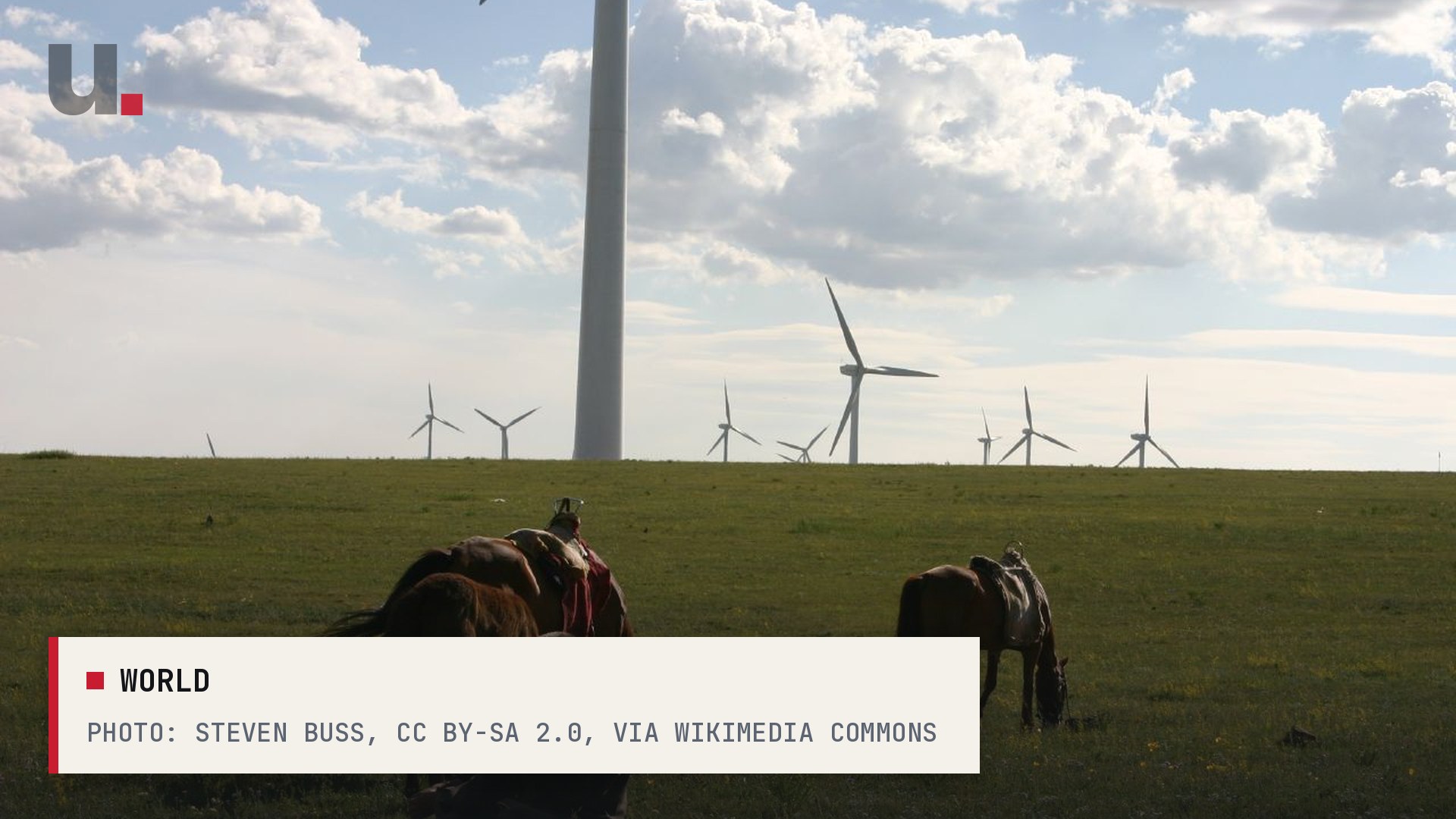
Ulanqab used to be known for potatoes. Now there are nearly 30,000 construction workers in one zone of the city, putting up 22 data centers at once, and China’s top SI companies are lining up to fill them.
CBS News drove through the site this week and published what it saw on Thursday. Multistory data centers rise on both sides of brand-new roads. Power lines march across the plateau toward wind turbines on the snowy ridgeline. The network calls it “the biggest, and fastest growing infrastructure project anywhere in China right now,” and says the construction site is “the size of a small American city.”
That is the part of the SI race most Americans never see. Everyone argues about chatbots and chips. The fight underneath is about who can pour concrete, string power lines and switch on the servers first.
A year from bare dirt to a running campus
The most detailed look inside comes from SemiAnalysis, the chip and data center research firm, which toured the area in September and published its report on Nov. 7. Its main stop was Galaxy, a campus owned by the wind power company Envision and planned for up to 800 megawatts of computing load. That is about the size of the core Stargate campus in Abilene, Texas, the project OpenAI and its partners announced at the White House with President Trump in January 2025.
SemiAnalysis on 𝕏, Nov. 10, 2026: “We visited Galaxy, Envision’s 800MW wind-powered datacenter campus in Ulanqab, Inner Mongolia. Its first 120MW phase went from bare land to delivery within a year.”
— @SemiAnalysis_ View on 𝕏
The first 120 megawatts went from bare land to finished within a year, the firm says, and it puts the building cost under $3 million per megawatt. By its reckoning, that is about one-fifth of what a comparable site costs here. Experts cited by the Financial Times have put Chinese data centers at roughly the same fraction of American prices, mostly because land and labor cost so much less.
Envision does nearly everything itself. It builds the wind farms, runs a dedicated power line to the campus, makes the batteries that smooth out the load and helped design the substation. Its turbine blade factory sits across the road. SemiAnalysis says the company’s data center plans in Inner Mongolia add up to 3 gigawatts, with Galaxy as the first piece, and that 25 gigawatts of data center projects have been announced across the region.
Two engineering details stand out. In one hall, special transformers take high-voltage power from the grid and turn it straight into the 800-volt direct current the server racks use, skipping several steps. SemiAnalysis notes that American builders still have that design on the to-do list. Galaxy also runs without a big central chiller plant, leaning on the region’s cold air instead.
Cheap power, cold air and a lot of hands
The labor numbers are what got people talking. “At peak, a 100MW site in China has 3,000–4,000 workers on site, 3–5x a typical US site,” SemiAnalysis wrote. The 30,000 figure comes from a local official. Liu Junping, a deputy director of the zone’s administrative committee, told China Daily in October that 22 computing projects in the high-tech zone alone involve “nearly 30,000 construction workers.”
SemiAnalysis on 𝕏, Nov. 10, 2026: “At peak, a 100MW site in China has 3,000–4,000 workers on site, 3–5x a typical US site. Local reports put nearly 30,000 workers across 22 datacenter projects in the zone around Galaxy.”
— @SemiAnalysis_ View on 𝕏
The rest of the formula is weather and electricity. Ulanqab sits about two hours by high-speed train from Beijing. It is windy and cold most of the year, which cuts cooling costs. A staffer at the cloud company UCloud told China’s state-run Global Times that power there costs about 0.32 yuan per kilowatt-hour, a little under 5 cents, with green power making up about 80% of that center’s supply. CBS notes that fossil fuels are still the region’s main source, with wind and solar added on top.
Local officials claim big totals. Per that same state-run outlet, 109 computing projects have been signed in the zone, with more than 700 billion yuan in planned investment and 460,000 server racks already running. Those are government figures, and nobody outside has checked them. The parts reporters and analysts saw with their own eyes are still massive.
CBS says Huawei, Alibaba, ByteDance, DeepSeek, Baidu and other Chinese SI names are active in Inner Mongolia, and that finished sections of the zone have avenues named after the tech giants.
Nobody in Ulanqab gets to say no
The workers and cheap power explain the speed. The politics explain the rest. “There is no opposition to data centers in China. It’s never heard of,” Henry Wang, founder of the Beijing think tank Center for China and Globalization, told CBS. A 72-year-old farmer told the network the buildout “doesn’t affect my farmland, not at all.”
Take that with a grain of salt. China does not tolerate protests, and the government controls the media. A farmer speaking to a foreign camera crew in Inner Mongolia is not exactly free to complain. Getting things built fast is easy when no town hall, lawsuit or zoning board can stop you.
Here, a data center has to get past all of those. SemiAnalysis calls Inner Mongolia the “West Texas” of China, and notes that Texas faces its strongest anti-data-center mood ever while Inner Mongolia faces none. Neighbors here worry about power bills and water, and those are fair worries. The Trump administration’s answer has been to make the big tech companies pay for their own power instead of passing it on to families, a plan that cleared a big Senate vote this week.
America still has the better chips, for now
China is not ahead on everything. CBS says Chinese SI models are believed to be about six months behind American ones, largely because Washington blocks the sale of top chips. Even that wall has holes. Earlier today we reported on new evidence that four leading Chinese labs trained recent models on Nvidia chips America banned from export.
Wang told CBS he thinks power, not chips, will decide the race. China has more than double America’s power generation capacity, he noted. “Whoever goes through that first gets the advantage. And right now, China has the edge,” he said.
American builders have shown they can move fast too. Elon Musk’s xAI stood up its Colossus supercomputer in Memphis in 122 days in 2024. Abilene went from groundbreaking in mid-2024 to running for OpenAI. The difference is that those are the exceptions here. In Ulanqab, that speed is just the plan for 22 projects at a time.
Galaxy’s whole campus is due by the end of 2027. If China really does build at a fifth of the price, the question for Washington is simple: how many more Abilenes can America build before Ulanqab fills up?
Sources
- CBS News — While many Americans resist, China embraces AI data center boom, Anna Coren (Nov. 12, 2026)
- SemiAnalysis — We Visited China’s Stargate in Inner Mongolia, Tan, Eliahou Ontiveros, Laoban and Patel (Nov. 7, 2026)
- SemiAnalysis on 𝕏 — Galaxy’s first 120MW phase went from bare land to delivery within a year (Nov. 10, 2026)
- SemiAnalysis on 𝕏 — 3,000–4,000 workers at a 100MW site; nearly 30,000 across 22 projects (Nov. 10, 2026)
- SemiAnalysis on 𝕏 — 25GW of datacenter projects announced in Inner Mongolia (Nov. 10, 2026)
- China Daily — Inside China’s “unlikely” AI computing hub (Oct. 20, 2026)
- Global Times (Chinese state media) — Once known for grasslands and volcanoes, Ulanqab is emerging as a computing hub (Oct. 2026)
- unga.news — Trump’s Plan to Make Data Centers Pay Their Own Power Bills Clears a Big Senate Vote, 73–25
- unga.news — China’s Top SI Labs Used Nvidia Chips America Banned, a Researcher Says.