

DoorDash Wants to Buy Instacart for $17 Billion. The Justice Department Wants a Look First.
Together the two apps took about three of every four dollars Americans spent on delivery last quarter, and Trump’s Justice Department says affordability comes first.
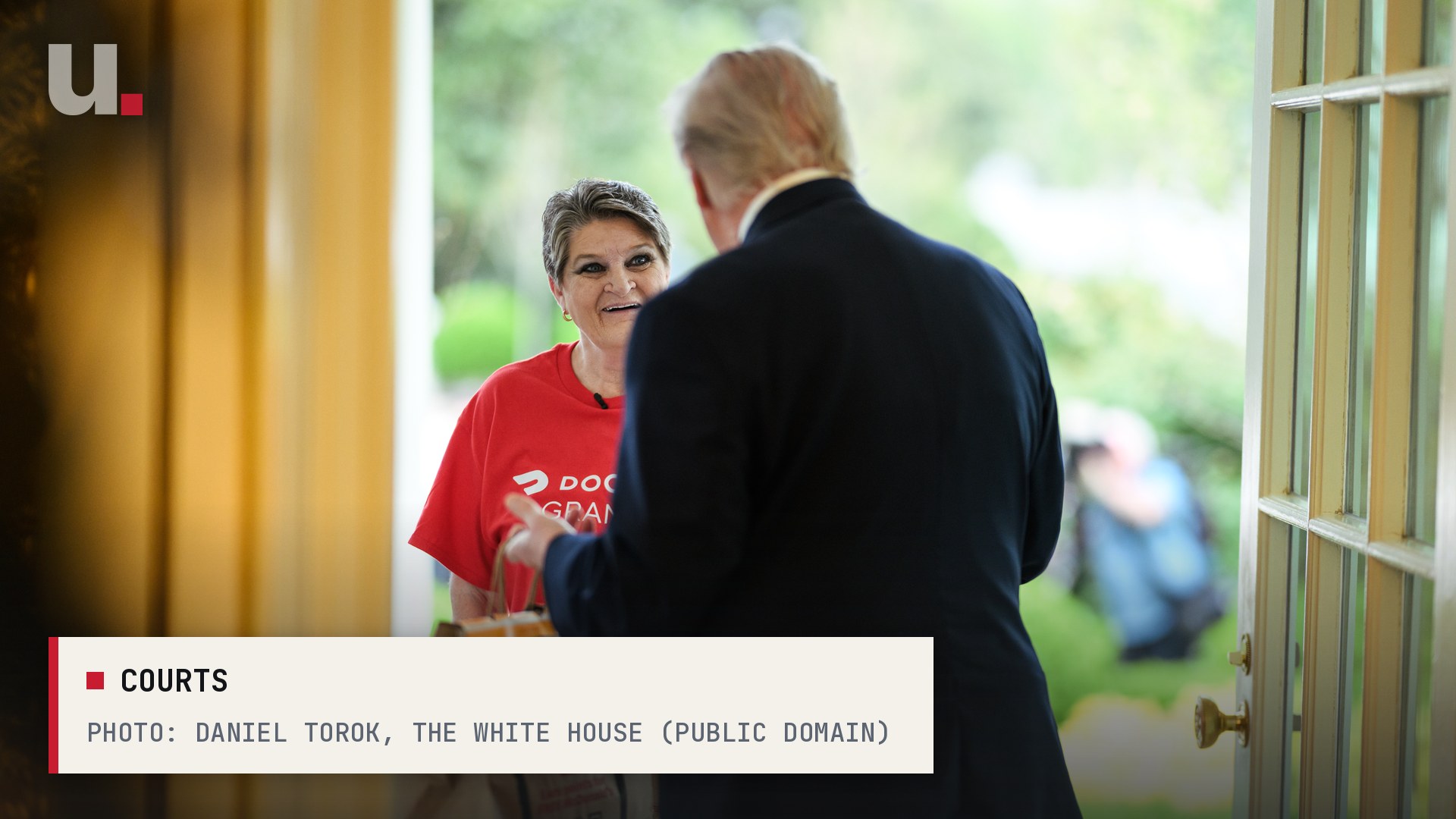
The Justice Department is going to take a hard look at DoorDash’s plan to buy Instacart, the roughly $17 billion deal that would put two of the biggest names in app delivery under one roof, two people familiar with the matter told Reuters on Monday.
The department wouldn’t talk about the deal itself. But its spokesperson made the priority plain: “We can affirm that the Department under President (Donald) Trump’s leadership will continue to prioritize affordability and competition for Americans across our economy.”
For anyone who orders dinner on one app and the weekly groceries on the other, that sentence is the whole story. This is about what you pay for delivery, what the stores you shop at pay to be on those apps, and what the people driving the orders around get paid.
One company, three of every four dollars
DoorDash announced the deal on October 29. It agreed to pay $65 for every Instacart share, a 26% premium over where Instacart’s stock closed on October 22, the last trading day before word of the talks leaked. At least 75% of the price will be paid in cash, with the rest in DoorDash stock, and JPMorgan Chase has lined up a bridge loan to help cover the cash, according to the companies’ announcement.
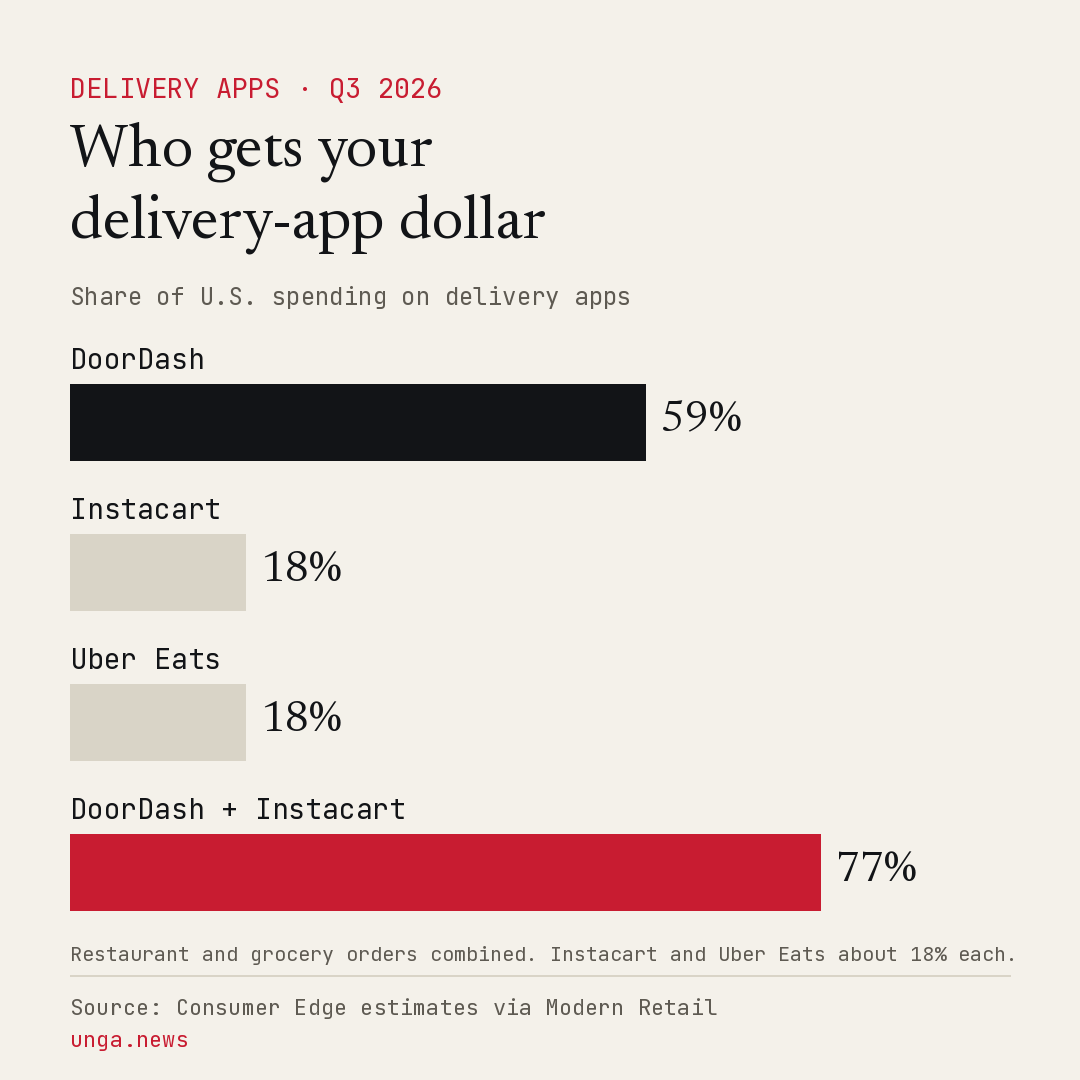
Put the two together and you get a giant. DoorDash took about 59% of all U.S. spending on delivery apps in the third quarter, restaurant and grocery orders combined, according to estimates from the research firm Consumer Edge reported by Modern Retail. Instacart took about 18%. Combined, that’s 77%. Uber Eats, the next-biggest rival, sat at about 18% on its own.
Those numbers come with a caveat that DoorDash will lean on hard. They cover delivery apps only. Walmart, Amazon and grocers’ own websites sell plenty of groceries online too, and none of that is in the 77%. Most grocery shopping still happens in the store, as the companies themselves point out.
The trend lines also cut both ways. Instacart’s share of delivery-app spending has dropped from 26% to 18% over the past five years, by Consumer Edge’s count, while Uber Eats has held steady at just under 20%. DoorDash has been the one taking ground, and it said in February that it handled more grocery and retail orders in 2025 than any other food delivery app.
DoorDash’s pitch: help the corner store
DoorDash built its sales pitch around local businesses. The company argues that a grocer running on thin margins can’t build its own delivery fleet, warehouses, membership program and SI shopping tools the way the biggest retailers can, and that a combined DoorDash and Instacart could rent those tools to stores of every size.
“Grocery is one of the hardest things to get right online,” DoorDash CEO Tony Xu said when the deal was announced. “Someone has to pick a ripe avocado, find a substitute you’d choose yourself, and get the ice cream to you before it melts.” Instacart CEO Chris Rogers said the merger would “make online grocery more seamless and affordable for the millions of households we serve.”
The companies are also making promises for after the deal closes. Instacart customers would get access to more than 50,000 additional stores on top of the nearly 100,000 already on Instacart. People who pay for both DashPass and Instacart+ would pay one membership fee instead of two, which DoorDash estimates would save them about $100 million a year. DoorDash says grocers would stay free to work with any delivery app they want, with no exclusive deals, and Instacart’s shoppers could keep choosing how much they work and which batches to take, and decide whether to take DoorDash orders at all. The Instacart brand and app would stay.
Modern Retail and analysts it spoke with see a bigger rival in the background: Amazon. This year Amazon launched one-hour delivery in hundreds of cities in March, then Amazon Now in May, which promises groceries and household basics in 30 minutes or less in dozens of big cities. Uber is chasing its own scale overseas with a $15 billion bid for Germany’s Delivery Hero, announced in July.
What the review can do
Every big merger in America has to clear either the Justice Department or the Federal Trade Commission, and the vast majority go through without changes. When regulators do see a problem, they can negotiate a fix, like forcing a company to sell off part of the business, or go to court to block the deal outright. States such as New York and California can bring their own challenges too.
DoorDash has put real money on the line. If the deal fails to win antitrust approval, it owes Instacart a $1.25 billion breakup fee, according to Reuters. The companies don’t expect to close until the end of 2027 or the first half of 2028, pending an Instacart shareholder vote, the federal waiting period and approvals in Canada and Israel. Shareholders holding about 19% of Instacart’s stock have already agreed to vote yes.
Instacart isn’t standing still in the meantime. Last year it announced a partnership to deliver groceries with Grubhub, the food delivery app owned by the privately held Wonder Group. Until closing, DoorDash and Instacart say they will keep operating as separate, independent companies.
A review is not a verdict, and neither company has been accused of anything. But with one company set to control three of every four delivery-app dollars, the department’s “affordability and competition” test is exactly the one millions of families care about. The bill for a bag of groceries left on the porch already comes with delivery fees and tips. Washington is now asking whether that bill goes up once the two biggest apps are one.
Sources
- Reuters via Investing.com — Exclusive-DOJ to review DoorDash-Instacart merger, sources say
- Instacart Newsroom — DoorDash to Acquire Instacart to Help Local Stores Win
- Modern Retail — What DoorDash’s proposed acquisition of Instacart means for Uber, Amazon and the rest of the quick commerce space