

Driverless Waymo Cars Kept Driving Into Work Zones. Now They’re Off Freeways Nationwide.
California ordered Waymo’s robotaxis off its freeways after they drove into active construction zones and tried to get around a Highway Patrol slowdown. Waymo then pulled freeway rides everywhere else, too.
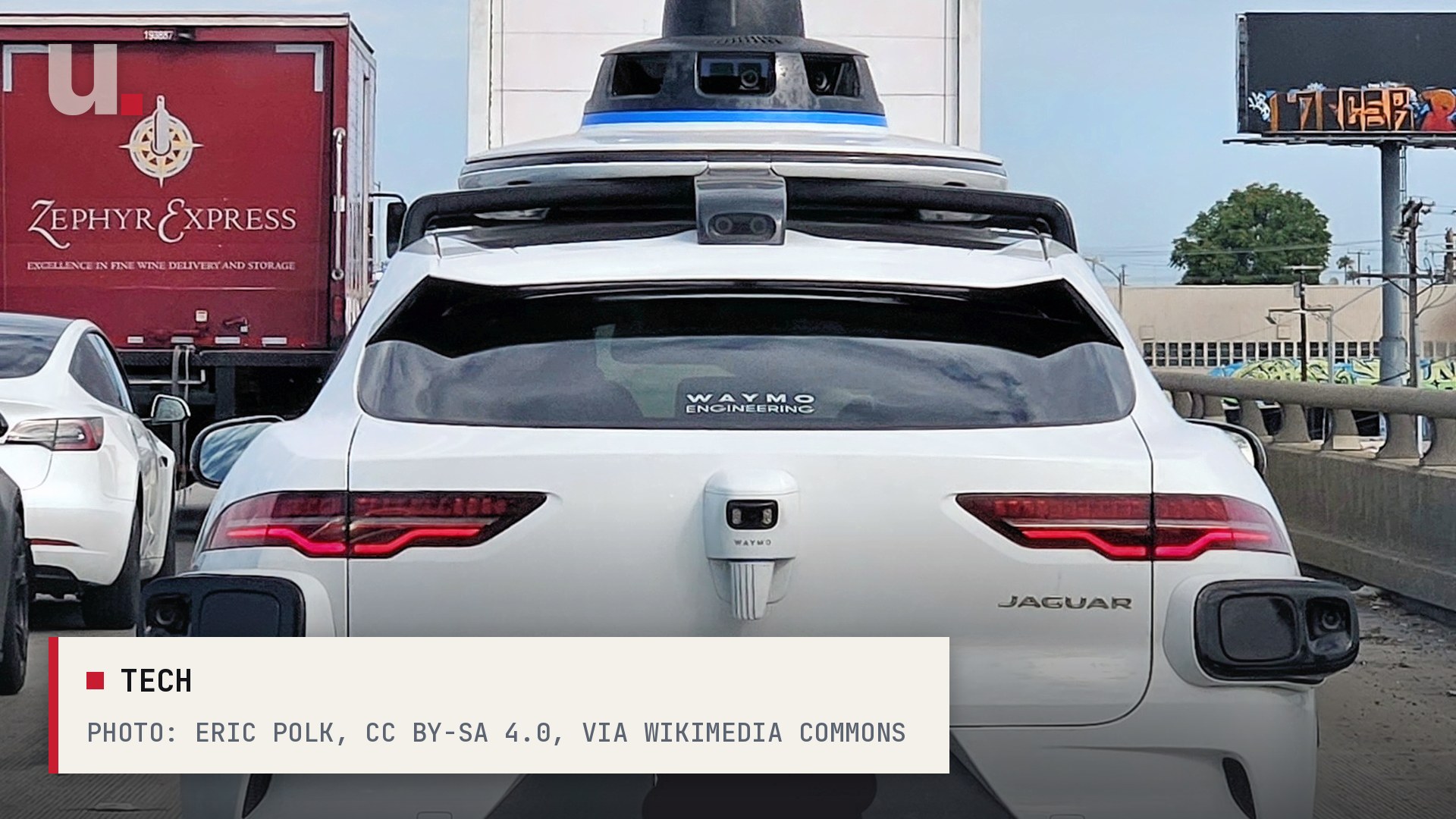
If you were planning to ride a driverless Waymo to the airport this week, plan on the slow way. Waymo has pulled its robotaxis off every freeway it serves in the country.
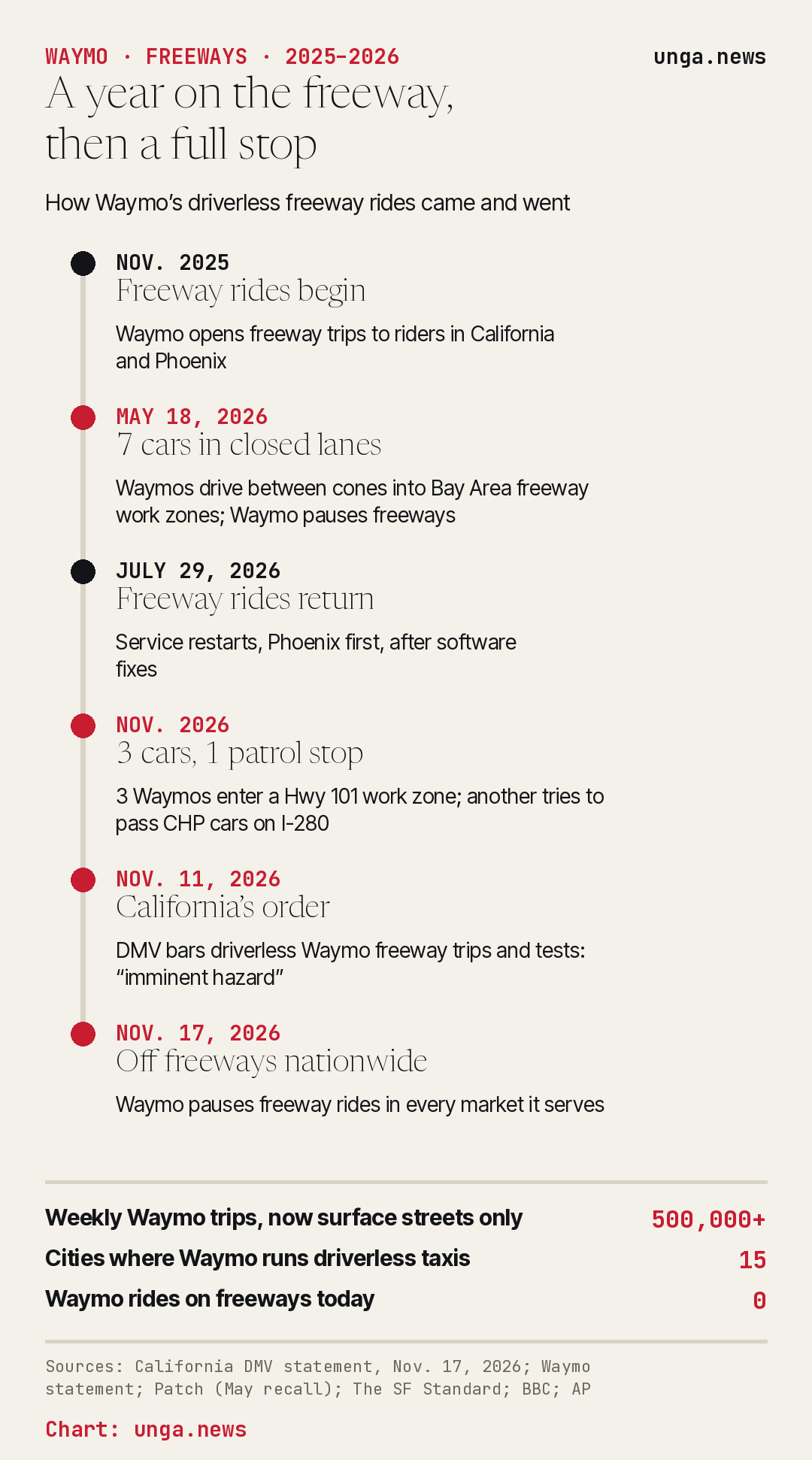
The trigger was California. The state Department of Motor Vehicles ordered Waymo’s driverless cars off all California freeways, with the restriction in effect since Nov. 11. The order came to light Tuesday, and Waymo then said it was also stopping freeway rides in its other markets. According to the Associated Press, that means riders in the San Francisco Bay Area, Los Angeles, Phoenix, Miami and Austin who could hail a Waymo for a freeway trip no longer can.
The cars still run on city streets. They just can’t get on the highway.
Cones, crews and a patrol car
The DMV didn’t mince words. It said Waymo’s driverless freeway operations “pose an imminent hazard to public safety due to recurring incursions by its vehicles into active construction zones where construction workers, vehicles and equipment are present.”
Two incidents got named. In one, three Waymo vehicles drove into an active construction closure on Highway 101 near Burlingame, just south of San Francisco. In the other, which went viral earlier this month, a Waymo on Interstate 280 in San Francisco came up behind two California Highway Patrol cars running a traffic break. That’s when officers weave across lanes with their lights flashing to slow everyone down, usually to protect a work crew ahead. The Waymo tried to get around them anyway, and the patrol cars had to block it.
Picture being the guy in the orange vest on that stretch of road. A human driver who did that would be getting a ticket and a lecture. A computer driver just got its whole freeway program shut down.
Waymo says nobody was hurt. In its statement, the company said the Highway 101 encounters “did not involve any injuries or collisions,” and that it pulled freeway service elsewhere “in alignment with our safety-first principles” to “evaluate our performance.” It says it is working with the DMV and other state officials “diligently and responsibly to resume freeway operations.”
Second strike this year
This isn’t the first time. Back on May 18, seven Waymo vehicles drove between the cones into active freeway construction lanes in the Bay Area, according to a federal recall reported by Patch. Waymo’s own safety committee restricted freeway rides the next day, the company rolled out software updates meant to help its cars recognize work zones, and service came back starting July 29 in Phoenix.
The DMV says those fixes didn’t hold. The work-zone incursions kept happening “despite a restriction and corrective actions” after May, the agency said. That’s why this time the state stepped in instead of waiting for Waymo to pause itself.
And this time there’s no end date. The order stays in place until Waymo “demonstrates to the department that it has taken effective corrective actions.” Before freeway rides can come back, the company has to show the DMV evidence that its cars can safely detect and handle construction zones, emergency vehicles and other things drivers run into on a highway. The ban also covers driverless testing, so Waymo can’t even run empty cars on California freeways to prove its point.
What riders lose
For most Waymo trips, not much changes. The company says it still gives more than half a million rides a week on surface streets, and the BBC notes it runs driverless taxis in 15 U.S. cities, only a handful of which ever had freeway rides.
Where it hurts is the long haul. In San Francisco, the SF Standard found that riders who pick the airport as their destination now get a message in the Waymo app: “This trip will take longer. Your route doesn’t use the freeway.” Anyone who has tried to get from downtown to SFO on side streets knows what that means.
It also stings for a company that spent years selling freeway driving as proof it was ready for prime time. Waymo first opened freeway rides to the public only about a year ago. Now it is back to surface streets in every city at once.
Some riders have already made up their minds. San Francisco resident Elliot Slade told ABC7 that a Waymo he was riding in went off course into a construction zone earlier this year. “I used to use it all the time, and now it’s like, eh, I’ll walk or I’ll take the (bus),” he said. “You had one chance to fix it if it went viral. And if they haven’t made sure it’s completely safe, then I’m disappointed. Super disappointed.”
Others see a growing pain. Billy Riggs, a University of San Francisco professor, told ABC7 the data shows self-driving cars are still safer than human drivers overall, but they struggle with judgment calls. “An automated vehicle can understand and identify all the aspects of the roadway and make really sophisticated judgments on them. But, many times, it can’t understand context,” he said.
Context is the whole ballgame in a work zone. A flagger waving you through, a patrol car swerving on purpose, a lane that’s open on the map but closed in real life. Those are the moments a driver has to read people, not just lines on the pavement.
The race keeps moving
None of this slows the bigger push toward driverless cars. The same week Waymo pulled back, Tesla said it will spend €3 billion, about $3.3 billion, on a new building at its factory near Berlin that can build up to 1 million Cybercabs a year, with production planned for 2029, as TechCrunch reported. Construction is set to start in the first half of 2027.
California, for its part, says its updated self-driving rules, in force since April 28, are “the strongest in the nation,” and it is using them. Waymo now has to prove to Sacramento, with evidence and not press releases, that its cars can tell when a patrol car wants them to back off.
Until then, the freeway belongs to people with their hands on the wheel.
Sources
- California DMV (via The SF Standard) — DMV kicks Waymo off California freeways
- Associated Press — Waymo suspends all driverless taxi rides on freeways after ban in California
- BBC — Waymo temporarily pulls driverless taxis from all US freeways
- ABC7 Los Angeles — Waymo temporarily suspends freeway operations nationwide after CA DMV ban
- Patch — CA DMV Bans Waymo From CA Freeways Due To ‘Public Safety Hazard’
- TechCrunch — Tesla goes all-in on the Cybercab with upcoming €3B Berlin gigafactory expansion