

Economy Grew 3.4% This Summer, Beating Forecasts. Business Equipment Spending Hit Its Fastest Pace Since 2020
The last GDP report before Tuesday's midterms shows private demand at its strongest since 2021, led by a surge in computer purchases. Inflation cooled for the quarter, but September prices were still up 3.6% from a year ago.
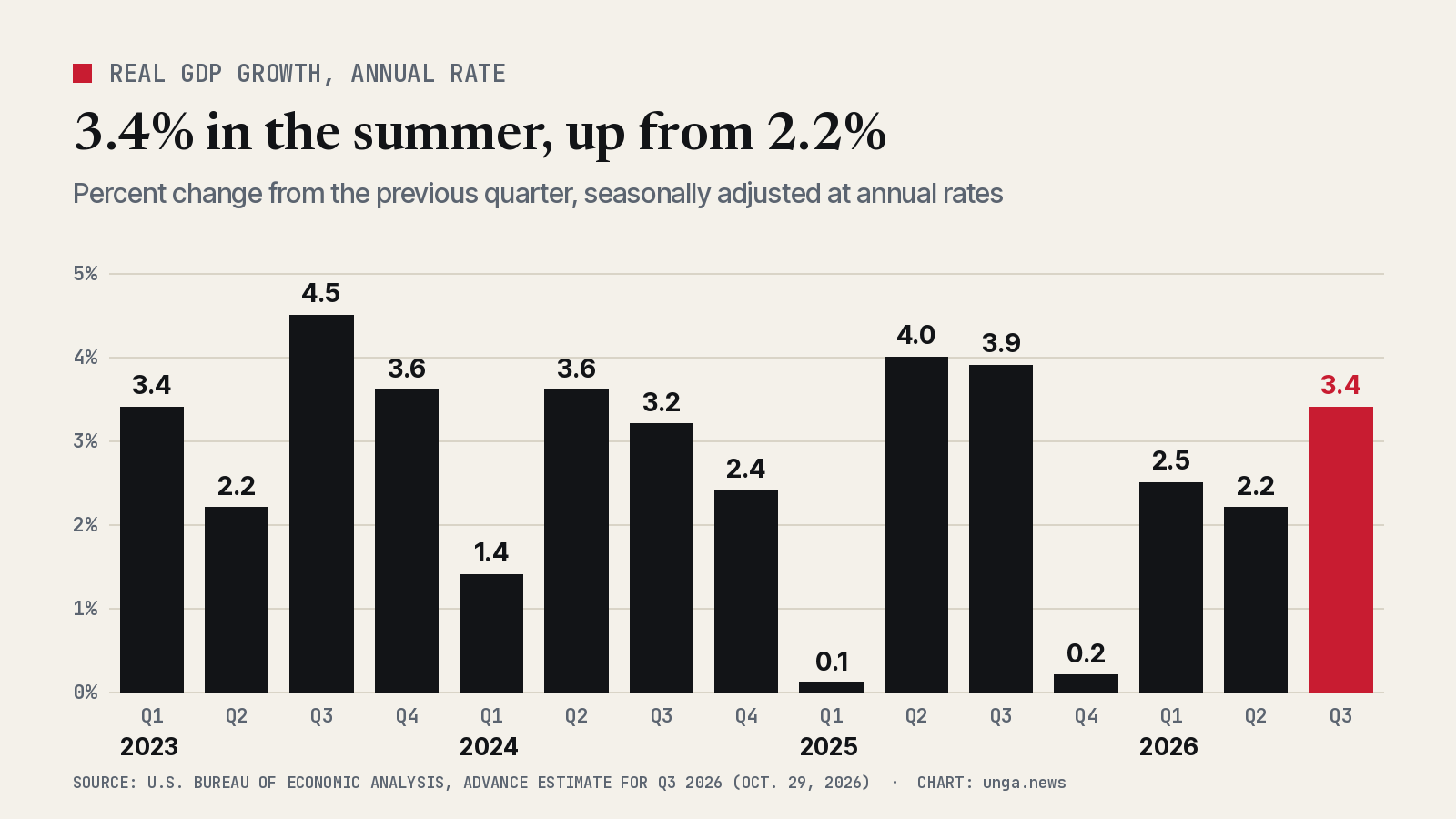
The U.S. economy grew at a 3.4% annual rate from July through September, the Commerce Department's Bureau of Economic Analysis said Thursday. That is up from 2.2% in the spring and above the 3.1% economists expected, Breitbart's John Carney reported.
It is the last GDP report voters will see before Tuesday's midterms, and the strongest part of it is the part that gets the least attention: businesses are buying machines at a pace the country hasn't seen in six years.
The machine-buying boom
Business spending on equipment grew at a 20.9% annual rate, the fastest since the third quarter of 2020, according to the BEA's own comparison table. The agency says the jump was led by information processing equipment, "mainly computers and peripheral equipment." Spending on software and research rose 8.4%, and total business investment outside housing rose 12.7%, also the fastest since 2020.
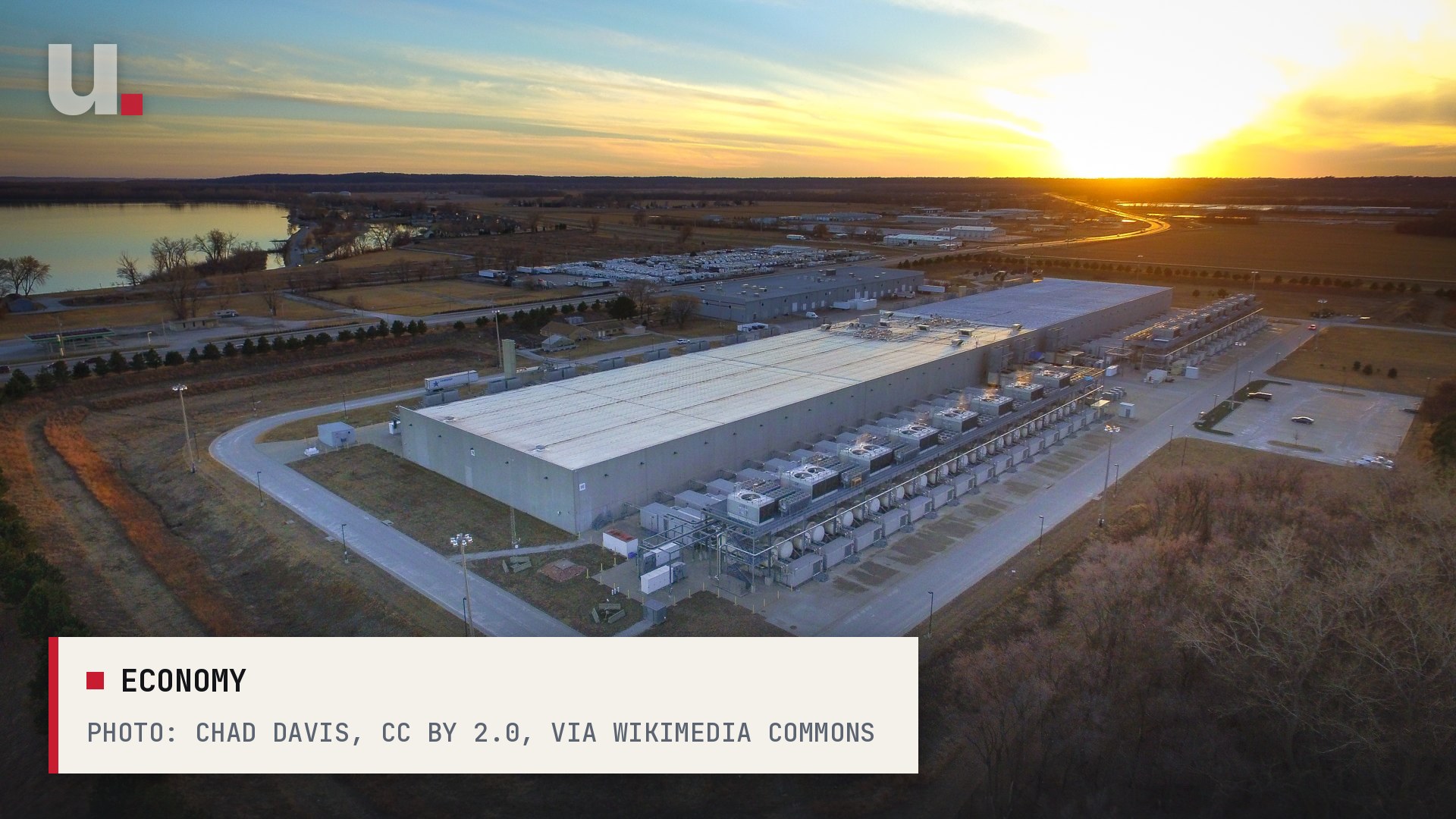
That is what the SI build-out looks like in the national numbers. Companies racing to fill data centers like the one in the photo above are buying servers by the warehouse load, and the government counts every one of them as investment.
Shoppers kept up too. Consumer spending grew 3.8%, the same as the spring, led by health care, restaurants and hotels, and prescription drugs. Put consumers and business investment together and you get what economists call final sales to private domestic purchasers, the cleanest read on American demand. It grew 4.9%, the fastest since the second quarter of 2021.
What the White House says
The White House called it a win for President Trump's investment push. "GDP growth crushes economists' expectations!" it posted. "President Trump has garnered more investment in our country than any President in history, and the results are showing."
The White House: "GDP growth crushes economists' expectations!"
— @WhiteHouse View on 𝕏
National Economic Council Director Kevin Hassett went further. "Real output numbers have been outperforming analysts' forecasts by a lot, and this is another example of that," he said. "We've got really huge 3% growth that's headed towards 4% growth."
Kevin Hassett on the GDP report
— @RapidResponse47 View on 𝕏
Read the fine print
Not every piece of the 3.4% is as solid as the equipment number. Here is where it came from.
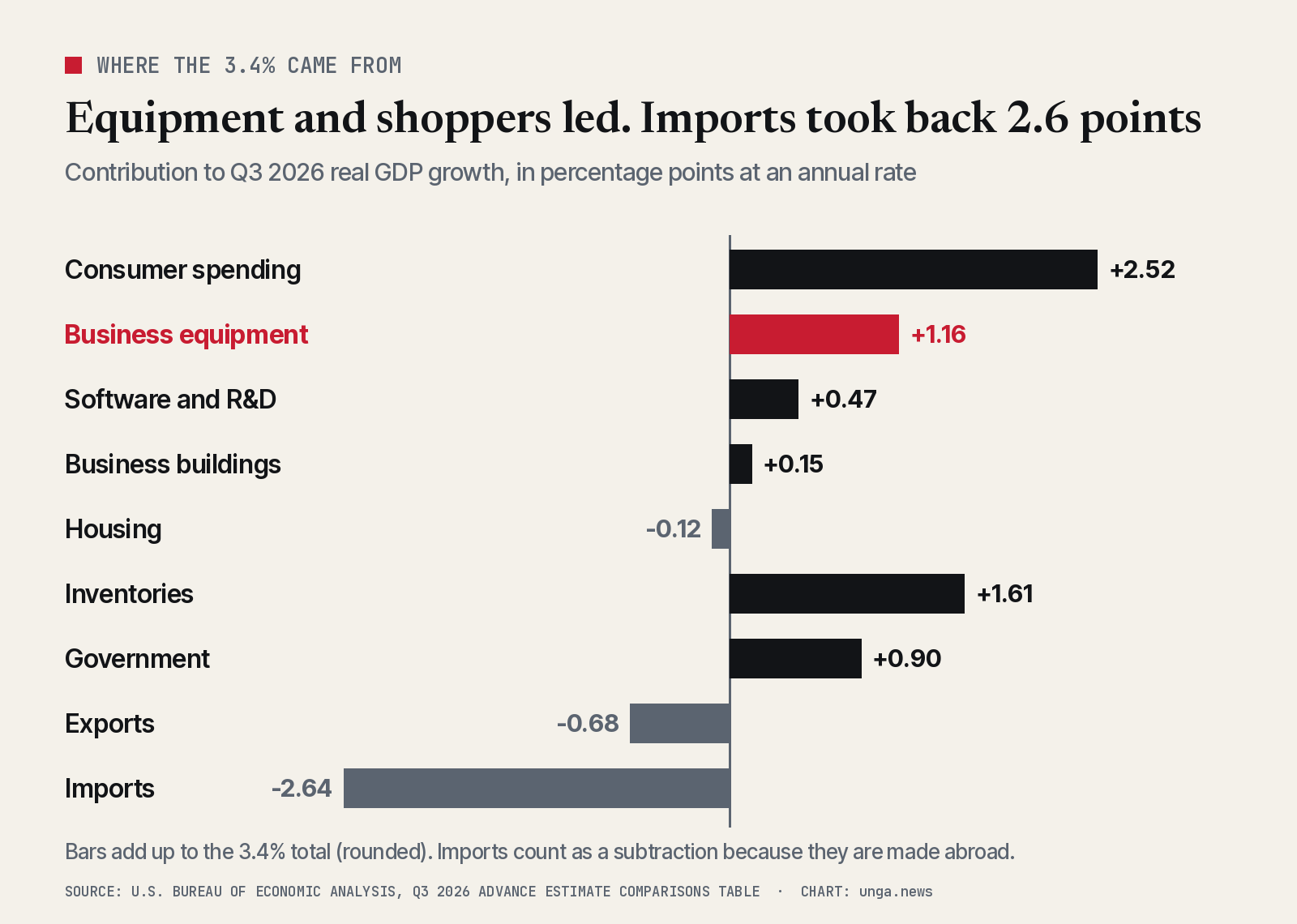
Inventories. Companies stocked their shelves and warehouses, which added 1.61 points. Strip that out and final sales grew 1.7%. Stockpiles can be a sign businesses expect strong sales, but they also have to be sold off later.
Imports. Imports rose 19.7%, led by capital goods, which subtracted 2.64 points. Much of that is the same story as the equipment boom: many of the computers going into American data centers are built overseas. Exports fell 5.7%, led by petroleum.
Government. Federal spending added 0.91 points, but the BEA says most of that is an accounting quirk. The government sold less oil out of the Strategic Petroleum Reserve than in the spring, and those sales count against government spending. The agency says that has "no direct effect on GDP" overall.
Housing. Home building fell at a 3.3% rate, the weakest spot in the report.
Prices: better for the quarter, not for September
The PCE price index, the inflation gauge the Federal Reserve watches most, rose at a 2.1% annual rate in the third quarter, down from 5.0% in the spring. Without food and energy it rose 2.5%, down from 3.3%.
The monthly numbers released the same morning are less friendly. In September alone, PCE prices rose 0.5%, and they were up 3.6% from a year earlier, 3.1% without food and energy, well above the Fed's 2% target. After inflation, take-home income fell 0.3% for the month, and Americans saved just 3.8% of what they earned.
What's next
Thursday's 3.4% is an advance estimate built on incomplete data. The BEA will revise it on Nov. 25, three weeks after the election. For now, the headline number gives Republicans a strong talking point, and the equipment boom gives it some muscle. The September price numbers are a reminder that voters feel the grocery bill before they see the GDP report.
Sources
- U.S. Bureau of Economic Analysis — GDP (Advance Estimate), 3rd Quarter 2026 (Oct. 29, 2026), full release
- U.S. Bureau of Economic Analysis — 2026Q3 advance estimate comparisons: percent changes and contributions to real GDP (Oct. 29, 2026)
- U.S. Bureau of Economic Analysis — Personal Income and Outlays, September 2026 (Oct. 29, 2026)
- The White House (X) — "GDP growth crushes economists' expectations!" (Oct. 29, 2026)
- The White House (Rapid Response 47) — NEC Director Kevin Hassett on the GDP report (Oct. 29, 2026)
- Breitbart (John Carney) — U.S GDP Growth Accelerated to 3.4% in Third Quarter (Oct. 29, 2026)
- ZeroHedge — Fed's Favorite Inflation Indicator Surges In September (Oct. 29, 2026)