

European Parliament Money Helped Fund a Closed-Door Meeting on Resisting Trump Before the Midterms
The organizers' own agenda says "closed door roundtable" and "financial support of the European Parliament." The keynote speaker had written that Democratic wins could make Trump "a much weaker president."
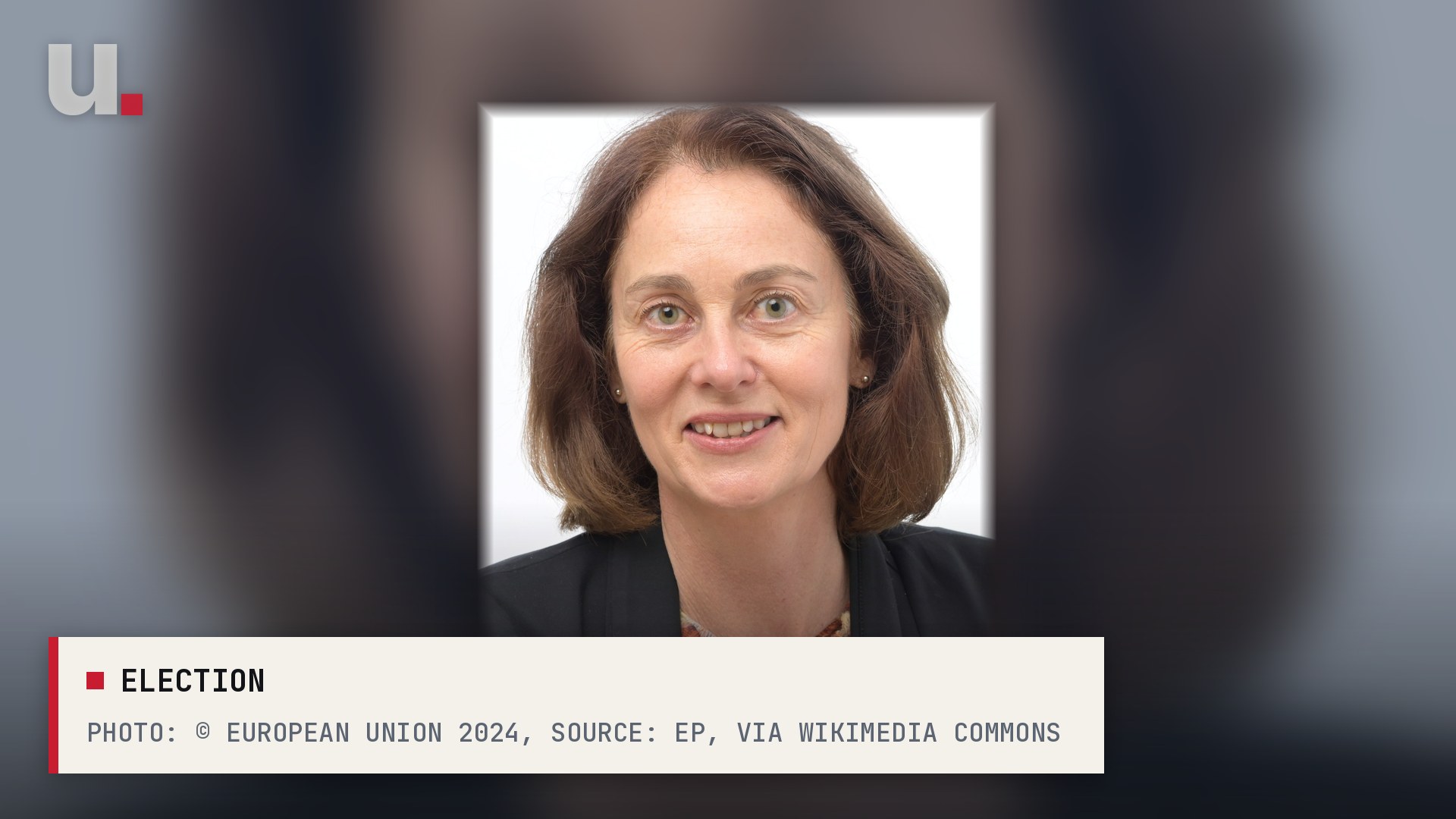
Five months before America's midterms, European Parliament money helped pay for a private meeting inside the Parliament on how the left is resisting President Trump, and what Europe's socialists can learn from it.
That isn't our reading. It's the organizers' own paperwork. The event agenda is stamped "CLOSED DOOR ROUNDTABLE" and says the session was held "by invitation only." Its last page reads: "This event is produced with the financial support of the European Parliament."
The meeting ran from 10 a.m. to noon on June 3 in Brussels. Katarina Barley, a German Social Democrat and one of the Parliament's vice-presidents, convened it. The Foundation for European Progressive Studies (FEPS), the think tank of the Party of European Socialists, ran it with Germany's Friedrich-Ebert-Stiftung, the foundation of Barley's party.
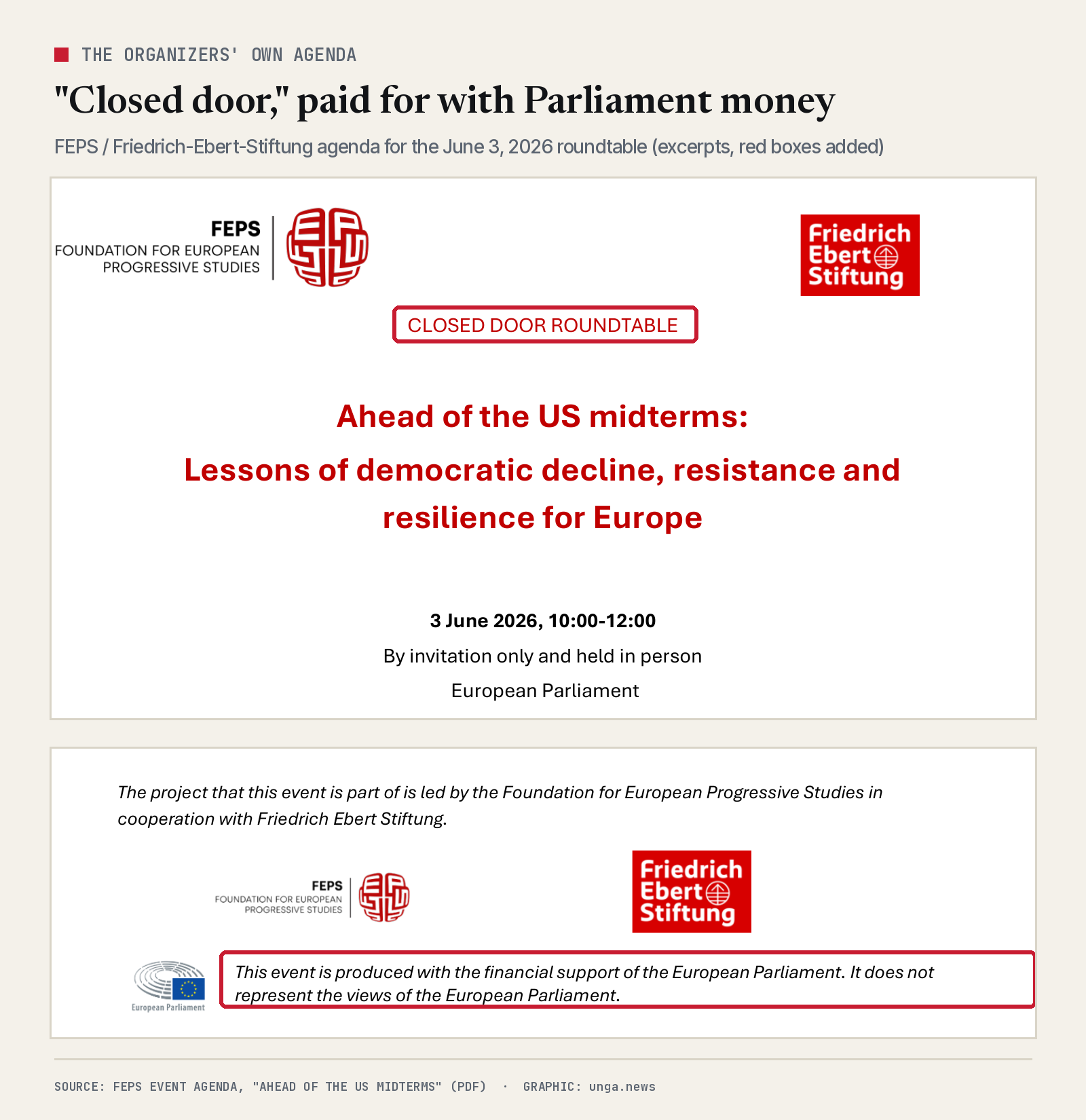
What was on the table
The agenda lays out the questions in plain words: "What is the state of US democracy under a second Trump administration and the broader MAGA movement? Where is resistance from the Democratic Party as well as from activists and NGOs working, where is it failing, and what can European progressives genuinely learn from those approaches?"
It says the closed format was "designed to enable a frank exchange among S&D MEPs in a small circle." S&D is the socialist group in the Parliament.
The keynote title was "Ahead of the US Midterms — Democratic Decline, Resistance, and Resilience: Lessons for Europe." FEPS's own recap afterward listed takeaways such as "Dare to be ideological" and "Know your coalition. Energy spent chasing voters who were never reachable comes at the expense of those who genuinely can be, including a young generation that increasingly leans progressive."
The keynote speaker
The keynote went to Cas Mudde, a Dutch-born professor of international affairs at the University of Georgia who studies the right. FEPS policy analyst Matteo Dressler, who moderated, wrote that it "was a great pleasure to bring Cas Mudde to the European Parliament on behalf of FEPS Europe."
Mudde's view of the midterms is no secret. In a December 2025 essay, he wrote that if Democrats win the House or Senate, "they can overrule, and at least slow down, the executive orders and make Trump a much weaker president for the rest of his second term." In the same piece he called the U.S. "an imperfect and struggling liberal democracy but with a clearly authoritarian government."
That essay also attacked the Trump administration's 2025 National Security Strategy for its goal of "cultivating resistance to Europe's current trajectory within European Nations," and warned of "some level of U.S. interference" in Hungary's election. Months later, he was the featured voice at a Parliament-funded session on resistance inside the United States.
In April, Mudde wrote on LinkedIn that "Everything points to a (big) win for the Democrats in the Midterms this November."
Whose money
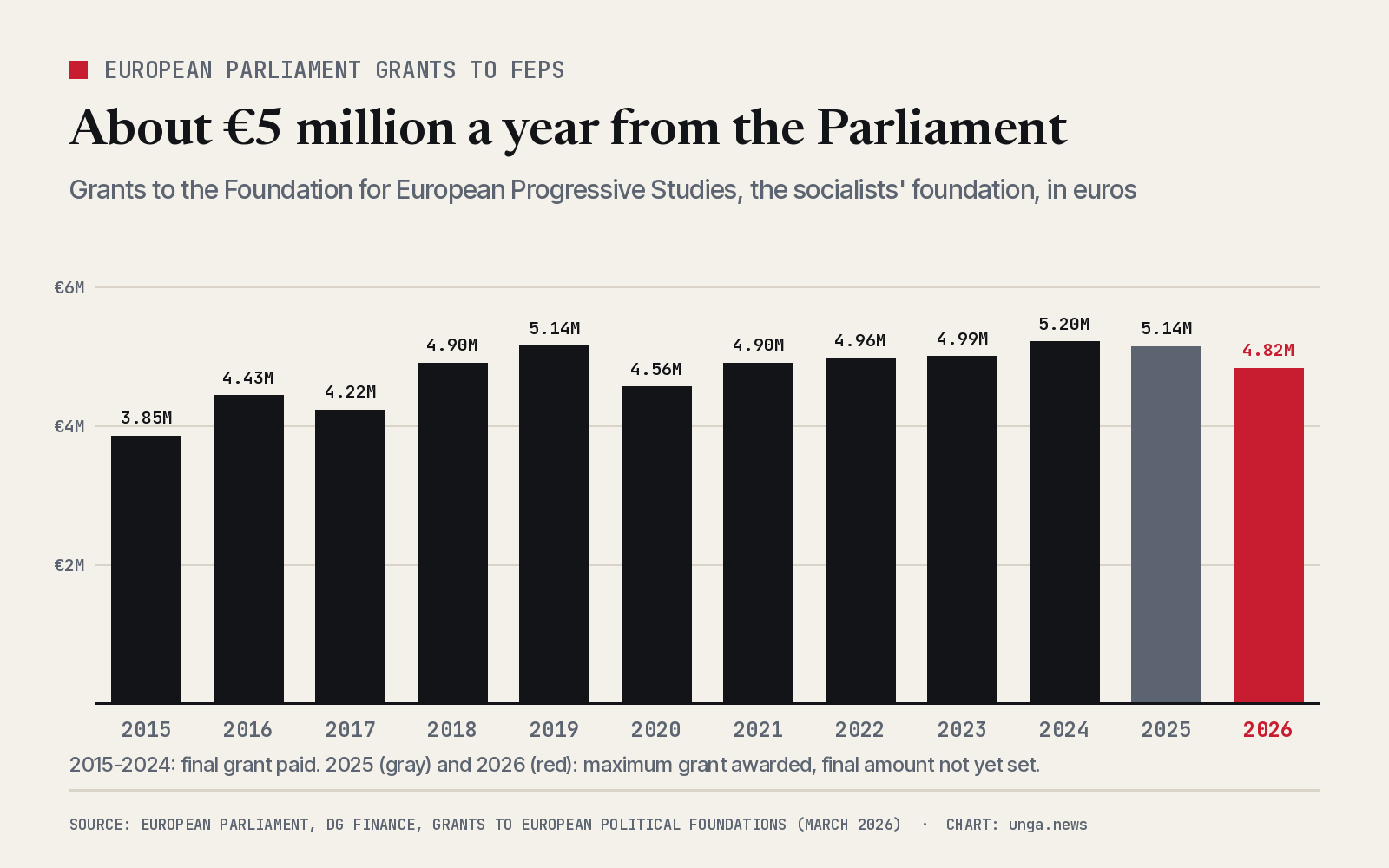
The Parliament funds FEPS directly. Its own grant tables show FEPS was awarded up to €4,823,718 for 2026, after a final grant of €5,204,666 in 2024. That money comes from the EU budget, which taxpayers across Europe fund.
EU law sets limits on how that money can be used. The regulation on European political foundations says their funding "shall in particular not be used for the direct or indirect funding of elections, political parties, or candidates or other foundations."
Nothing in the agenda shows money going to any American campaign or candidate. But it does show a Parliament vice-president, a Parliament-funded foundation and Parliament money behind a private strategy session on America's opposition, held behind closed doors.
What it means
Brussels often warns about foreign interference in Europe's elections. This time, the paperwork shows European public money behind a private meeting on how to push back against an elected American president before Americans vote.
No recording or transcript of the session has been released. Election Day is Tuesday.
Sources
- Foundation for European Progressive Studies — Agenda: Ahead of the US midterms: Lessons of democratic decline, resistance and resilience for Europe (closed door roundtable, June 3, 2026)
- Foundation for European Progressive Studies — Event page: Ahead of the US midterms
- FEPS Europe (LinkedIn) — Recap of the June 3 roundtable hosted by Katarina Barley MEP
- Matteo Dressler (LinkedIn) — Post on bringing Cas Mudde to the European Parliament
- Voxeurop — Cas Mudde: In 2026 Europe's democratic fate will be decided in the US and Hungary (Dec. 28, 2025)
- Cas Mudde (LinkedIn) — Post on Hungary and the U.S. midterms (April 2026)
- European Parliament, DG Finance — Grants from the European Parliament to European political foundations per foundation per year (March 2026)
- EUR-Lex — Regulation (EU, Euratom) No 1141/2014 on the statute and funding of European political parties and European political foundations, Article 22