

Even Blue States Took Free School Scholarships for Their Kids. Illinois’ Governor Said No.
Thirty-one states signed up for the new federal credit that pays donors back for helping families with tuition and tutoring, at no cost to the state. JB Pritzker said no, so Illinois money will flow to other states’ kids.
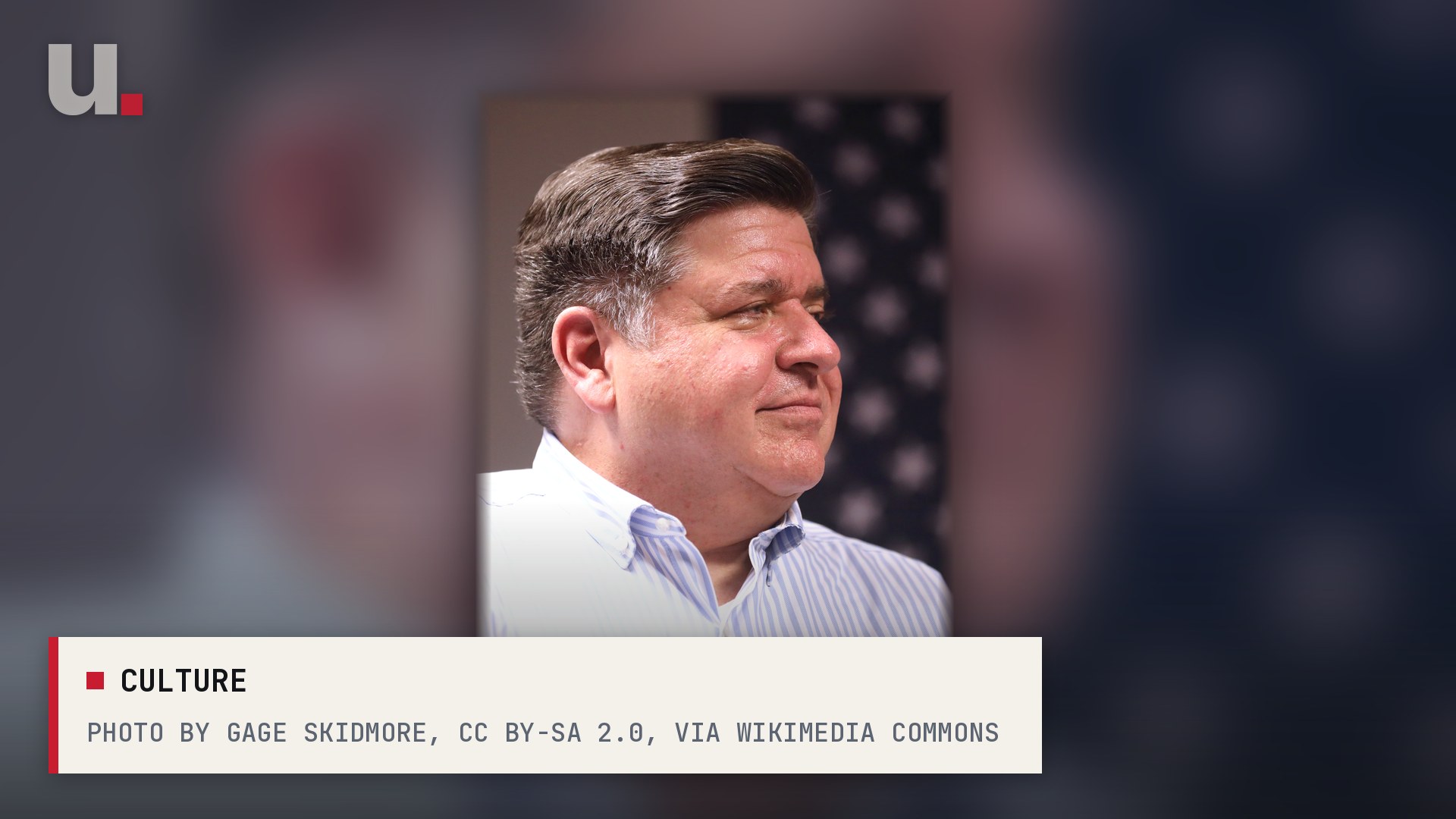
Most governors never get to hand out help that costs their own state nothing. Illinois Gov. JB Pritzker got that chance, and on Tuesday he turned it down.
Pritzker announced that Illinois will not join the new federal school scholarship tax credit, the program Republicans wrote into the One Big Beautiful Bill that President Trump signed last year. Starting Jan. 1, anyone in a participating state can give up to $1,700 to a scholarship group and get every penny of it back off their federal taxes. Married couples can give $3,400. The scholarship groups then help families earning up to three times their area’s median income pay for private school tuition, tutoring, books, special-needs services and other school costs, whether the child attends a private, public or charter school.
The state pays nothing. The only thing a governor has to do is say yes by Jan. 1.
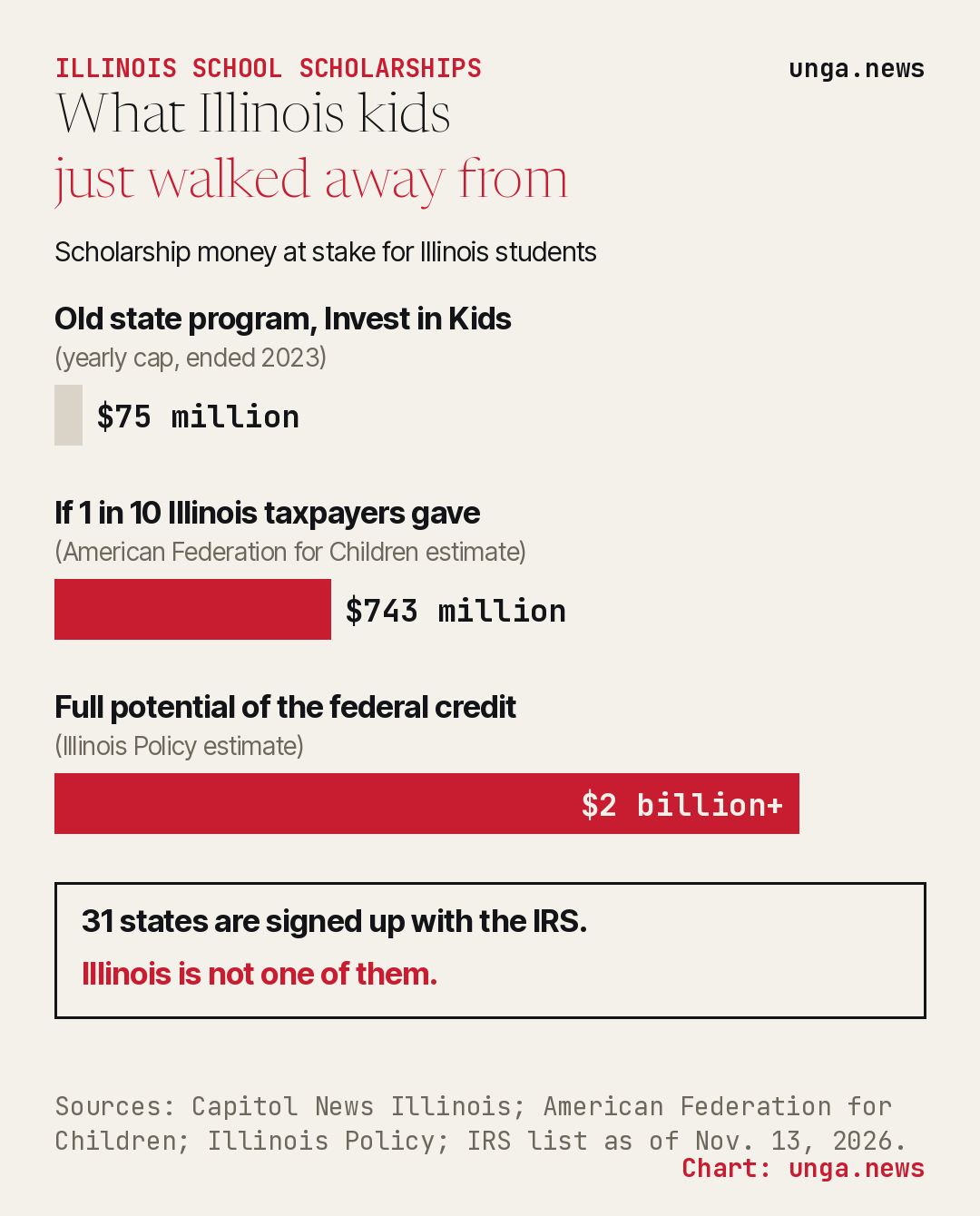
Thirty-one states have already done it, according to the IRS list of participating states. It runs from Florida, Texas and Utah to Democrat-led Colorado and New Mexico. New York Gov. Kathy Hochul announced in October that her state is in too. Illinois, where the Catholic Church runs one of the state’s largest private school networks, is now on the outside looking in.
His reasons, in his own words
The governor’s statement reads more like a campaign speech than a school policy. It says the president “created this voucher program to lure states.”
“At a time when public school education needs investments more than ever, we should not siphon money from public schools for private education – especially as the Trump Administration’s policies decimate education,” Pritzker said. “Taxpayer funding should not subsidize donations to private schools that could discriminate based on religion, sexual orientation, or other characteristics.”
His office also complained that states can’t add their own rules for the scholarship groups and that the credit could cost the federal treasury $2.7 billion to $6.1 billion a year.
Read that list again and look for the part where Illinois public schools lose a dollar. It isn’t there. The money in this program is a private donation that the donor gets back from Washington. It never passes through Springfield, and it never comes out of a school district’s budget. A public school kid who needs a reading tutor can get help from the same groups. That’s why the Catholic Conference of Illinois said it was “perplexed.”
“Gov. Pritzker still has time to reconsider this decision to give Illinois students extra resources without taking anything away from current state budget needs,” the conference said, according to Capitol News Illinois. “We urge him not to squander this opportunity by putting politics ahead of school children.”
The money leaves anyway
Here is the part that makes the decision hard to defend. Saying no doesn’t stop Illinois taxpayers from using the credit. It just stops them from using it at home.
Under the federal rules, donors can claim the credit for gifts to approved scholarship groups in any participating state, wherever they live. So an Illinois family that wants the $1,700 break can still take it. They’ll just have to send their check to a scholarship group in Indiana, Missouri or Iowa, and those kids will get the help.
“The money will leave Illinois and won’t come back to our children,” Rabbi Leonard Matanky, dean of Ida Crown Jewish Academy in Skokie, told the Jewish News Syndicate. “The governor said we shouldn’t siphon money from public schools. This program wouldn’t have. It’s a federal credit on private donations.”
The American Federation for Children, the school choice group, figures that if just 10% of Illinois taxpayers took part, the credit would raise nearly $743 million for Illinois families. The free-market Illinois Policy Institute puts the full potential above $2 billion. Those are advocates’ estimates. Even the lower one is almost 10 times what Illinois’ old program was allowed to raise.
Kids in Illinois have been here before
This is the second time Pritzker has let a scholarship lifeline slip away. Illinois had its own tax credit program, Invest in Kids, created in 2017 under Republican Gov. Bruce Rauner. Donors got a 75% state income tax credit, and the program was capped at $75 million a year. Teachers’ unions fought it from the start, and Democrats in the legislature let it die at the end of 2023. Pritzker said that year he would have signed an extension if lawmakers had sent him one. They didn’t.
This time Washington picked up the whole tab, and he still said no.
The unions were thrilled. “Trump’s voucher scheme was built to pull money out of public education with zero oversight and zero educational benefit for students,” said Stacy Davis Gates, who leads both the Chicago Teachers Union and the Illinois Federation of Teachers.
Republicans in Springfield saw it plainly. “This program offered free money to help struggling Illinois students and their families,” said Senate Republican Leader John Curran of Downers Grove. “This was not a partisan issue, but the governor decided to try to score national political points instead of doing what’s best for the people of Illinois.”
State Rep. Brad Halbrook of Shelbyville pointed to the blue states that said yes. Colorado and New York said yes, he noted, “yet Governor Pritzker will let his own biases and differences with the federal government stand in the way of benefiting our students and families. This is shameful and embarrassing.”
On Friday the Illinois Freedom Caucus piled on, accusing the governor of putting teachers’ unions and political donors ahead of parents, and noting that the state already adds $350 million or more to school funding every year.
The Jewish United Fund, Chicago’s Jewish federation, called it “disappointing that thousands of Illinois students, both in public and private schools, won’t be able to take advantage of this opportunity.” Agudath Israel of Illinois called it “a costly and avoidable setback for children across Illinois” that comes “without saving the state a dollar.”
Pritzker is widely seen as a 2028 presidential hopeful, and it’s hard to read his statement without hearing a candidate who wants to be the Democrat who stood up to Trump. That may play well with the unions. It does nothing for a family trying to pay for a math tutor.
The door isn’t closed yet. States have until Jan. 1 to sign up, and Hochul, Colorado’s Jared Polis and New Mexico’s Michelle Lujan Grisham have shown a Democrat can say yes without losing face. Until Pritzker does, the Illinois parents who want this help will watch their neighbors’ donations cross the state line.
Sources
- Office of Gov. JB Pritzker — Gov. Pritzker Prioritizes Public Education and Declines Trump Administration’s Voucher Program (Nov. 24, 2026)
- Internal Revenue Service — Federal Scholarship Tax Credit (FSTC): Participating states (as of Nov. 13, 2026)
- Capitol News Illinois — Illinois will not participate in federal education scholarship tax credit program (Nov. 25, 2026)
- American Federation for Children — AFC Responds to Governor Pritzker’s Decision to Deny K-12 Scholarships to 1.9M Illinois Students (Nov. 24, 2026)
- Illinois Policy — Pritzker denies education opportunities for Illinois students (Nov. 24, 2026)
- JNS — ‘Missed opportunity,’ Chicago-area Jewish schools say of Pritzker keeping Illinois out of federal education tax credit program (Nov. 25, 2026)
- Effingham Radio (thexradio.com) — Rep. Halbrook Reacts to Governor’s Decision on Federal Scholarship Tax Credit Program (Nov. 25, 2026)
- WFIW Radio — Illinois Freedom Caucus criticizes Pritzker over federal scholarship tax credit decision (Nov. 27, 2026)