

Ex-Google Engineers Want You to Trade Your iPhone for a Phone You Just Talk To
Blue’s founders say 10 people switched from iPhone and none wanted to go back. Today’s version is a $1,299 Pixel running their own software, and some big features are still “coming soon.”
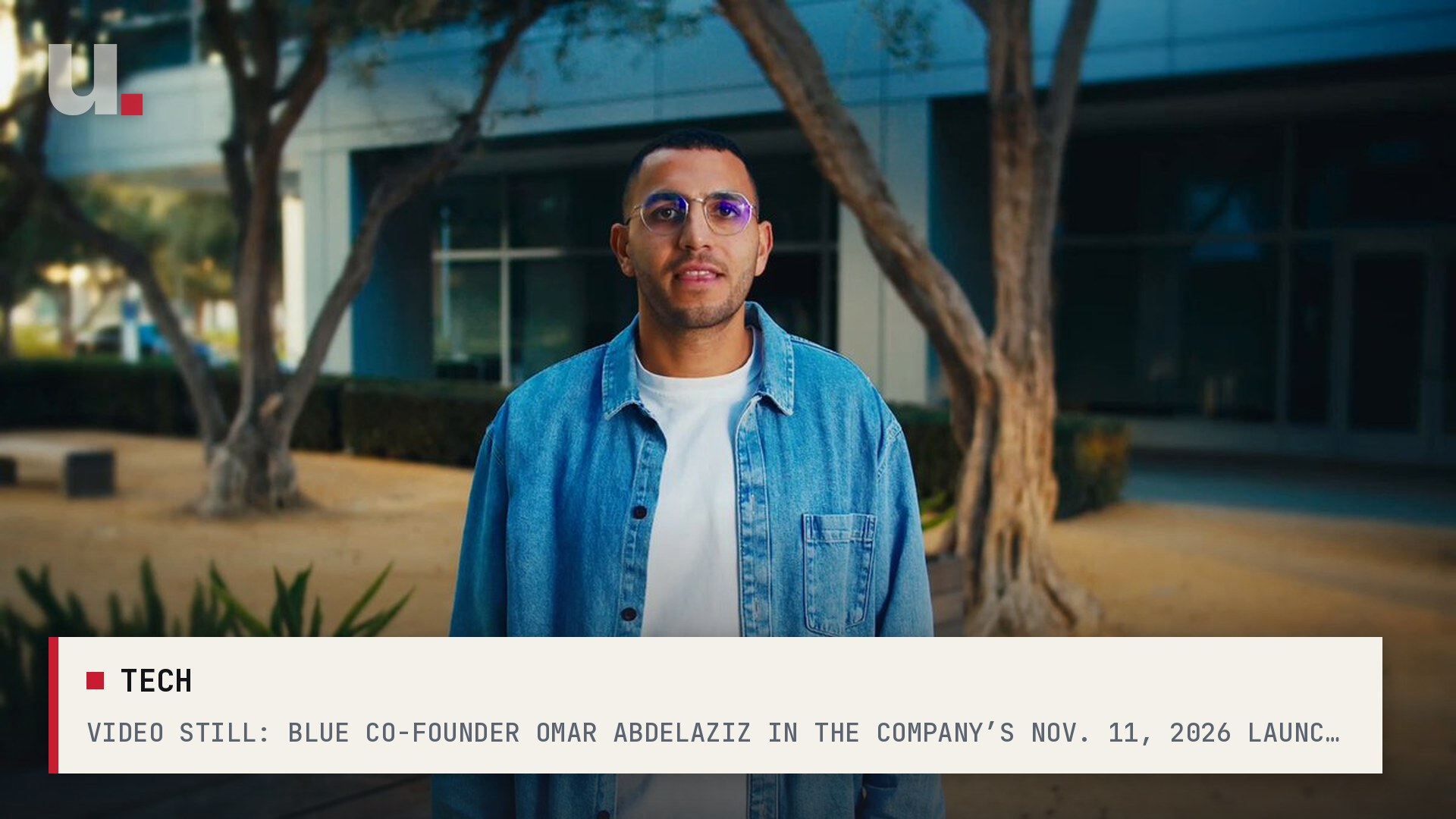
Omar Abdelaziz opens his launch video standing outside an office park in a denim jacket, holding up a phone that doesn’t look like anything special. That’s sort of the point. The trick isn’t the glass and aluminum. It’s that you’re supposed to stop tapping it.
“Introducing Blue: a phone you just talk to,” Abdelaziz wrote on Nov. 11. “Tell it what you need, and it gets done.” He opened with a dare aimed straight at Apple: “We switched 10 people from iPhone to Blue. Weeks later, none of them want their iPhone back.” The post has been viewed nearly 9 million times in a day.
Omar Abdelaziz on 𝕏, Nov. 11, 2026: “Introducing Blue: a phone you just talk to.”
— @OmarAbcXyz123 View on 𝕏
Ten people is a tiny sample, and the company picked them. But the pitch landed because almost everybody knows the feeling it’s selling against. Forty apps, each in its own little box, each buzzing for attention, and you stuck in the middle copying a code from a text into an email into a website.
A secretary living inside the phone
Blue calls its software an “intelligence layer” that sits around all your apps instead of inside one. On its website the company says you can ask for something with as many steps as you want, and it will work across email, texts, calendar and anything else on the phone. The examples are the boring chores people actually hate: finding an old receipt and attaching it to an expense report, comparison shopping, disputing a charge on a credit card.
It also remembers. Blue says it learns who “Dad” is, which airport you usually fly out of and what your usual dinner order is, so “get me a ride to the airport” or “let Dad know we’ll be there in 5” just works. One demo on the site walks through a message about a $2,450 fence quote from somebody named Kyle. Blue finds the right Kyle out of three, opens the email, reads the attached PDF, does the math on the gate and drafts a reply in your own voice.
That “in your voice” part shows up a lot. Blue says texts and emails that need an answer come back as drafts waiting for your OK, routine stuff gets handled with a quick note to you, and only truly urgent things interrupt. Its dictation is supposed to strip out the “ums” and mid-sentence corrections and hand you a clean message, in 13 languages.
Who built it, and what it really is today
Blue isn’t a garage project from people who’ve never shipped. Abdelaziz says that at Google he drove the first large language model to serve live content on the Google Assistant, before Gemini existed. Co-founder Peter Krogh spent years on Google Assistant and Gemini Live and before that built conversation systems for the Jibo home robot. Farhan Hossain runs hardware and, the company says, designed and delivered its first gadget in 55 days for Y Combinator’s summer 2025 demo day. That first product was a USB dongle that plugged into an iPhone. The team decided that wasn’t enough and built a whole new operating system instead.
Here’s what buyers actually get right now. The “Blue Phone” you can order today is a Google Pixel 10 Pro or Pro XL running Blue OS, a heavily modified version of Android. It costs $1,299, or nothing if you trade in your iPhone within 30 days. It comes with three months of unlimited use, and the company says it plans subscriptions starting around $20 a month after that, with exact tiers still undecided. Its own custom-built phone is promised for the third quarter of 2027, with a $100 refundable deposit to reserve one. The site says the first alpha batch sold out and the second is shipping through December.
The fine print matters, and Blue deserves credit for printing it. Its own comparison chart lists several headline features as “coming soon” on the phone shipping today, including the “Hey Blue” wake word, calls that Blue screens or places for you, and notification triage, which the launch post says it already does. Tap-to-pay at the checkout counter isn’t available on the beta at all. Those are promised for the 2027 phone.
Your whole life in one assistant
A phone that reads every text, email and notification you get is a phone that knows a lot about you. Blue seems to know that’s the first question. It says it builds on security features from hardened open-source versions of Android, blocks ad tracking by default and runs even the Google Play Store in a sandbox with no special access unless you grant it. Passwords and other secrets go into what it calls a Vault, encrypted with keys sealed in hardware, and Blue says it can use them without seeing them. Every memory it keeps is supposed to be visible to you, and you can edit or delete it. “We will never sell your data,” the site says, and it argues there’s no ad business behind Blue pulling you back to the screen.
Those are promises, not audits. Nobody outside the company has tested them yet, and a startup handling bank logins and family texts will have to earn that trust the slow way.
Switching is meant to be painless. Blue says it sees the apps you had on your iPhone and installs the same ones from Google Play, and you plug your old iPhone into a Mac to move chats, mail and photos over.
Big companies have been promising this kind of assistant for more than a decade, and most of what they shipped could set a timer and not much else. A small team out of Santa Clara is betting people are tired enough of babysitting their phones to try something new, even at $1,299. If the second batch of buyers says what the first 10 did, Apple will notice.
Sources
- Omar Abdelaziz on 𝕏 — Introducing Blue: a phone you just talk to, Nov. 11, 2026
- Blue — The Blue Phone: features, release comparison, pricing and FAQs
- Blue — About us: founders and company history
- Blue — Privacy & Security