

Full Fifth Circuit Backs Trump 10-7: Illegal Entrants Held by ICE Get No Bond Hearings
The court says detainees "hold the keys" to their own release by agreeing to leave, and that ICE can re-detain men freed under the overturned orders.
The full U.S. Court of Appeals for the Fifth Circuit, the federal appeals court over Texas, Louisiana and Mississippi, ruled 10-7 on Friday that people who entered the country illegally have no constitutional right to a bond hearing while ICE holds them for deportation. It is the biggest court win yet for the mandatory detention policy at the center of President Trump's deportation push (Fifth Circuit opinion; Bloomberg Law).
The case is Sosnava Rodriguez v. Ortega. Three men, two from Mexico and one from Honduras, had lived in the U.S. illegally for 14 to 22 years before ICE picked them up after traffic stops in late 2025 and early 2026. Federal district judges in Texas ordered all three released and barred ICE from holding them again without a hearing on whether they were dangerous or likely to run. The full court threw those orders out and sent its decision down "FORTHWITH" (opinion).
What the court decided
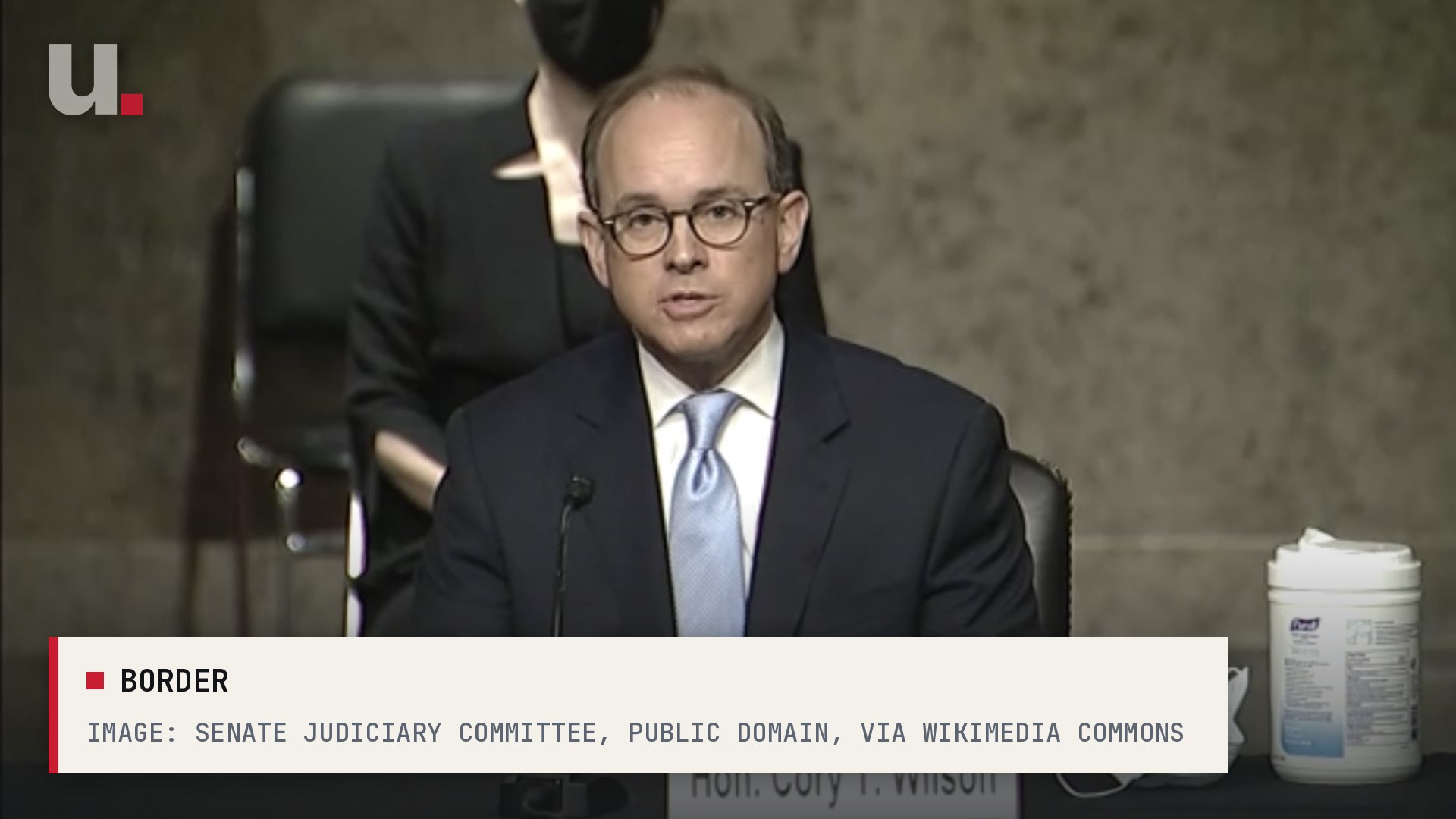
Judge Cory Wilson, a Trump appointee from Mississippi, wrote for the majority. Federal law says a person who has never been lawfully admitted "shall be detained" while removal proceedings play out, and Wilson wrote that the Constitution does not require anything more. A hearing on danger or flight risk is beside the point, he said, because those questions have nothing to do with why the law requires detention in the first place (opinion).
His sharpest line goes to the heart of the "locked up" complaint. If detainees want freedom, Wilson wrote, "they can do so at any moment by agreeing to leave the country. In no other context implicating a core liberty interest does the detainee hold the keys to his confinement." Think of a man stuck in a waiting room with an open exit door. He is not a prisoner. He just doesn't like where the door leads (opinion).
The court also said the length of detention "presented no constitutional issues," and that so long as deportation remains "a viable prospect, continued detention, or renewed detention in the case of an alien previously released, does not violate due process." In plain terms, ICE can hold people already released under the overturned orders again (opinion).
"Controlling illegal immigration is, no doubt, an important and controversial issue of public policy," Wilson wrote. "But the Constitution entrusts broad authority to delineate immigration policy, and to design proceedings to effectuate those policy choices, to Congress—not courts. Neither we nor the district courts are free to ignore that bedrock principle and rewrite the immigration policy Congress has enacted" (opinion).
Reaction on 𝕏 as the ruling landed (Oct. 23)
— @Hunter_Eagleman View on 𝕏
Ho and Oldham go further
Judge James Ho opened his concurrence with a line conservatives will be quoting for a while: "A nation ceases to be a nation if it can't protect its borders." He wrote that the petitions, "far from affirming American liberty," are "profoundly un-American—because they send the message that the only people who are above the law in our country are the ones who violated our laws to get in." What the men want, Ho said, "is not liberty, but license to violate our national sovereignty" (opinion).
Judge Andrew Oldham answered a dissent that accused the majority of "sham history" with a baseball comparison. Congress, he wrote, "defines an unadmitted alien's strike zone. Congress can expand it or contract it, as it has over time. But what Congress says goes, and the Constitution does nothing to change what counts as a ball or a strike" (opinion).
Who voted which way
The majority was Wilson, Chief Judge Jennifer Walker Elrod and Judges Edith Jones, Jerry Smith, Don Willett, Ho, Stuart Kyle Duncan, Kurt Engelhardt and Oldham, with Judge Priscilla Richman agreeing with the result. Seven judges dissented: Leslie Southwick, Carl Stewart, James Graves, Catharina Haynes, Stephen Higginson, Dana Douglas and Irma Carrillo Ramirez (opinion; Bloomberg Law).
Southwick wrote that the majority built "an impenetrable wall between the Constitution and these long-term residents." Douglas wrote that it "detonates the core of the Due Process Clause." Immigrant-rights lawyers who argued the case called the ruling "an affront to the U.S. Constitution" (opinion; American Immigration Council).
Why it matters
The policy treats people caught inside the country, not just at the border, the same as anyone "seeking admission," which means no bond. It sparked a flood of habeas lawsuits, and district judges have issued more than 9,300 rulings against it, according to a Politico count cited by SCOTUSblog. The Fifth Circuit had already upheld the policy under the statute earlier this year, and only one other appeals court has joined it, which makes this court the administration's strongest line of defense (SCOTUSblog; Bloomberg Law).
Friday's decision shuts down the constitutional route that Texas judges kept using to free detainees anyway. Thousands of people are held in ICE facilities in Texas and Louisiana alone, so the practical effect is large: in the three states the court covers, judges can no longer order release on due-process grounds just because a case is dragging on (Politico; Bloomberg Law).
What happens next
The Supreme Court has already agreed to decide the statute question in a separate case, Rhoney v. Barbosa da Cunha, which it took up on Oct. 1 and expects to hear early next year. Friday's ruling settles the constitutional question in the Fifth Circuit while that case is pending. The detainees' lawyers can also ask the justices to step in on this one (SCOTUSblog; Supreme Court docket).
Sources
- U.S. Court of Appeals for the Fifth Circuit — Sosnava Rodriguez v. Vergara, Nos. 26-50183, 26-50219, 26-50221 (en banc opinion, Oct. 23, 2026)
- Bloomberg Law — Trump Migrant Detention Policy Upheld by Full Fifth Circuit
- Politico — Appeals court shores up ICE mass detention policy
- American Immigration Council — In Major Setback for Due Process, Fifth Circuit Ruling Denies Immigrants the Opportunity to Challenge Their Detention
- SCOTUSblog — Court agrees to hear arguments in important immigration case, religious zoning dispute
- Supreme Court of the United States — Docket No. 26-104, Rhoney v. Barbosa da Cunha
- 𝕏 — Hunter Eagleman: Fifth Circuit en banc just ruled
- 𝕏 — How Appealing: today's 10-to-7 en banc decision