

Gas Finally Eased in October, but Beef and Groceries Pushed Prices Up 0.4%
Prices rose 0.4% last month, down from 0.6% in September, as the pump gave some relief. Groceries jumped after a quiet summer, and tariff-sensitive goods like clothing barely moved.
If you filled up your truck this week, you probably noticed the number on the pump finally coming down. If you bought a pack of ground beef the same day, you probably noticed that one didn’t.
That’s about the size of the October inflation report the government put out Tuesday. Prices across the economy rose 0.4% from September, the Bureau of Labor Statistics said. That’s a slowdown from the 0.6% jump the month before, and it’s the first report in a while where gasoline wasn’t the main thing doing the damage. But it still came in hotter than the 0.3% economists had been expecting, according to CNBC, and this time it was the grocery bill that did the pushing.
Groceries took the lead
For most of the summer, groceries were the quiet part of the inflation story. Prices for food at home actually dipped in July and September, and they were flat in August, according to the bureau’s numbers. October broke that streak.
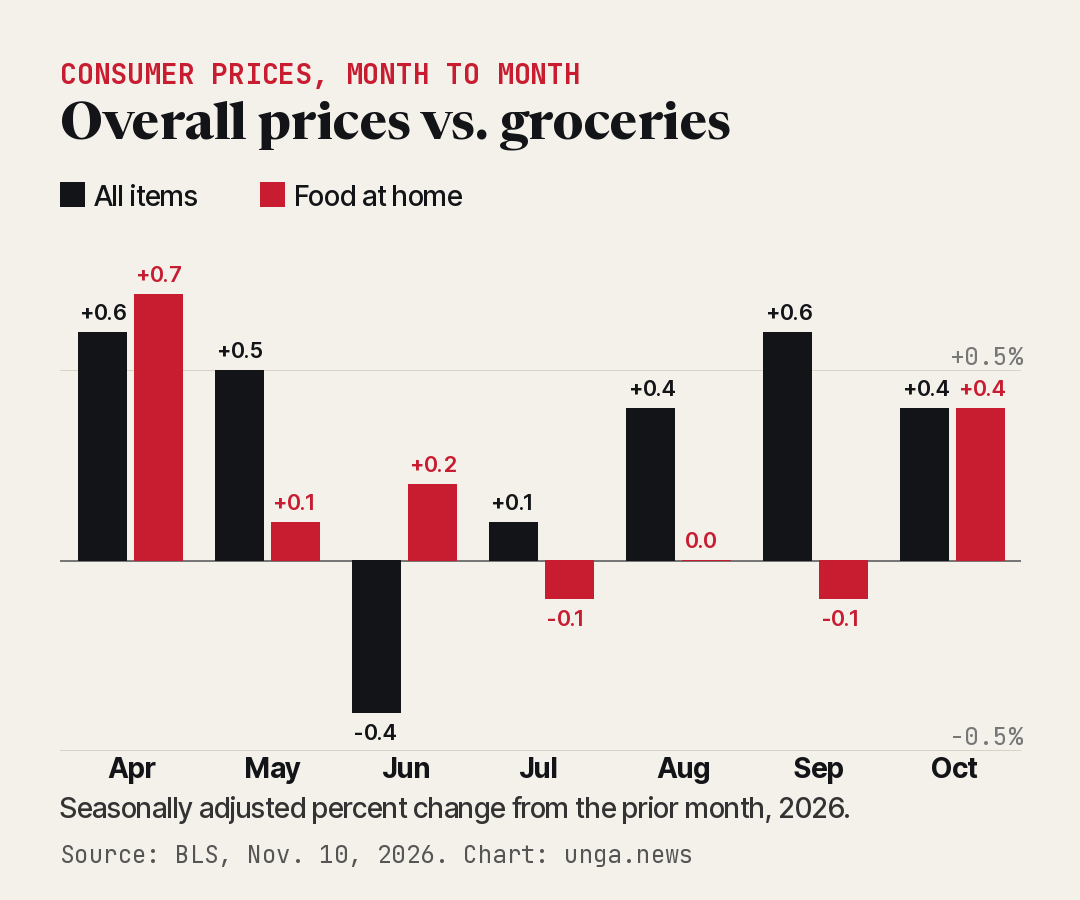
Food at home rose 0.4% in October. Beef was up 0.9%. Snacks were up a full 1%. Fruits and vegetables and dairy each climbed 0.6%. Eating out got pricier too, up 0.5%, with sit-down restaurant meals up 0.7%. If you took the family out for dinner last month and the check felt heavier, it wasn’t your imagination.
Not everything at the store went up. Soda, coffee and other drinks fell 0.3% after a big jump in September, and bread and cereal held steady. But four of the six major grocery categories climbed, the bureau said, and that’s the stuff people buy every single week.
The pump is finally giving some relief
Now for the part that should make folks breathe a little easier. Energy prices rose just 0.7% in October after soaring 5.2% in September. And that small October increase comes with an asterisk.
The government adjusts its numbers for the usual seasonal ups and downs. On that adjusted basis, gasoline rose 1%. But before the adjustment, the price people actually paid for gas fell 0.7% in October, the bureau said. In other words, gas got cheaper at the pump. It just didn’t get cheaper as fast as it normally does this time of year.
The drop has kept going since. The national average for regular gas fell below $4 a gallon on Tuesday for the first time since July 20, according to AAA data cited by NBC News. Oil has fallen too. Brent crude, the global benchmark, slipped below $90 a barrel, its lowest since August, after President Trump said the war with Iran was “effectively over” and would be “ending fairly soon,” the Guardian reported.
Gas is still a lot higher than it was a year ago, up 37.4% before seasonal adjustment, by the bureau’s count. That’s what nine months of war in the Persian Gulf does to a gallon of unleaded. But the direction has turned, and that matters for every family budget in America.
Tariffs barely moved the needle
Here’s a detail you won’t hear much about. For two years, critics have warned that Trump’s tariffs would send the price of everyday goods through the roof. Clothing is one of the most tariff-sensitive things the government tracks. In October, apparel rose just 0.1%, CNBC noted. Used cars and trucks fell 1.2%. New vehicles were up only 0.2%.
Where prices did keep climbing was mostly in services, not imported goods. Car insurance rose 0.7%. Hospital services rose 0.8%. Recreation was up 0.8%. Housing costs rose 0.3% and made up more than 30% of the overall increase, the bureau said. Rent itself rose 0.2%.
Strip out food and energy, which bounce around a lot, and you get what economists call core inflation. That rose 0.3% in October, the same as in August and September. Economists had hoped for 0.2%, according to CNBC.
Why there’s no yearly number this time
If you’re looking for the usual headline figure, the one that tells you how much prices rose over the past year, you won’t find it. The bureau didn’t publish one. During last fall’s government shutdown, it didn’t collect price data for October 2025, so there’s nothing to compare this October against for most items.
That’s a real gap. It means nobody can say with confidence what the overall yearly inflation rate is right now. The bureau did publish yearly numbers for a handful of items where it had the data, which is how we know about that 37.4% gas figure.
What it means for interest rates
The bigger worry for anyone with a mortgage, a car loan or a credit card balance is what comes next from the Federal Reserve. Reuters reported that the October numbers cemented expectations that the Fed will raise interest rates at its meeting next month, after a third straight month of steady underlying price pressure.
NPR’s Scott Horsley put it plainly on Tuesday morning: inflation is “still pretty sticky.” An RBC Capital Markets economist told NPR that diesel prices, which haven’t fallen as much as gasoline, are spilling over into the cost of everything that gets trucked to market, NPR reported.
That’s the piece to keep an eye on. Gasoline is easing because oil is easing, and oil is easing because the fighting with Iran appears to be winding down. If diesel follows gasoline down, the cost of hauling beef, produce and everything else to your local store should follow it.
The next report comes out Dec. 10, according to the bureau. By then we’ll know whether cheaper gas is starting to show up in the grocery aisle, or whether the family grocery bill is going to keep climbing on its own.
Sources
- Bureau of Labor Statistics — Consumer Price Index – October 2026
- CNBC — Consumer prices rose 0.4% in October, more than expected
- Reuters — US consumer prices rise briskly for third straight month
- NBC News — Morning Rundown, Nov. 10, 2026
- The Guardian — Oil price relief as Trump says US war on Iran ‘ending fairly soon’
- NPR — Inflation report (Morning Edition)