

Hackers Got Into the FBI Crime Database Police Across America Use to Check Warrants
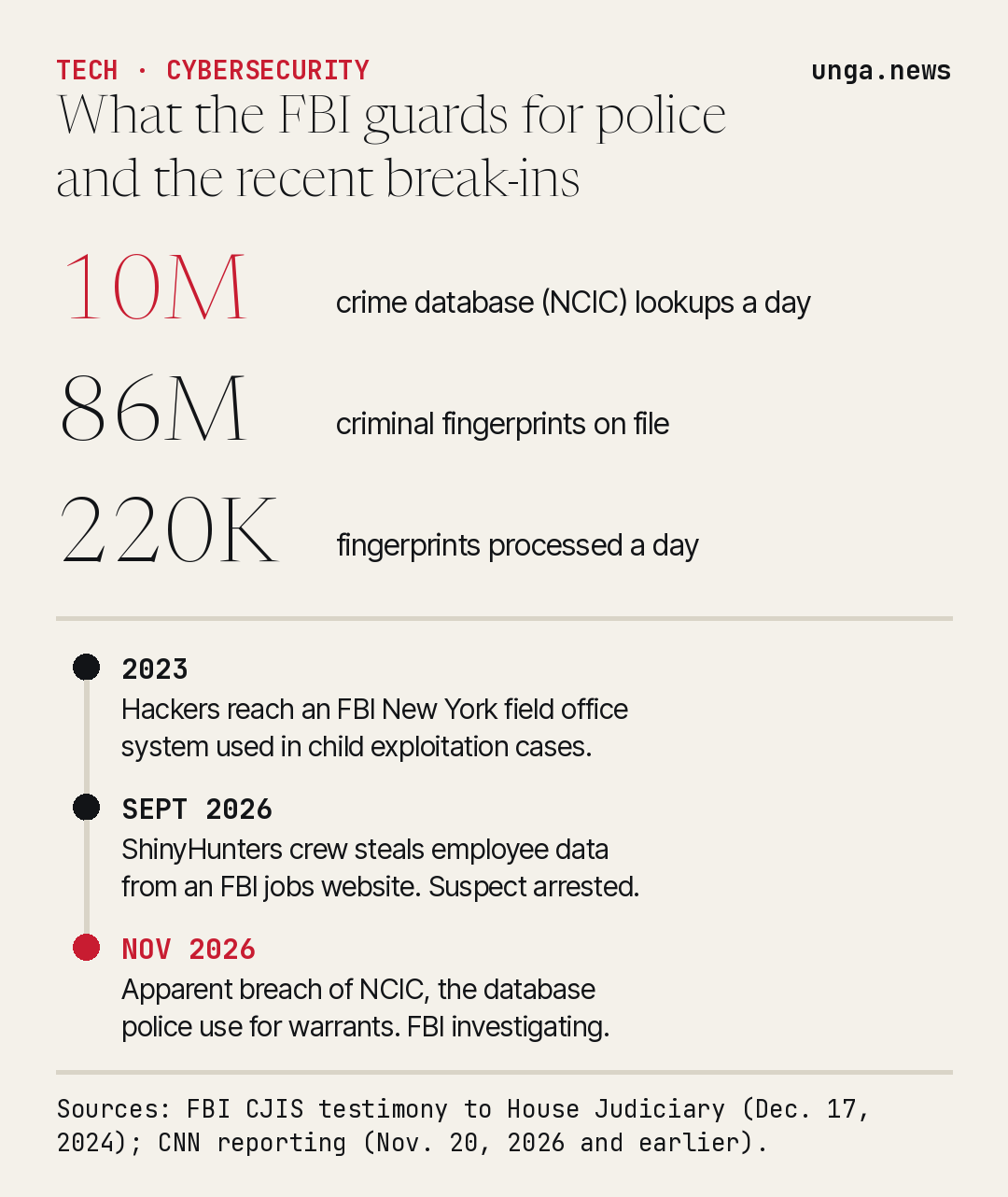
The FBI is investigating an apparent breach of the National Crime Information Center, the system local, state and federal officers lean on millions of times a day. It is the second intrusion at the bureau in recent months.
Every time a cop pulls someone over and runs a name, there’s a good chance the answer comes back from one place: the FBI’s National Crime Information Center. Warrants, stolen cars, missing persons, background checks. It is the switchboard that lets a deputy in rural Montana know what a detective in New Jersey already knows. Now the FBI is investigating an apparent break-in to that system.
CNN’s Evan Perez reported Friday evening that the bureau discovered the intrusion “in recent days,” citing two people briefed on the investigation. The FBI did not immediately respond to CNN’s request for comment, and as of Friday night it had put out no public statement. Nobody has said who got in, how long they were inside, or what, if anything, they took.
That last part matters more than the headline. A peek at a login screen and a copy of millions of criminal records are very different events, and right now the public doesn’t know which one this was.
Why this one system is such a big deal
NCIC isn’t some dusty archive. It is live, and it is busy. In sworn testimony to the House Judiciary Committee in December 2024, Timothy Ferguson, then acting head of the FBI’s Criminal Justice Information Services Division, called it “a lifeline for law enforcement with an average of 10 million daily transactions.” That works out to more than a hundred lookups every second, around the clock.
The same division also runs the bureau’s fingerprint and criminal history repository, which Ferguson said holds 86 million criminal fingerprints and processes about 220,000 prints a day. There is no report that the fingerprint system was touched. But it shows the scale of what sits behind the FBI’s walls in West Virginia, and why anyone with bad intentions would want a way in.
For a regular person, the risk runs two ways. If records were stolen, that could expose personal details on people who were never charged with anything, along with sensitive case information. If records were changed, the danger is quieter and worse: a warrant that vanishes, or one that appears where it shouldn’t. Officers act on NCIC hits at the side of the road. The data has to be right.
The second hit in a few months
This isn’t the bureau’s first rough patch. In September, a hacking crew calling itself ShinyHunters went after an FBI jobs website and grabbed sensitive personal data on employees, according to CNN’s earlier reporting. A Canadian cybersecurity researcher and author has since been arrested and charged in connection with that breach. Agents caught a suspect. That is the part of the job the FBI does well.
Go back to 2023 and there was another: hackers got into a computer system the FBI’s New York field office used in child sexual exploitation cases, including one used to store images tied to the Jeffrey Epstein investigation. That happened before the current leadership arrived.
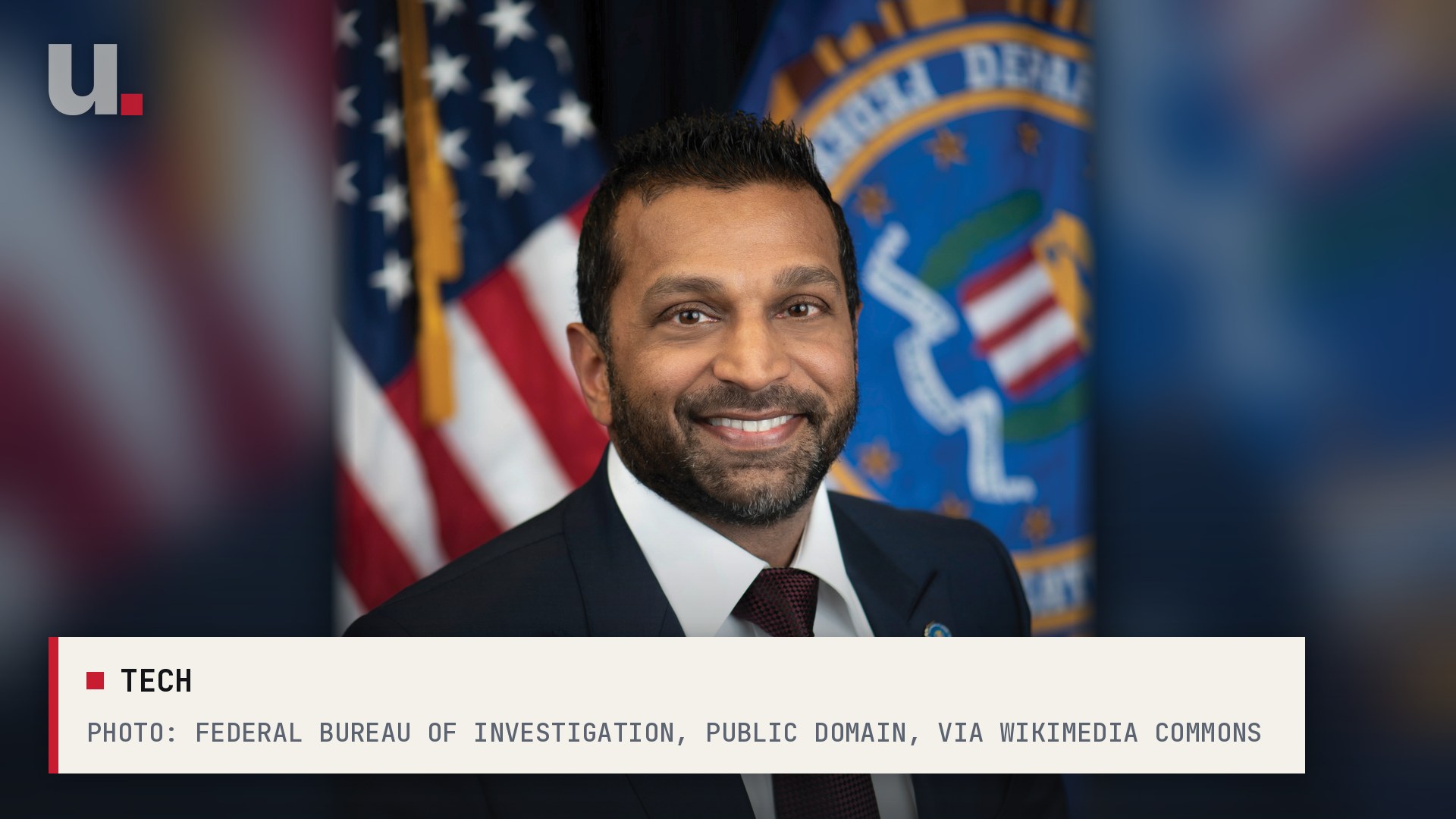
FBI Director Kash Patel has been pushing to harden systems across the country. His Operation Winter SHIELD, launched Jan. 28, was a 60-day campaign urging companies and agencies to adopt ten practical defenses, from login methods phishing can’t beat to retiring outdated systems and keeping backups attackers can’t erase. In testimony to the Senate Judiciary Committee, Patel said all 56 FBI field offices took part and ran more than 600 engagements across 14 critical-infrastructure sectors. On Fox News Thursday he put it bluntly: “Other administrations could have made these updates, but they didn’t. We are staying ahead of the curve and making up for lost time.”
The NCIC break-in is the clearest proof yet of why that catch-up work can’t stop. Systems this old and this connected, linking thousands of police departments, have a lot of doors. Every one of them has to be locked.
A fresh cyber boss at the White House
The news lands during a jittery week in Washington. Banks, the Federal Aviation Administration’s air traffic control system and the National Security Agency all suffered high-profile outages, though officials have said those were not cyberattacks. On Thursday, the White House confirmed that national cyber director Sean Cairncross was leaving, and President Trump moved the same day to name Kirsten Davies, the Pentagon’s chief information officer, to the job.
The White House announcement calls her “a battle-tested cyber leader” who will run a strategy “that treats cybersecurity as national security.” Director of National Intelligence Jay Clayton said she brings “nearly two decades of leadership experience in the technology space.” Davies will serve as acting director, and the post needs Senate confirmation to make it permanent, NBC News reported.
She inherits a to-do list with the FBI’s most important police database near the top. The questions are plain and Americans deserve plain answers: Who got in? Were records copied or altered? Is the door closed? Which police departments need to double-check what they pulled from the system over the past weeks?
Until the bureau says more, the sensible move for anyone in law enforcement is to verify anything unusual that comes back from NCIC before acting on it. And for everyone else, it is one more reminder that the systems quietly keeping streets safe are now targets, too.
Sources
- CNN (Evan Perez) — The FBI was hacked again, this time the breach targeted its crime database (Nov. 20, 2026)
- U.S. Department of Justice — Testimony of Timothy A. Ferguson, Acting Assistant Director, FBI CJIS Division, House Judiciary Committee (Dec. 17, 2024)
- U.S. Department of Justice — Senate Judiciary Committee testimony of FBI Director Kashyap Patel (Operation Winter SHIELD)
- FBI — Operation Winter SHIELD: Adopt phish-resistant authentication
- The White House — President Trump Taps Pentagon Cyber Chief Kirsten Davies as National Cyber Director (Nov. 20, 2026)
- NBC News — White House national cyber director is leaving after tech outages hit companies and agencies (Nov. 19, 2026)