

Hackers Knocked Britain’s Welfare Website Offline. Millions Still Can’t Log In Two Days Later.
The government now admits it was a deliberate attack on the agency that runs most British benefits, and it can’t say when the site comes back.
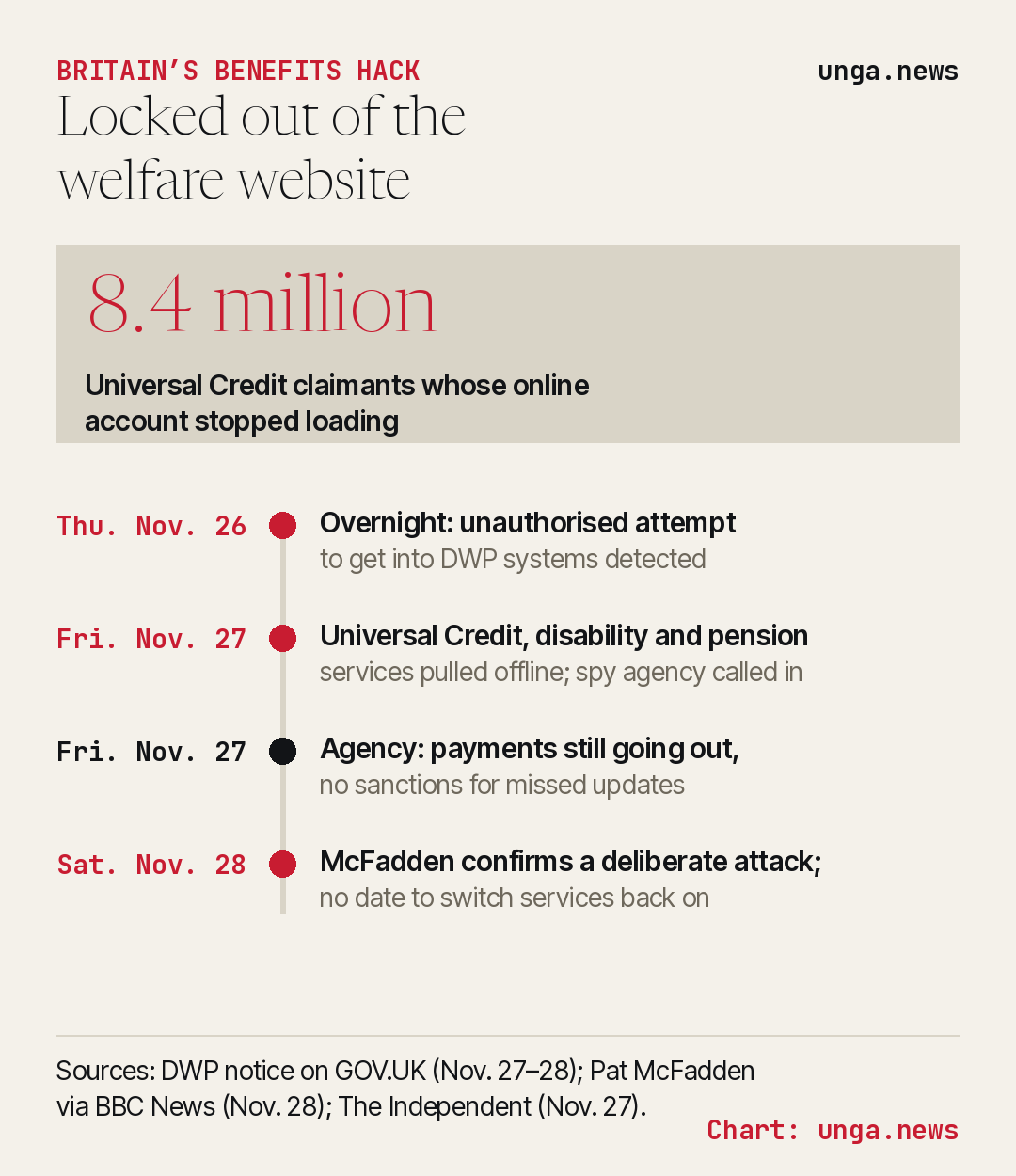
For two days now, millions of people in Britain who depend on the government for a monthly check have been locked out of the website that runs their lives. Universal Credit, the country’s main welfare payment, along with disability benefits and state pension applications, all went dark after hackers tried to break into the Department for Work and Pensions, the giant agency that handles most British benefits.
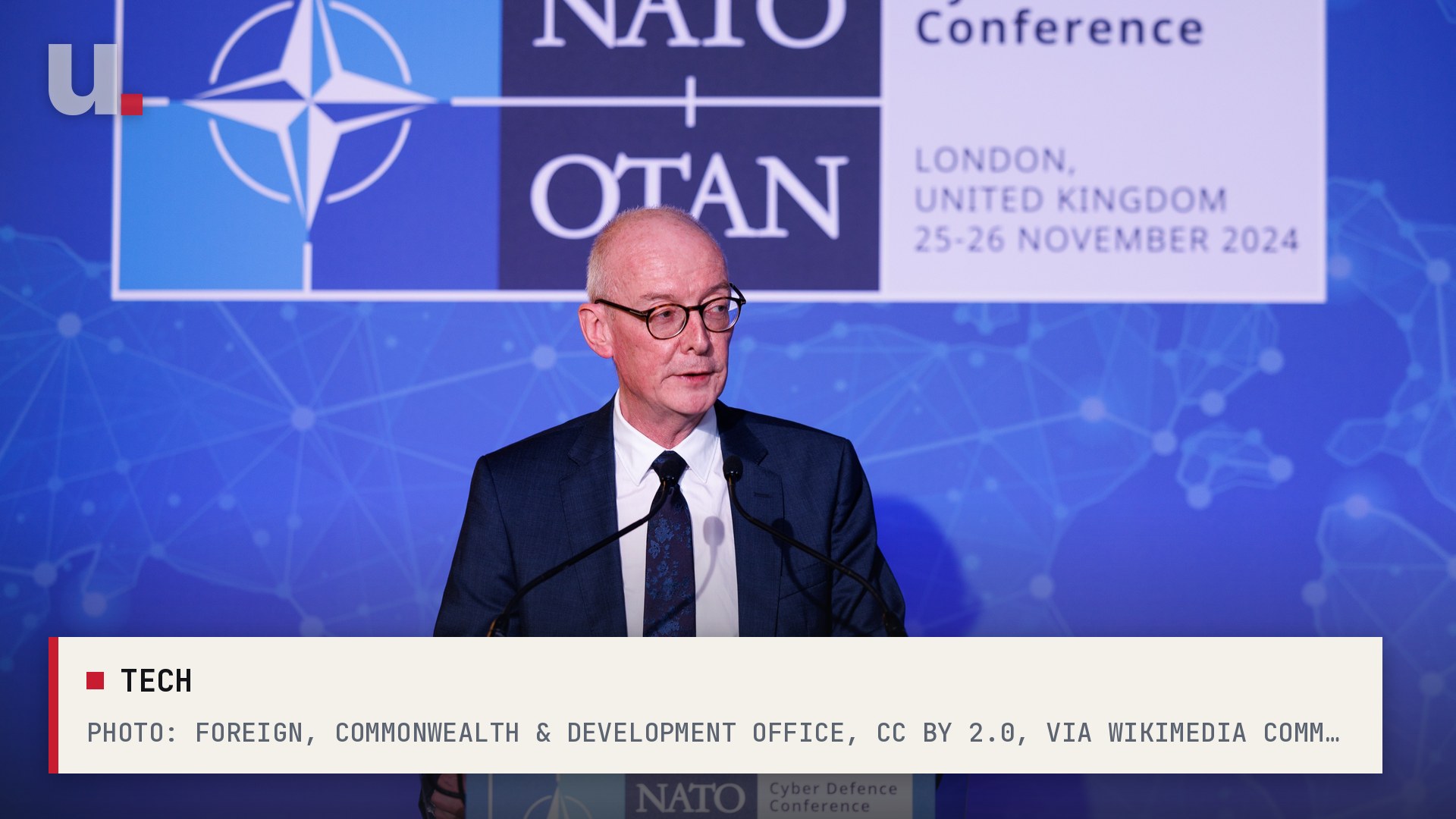
On Saturday the government finally said the quiet part out loud. This wasn’t a glitch. Work and Pensions Secretary Pat McFadden confirmed there had been an “unauthorised attempt to gain access to DWP systems,” and that the experts at the National Cyber Security Centre, part of the British spy agency GCHQ, now say it was not accidental.
When it’s safe to switch everything back on, nobody can say. “We will not put services back online until we have made sure that it’s safe to do so,” McFadden said Saturday. “It would be a mistake to rush to do that if we weren’t sure that those systems were safe.”
Pat McFadden on 𝕏 — Nov. 27, 2026
— @patmcfaddenmp View on 𝕏
One login for 8.4 million people
Here is why this matters so much. Britain built its modern welfare system around one online account. The country’s roughly 8.4 million Universal Credit claimants use an online “journal” to report changes in their lives, check what they owe the government and complete the to-do tasks that keep their payments flowing. That login page stopped loading on Friday. So did the “Tell Us Once” service families use to report a death to most of government in one go.
The department insists the money itself is still moving. “Regular benefit and pension payments will continue to be paid as normal,” its official notice says. Because payments are cleared several days ahead, McFadden said anyone missing a payment Friday probably wasn’t hit by the attack, and he told them to call in.
For people who were supposed to update their records or show up for appointments this week, the agency has hit pause on punishment: “customers who do not attend or cannot update their circumstances will not be sanctioned.” Sanctions already processed still stand.
McFadden also said there is “no evidence” of personal details being compromised so far. That is good news if it holds, but it is an early read from an investigation that is still running. The country’s data-protection watchdog says it is in contact with the department.
A bigger state makes a bigger target
Conservatives saw this coming from a mile away. Shadow Work and Pensions Secretary Helen Whately called the attack “extremely concerning” and said “it must be treated with the utmost seriousness.” She added: “Cyber security is vital to our national security. The Labour government must do more to protect against increasingly frequent cyber attacks and ensure our systems are resilient to these threats.”
She’s right, and there’s a deeper point behind it. The more of a country’s life that runs through one government computer system, the bigger the prize for anyone who wants to break in or shut it down. Britain’s welfare rolls aren’t shrinking. Just hours before the break-in was spotted, Whately warned that “3 million people are set to be signed off sick from work under Labour,” more than the record unemployment lines of the 1980s, and that “Britain can’t afford this ballooning sickness benefits bill.” Her party says it has a plan to save £36 billion on welfare and get people who can work back into jobs.
Every one of those claimants now depends on a single digital front door. When it slams shut, the people hurt first are the ones with the least cushion. The family that planned its weekly shop for Sunday with bills due Monday doesn’t care whose fault it is. It just needs the system to work.
Britain keeps getting hit
This is not a one-off. In recent weeks, British fashion retailers Next and Asos both reported break-ins that exposed some customer data, and earlier this month some UK meat suppliers found their fridges warming up overnight after hackers went after software used by supermarkets across Europe. The BBC notes the DWP breach has fueled worries about whether state computer systems are keeping up with threats, including hackers who now use SI to speed up their work.
Downing Street says there is no evidence a “malicious actor” is going after other government departments. The government hasn’t said who did it, and nobody has publicly claimed it.
Scammers will move in next
The department and consumer groups are warning about the second wave that always follows attacks like this: fake messages. Criminals know millions of anxious people are waiting for news about their money, so expect texts and emails dressed up as official DWP updates.
The department’s rule is simple: it “will never ask for personal or financial information by text message or email.” Lisa Webb of the consumer magazine Which? put it plainly: “If you’re ever unsure who you’re speaking with, end the conversation immediately and contact the company directly.”
Americans should pay attention, too. Our own federal benefit systems, from Social Security to Medicare, run on the same kind of online accounts, and Washington’s computers have been breached before. Britain’s lesson this week is that a government that wants to manage more of people’s lives had better be able to guard the door. Right now, one of the biggest welfare agencies in the Western world can’t even say when it will reopen its website.
Sources
- Department for Work and Pensions (GOV.UK) — Temporary disruption to some DWP online services (Nov. 27, updated Nov. 28, 2026)
- Pat McFadden on 𝕏 — “We have taken some services offline as a precaution following a cyber incident” (Nov. 27, 2026)
- BBC News — DWP confirms cyber attack forced it to take pension and benefits systems offline (Nov. 28, 2026)
- The Independent — What DWP cyber incident means for Universal Credit, PIP and state pension (Nov. 27, 2026)
- Helen Whately on 𝕏 — “3 million people are set to be signed off sick from work under Labour” (Nov. 26, 2026)
- Helen Whately on 𝕏 — Conservatives’ £36 billion welfare savings plan (Nov. 26, 2026)