

Hackers Phoned Their Way Into a Pacemaker Maker in May. 117,789 People Are Just Now Finding Out
A phone scam let thieves download data from Boston Scientific’s cloud apps last spring. A Texas filing says Social Security numbers, medical and insurance details were in the haul, and the letters only started going out this week.
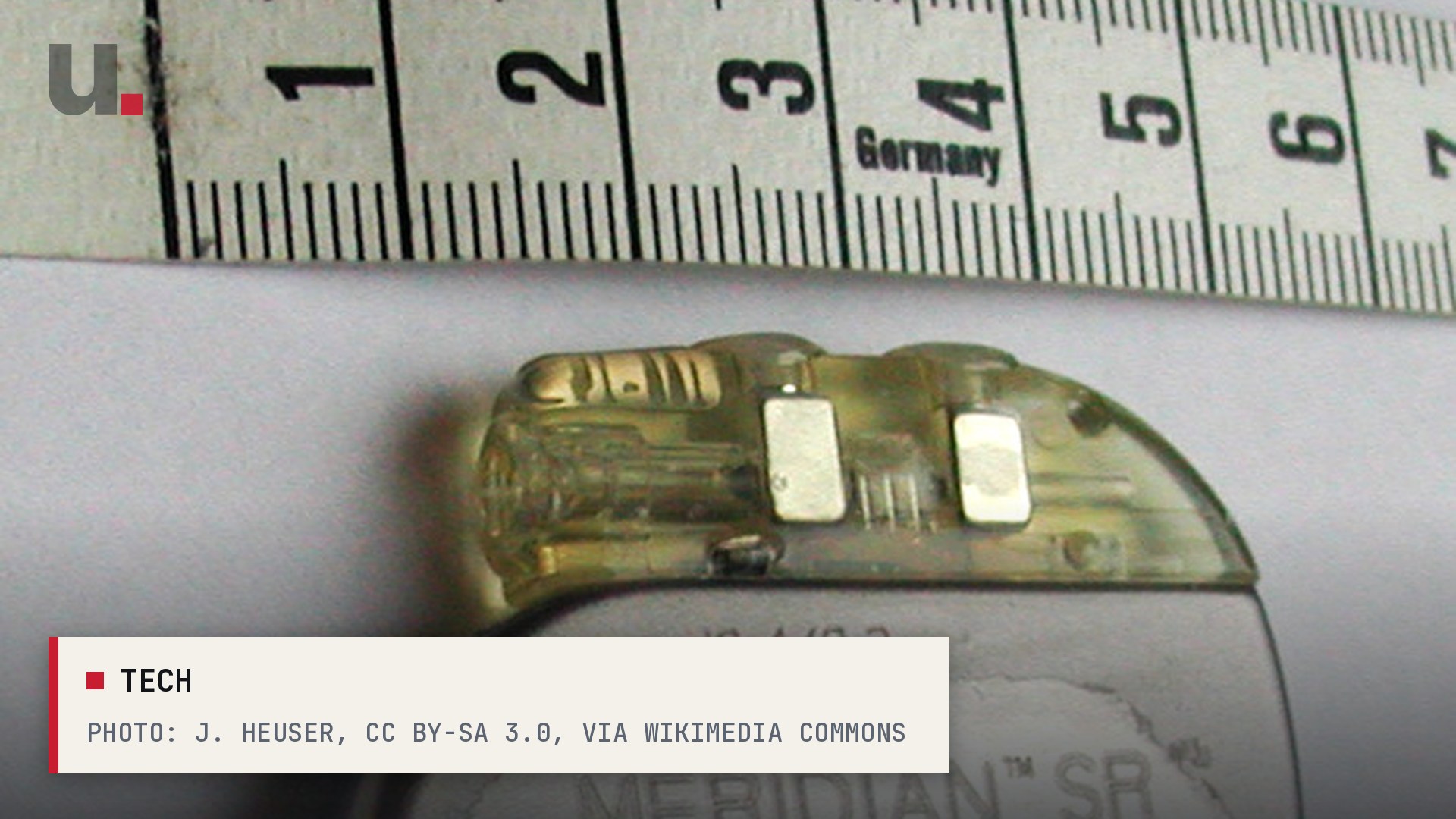
Somebody picked up the phone at one of the world’s biggest heart device makers last spring, believed the voice on the other end, and handed over the keys. Six months later, the people whose information walked out the door are just now getting letters about it.
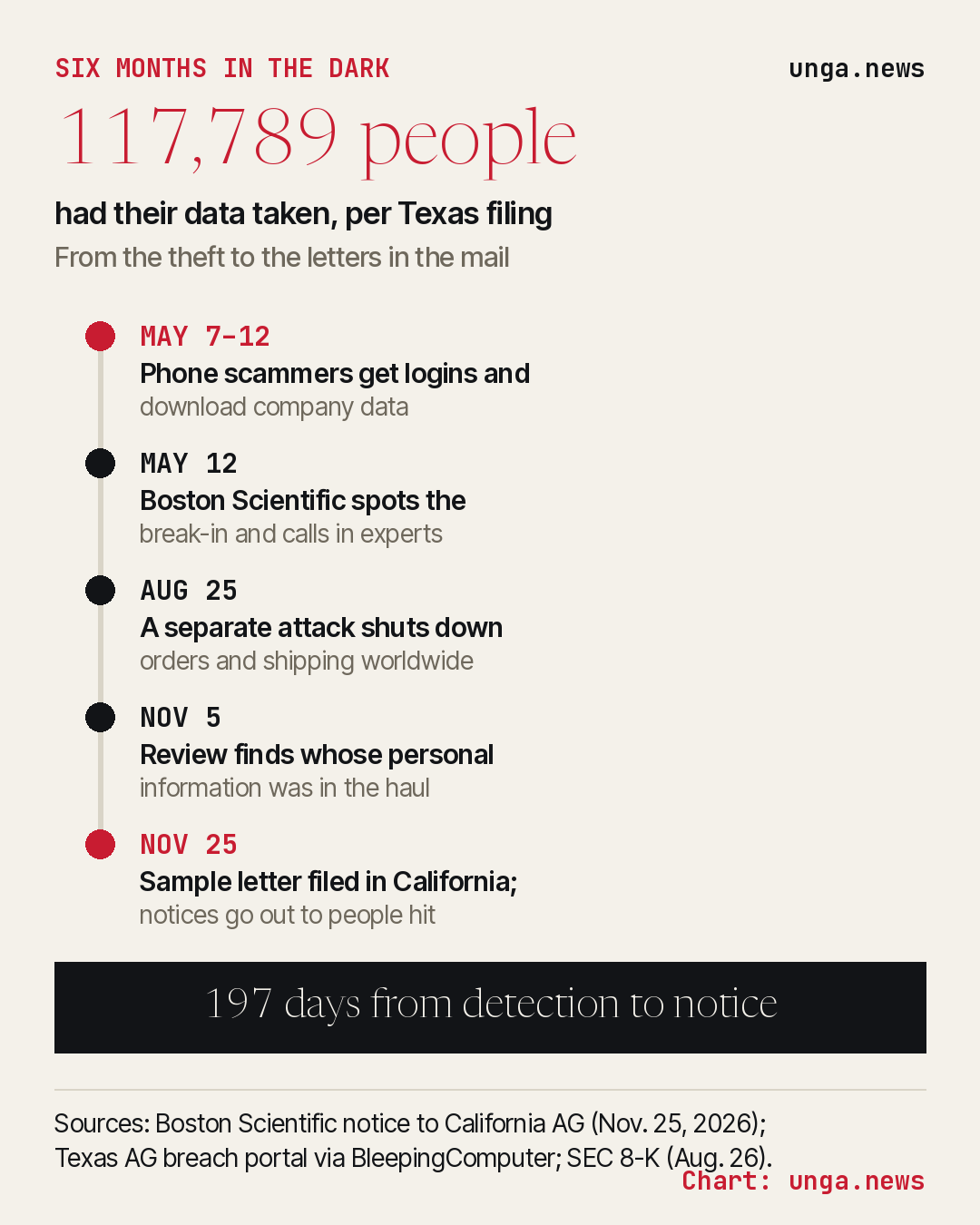
Boston Scientific, the Massachusetts company behind pacemakers, defibrillators, stents and catheters used in hospitals across the country, filed a sample breach notice with California’s attorney general on Nov. 25. The letter says hackers got into “certain cloud-based IT business applications through social engineering (vishing) tactics and downloaded data between May 7 and May 12, 2026.”
Vishing is voice phishing. No zero-day exploit, no movie-style hacking. The company’s own letter spells it out: tricking people into giving up their logins, “such as calling and pretending to be a customer or member of the IT department.”
The number the letter leaves out
Boston Scientific’s notice never says how many people were hit. Texas made that answer public. Under Texas law, any company that loses data on 250 or more Texans has to report it to the state attorney general, and the office posts those reports online. According to BleepingComputer, which first reported the filing, the Texas portal lists 117,789 people affected.
The Texas listing also spells out what kinds of information were taken: full names, home addresses, Social Security numbers, government ID numbers like passports and state ID cards, medical information, health insurance information and dates of birth.
The letter itself is softer. It says the stolen data varied person by person and could include contact details, birth dates, device serial numbers and other information tied to someone’s “treatment or relationship with Boston Scientific.” The California sample tells its reader, “Your Social Security Number and financial information were not affected,” which suggests different people are getting different versions depending on what was in their file. Anyone who gets one of these letters should read their own list closely rather than assume the best.
There is real good news for patients who carry one of these devices in their chest. Boston Scientific says the breach did not touch its LATITUDE remote monitoring system, which lets doctors check on implanted heart devices from afar. It also says the hackers did not get into connected medical devices, clinical case management tools or patient medical record systems.
“There also was no impact to the operation, performance, remote monitoring or safety of Boston Scientific products or medical devices,” the letter says. Manufacturing, ordering and shipping kept running.
So nobody’s pacemaker got hacked. What got taken was the paperwork side of the business: the cloud apps a big company uses to keep track of customers, patients and the people it works with. For a crook, that’s plenty. A name, a birth date, an address and an insurance number are the raw material for medical identity theft, fake insurance claims and very convincing scam calls.
Two break-ins in one year
This is the second time Boston Scientific has been hit in 2026, and the company says the two are not connected.
On Aug. 25, a separate attack knocked out systems the company needs to build, process and ship orders around the world. Boston Scientific disclosed it in an SEC filing the next day. That one, according to CrowdStrike’s investigation as described by BleepingComputer, started with an internet-facing network device and spread into part of the company’s in-house computer systems. Investigators found no sign it reached the cloud apps. On its third-quarter earnings call, the company said the outage cost roughly $150 million in sales.
A Boston Scientific spokesperson told BleepingComputer the May theft is unrelated and declined to share more. The company has not named who did it, and no gang has publicly claimed it.
Six months is a long time
Here’s the part that should bother people. Boston Scientific says it spotted the break-in on May 12, the same day the data downloads stopped. It did not finish figuring out whose information was in the haul until Nov. 5. The sample letter landed with California on Nov. 25. That’s 197 days from the moment the company knew something was wrong to the moment it put a notice on file.
Companies will say a careful review takes time, and sorting through stolen files to find every name is real work. Texas law gives businesses 60 days to notify people once they determine a breach happened, and Boston Scientific dates that determination to Nov. 5. On paper, the clock may have barely started.
But the people on the other end of this don’t live on paper. For six months, scammers could have been sitting on names, addresses, insurance details and in some cases Social Security numbers, while the people those numbers belong to had no reason to be on guard.
The company is also not offering free credit monitoring, according to BleepingComputer. The letter tells people to watch their statements, use unique passwords and contact the Federal Trade Commission if they suspect identity theft. A company that took in more than $20 billion in revenue last year could afford a year of monitoring for the people whose files it lost.
A free lock on your name
Freeze your credit. It’s free at all three bureaus, Equifax, Experian and TransUnion, thanks to a 2018 banking law President Trump signed that made freezes free nationwide. A freeze stops anyone from opening new credit in your name and takes a few minutes online.
Next, watch your health insurance statements, the explanation of benefits forms that show what was billed under your name. Medical identity theft often shows up there first as a visit or a device you never got.
Then treat every unexpected call about your device, your insurance or your account with suspicion, even if the caller knows your name, birth date and doctor. That’s exactly the kind of detail this breach could put in a scammer’s hands. Hang up and call back using the number on your card or the company’s official site. Boston Scientific’s letter lists an assistance line at (844) 301-0384, weekdays 8 a.m. to 5:30 p.m. Central.
The lesson for every big company is the same one the letter teaches, whether it meant to or not. Billions in security spending can fall to one convincing voice on the phone. Training the people who answer those calls costs a lot less than mailing out a hundred thousand apology letters six months late.
Sources
- Boston Scientific (filed with California Attorney General) — Notice of Data Breach, sample letter (filed Nov. 25, 2026)
- California Attorney General — Search Data Security Breaches: Boston Scientific Corporation, reported 11/25/2026
- BleepingComputer — New Boston Scientific data breach exposes personal, medical info (Nov. 27, 2026)
- Boston Scientific (SEC) — Form 8-K, cybersecurity incident (Aug. 26, 2026)
- Boston Scientific (SEC) — Form 8-K (Sept. 8, 2026)
- Texas Legislature — Business and Commerce Code § 521.053: Notification required following breach of security
- Federal Trade Commission — Credit Freezes and Fraud Alerts