

Hackers Tried to Break Into America’s Busiest Port 120 Million Times in One Month
Attacks on the Port of Los Angeles have nearly doubled since 2023, Texas’s top oil port says it gets hit thousands of times a day, and the Coast Guard and FBI are now boarding ships to check their computers.
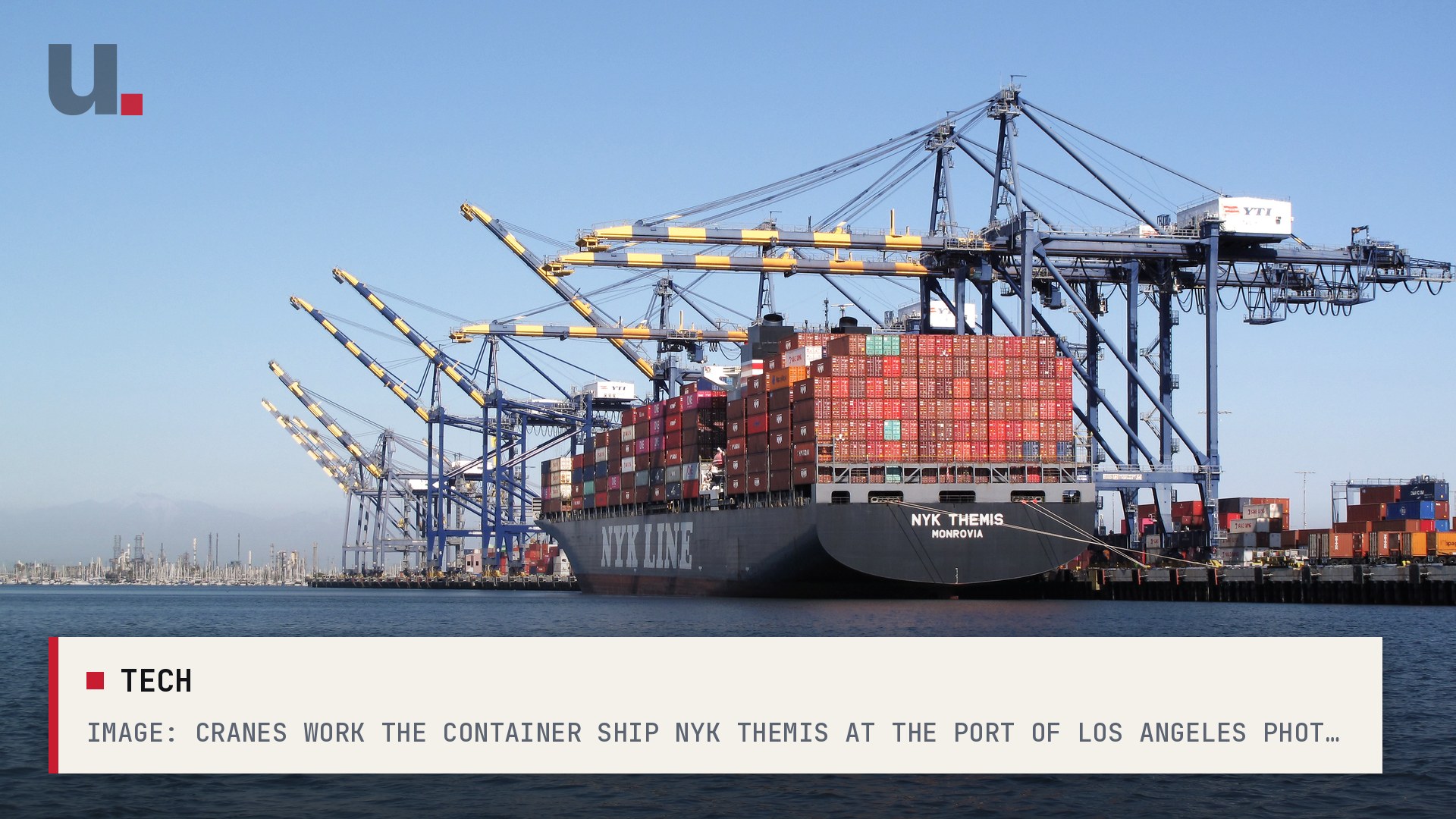
Every pair of sneakers, flat-screen TV and box of Christmas lights that comes off a ship in Southern California passes through computers that somebody, somewhere, is trying to break into. In August, the Port of Los Angeles says, that somebody tried about 120 million times.
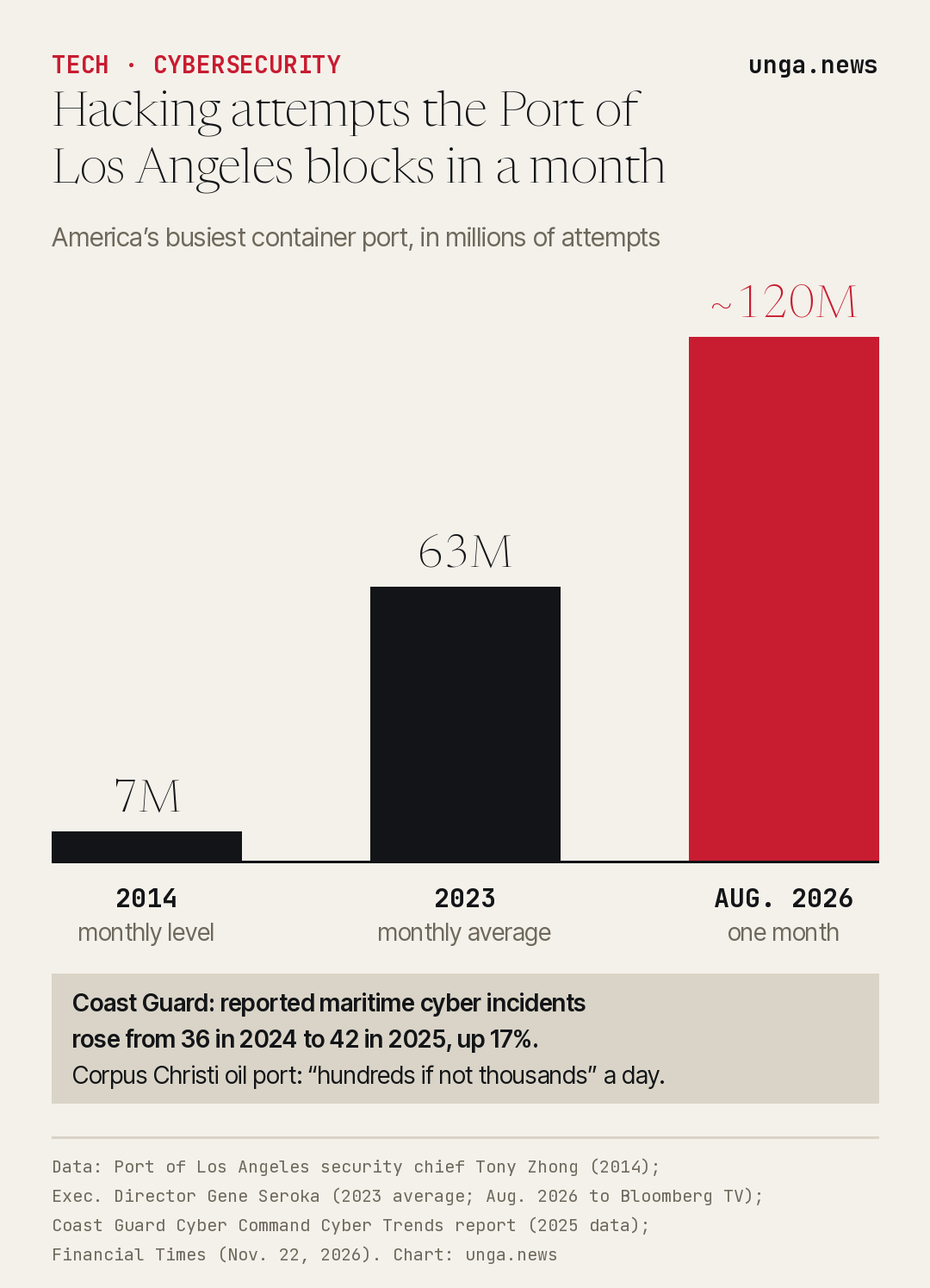
That number came from Gene Seroka, the port’s executive director, in a Bloomberg Television interview this fall. It is nearly double the roughly 63 million attempts a month the port reported blocking in 2023, which at the time was the most it had ever recorded. Back in 2014, when the port opened the country’s first cybersecurity operations center at a seaport, the monthly figure was about 7 million.
Now the rest of the country’s ports are saying the same thing out loud. In a report published Sunday, the Financial Times found that a run of break-ins at U.S. ports, on oil tankers and at shipping companies has exposed how old and leaky many of these networks are. The port bosses it talked to did not sound calm.
The oil port that gets hit all day
The sharpest warning came from Texas. The Port of Corpus Christi is the biggest gateway for American crude oil going overseas, moving about 2.3 million barrels a day. Its chief executive, Kent Britton, told the paper that hacking attempts have climbed to “hundreds if not thousands” a day, coming from “known bad actor” countries and from groups hunting for big-name targets.
He would not name the countries. He did describe the playbook. Attackers pose as senior executives and send fake messages meant to trick employees into opening the door. “They’re poking at our systems and trying to find vulnerabilities,” Britton said. “With AI, it’ll only get more complicated.”
He also put the whole problem in one line any linebacker would understand: “If you’re playing defence, you have to get it right every time … if you’re planning offence, you only have to get it right once.” Seroka has said almost the same thing about Los Angeles. The attackers, he said, only “have to get it right one time,” and the threat is “front of mind every day.”
Corpus Christi is not betting everything on software. The port has hired dedicated cybersecurity staff and keeps a fallback plan that runs on radios, binoculars and paper records, so ships can keep moving if the screens go dark. That is not old-fashioned. That is a port that has thought hard about what happens when the network loses.
This is about more than one port’s IT budget. Oil exports are one of the biggest wins American energy has to show the world, and a port that can’t load tankers is a gift to every rival who would rather the world buy its oil from somebody else. A successful break-in at a place like Corpus Christi could stall energy shipments. At a place like Los Angeles, it could back up the goods families are buying for the holidays.
When the screens did go dark
It has already happened on a smaller scale. On Aug. 4, hackers got into the computer systems of the North Carolina State Ports Authority, hitting the Port of Wilmington, the Port of Morehead City and the Charlotte Inland Port all at once. A spokesperson told Recorded Future News the system was “hacked by an outside actor or group.” Gates opened late, signs outside warned truckers to “Expect Delays,” and workers switched to processing cargo by hand.
The authority said the breach was contained and that there was no sign sensitive data was taken. Normal gate hours came back on Aug. 6, but cargo was still being handled manually while the systems were rebuilt. Nobody has publicly taken credit, and the ports authority has not said who did it.
Out at sea, things got stranger. Later that month, the Coast Guard and the FBI boarded two foreign-flagged ships headed for the United States after signs their onboard networks had been compromised. The vessels were carrying crude oil and liquefied petroleum gas from the Mediterranean toward Galveston, Texas, and the trouble reportedly started near the Strait of Gibraltar. Teams went aboard on Aug. 21 and again on Aug. 24.
These were not ordinary inspections. According to The Maritime Executive, the boarding parties included specialists from a Coast Guard Cyber Protection Team and the FBI’s Cyber Action Team, and their target was the ships’ computer networks rather than contraband. The two agencies said the boardings were meant “to ensure the integrity of the vessel’s operational and information technology systems following indications that the networks of both vessels were compromised.” No crew was hurt, no ship lost control and nothing spilled.
The Coast Guard goes on offense
Two weeks later, on Sept. 4, Coast Guard Cyber Command and the FBI put out a maritime cyber alert. They said they had seen nation-state hackers exploiting weaknesses in Fortinet FortiGate firewalls and VPN gear used on ships and at port facilities. Citing the federal cyber defense agency, the alert said login details tied to 74,000 of those devices had been stolen and leaked.
The Coast Guard’s own yearly numbers point the same way. Its Cyber Command counted 42 reported cyber incidents across the country’s maritime system in 2025, up 17% from 36 in 2024. The share of its cyber missions that involved the machinery side of operations, the systems that move cranes, pumps and gates rather than email, jumped from 46% to 62%.
The most humbling numbers in that report are about the basics. When Coast Guard teams tested port and ship defenses in 2025, a fake phishing email got them in 53% of the time. Across all their missions, they cracked 4,605 passwords. Real attackers don’t need a genius trick when a tired employee will click the wrong link.
Ports are not waiting around. The Port of Virginia runs monthly staff training and joint drills with the Coast Guard. The Port Authority of New York and New Jersey is spending heavily on cyber defense. Britton says Corpus Christi wants more help from Washington, and the Coast Guard and FBI boardings show the federal government has started treating a hacked tanker as a security threat instead of a paperwork problem.
For the guy waiting on a delivery truck, none of this shows up until the day it does. Los Angeles stopped every one of those 120 million attempts it counted in August. Britton’s rule still applies. The hackers only need one to work.
Sources
- Financial Times — US ports face escalating cyber threats (Nov. 22, 2026)
- Bloomberg — Port of LA Foiled Around 120 Million Cyberattacks Last Month (Sept. 17, 2026)
- Domestic Preparedness — Gene Seroka: Fighting Cyberattacks at the Western Hemisphere’s Busiest Port (Feb. 14, 2024)
- American Journal of Transportation — Port of Los Angeles hit by 60 million monthly cyber attacks in 2023 (July 16, 2024)
- Recorded Future News — Cyberattack on North Carolina Ports ‘contained’ as Coast Guard, state officials investigate (Aug. 6, 2026)
- WECT — NC Ports operating manually after cyberattack disrupts statewide systems (Aug. 6, 2026)
- The Maritime Executive — When the Hacker Comes Aboard
- Associated Press — FBI and Coast Guard boarded US-bound oil tankers after signs the ships were hit with cyberattacks
- Anadolu Agency — US ports face surge in cyberattack attempts, threatening vital trade routes (Nov. 22, 2026)