

House Investigators Spent 15 Months on Epstein. They Found No Trump Link, and Prosecutors Who Let Him Off Easy.
The final House Oversight report says every witness cleared Trump, and that Epstein’s crimes after 2005 could have been stopped if prosecutors and a Florida sheriff hadn’t gone soft on him.
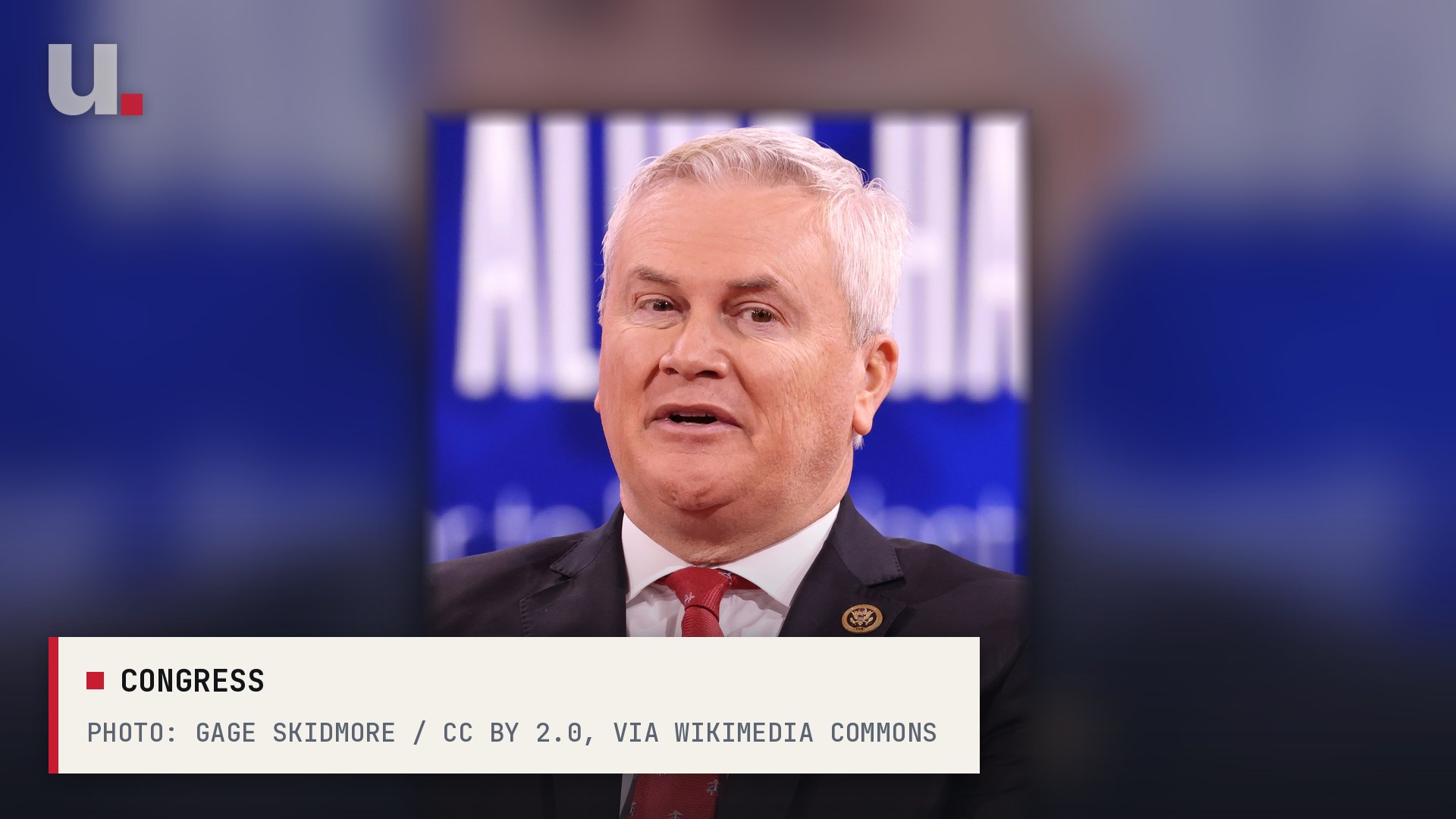
For a year and a half, Democrats told anyone with a microphone that the Epstein files would bury Donald Trump. On Tuesday the House Oversight Committee put out its final report on the case, and it lands somewhere very different. After 19 depositions and interviews, tens of thousands of pages from the Epstein estate and the Justice Department, and a hard look at bank records, Republican investigators say the trail never once led to the president.
What the trail did lead to is uglier and older. The 136-page report, the end of a 15-month investigation led by Chairman James Comer of Kentucky, concludes that Jeffrey Epstein’s crimes after 2005 “could have been prevented and justice served had it not been for the repeated failures of law enforcement and federal prosecutors.” In plain English: the government had him, and it let him off easy.
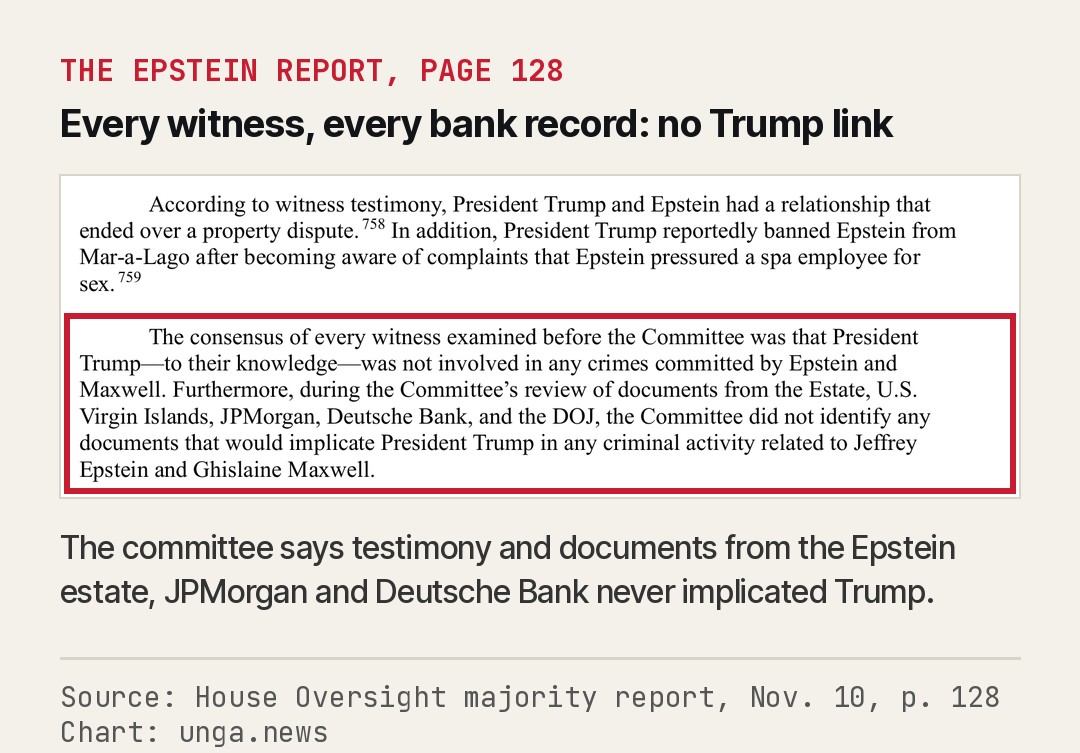
The committee doesn’t mince words about the Trump question either. “The consensus of every witness examined before the Committee was that President Trump, to their knowledge, was not involved in any crimes committed by Epstein and Maxwell,” the report says. It adds that a review of records from the estate, the U.S. Virgin Islands, JPMorgan, Deutsche Bank and the Justice Department turned up no documents “that would implicate President Trump in any criminal activity.”
The Trump question, answered under oath
Some of the strongest testimony on that point came from people with no reason to help Trump. Bill Clinton, deposed in February, volunteered it. “I hate this, but, because I don’t believe I should inject anything,” Clinton said, before adding that Trump “never said anything to me to make me think he was involved in anything improper with regard to Epstein either. He just didn’t.” According to Clinton, Trump told him, “We were friends, and then we had a falling out over a land deal, property deal.”
Epstein’s longtime lawyer, Darren Indyke, told the panel the same story about a Palm Beach property dispute. Les Wexner, the retail billionaire who once handed Epstein power of attorney over his finances, was asked by Rep. Jasmine Crockett whether Epstein ever shared anything about Trump’s sex life. “No,” Wexner said. Asked if Epstein even dropped Trump’s name, Wexner said Epstein name-dropped everybody, “the Pope” and “God” included, but he couldn’t recall Trump specifically. The report also notes Trump reportedly banned Epstein from Mar-a-Lago after complaints that Epstein pressured a spa employee for sex.
Republicans also accuse committee Democrats of running a show, saying they Democrats leaked three emails out of more than 20,000 pages of estate documents, with their own redactions, to “manufacture an anti-Trump narrative,” which the report calls “a dishonest, politically motivated attempt.” For the record, Trump signed the Epstein Files Transparency Act on Nov. 19, 2025, and the Justice Department released more than three million files on Jan. 30 of this year.
Twelve hours out, six days a week
The real scandal in these pages is how Epstein was treated the first time he got caught. Palm Beach police opened the case in March 2005. Federal prosecutors in South Florida drafted an indictment in 2007, then dropped it for a non-prosecution agreement, a deal promising Epstein wouldn’t face federal charges if he pleaded guilty to state ones. The report calls that deal “wholly inappropriate,” saying it shielded Epstein and an unknown number of “potential co-conspirators” and kept survivors in the dark while it was negotiated. Some of Epstein’s own assistants were named in it without their knowledge.
Then came the jail time, if you can call it that. Epstein was sentenced to 18 months and served 13. Thanks to the Palm Beach County Sheriff’s Office, he could leave the stockade for up to 12 hours a day, six days a week, to “work” at what the report calls a “by all accounts fictitious” Florida Science Foundation. He rode in a private car, watched by off-duty deputies he paid and even gave amusement park tickets to. Survivors, including Sarah Kellen, told the committee Epstein abused women during those work-release hours. Kellen said it even happened over video from the stockade itself.
Alexander Acosta, the U.S. attorney who signed off on the deal and later served as Trump’s labor secretary, takes real heat. The committee says his “hands-off approach” left the case to “potential Epstein loyalists,” naming two of his former prosecutors, Matthew Menchel and Bruce Reinhart. Reinhart left the office on Jan. 1, 2008, and went straight into private practice representing Epstein associates. Acosta told investigators the state proved an “unreliable partner” and that his office had been assured Epstein wouldn’t get work release at all.
Banks saw it. So did the travel desk.
Epstein had help. The report says banks spotted activity bearing “hallmarks of human trafficking” and kept processing it, and that many suspicious-activity filings were made only after his 2019 arrest. It says American Express agents let Epstein book “decoy flights,” dummy refundable itineraries shown to foreign consulates, to move foreign women across borders and into his homes. Epstein and associates used Disney princess names as code for young women.
On Epstein’s 2019 death, the committee lands where the FBI did. Guards at the Manhattan jail missed at least 12 rounds and three counts that night, close to eight hours with no real supervision. But the report says nothing the committee received disproved the finding that Epstein took his own life.
Comer, who gives up the top Republican seat on the panel in January under conference term limits, wants action before the file closes. “The federal government has failed the survivors of Jeffrey Epstein and Ghislaine Maxwell’s horrific crimes for decades,” he said in a [statement]({PR}). The report asks the Justice Department to interview or re-interview members of Epstein and Maxwell’s inner circle, to look harder at associates accused of crimes, and to give survivors their own records unredacted. It names his former executive assistant, Lesley Groff, saying it is “not credible” she couldn’t recall who was in Epstein’s little black book after years of booking his “massages.” It wants Congress to pass Comer’s Survivor’s Voice Protection Act, which would let abuse survivors speak out even if they signed a gag agreement.
Democrats aren’t buying the ending. Rep. Robert Garcia, the panel’s top Democrat, said in a statement quoted by the Guardian that the report rests on “an incomplete investigation and zero public hearings,” claimed the department is still withholding over 2.5 million pages, and promised to keep going when his party takes the gavel in January, “including Donald Trump.”
Ghislaine Maxwell, the one person who could answer the most questions, pleaded the Fifth when the committee deposed her. She is serving 20 years at a federal prison camp in Bryan, Texas.
Sources
- House Oversight Committee — A Review of the Federal Government’s Mishandling of the Jeffrey Epstein and Ghislaine Maxwell Criminal Investigations (majority staff report)
- House Oversight Committee — House Oversight Committee Releases Report on the Federal Government’s Mishandling of Epstein and Maxwell Criminal Investigations
- The Guardian — US politics live, Nov. 10, 2026 (Robert Garcia statement)
- Politico — House Oversight Republicans release final report on Epstein investigation