

Illinois Man Mailed Fake Anthrax to Four Members of Congress, With His Own Name and Home Address on Every Envelope
He told the FBI the white powder was salt because it "kind of looks like" anthrax. A tipster gave agents his name before the letters were even postmarked, and the bigger wave of powder letters that inspired him is still unsolved.
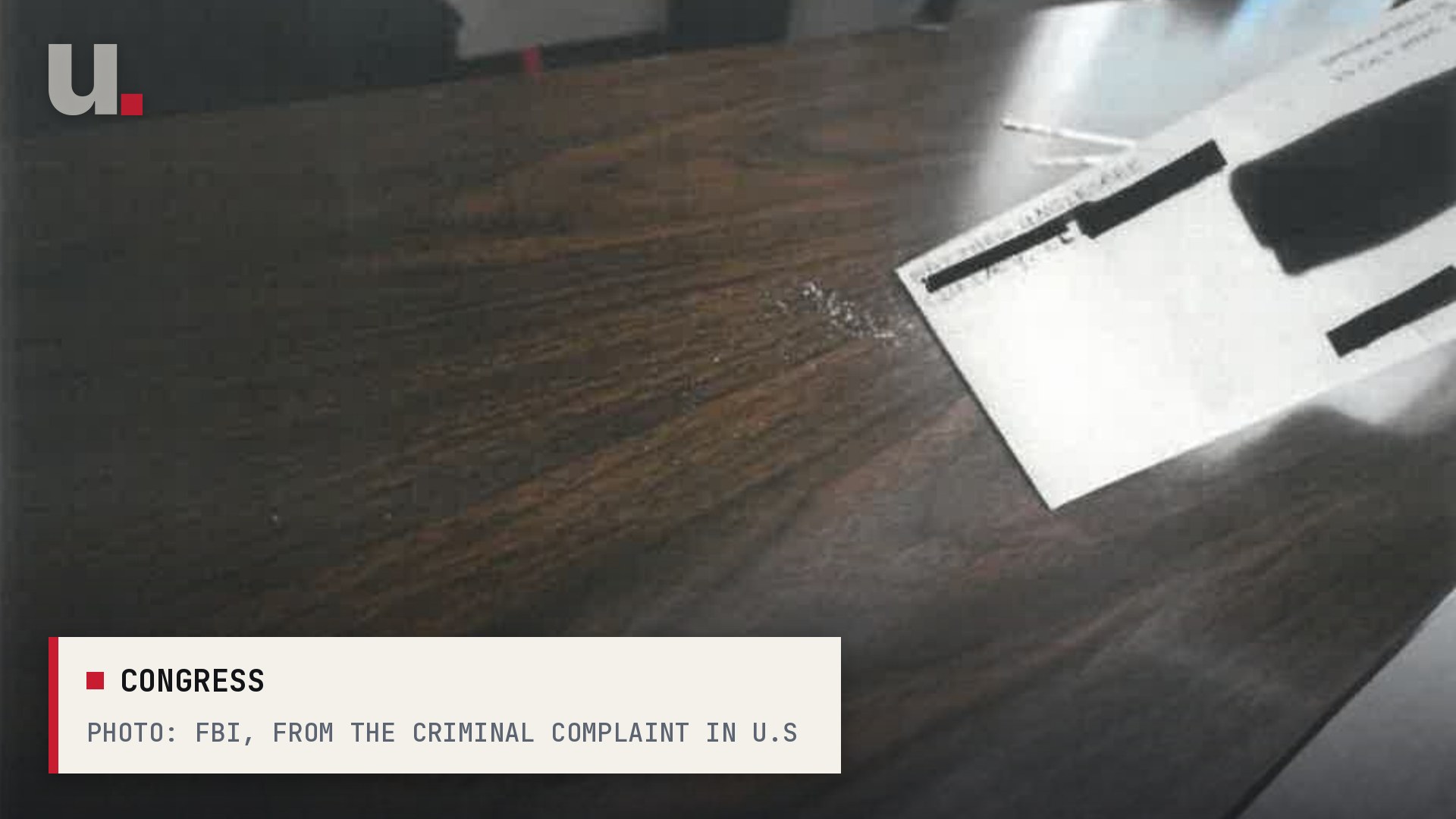
Four envelopes of white powder reached the offices of four members of Congress from Illinois last week. Staff called 911, hazmat crews rolled, and FBI personnel trained in handling weapons of mass destruction came to collect them. Every one of the envelopes had the sender's name and home address written in the corner.
Matthew G. Unglesbee of Quincy, Ill., is charged with false information and hoaxes and with mailing threatening communications, according to a federal complaint unsealed Monday in the Central District of Illinois. He told agents the powder was salt.
Why salt. In an Oct. 25 interview in an FBI vehicle outside his home, Unglesbee said he knew recipients of white-powder letters "took it serious" and would have "hazmat come in white suits" because "anthrax is dangerous," the FBI affidavit says. He used salt because it "kind of looks like" anthrax since it's white, he told agents. He claimed he was joking but acknowledged the recipients would not know that and could see the letters as a threat.
"HA HA"
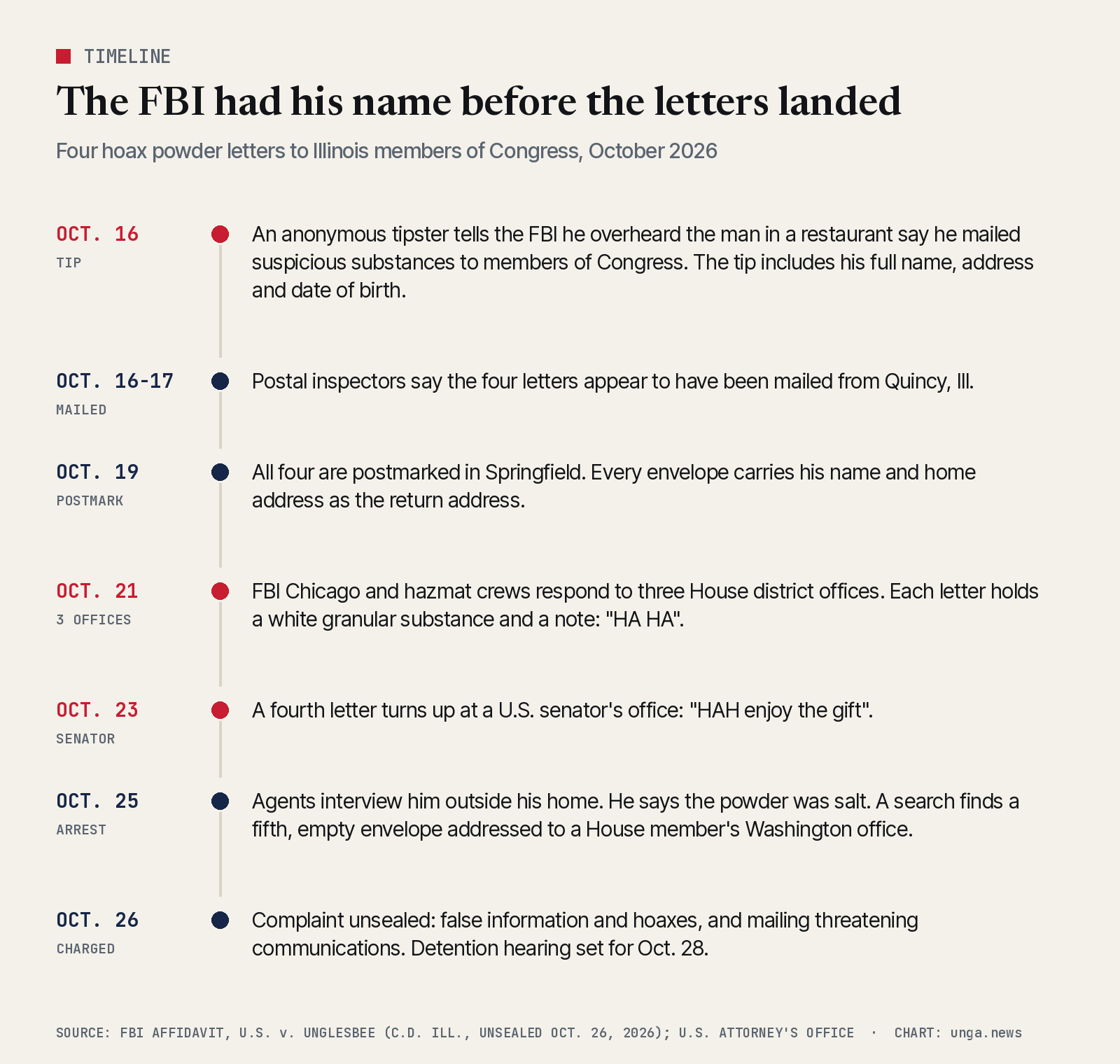
According to the affidavit, FBI Chicago personnel recovered three letters on Oct. 21 from the district offices of three House members in northern Illinois. Each held a white granular substance and a handwritten note reading "HA HA." On Oct. 23, a fourth envelope turned up at a U.S. senator's office with a note reading "HAH enjoy the gift."
The complaint does not name the lawmakers. ABC7 Chicago reported the letters went to Reps. Mike Quigley, Brad Schneider and Jan Schakowsky and Sen. Tammy Duckworth, all Democrats.
Staff did not open any of them. One office spotted the envelope because it felt like it held powder and something could be heard inside. By the time one Chicago office found its letter, the warning passing between offices was simple: mail from "Matthew Unglesbee" was to be treated as life threatening. Preliminary testing at the Illinois State Laboratory Response Network found no chemical or biological toxins.
The tip came first
The FBI had his name before any letter landed. On Oct. 16, the bureau's National Threat Operations Center got an anonymous online tip from someone who said he overheard Unglesbee in a restaurant say he had sent suspicious substances to members of Congress. The tipster supplied his full name, his address and his date of birth, the affidavit says.
Postal inspectors later concluded the letters were likely mailed from Quincy on Oct. 16 or 17, and they were postmarked in Springfield on Oct. 19. They still reached the offices. Agents interviewed Unglesbee on Oct. 25, nine days after the tip, and searched his room, where they found a fifth envelope, empty and unmailed, addressed to one of the House members' Washington offices with his own return address.
A copycat of a bigger, unsolved wave
Unglesbee told agents he mailed the letters after hearing someone in a restaurant talk about news of other letters sent earlier this month. He denied any role in those and said he couldn't afford to travel to other states to mail them.
That earlier wave is still open. On Oct. 23 the FBI and the U.S. Postal Inspection Service warned that letters with suspicious substances had been mailed nationwide to elected officials, secretaries of state, election offices, media organizations and polling companies, and said agents were working to intercept more before delivery. No hazardous material had been identified, the agencies said. Roll Call reported that more than six dozen lawmakers had said they were targeted, and that no charges have been announced in that wave.
What happens next
"The use of the mail to threaten others, including the mailing of threatening substances, will not be tolerated," U.S. Attorney Gregory M. Gilmore of the Central District of Illinois said in his office's announcement. "These threats will be investigated and prosecuted to the full extent of the law."
Unglesbee made his first appearance Monday by video before U.S. Magistrate Judge Douglas J. Quivey. A detention hearing is set for Wednesday in Springfield. Mailing threatening communications carries up to 10 years in prison, and the hoax charge up to five. A complaint is an accusation, and he is presumed innocent unless proven guilty.
CBS Chicago reported that he is listed as a registered sex offender in Adams County in the Illinois State Police database and was already being held in the county jail on a state harassment charge when the federal case was filed.
Sources
- U.S. District Court, Central District of Illinois — Criminal complaint and FBI affidavit, United States v. Matthew G. Unglesbee, No. 3:26-mj-03110 (unsealed Oct. 26, 2026)
- CourtListener (RECAP) — Docket: United States v. Unglesbee (C.D. Ill.)
- U.S. Attorney's Office, Central District of Illinois — Quincy Man Arrested and Charged with Mailing Hoax Letters Containing an Unknown Substance to Illinois Congressional Offices (Oct. 26, 2026)
- FBI and U.S. Postal Inspection Service — Suspicious Letters Containing White Powder Mailed to State and Local Election Officials, Media Organizations, and Public and Private Polling Companies (PSA I-102326-2, Oct. 23, 2026)
- Washington Examiner — Illinois man charged in white powder mail hoax targeting members of Congress (Oct. 26, 2026)
- ABC7 Chicago — Matthew Unglesbee accused of sending letters with white powder to 4 members of Congress
- CBS Chicago — Quincy, Illinois, man charged with sending white powder to Chicago area members of Congress
- Roll Call — Four hoax letters to Congress draw federal charges (Oct. 26, 2026)
- AP — Illinois man charged with mailing white powder to members of Congress
- NBC News — Man charged with mailing threatening letters with white substance to members of Congress