

Illinois’ New Senator Wants to Gut the Filibuster and Abolish ICE Before She’s Even Sworn In
Juliana Stratton says Democrats should pass bills with a bare majority and use the Senate’s purse strings to shut ICE down. The 60-vote rule is what stands in the way.
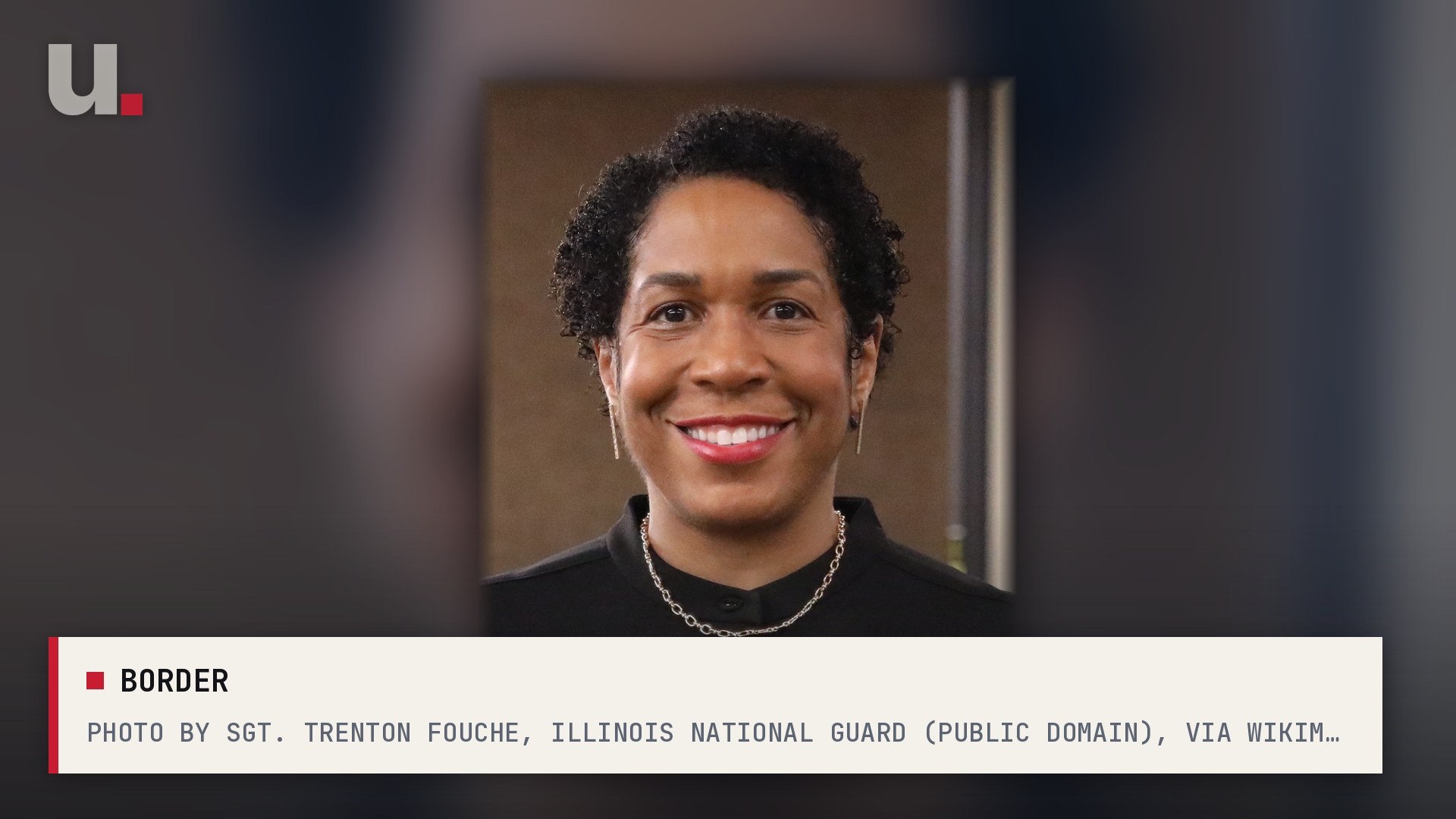
Juliana Stratton won’t be a United States senator until January. She already knows which Senate rule she wants gone first.
In an interview published Tuesday morning by The Guardian, the Illinois lieutenant governor and senator-elect said she would back “significantly reforming or abolishing” the filibuster, the rule that makes most bills clear 60 votes before they can pass. Her reason was blunt. Democrats made promises on the campaign trail, and she doesn’t want the minority party getting in the way of keeping them.
“We cannot go in kind of waffling on, ‘Well, we’ll see what we can do, it’s going to be hard,’” Stratton said. “Sure, there are hurdles, but we were elected to do hard things.”
The hurdle she means is the rule that gives the minority party, and the voters who elected it, a real say.
Four votes short, and in a hurry
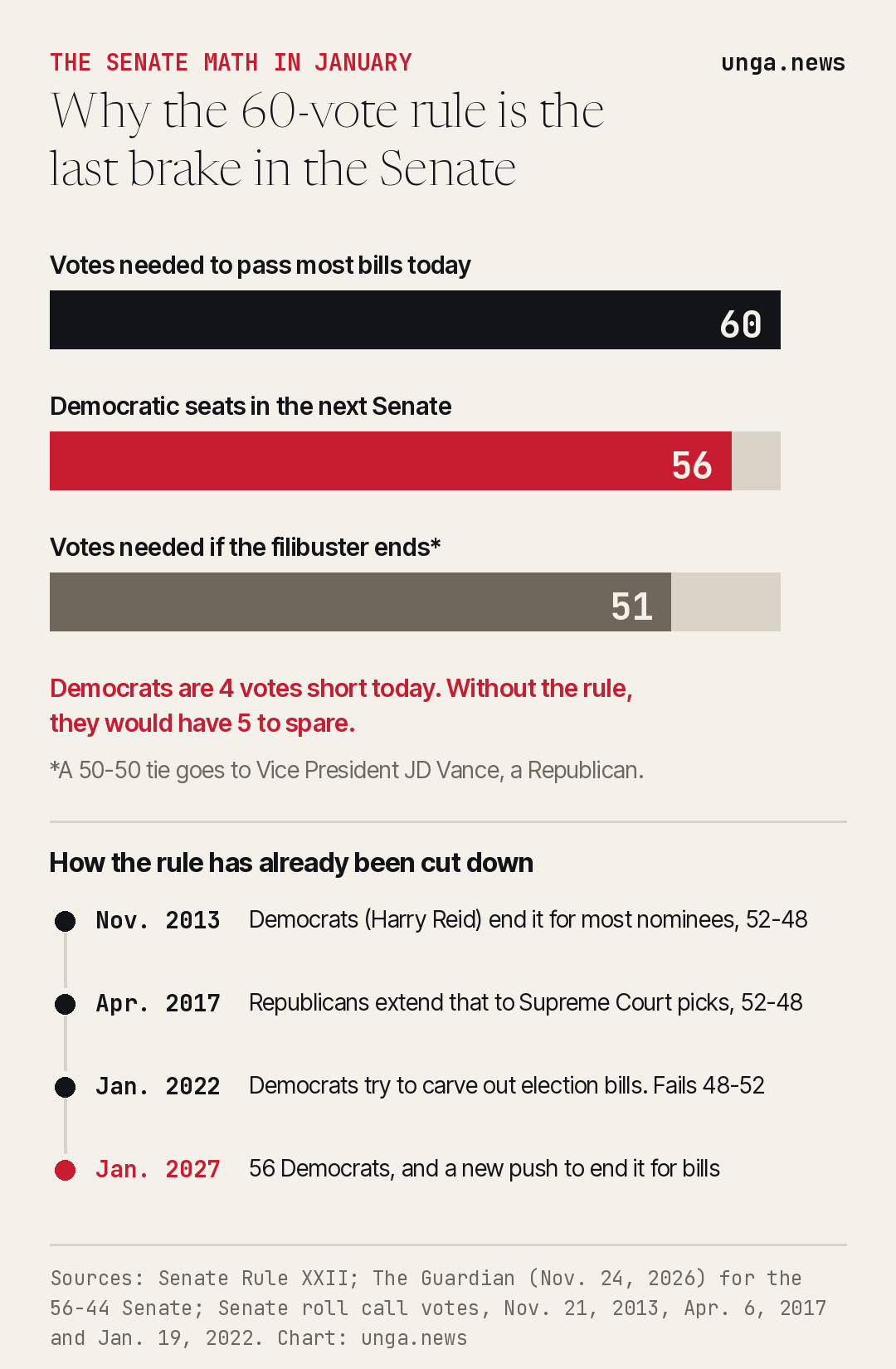
Democrats will hold a 56-44 majority in the next Senate, their biggest in nearly two decades. That is a lot of seats. It is still four short of 60, the number Senate Rule XXII requires to end debate on most legislation. As long as that rule stands, anything Democrats pass needs at least a handful of Republicans to sign on, which forces real negotiation.
Take the rule away and the math flips. With Vice President JD Vance breaking any 50-50 tie for Republicans, Democrats would need 51 votes of their own. They would have five to spare.
Stratton was clear about what she would do with that room. She listed restoring the Medicaid and food assistance cuts, bringing back the Obamacare marketplace subsidies, ending tariffs and ending the Iran war. If the president vetoes those bills, she said, “that’s on Republicans.”
“If he wants to run on how he’s doubling down on taking away people’s healthcare, if Republicans want to say it’s OK that children are going hungry, let them run on that, to their peril,” she told the paper.
She also ran on Medicare for All, and she hasn’t let up on that since winning.
Juliana Stratton on 𝕏, Nov. 20, 2026: “I’m fighting for Medicare for All for every Illinoisan.”
— @JulianaStratton View on 𝕏
A government takeover of health insurance has never come close to 60 votes. At 51, it is suddenly a conversation.
Abolish ICE, by starving it
The filibuster wasn’t the only thing on her list. Stratton told the Guardian she does not believe Immigration and Customs Enforcement can be reformed. She wants it abolished, and she wants senators to use “the power of the purse” to withhold its funding.
She pointed to Chicago, which she said is “still feeling the effects” of Operation Midway Blitz, the federal enforcement surge that sent hundreds of agents into the area and led to thousands of arrests. Her youngest daughter’s school, she said, went on lockdown twice because of ICE activity nearby.
Defunding ICE through spending bills is exactly the kind of fight where the 60-vote rule matters. Right now, a spending bill that zeroes out immigration enforcement would need Republican votes to get through the Senate. Those votes don’t exist. Without the filibuster, a party-line majority could try to choke off the agency that finds and removes illegal aliens, one appropriations bill at a time.
That is a huge thing to say before taking the oath. Illinois voters sent her to Washington. Tens of millions of Americans voted for Republican senators, and the filibuster is the rule that keeps their voices in the room.
Democrats started this fight, too
Democrats have chipped away at the rule before when it suited them. In November 2013, Majority Leader Harry Reid used a 52-48 vote to end the filibuster for most presidential nominees. Republicans warned Democrats they would regret it. In April 2017, Republicans used that same precedent to extend the change to Supreme Court nominees, on another 52-48 vote.
In January 2022, Democrats tried again, this time to carve the rule out for their election bills. It failed 48-52, because Joe Manchin and Kyrsten Sinema refused to go along. Both are gone now, and the new Democratic class is far less interested in that kind of restraint.
Republicans held the Senate for the last two years and kept the legislative filibuster in place, even when ending it would have helped them. That is the standard Democrats will be measured against.
A split inside her own party
Stratton isn’t only picking a fight with Republicans. She pledged during her campaign not to vote for Chuck Schumer as the Democrats’ leader, and she told the Guardian she is sticking to that. She wouldn’t commit to Sen. Chris Van Hollen of Maryland, who is challenging Schumer in the Dec. 1 secret-ballot election and has also called for ending the filibuster.
“I’m listening to everyone,” she said. “I want to see who steps up. We have one, Senator Van Hollen, who has stepped up.”
Schumer has more public backers. The Hill’s whip count has 16 senators openly with him and six with Van Hollen, with 28 votes needed to win. But the pressure from newcomers like Stratton tells you where the energy in that caucus is heading, and it isn’t toward compromise.
Stratton, 61, has spent the last seven years as JB Pritzker’s lieutenant governor and spent two decades before that running a dispute-resolution firm. She says that background will help her bring people together. Her first public plan for the Senate is to make sure she doesn’t need the other side at all.
Sources
- The Guardian — History-making Democratic senator backs filibuster reform to make good on midterm pledges (Nov. 24, 2026)
- Juliana Stratton on 𝕏 — “I believe that healthcare is a right, not a privilege…” (Nov. 20, 2026)
- U.S. Senate — Standing Rules of the Senate, Rule XXII (cloture)
- U.S. Senate — Roll Call Vote 117th Congress, 2nd Session, Vote No. 10 (Jan. 19, 2022)
- U.S. Senate — Roll Call Vote 113th Congress, 1st Session, Vote No. 242 (Nov. 21, 2013)
- U.S. Senate — Roll Call Vote 115th Congress, 1st Session, Vote No. 109 (Apr. 6, 2017)
- The Hill — Whip list: Chuck Schumer faces a leadership challenge from Chris Van Hollen