

Instagram Will Now Catch People Who Steal Your Videos, Even When SI Disguises the Copy
A new tool alerts creators when their Reels get reposted and lets them block the copy. Next up: catching SI videos built on stolen audio.
If you have ever posted a video that took you all afternoon to make, and then watched some stranger’s account repost it and rack up the views, Instagram finally has something for you. On Tuesday the Meta-owned app rolled out a tool it calls “content protection,” which hunts down copies of your Reels and lets you decide what happens to them.
The part that matters most going forward is the SI piece. Instagram says the tool will start catching SI-made videos that steal a creator’s original audio and paste it over new visuals. That is one of the oldest tricks on the app, and SI has made it faster and cheaper than ever.
How it catches a copy
Content protection is not new to Meta. Facebook has had it for about a year. What is new is that Instagram creators now get it too, according to TechCrunch, which first reported the rollout.
Once a creator signs up, the tool keeps scanning Instagram for copies of their protected videos. When it finds a match, it sends the creator an alert. From there the creator gets four choices:
Block the copy so nobody can watch it on Instagram or Facebook. Leave it up, but stick an “original by” label on it that sends viewers back to the real video. Leave it up and simply watch how it performs. Or release the claim and let it stay.
Those last two options sound odd until you think about how creators actually work. Plenty of them are happy to let a fan page spread their stuff, as long as people know where it came from. The label gives them credit without starting a fight.
There is also an allow list. If a creator runs a second account, or has given a brand permission to use a video, they can add those profiles so the tool doesn’t flag them.
The SI copycat problem
The SI side is the bigger deal, and it is also the part that is not fully here yet. Instagram says it will begin detecting SI-generated videos that reuse a creator’s original audio “even when the visuals have been altered.” A small group of creators will test that in the coming weeks, and Meta plans to open it up to everyone enrolled in content protection on both apps after that.
Think about what that covers. A comedian records a bit. Someone runs the audio through an SI video tool, generates a slick new clip around it, and posts it as their own. Today, a match tool that only looks at pictures would miss that, because the picture is brand new. Listening for the stolen audio closes the gap.
Instagram also says it is looking at ways to cut the reach of accounts that keep using SI tools to repost other people’s work. It did not say when, or how hard it will come down on them. Until it does, that is a promise, not a policy.
Why Meta thinks this works
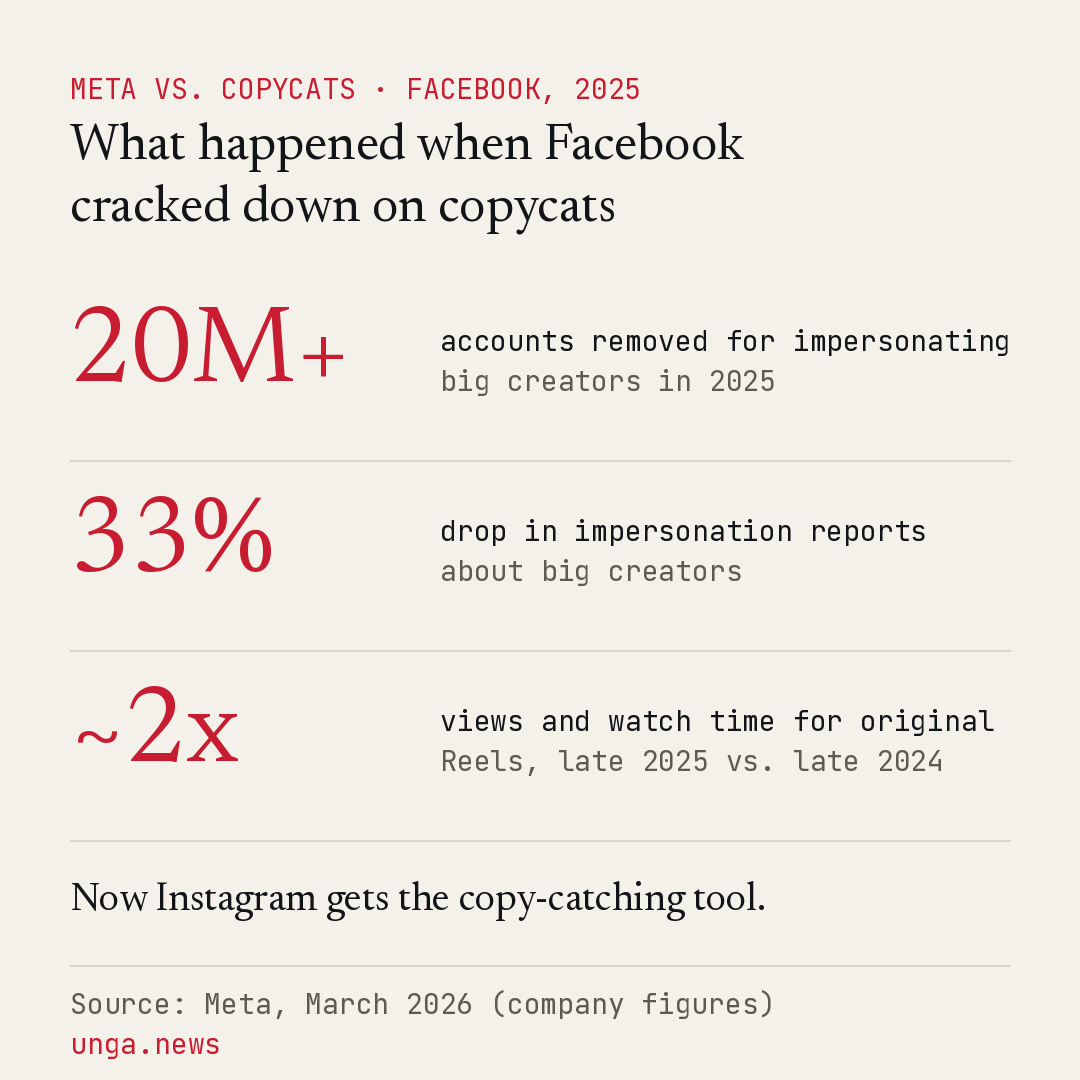
Meta has some numbers from the Facebook side, and they are worth a look, with the caveat that they are the company’s own figures. In a March update, Meta said it removed more than 20 million accounts in 2025 that were impersonating large content creators, and that impersonation reports about those creators dropped 33%. It also said views and watch time for original Reels on Facebook roughly doubled in the second half of 2025 compared with the same stretch of 2024.
Those numbers come from a broader crackdown, not from this one tool alone. Facebook also changed its rules so that reposts with tiny edits, like adding a border, a caption or speeding a clip up, count as unoriginal and get pushed down in the feed. Still, the direction is clear. Meta has decided that copied content is hurting the people it needs most, the ones who actually make things.
Who gets it, and when
Not everyone gets the tool on day one. Eligible creators will see a notice in their activity feed. Once they enroll, every new video they post is protected automatically, and they can go back and pick older videos to protect by hand, according to The Next Web. Meta’s rules for the tool generally require a creator to post mostly original content, own the rights to it, and keep an account in good standing.
Instagram made one more move the same week. Meta started testing Direct, a messaging-only app from Instagram, in Türkiye and Thailand. People can sign up with just an email address or phone number, without an Instagram account, and chats sync with the main app.
For the average person scrolling Reels, the change may be hard to notice at first. For the person who made the video, it is the difference between watching a copycat get the credit and getting it back.
Sources
- TechCrunch — Instagram's new tool for creators targets unauthorized reposts and AI-modified videos
- The Next Web — Instagram takes on AI copycats as Meta tests Direct, a messaging-only app
- Meta — Rewarding Original Creators on Facebook