

Judge Chutkan Bans Trump’s Noncitizen Voter Lists Nationwide. All 34 Charged in California Were on One
On Election Eve, the judge from Trump’s 2020 election case banned DOJ and DHS from handing states and counties their suspected noncitizen lists, on a $1 bond. Prosecutors say every accused noncitizen voter they’ve charged in California came off that list.
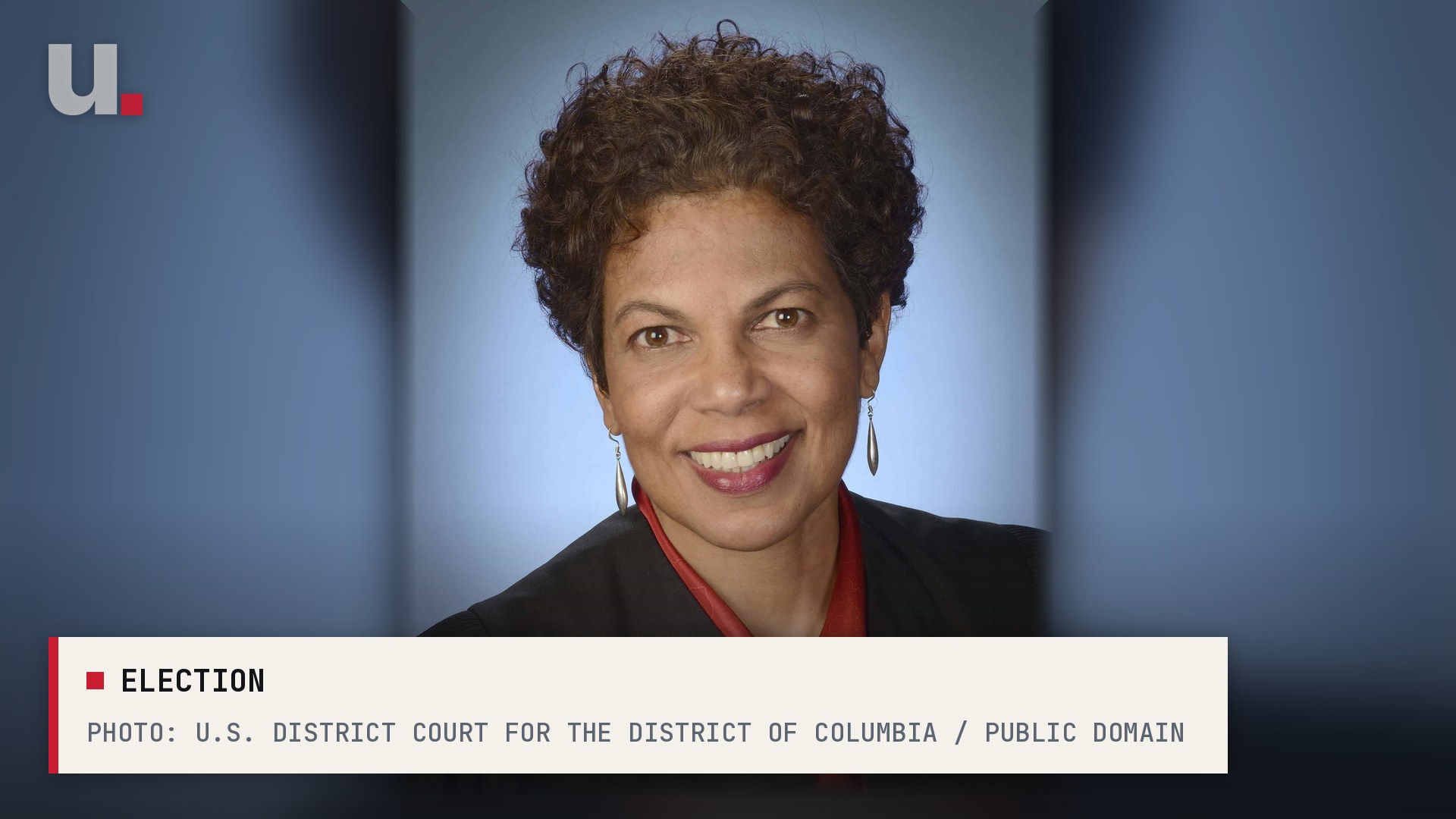
The night before Election Day, Judge Tanya Chutkan told the Justice Department and Homeland Security to stop sending lists of suspected noncitizen voters to election officials. Not just in California. Anywhere in the country.
Her two-page order bars both departments from “further disclosing, transmitting, or releasing data purporting to constitute lists of individual potential or actual non-citizen voters or registered voters” to any state, county or city official who registers voters, handles ballots, checks signatures or counts and certifies votes. The groups that sued have to post a bond of $1.
One dollar. That is the price of shutting down the federal government’s main tool for flagging noncitizens on the rolls, on the eve of a national election.
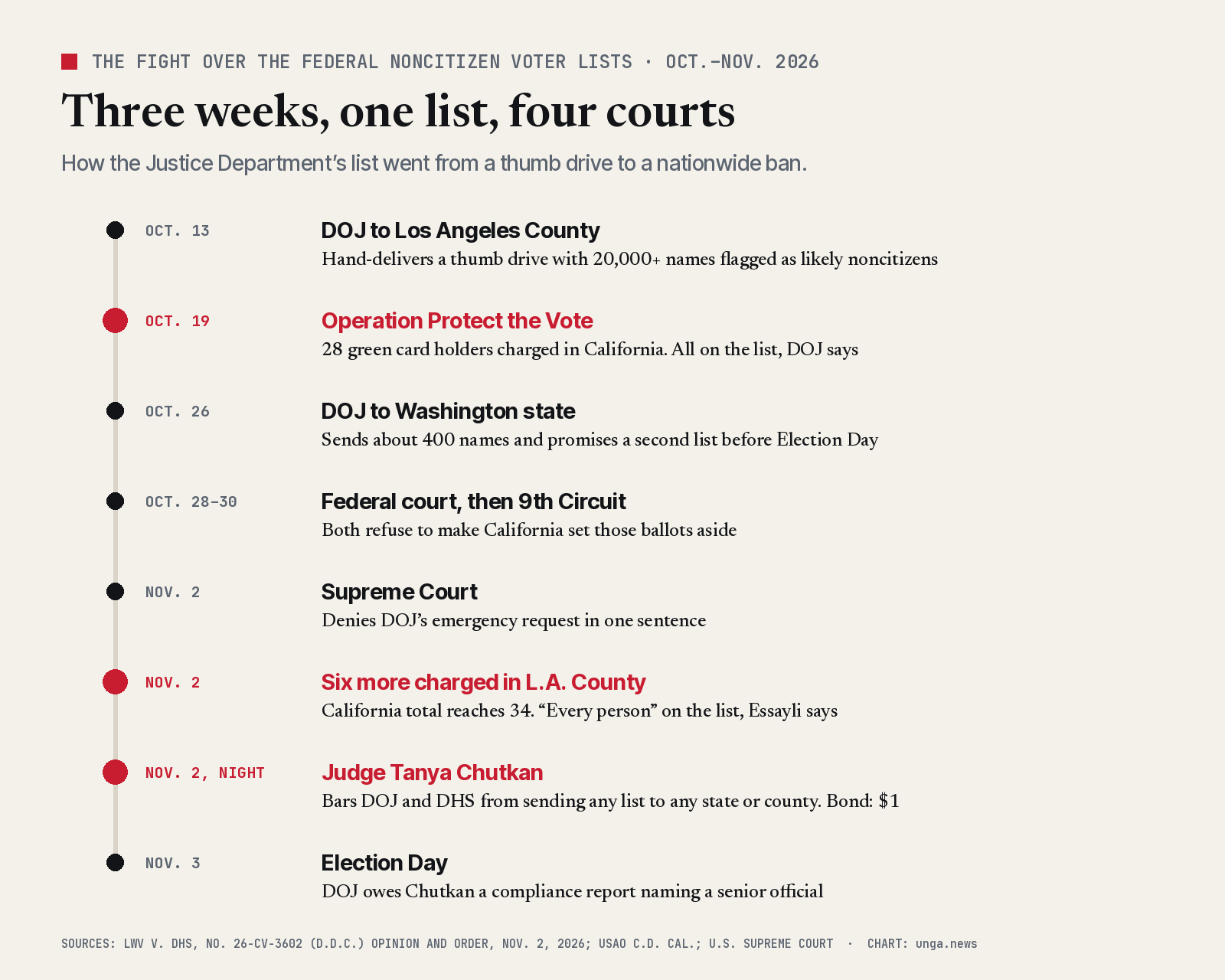
And it landed hours after federal prosecutors in Los Angeles said the list works. Bill Essayli, the first assistant U.S. attorney there, announced six more green card holders charged Monday with registering and voting illegally, bringing California’s total to 34. His point was the list itself.
What the judge actually blocked
The case is League of Women Voters v. Department of Homeland Security, filed Oct. 15 in Washington, D.C. Two of the plaintiffs, the Latino group LULAC and the privacy group EPIC, asked for the emergency order on Oct. 29. They are represented by Democracy Forward and Citizens for Responsibility and Ethics in Washington, two of the left’s busiest litigation shops.
Chutkan, an Obama appointee best known as the judge in the 2020 election case against Donald Trump, granted it in a 30-page opinion. Her reasoning runs on two tracks.
No law allows it, she says. The government pointed to 18 U.S.C. § 611, the federal law that makes it a crime for a noncitizen to vote. Chutkan said that law punishes the voter after the fact and “contains no language authorizing the broad program of bulk transmission of sensitive voter data.”
The Privacy Act, she says. Federal agencies that build a database of Americans’ records have to publish a notice in the Federal Register first, and they can share those records only under narrow exceptions. DHS and DOJ have pulled voter lists from at least 47 states, the plaintiffs say, and matched them against Social Security, State Department and immigration records. Chutkan found the agencies published no such notice and could not use the law-enforcement exception for bulk transfers.
Think of it like a bank that spots a forged check but is told it can’t call the store that cashed it. It can still call the police. It just can’t share what it found with the people who take the checks.
What she didn’t block
The order spells out two things the government can still do. It can answer questions from states that run a voter through SAVE, the federal citizenship check, and it can keep “prosecuting violations of federal law.”
That second carve-out is exactly where the administration is putting its weight today. “The courts have made it clear that the preferred remedy for election law violations is criminal prosecution,” Essayli wrote Monday night. “Building on Operation Protect the Vote, we will continue investigating and charging those who violate election laws or assist in their violation.”
Homeland Security Secretary Markwayne Mullin went further on Election Day morning: “If you vote illegally in this country, and you are NOT eligible to vote, @DHSgov will find you, hunt you down, and you will be prosecuted to the fullest extent of the law. Only American citizens should be deciding American elections.”
The SAVE carve-out matters too. Homeland Security Investigations announced Tuesday that an Uzbek national in Wyoming, Maksim Shakirov, pleaded guilty to voting as a noncitizen after the state started running its rolls through SAVE, Fox News’s Bill Melugin reported. States that ask can still get answers. States that don’t ask will no longer be told.
How the judge got there
The government argued the lists had “no independent legal effect,” since no state was forced to act on them. Chutkan turned that around: if the letters are only requests, she wrote, an injunction costs the government nothing in its fight against fraud. She also faulted it for not pointing to “any record evidence that there will be significant fraud in the upcoming elections.”
She leaned heavily on how the lists performed elsewhere. She cited a California ruling noting that Nevada says it reviewed 15,903 people DHS had flagged and found every one was a citizen, and that only 7,035 of the 20,000-plus Los Angeles records even had addresses in the county. Those are the states’ numbers, not findings the court made itself.
What the opinion never squares is the other number. Every one of the 34 people charged in California was on that same list, according to prosecutors. A tool that catches 34 accused noncitizen voters in a few weeks is not nothing.
What happens next
DOJ had promised Washington state a second list “ahead of” Election Day. That list is now frozen. San Luis Obispo County’s district attorney is investigating 63 registrations from an earlier batch, the opinion notes, and nothing in the order stops that.
Chutkan also gave the departments 24 hours to file a report confirming they are complying and naming a senior official responsible for keeping it that way. That deadline falls tonight, while the votes are being counted. The government can appeal to the D.C. Circuit, and it has already taken a California fight over the same list to the Supreme Court, which turned it down Monday in a one-line order.
The prosecutions go on. The warnings to the states do not, at least for now.
Sources
- U.S. District Court for the District of Columbia — League of Women Voters v. DHS, No. 26-cv-3602, Order granting preliminary injunction and stay, Doc. 30 (Nov. 2, 2026)
- U.S. District Court for the District of Columbia — League of Women Voters v. DHS, Memorandum Opinion, Doc. 31 (Nov. 2, 2026)
- U.S. Attorney’s Office, Central District of California — Six additional foreign nationals in L.A. County who registered to vote and voted charged (Nov. 2, 2026)
- LiveNOW from FOX (YouTube) — Video: Operation Protect the Vote news conference with Bill Essayli (Nov. 2, 2026)
- Bill Essayli on 𝕏 — “The preferred remedy for election law violations is criminal prosecution” (Nov. 2, 2026)
- DHS Secretary Markwayne Mullin on 𝕏 — “@DHSgov will find you, hunt you down” (Nov. 3, 2026)
- Bill Melugin (Fox News) on 𝕏 — HSI announces new noncitizen voting prosecutions, including Wyoming SAVE case (Nov. 3, 2026)
- U.S. Supreme Court — Order list, United States v. California, No. 26A624 (Nov. 2, 2026)
- EPIC — Press release: plaintiffs’ statement on the ruling (Nov. 2, 2026)
- Josh Gerstein (Politico) on 𝕏 — First report of the Chutkan order, with opinion and order links (Nov. 2, 2026)
- Wikimedia Commons — Tanya Chutkan, U.S. District Court Judge (public domain)