

Labor Department Wants Companies to Prove They Tried to Hire Americans Before Sponsoring Green Cards
The first big rewrite of the PERM rules in nearly 20 years would triple the job-posting period, kill the newspaper-ad loophole and block sponsors that laid off Americans in the past two years.

The Labor Department wants companies to prove they actually tried to hire an American before they sponsor a foreign worker for a green card. And it wants them to try a lot harder than they do now.
Labor Secretary Keith Sonderling on Monday rolled out the biggest overhaul in nearly 20 years of PERM, the federal sign-off most employers need before they can sponsor a worker for permanent residence. The proposal is scheduled to publish in the Federal Register Tuesday, starting a 60-day comment period.
“American Workers are the best in the world, and they deserve the first and best job opportunities,” Sonderling said in a statement reported by Anadolu Agency. “Existing regulations have instead allowed companies to sponsor foreign workers without fully considering American workers first.”
“This proposed rule change will ensure American workers are first in line for high-skilled, high-paying job opportunities over foreign labor,” he added.
The old test was easy to game
Under the law, a company can’t get a worker-based green card for most foreign hires unless the Labor Department certifies two things: there aren’t enough Americans able, willing, qualified and available to do the job, and hiring the foreigner won’t drag down American wages.
In practice, the test the government uses has barely changed since 2005. Today, a company sponsoring a professional worker posts a 30-day job order with the state, runs two Sunday newspaper print ads and picks three more steps from a menu, according to a breakdown by the immigration law firm Fragomen. Nothing requires the company to advertise the job the way it advertises any other job.
That gap is the whole point of the new rule. The department says too many employers have been running ads designed not to find anybody.
What would change
Under the proposal, the newspaper ads go away and online recruiting takes over. A company would have to post the opening on its own website wherever it normally posts jobs, on at least one outside job search site and on social media if that’s how it usually recruits. The ad would have to list the pay or pay range.
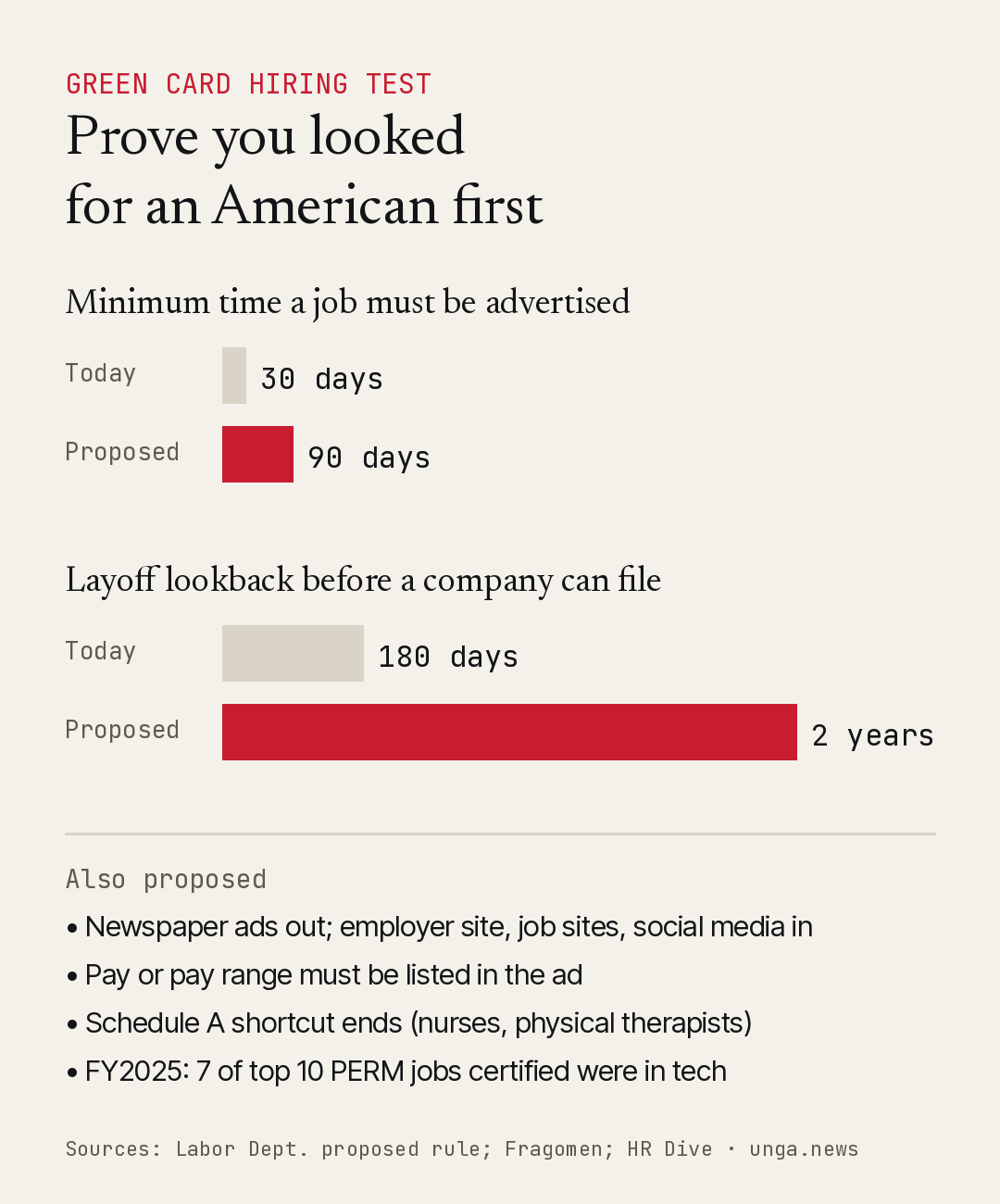
Recruitment would have to run at least 90 days, up from 30 today, or longer if that’s how long the company normally keeps similar jobs open. Americans would apply through the company’s normal hiring channels, not a special back door set up for the green card file. Interviews would be by phone or video so it costs applicants little or nothing, and the interviewer would have to be a U.S. worker who normally hires for that kind of job.
Employers would also be barred from tailoring a job to fit the foreign worker they already have in mind, and they’d have to submit their recruiting records with the application.
Lay off Americans, lose the green card option
The sharpest change is about layoffs. Right now, a company that lays off workers in the same kind of job faces a 180-day restriction, HR Dive reported. The proposal stretches that to two years. A company that laid off Americans in the same or similar occupation in the same area within the past two years couldn’t file at all. Layoffs after filing would have to be reported, with notice and offers to the affected U.S. workers.
The department says it isn’t guessing about why that matters. In the proposed rule, it says that in fiscal 2025, seven of the top 10 PERM jobs it certified were in computer and technology fields, while employers in the tech sector were laying off large numbers of American workers at the same time. It also points to investigations into third-party staffing firms that bring in lower-cost foreign workers and contract them out to other companies.
No more automatic pass
The rule would also end Schedule A, a list that has let employers skip the labor market test entirely for physical therapists, professional nurses and immigrants of exceptional ability in the sciences or arts, including college professors. The list was last revised in 2004. The department says nobody gave it a workable way to decide which jobs truly lack American workers, so it proposes to stop running the shortcut altogether.
Hospitals and universities that lean on that exemption will get their say during the comment period. Immigration lawyers are already warning clients. Lorraine D’Alessio, CEO of D’Alessio Law Group, told HR Dive the process could become “slower and costlier” for employers, and that companies “with recent or planned reductions in force should be reviewing their pipeline now.”
That is pretty much the idea. The rule targets the cheapest, quickest route a company can take around the American job market and makes it longer and more expensive.
Nothing changes overnight. The proposal has to clear the comment period and a final rule before it takes effect, which typically takes months. But the direction is clear, and it matches what this Labor Department has been doing all year: suspending the PERM filings of companies it says broke the rules and going after staffing firms. If the rule survives, the next time a company says it couldn’t find a single qualified American, it will have to show its work.
Sources
- Federal Register (Labor Department) — Modernizing the Labor Market Test and Improving Protections for U.S. Workers in the Permanent Labor Certification Immigrant Visa Program
- Anadolu Agency — US proposes tighter rules for employer-sponsored green cards
- HR Dive — Feds seek overhaul of permanent immigrant worker regulations
- Fragomen — Labor Department Proposes Sweeping Changes to PERM Program