

Mexicans Can Now Secretly Text U.S. Drug Agents About Cartel-Linked Politicians. Their President Filed a Complaint.
America’s top drug cop opened anonymous tip lines for Sinaloa, where U.S. prosecutors have already charged the governor. Mexico’s president called it interference. Local journalists started sending tips.
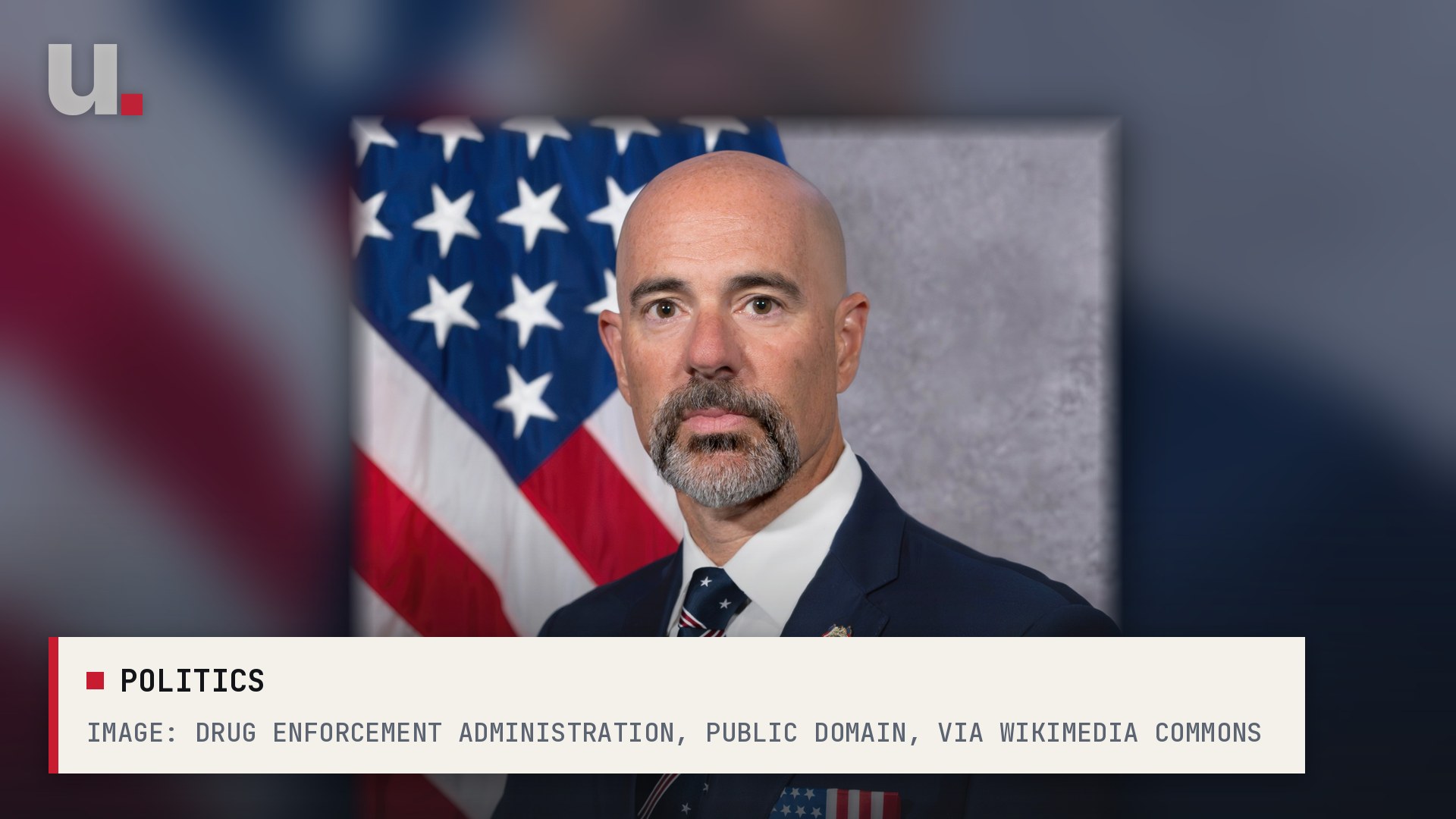
Wednesday night, the head of America’s drug enforcement agency posted a phone number. By Friday, the president of Mexico had filed a formal diplomatic complaint about it.
The number belongs to the U.S. Drug Enforcement Administration. Administrator Terry Cole put it on his 𝕏 account with a simple pitch to the people of Sinaloa, the home state of the cartel that bears its name: if you know who is running drugs, who is laundering the money, or which government officials are on the cartel’s payroll, tell us. Confidentially. Anonymously. By WhatsApp, Signal, the encrypted app Threema, or email.
DEA Administrator Terry Cole on 𝕏 — Nov. 25, 2026
— @DEATerryCole View on 𝕏
“The @DEAHQ has established dedicated tip lines to receive information regarding: Members and associates of designated Foreign Terrorist Organizations (FTOs). Corrupt government officials providing material support to designated FTOs,” Cole wrote, adding a third category for the criminal networks that launder money for what he called narcoterrorism. He promised a second set of lines for Jalisco and the Jalisco New Generation Cartel next. The post has been seen nearly 600,000 times.
That is not a raid. It is not a drone strike. It is a phone number that lets ordinary Mexicans who are afraid of their own local police talk to someone who might actually do something.
A phone number becomes an incident
President Claudia Sheinbaum treated it like an invasion. At her Thursday morning press conference she called the tip lines “a matter of interference,” according to Mexico News Daily’s account of the briefing. On Friday she announced that her foreign minister had carried a formal complaint to U.S. Ambassador Ron Johnson. “The ambassador said he was going to review it,” she said.
“We have made it very clear that our relationship with the United States is one of coordination, not subordination,” Sheinbaum told reporters, according to Reuters. She added that Washington should focus on drug use and criminal groups inside its own borders. “We have to say what we are thinking, and furthermore it is an obligation to do so because we have to defend our sovereignty,” she said.
Sovereignty is a fair thing for any president to care about. But it is worth asking what, exactly, a tip line threatens. It doesn’t arrest anyone on Mexican soil. It doesn’t override a Mexican court. It collects information from people who choose to send it. The only people with a reason to fear a confidential line for reporting cartel-bought officials are cartel-bought officials.
The governor already charged in New York
Sinaloa is not a random choice. Seven months ago, federal prosecutors in Manhattan and the DEA unsealed an indictment charging the sitting governor of Sinaloa, Rubén Rocha Moya, and nine other current and former officials with conspiring with the Sinaloa Cartel to push fentanyl, heroin, cocaine and methamphetamine into the United States. The list reads like a state government directory.
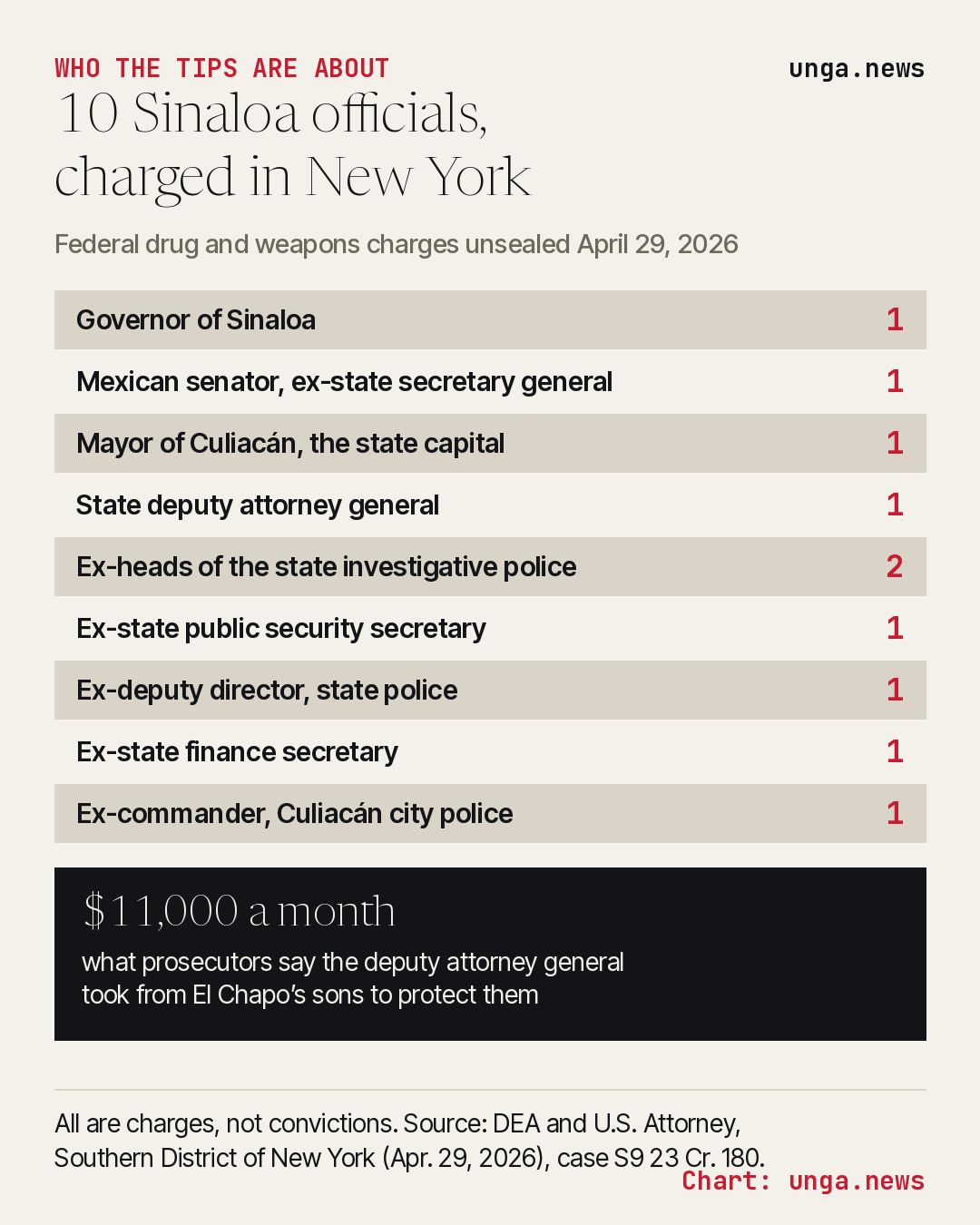
According to the DEA’s announcement of the charges, the sons of Joaquín “El Chapo” Guzmán, known as the Chapitos, helped Rocha Moya win the governorship in 2021 “by, among other things, kidnapping and intimidating his rivals.” In exchange, prosecutors say, he promised to protect their drug shipments. The state’s deputy attorney general allegedly took about $11,000 a month to shield cartel members from arrest and tip them off to U.S.-backed operations. A Culiacán police commander allegedly helped the cartel kidnap a DEA informant and the informant’s relative, who were then tortured and killed.
Rocha Moya has said he “categorically and absolutely” rejects the charges, and every defendant is presumed innocent. Mexico’s Attorney General’s Office said Washington’s request for provisional arrests did not come with enough evidence. None of the 10 is in an American courtroom. All are believed to still be in Mexico.
“The defendants allegedly used positions of trust to protect cartel operations, enabling a pipeline of deadly drugs into our country,” Cole said at the time. “No one is above the law.”
So when the DEA asks Sinaloans for tips about “corrupt government officials,” it isn’t speculating. A U.S. grand jury has already charged the governor, a senator and the mayor of the state capital. A tip line is the natural next step for an agency that has watched a local justice system decline to act on its own evidence.
The people of Sinaloa started texting
Mexico City’s objection is one thing. Sinaloa’s reaction is another. Juan Manuel Partida Valdez, president of the Sinaloa Journalists Association, was among the first to write to the WhatsApp line on Thursday, a day after Cole’s post, Euronews and the Associated Press reported. Journalists in Sinaloa have spent years working in one of the most dangerous places on earth to report on the narco trade. When one of their leaders reaches for an American tip line, it says something about how much faith people there have in their own state institutions.
Spanish-language posts sharing the numbers spread across Mexican 𝕏 within hours, some of them pitching the line as a way to be heard when local complaints go nowhere.
None of this happened in a vacuum. The State Department designated the Sinaloa Cartel a Foreign Terrorist Organization in February 2025, which is why Cole’s post speaks of terrorists and material support rather than ordinary drug crime. And just days before the tip lines opened, Mexican troops captured Fausto Isidro Meza Flores, the trafficker known as “El Chapo Isidro,” in an operation Mexican officials said was supported by U.S. intelligence. Cooperation, in other words, works fine when Mexico gets to decide who is caught.
The tip line takes that decision out of the hands of the people who may be compromised. That is exactly why it matters, and exactly why it stings. Cole’s Jalisco lines are already set up, including a dedicated email for the Jalisco New Generation Cartel. If Mexico’s institutions are as clean and capable as its president says, a WhatsApp number with a San Diego area code shouldn’t worry anyone in Culiacán.
Sources
- DEA Administrator Terry Cole on 𝕏 — DEA Administrator Terry Cole on 𝕏 — Sinaloa tip lines announcement (Nov. 25, 2026)
- U.S. Drug Enforcement Administration — Governor of Sinaloa and Nine Current and Former Mexican Officials Face Drug Trafficking and Weapons Charges (Apr. 29, 2026)
- U.S. Attorney’s Office, Southern District of New York — Superseding indictment S9 23 Cr. 180 (KPF), Spanish translation
- Mexico News Daily — Mexico files formal complaint over DEA’s Sinaloa tip lines: Friday’s mañanera recapped (Nov. 27, 2026)
- Reuters — Mexico files complaint with US over DEA tip line on alleged traffickers, official corruption (Nov. 27, 2026)
- Euronews — US hotline to report cartel activities slammed as foreign interference by Mexico (Nov. 28, 2026)
- Associated Press — Mexico’s government is slamming a DEA crime tip line as foreign interference. Others are thrilled.
- The Washington Post — Justice Department indicts Mexican governor on drug charges (Apr. 29, 2026)