

Microsoft Just Put Word and Excel Inside Its SI. Its New Helper Never Clocks Out.
Word, Excel and PowerPoint now run inside Copilot, and a new agent called Autopilot can chase emails and run projects on its own, with a human manager and a log of everything it does.
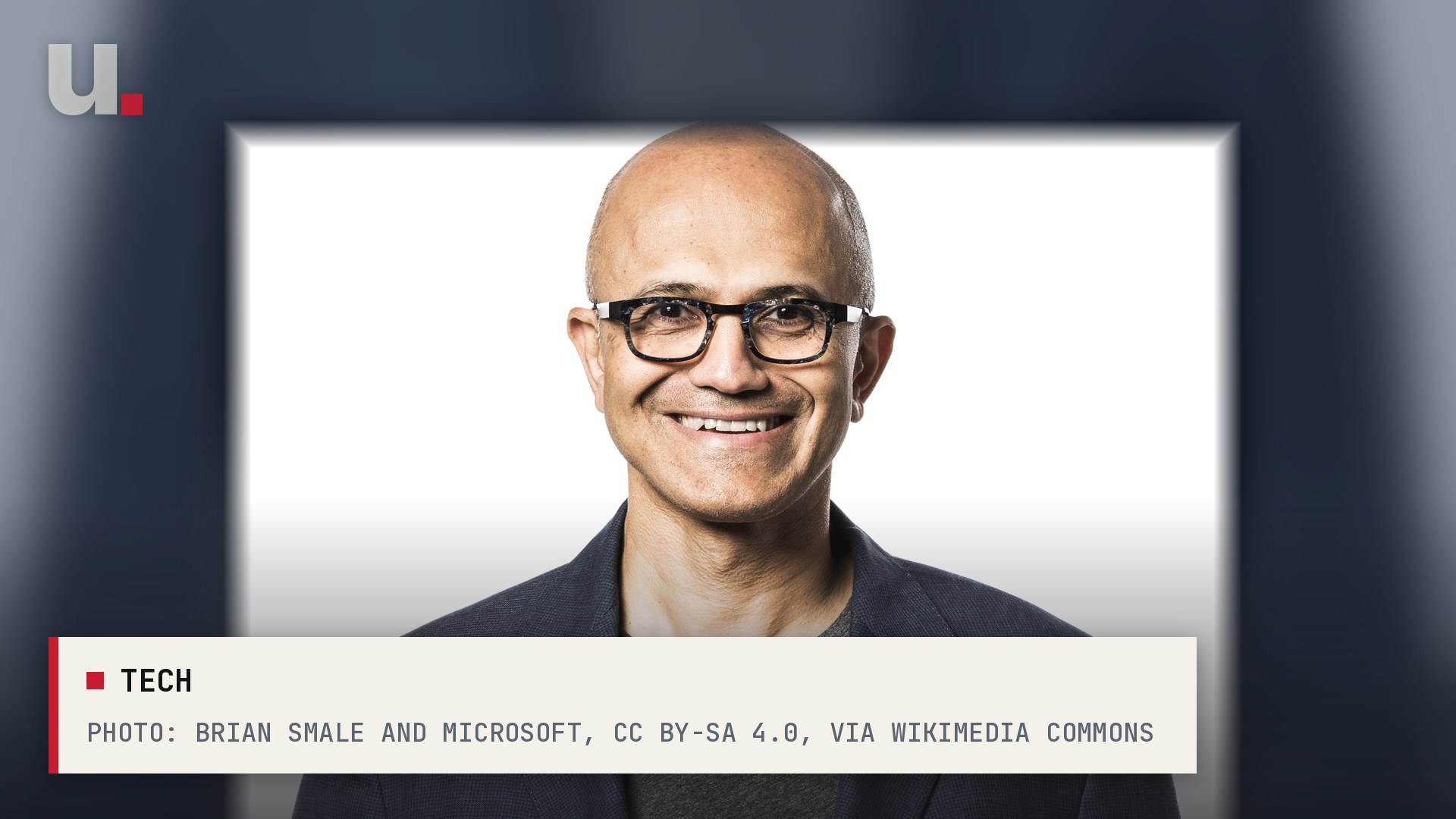
For thirty years you opened Word, and the helper lived in a corner of it. Microsoft just flipped that around.
At its Ignite conference in San Francisco on Tuesday, CEO Satya Nadella announced that Word, Excel and PowerPoint now run inside Copilot, the company’s SI assistant. You tell Copilot what you need, it builds the document, spreadsheet or slide deck in the same window, and you and your coworkers can keep editing it there or open it in the regular Office apps. Microsoft’s own write-up says it’s generally available now, not a preview.
Nadella’s line for it was blunt: “Copilot is the new OS for work.” The SI is the front door now, and the apps sit behind it.
A coworker that doesn’t wait to be asked
The bigger swing is something called Autopilot. Microsoft describes it as an agent that is “personal to you, always on, and working for you.” It lives inside a company’s own Microsoft account, has its own memory and tools, and shows up in Teams, Outlook and shared documents, where you can @mention it like a colleague.
What it does is the part office workers will notice. Microsoft says it can watch Teams channels, follow up on emails, run recurring work and manage a project “without waiting for a prompt.” The company’s example is a full supplier review: Autopilot builds the schedule and the plan, handles prep, sits through the meetings and the follow-ups, and chases people for updates on its own.
That is a long way from “summarize this email.” It’s a junior project manager who never logs off.
Who it answers to
Handing that much work to software raises the obvious question, and Nadella answered it himself, with unusual candor for a keynote. “The question is: How can you even trust all this powerful technology? The reality is, by definition, you can’t,” he said, as quoted by Ars Technica.
His answer is to fence the agent in rather than take its word for things. Each Autopilot gets its own sign-in ID and a named human manager. Company IT can limit what it touches or shut it off at any time. Everything it does is logged under its own name, and it can be set to check with you before key actions. Nadella said “what the model tells us about itself is not independent evidence,” and launched what he calls the Microsoft AI Transparency Initiative, which he says already has 40 organizations working on open standards for checking what SI systems actually do.
That is the right instinct. An agent that sends emails in your name ought to leave a paper trail a human can read.
How much it reads
Here’s what makes this more than a fancy chatbot. Copilot draws on what Microsoft calls Work IQ, a layer that sorts through a company’s email, chats, meetings and files to figure out what matters for the task. The pile is enormous.
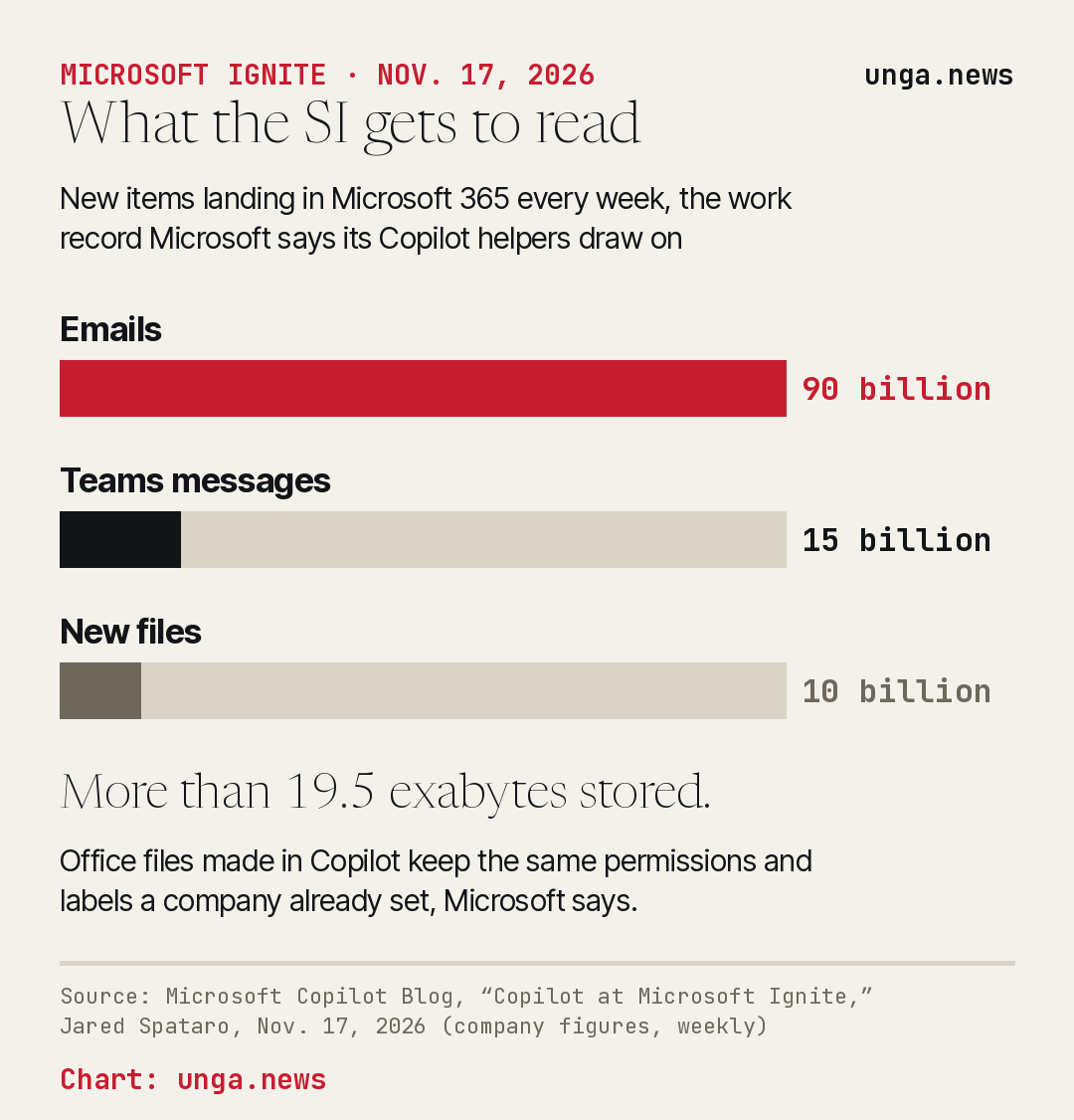
By Microsoft’s count, Microsoft 365 holds more than 19.5 exabytes of data and adds 90 billion emails, 15 billion Teams messages and 10 billion new files every week. Microsoft says files made in Copilot carry over the permissions, sensitivity labels and compliance rules a company already set, so the SI shouldn’t show you a document you couldn’t open yourself.
What’s included and what costs extra
The Office part costs nothing beyond a Copilot subscription. Jared Spataro, who runs marketing for Copilot, says it’s the only SI tool where you can make a PowerPoint deck or Excel sheet “without spinning a meter.”
Autopilot is a different deal. It’s billed by use through Copilot Credits, and Microsoft hasn’t announced the price. For now it’s rolling out only to companies in Microsoft’s early-access Frontier program, starting in the United States. Its setup page says it is off by default, needs a work account rather than a personal one, and won’t run unless the company sets a spending limit that covers it. Hit the limit and the agent stops.
Microsoft also took a swing at the competition. Citing a GigaOm report, Spataro claims Copilot is 84% cheaper than Claude and 63% cheaper than ChatGPT for an everyday user at comparable quality. That’s Microsoft quoting a study it chose, not an independent test, so treat it as a sales pitch until someone else checks it.
More helpers for specific jobs
Ignite came with a stack of add-ons aimed at particular desks. There are 44 sales skills, 13 customer-service skills, 30 finance skills and more than 20 legal skills, plus a Salesforce plugin with more than 38 sales skills that brings customer records into Copilot. A tool called Copilot Code, which lets ordinary employees describe an app or dashboard and have it built, arrives in the coming weeks.
Microsoft says nearly 80% of Fortune 500 companies already use Cowork, its tool for handing off multistep jobs, and that more than 5,000 people at drugmaker Lilly use it every month to sort out research before lab work starts.
The week-old outage
All of this lands one week after an outage knocked out Outlook email and Teams for users around the world. Nadella addressed it in a single sentence: “Last week was a reminder of how critical digital infrastructure is as the dial tone for the world,” adding, “I know we have work to do.”
That’s the catch with an assistant that never clocks out. It only works when the lights are on, and a lot more of the workday is about to run through it.
Sources
- Microsoft Copilot Blog — Copilot at Microsoft Ignite: Expanding what’s possible with intelligence built for work
- The Official Microsoft Blog — Ignite 2026: Building the frontier ecosystem
- Microsoft Learn — Autopilot (Frontier) requirements
- Ars Technica — Copilot is “the new OS for work,” and now Office runs inside of it