

NAACP Loses Bid to Keep DOJ Monitors Off the Polls. Schumer and Jeffries Lose Theirs Too
A federal judge let the Justice Department’s monitors go to the polls today and held DOJ to its sworn promise: no guns, no badges, no arrest powers. The same day, Boasberg turned away Schumer and Jeffries for lack of standing.
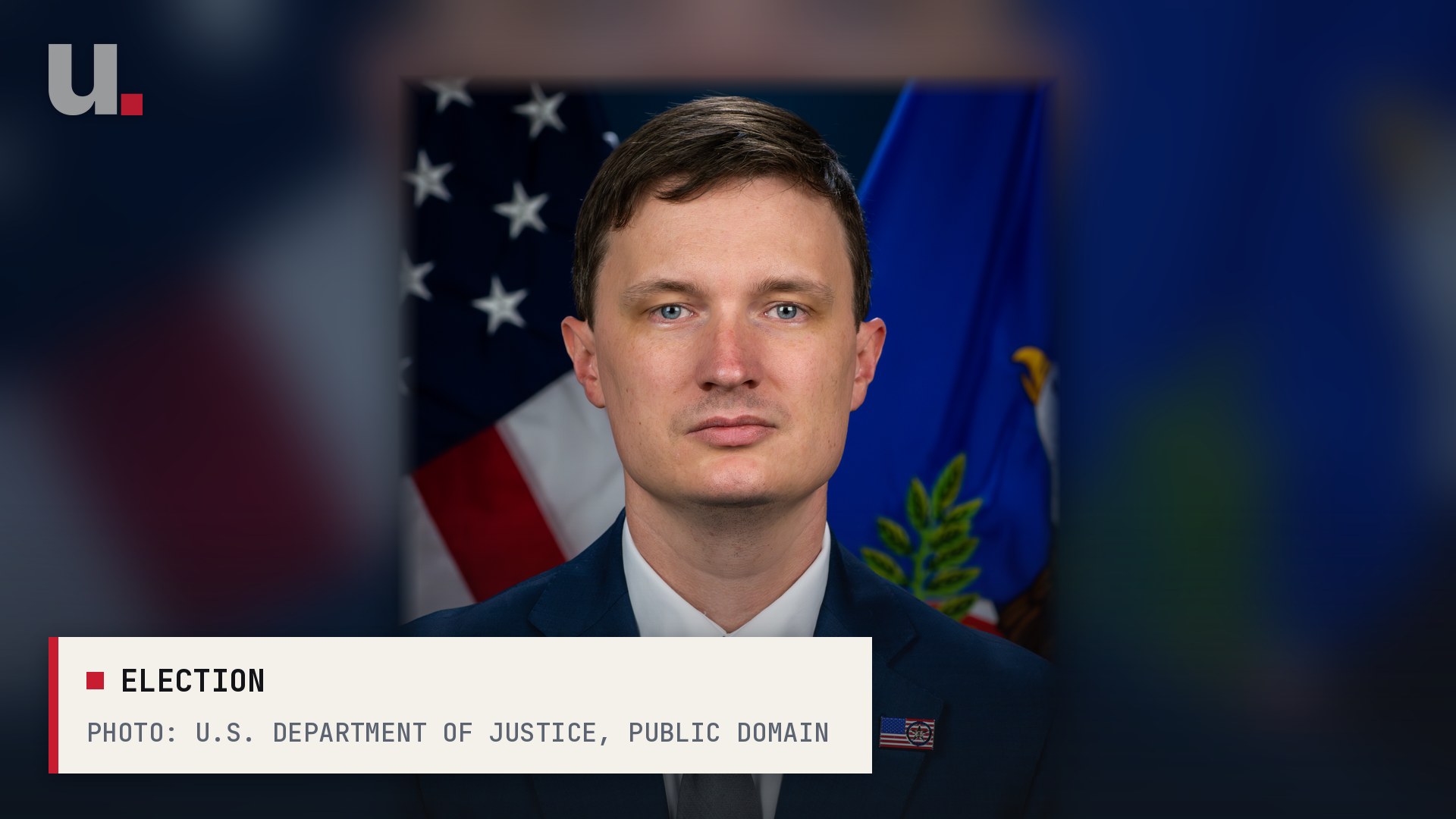
The Justice Department’s election monitors are at polling places across the country today, and the NAACP couldn’t stop them.
Late Monday, U.S. District Judge Reggie Walton in Washington denied the civil rights group’s emergency request to keep personnel from the Bureau of Prisons, the Drug Enforcement Administration, the ATF and the U.S. Marshals Service out of DOJ’s poll-monitoring program. The NAACP and three voters had argued that sending them to the polls amounted to voter intimidation under the Voting Rights Act.
Walton, a George W. Bush appointee, didn’t buy it. A plain-clothes clerical employee who is unarmed and can’t arrest anyone, he wrote, won’t put the average voter “in reasonable fear of harassment and interference with their right to vote.”
The NAACP had warned about monitors projecting a commanding presence and scanning crowds. The court was “unpersuaded” that someone doing that “without any outward indications of law enforcement authority” would “generate objectively reasonable fear in a voter.”
How DOJ won
The government won by putting its plan in writing, under oath.
The NAACP’s case rested largely on an Oct. 28 declaration from Eric Neff, acting chief of the Civil Rights Division’s Voting Section, which the group read as confirming that DOJ “will deploy personnel from criminal law enforcement agencies” to the polls. At Monday’s hearing, DOJ’s lawyers spelled out who those people are: clerical and administrative staff. “Sworn agents or officers from those particular agencies will be excluded,” they told the court.
Neff’s sworn statements said the same. “There will be no FBI or ICE employees, much less agents, serving as monitors,” he wrote, and monitors may do nothing beyond “observing the polling place and taking notes on their observations.” A second declaration said DOJ had excluded volunteers “that had clear indicia of being sworn law enforcement.”
DOJ’s lawyers also said the department wouldn’t object to an order requiring reasonable efforts to keep sworn officers out. Walton said he didn’t think an injunction was needed, but he ordered DOJ to live up to its promises anyway.
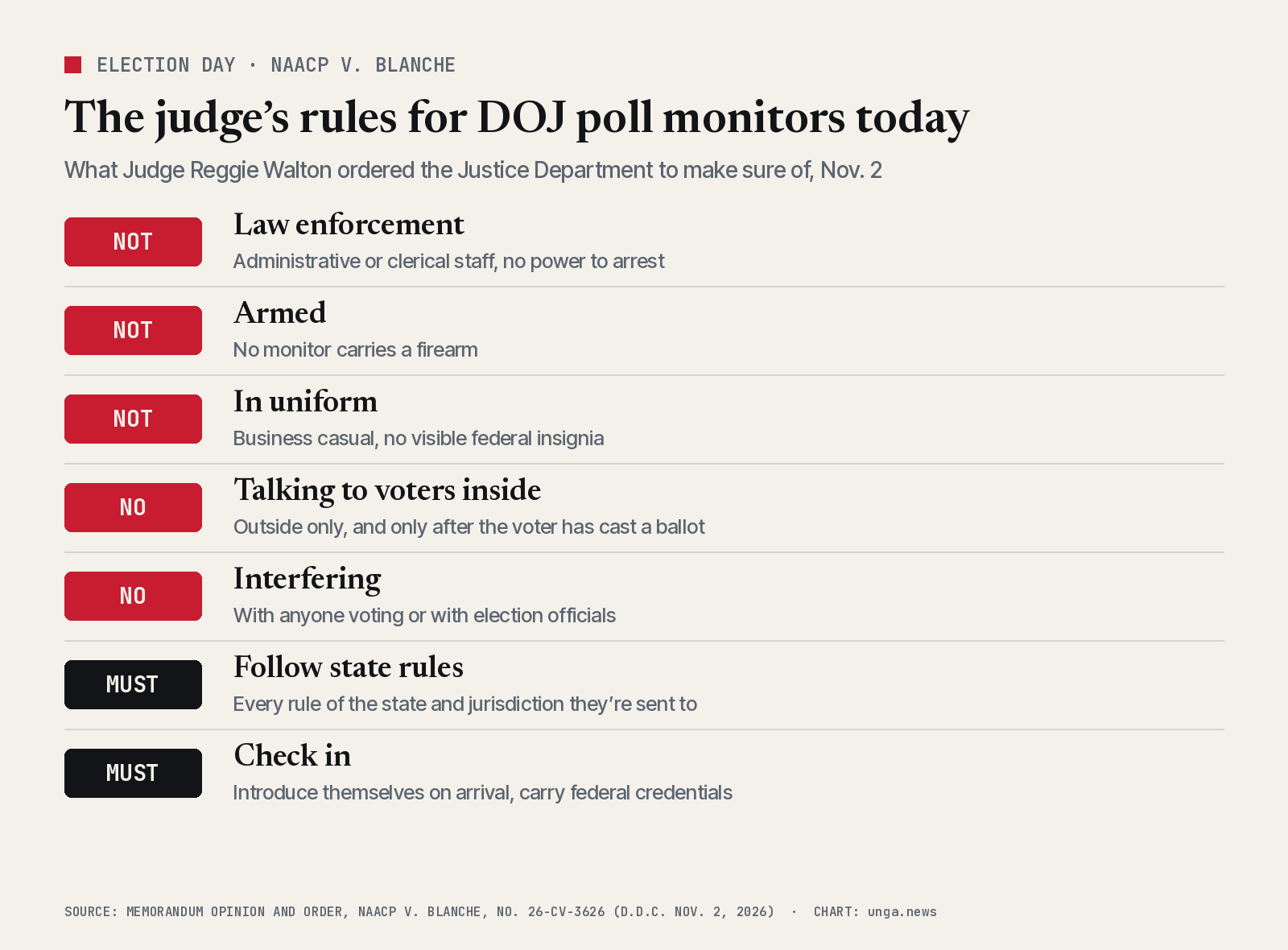
The order also had a deadline. DOJ had to file a status report explaining how it confirmed that none of its monitors are law enforcement officials with arrest powers, due at 7 a.m. Tuesday in Washington. And if the NAACP thinks DOJ breaks the rules today, Walton told it to file a notice and said the court “will take immediate action.”
One footnote matters. Some Bureau of Prisons staff can make arrests, but only for certain offenses on prison property or involving inmates. Walton said those employees don’t count as law enforcement officers under his order.
The night before, Acting Deputy Attorney General Trent McCotter went on Fox Business and put it more bluntly. DOJ is sending “over a thousand” monitors, he said, and the practice goes back decades.
“They’re not going to be Marines,” McCotter said. “They are typical election monitors. Most of them are lawyers, to be honest, who are there to observe, as has been done for 60 years.”
Schumer and Jeffries lose too
The NAACP wasn’t the only plaintiff turned away in Washington on Monday. Chief Judge James Boasberg denied an emergency request from the DSCC, the DCCC, the Democratic Governors Association, the Nevada State Democratic Party and two plaintiffs who sued by name: Senate Minority Leader Chuck Schumer and House Minority Leader Hakeem Jeffries.
They wanted Boasberg to stop DOJ and the Department of Homeland Security from sending states letters demanding that the ballots of suspected noncitizens be set aside until their citizenship is confirmed. Discovery in the case showed DOJ had sent formal demand letters to only two states, California and Washington. Both said no.
That doomed the request. “Plaintiffs present no evidence demonstrating that any state has acquiesced and removed a voter from the rolls or segregated her ballot based on the Government’s letters,” Boasberg wrote. No state went along, so no Democrat was hurt, so no standing.
He also rejected the broader theory. If Democrats could sue over this, he wrote, “candidates would have standing to challenge every Tweet, Truth Social post, or campaign speech that deploys rhetoric that undermines confidence in the election.”
Boasberg, no friend of this administration, made clear that it wasn’t a win on the merits. “The demand letters issued to the state elections officials may indeed be unlawful,” he wrote. And in a separate case brought by an immigrant-rights group, he barred the government from making new segregation demands of California officials.
What’s next
Neither ruling is final. Walton denied the NAACP’s request without prejudice and said his view could change “should the Court be presented with additional facts.” The NAACP will be watching the monitors today for exactly that.
The monitors, meanwhile, will be watching the polls: no guns, no badges on display, no questions for voters until after they vote.
Sources
- U.S. District Court for the District of Columbia — NAACP v. Blanche, No. 26-cv-3626 (RBW), Memorandum Opinion and Order denying TRO (Nov. 2, 2026)
- U.S. District Court for the District of Columbia — DSCC v. Trump, No. 26-cv-3674 (JEB), Memorandum Opinion denying TRO and preliminary injunction (Nov. 2, 2026)
- U.S. Department of Justice on 𝕏 — Acting Deputy Attorney General Trent McCotter on Fox Business on election monitoring (video, Nov. 2, 2026)
- Fox News — Federal judge orders DOJ to ensure poll monitors are not law enforcement officials (Nov. 3, 2026)
- Just Security — 2026 Midterms: Election Integrity Litigation Tracker
- Democracy Docket — Federal judge won’t bar Trump admin from threatening election officials (Nov. 2, 2026)