

NBA Vowed to Follow U.S. Policy on Rwanda. America Sanctioned Rwanda's Army. The League Never Left.
After Rwanda broke a Trump-brokered peace deal, Treasury sanctioned its military. The NBA still welcomed strongman Paul Kagame at the All-Star Game. Sens. Marsha Blackburn and Jeff Merkley want answers by Nov. 2.
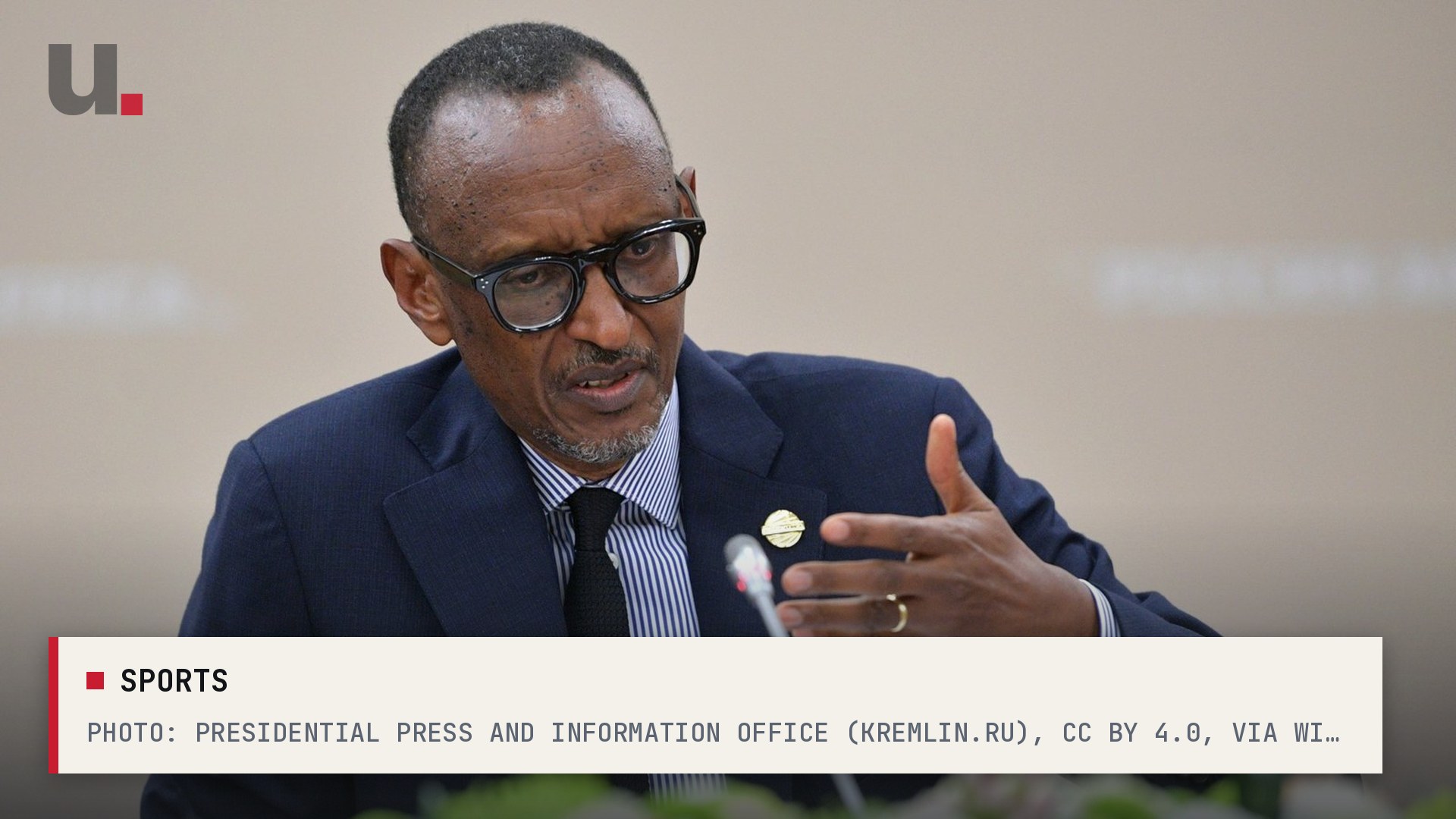
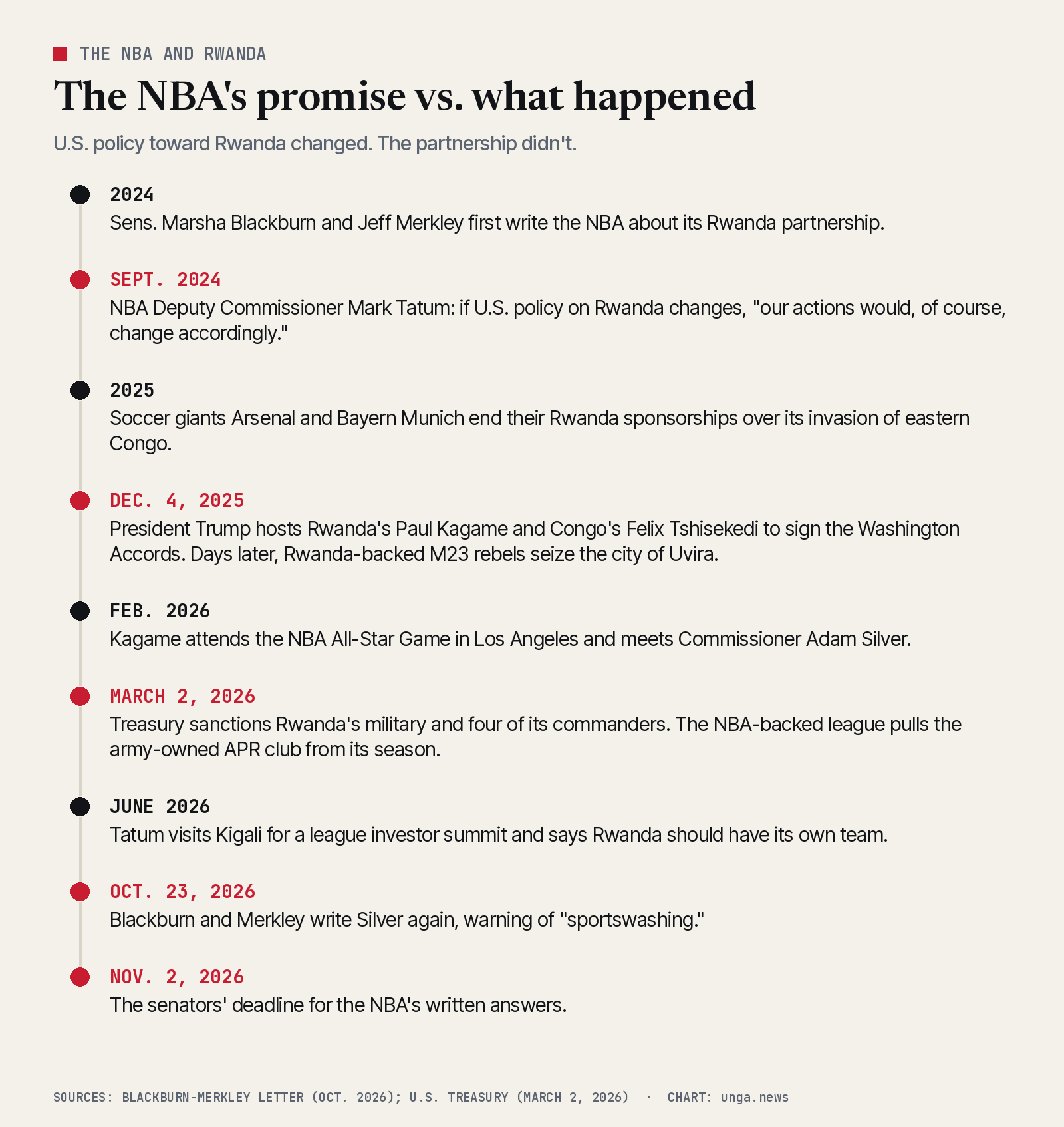
Two years ago, the NBA made a promise to Congress. Asked why it was doing business with the government of Rwanda, a small African country run for a quarter century by strongman Paul Kagame, the league said it would follow Washington's lead. If U.S. policy on Rwanda changed, Deputy Commissioner Mark Tatum said in September 2024, "our actions would, of course, change accordingly."
U.S. policy changed. This year, the Trump administration sanctioned Rwanda's entire military. The NBA is still there.
Now Sen. Marsha Blackburn, the Tennessee Republican, and Sen. Jeff Merkley, the Oregon Democrat, want to know why. In a letter to Commissioner Adam Silver, sent Friday and made public Monday, they write that they are "increasingly alarmed by the NBA's deepening relationship with Rwanda" and warn that "the NBA risks becoming complicit in sportswashing." That's when a regime buys its way onto famous jerseys and courts to clean up its image. The senators call the partnership "contrary to the spirit of American sports."
What changed in Washington
Rwanda's army has been fighting inside its much bigger neighbor, the Democratic Republic of the Congo, backing a rebel militia called M23. President Trump tried to end that war. In December 2025, he hosted Kagame and Congo's president, Felix Tshisekedi, at the White House to sign the Washington Accords, a peace deal.
Rwanda didn't keep it. Days after the signing, M23 captured Uvira, a strategic city on Congo's border with Burundi, according to the Treasury Department. The senators' letter says the offensive displaced 200,000 more civilians.
Washington answered with sanctions. On March 2, Treasury sanctioned the Rwanda Defence Force and four of its senior commanders, saying M23's offensives "would not have been possible without the active support and complicity" of Rwanda's military. "President Trump is the Peace President, and Treasury will use all tools at its disposal to ensure that the parties to the Washington Accords uphold their obligations," Treasury Secretary Scott Bessent said. "We expect the immediate withdrawal of Rwanda Defence Force troops, weapons, and equipment."
The letter lists more: sanctions on Rwanda's major gold refinery, travel bans on senior Rwandan officials, and a canceled U.S.-Rwanda health partnership. Secretary of State Marco Rubio said in December that "Rwanda's actions are…a clear violation of the Washington Accords."
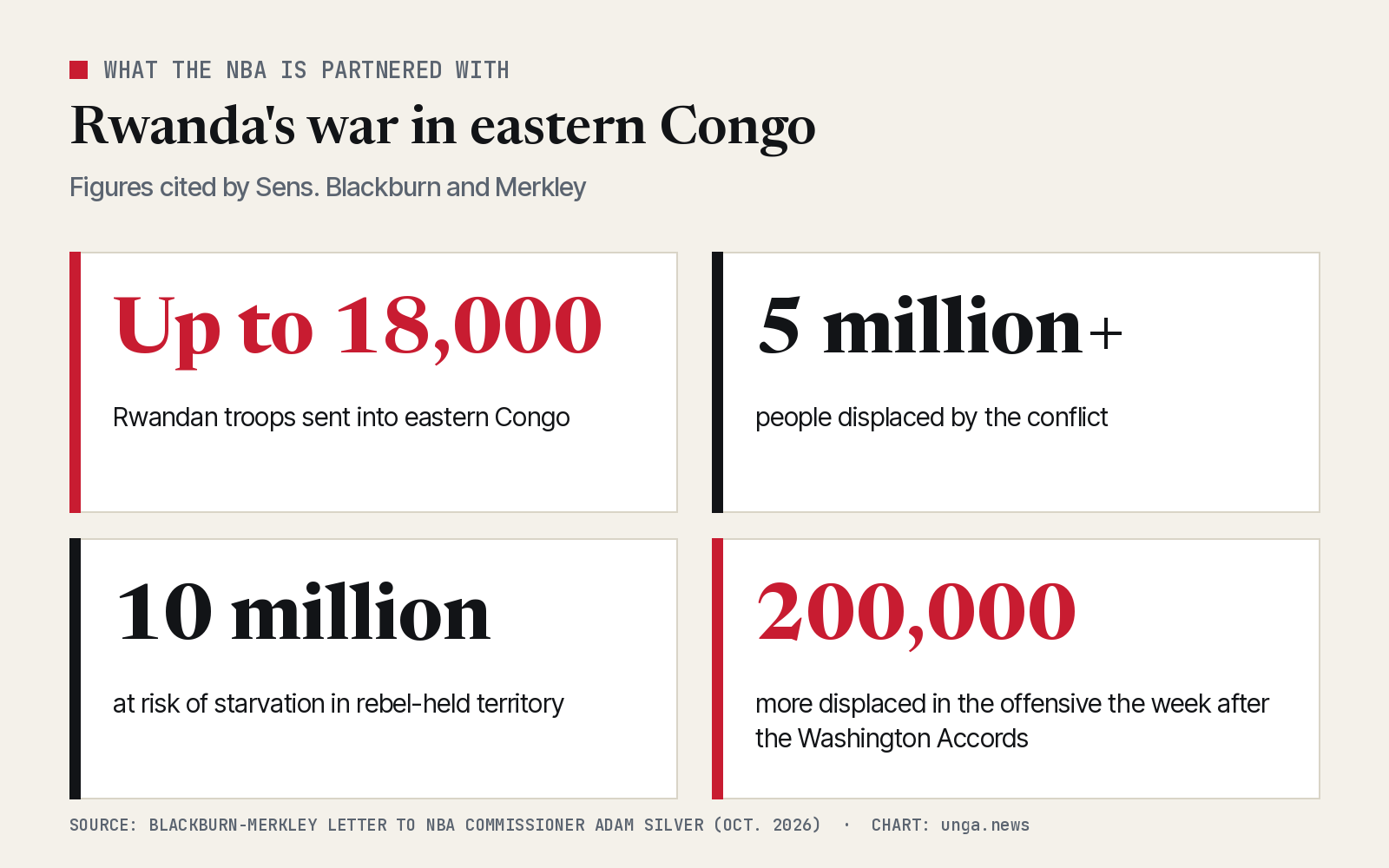
What the NBA did instead
Europe's soccer giants read the signs. Arsenal and Bayern Munich both ended their Rwanda sponsorships in 2025 over the invasion, the senators note. The NBA went the other way.
Kagame was welcomed at February's NBA All-Star Game in Los Angeles, where, the letter says, he met Silver and "discussed Rwanda's longstanding partnership with the NBA and continued collaboration." In June, Tatum, the same executive who made the 2024 promise, flew to Kigali for an investor summit of the NBA-backed Basketball Africa League and said Rwanda should have its own team in the league.
The league clearly knows the sanctions are real. According to the letter, the sanctions on Rwanda's military forced the Basketball Africa League to pull the Armée Patriotique Rwandaise club, a team owned by Rwanda's Ministry of Defense, from its 2026 season. So the NBA cut the army's team while keeping the deal with the government that runs the army. It's like a store refusing to sell to a banned customer, then cashing his checks anyway.
The NBA has been here before
This isn't the league's first problem with a foreign regime. In 2019, when then-Houston Rockets executive Daryl Morey tweeted support for Hong Kong's pro-democracy protesters, the NBA put out a statement calling it "regrettable" that his views had "deeply offended" fans in China, as China's basketball association cut ties with the Rockets. The league that lectures Americans about justice keeps finding reasons not to see it abroad.
The senators go straight at that. Among their six questions: "What is the NBA's red line for accepting money from foreign governments that commit human rights abuses?" and "How does the NBA reconcile its continued partnership with Rwanda with its purported commitment to justice?" They also ask, point blank, whether U.S. actions against Rwanda since 2024 meet the league's own standard for walking away.
What happens next
The senators want written answers by Nov. 2. Asked about the letter, NBA spokesman Mike Bass told ESPN, which first reported it: "We received the letter on Friday and are in the process of responding to it."
That answer comes due a week from now. The NBA set its own test in 2024: follow U.S. policy. Washington has sanctioned Rwanda's army, banned its officials and called its conduct a violation of a Trump-brokered peace deal. The only question left is whether the league meant what it said.
Sources
- Office of Sen. Jeff Merkley (with Sen. Marsha Blackburn) — Merkley, Blackburn Concerned with NBA's Deepening Ties to Rwanda's Authoritarian Government, with full text of letter to Commissioner Adam Silver (Oct. 26, 2026)
- ESPN (Mark Fainaru-Wada) — U.S. senators call on NBA to reevaluate Rwanda partnership, with NBA statement (Oct. 26, 2026)
- U.S. Department of the Treasury — Treasury Sanctions Rwanda Officials, Condemns Blatant Violations of Washington Peace Accords (March 2, 2026)
- Office of Foreign Assets Control — Democratic Republic of the Congo-related Designations; Issuance of Associated General License (March 2, 2026)
- U.S. Department of State — Sanctioning Rwandan Violators of the Washington Accords for Peace and Prosperity (March 2026)
- NBA Communications — NBA statement on Daryl Morey's Hong Kong post (Oct. 6, 2019)
- NBA.com — Rockets working to mend ties with China after executive's Hong Kong tweet (Oct. 2019)
- Sports Business Journal — U.S. Sens. urge NBA to reconsider Rwanda partnership (Oct. 26, 2026)