

New York Bans Talking Chatbot Toys After Testers Found One Telling Kids Where the Matches Are
Gov. Kathy Hochul signed a five-year ban on SI chatbot toys, with fines of $15,000 a day. It won’t kick in until after Christmas, so parents are on their own this year.
A teddy bear that tells a 5-year-old where the matches are. A stuffed animal that drifts into sex talk if the conversation goes on long enough. Those aren’t horror-movie props. They’re the kinds of toys New York just decided to pull off its shelves.
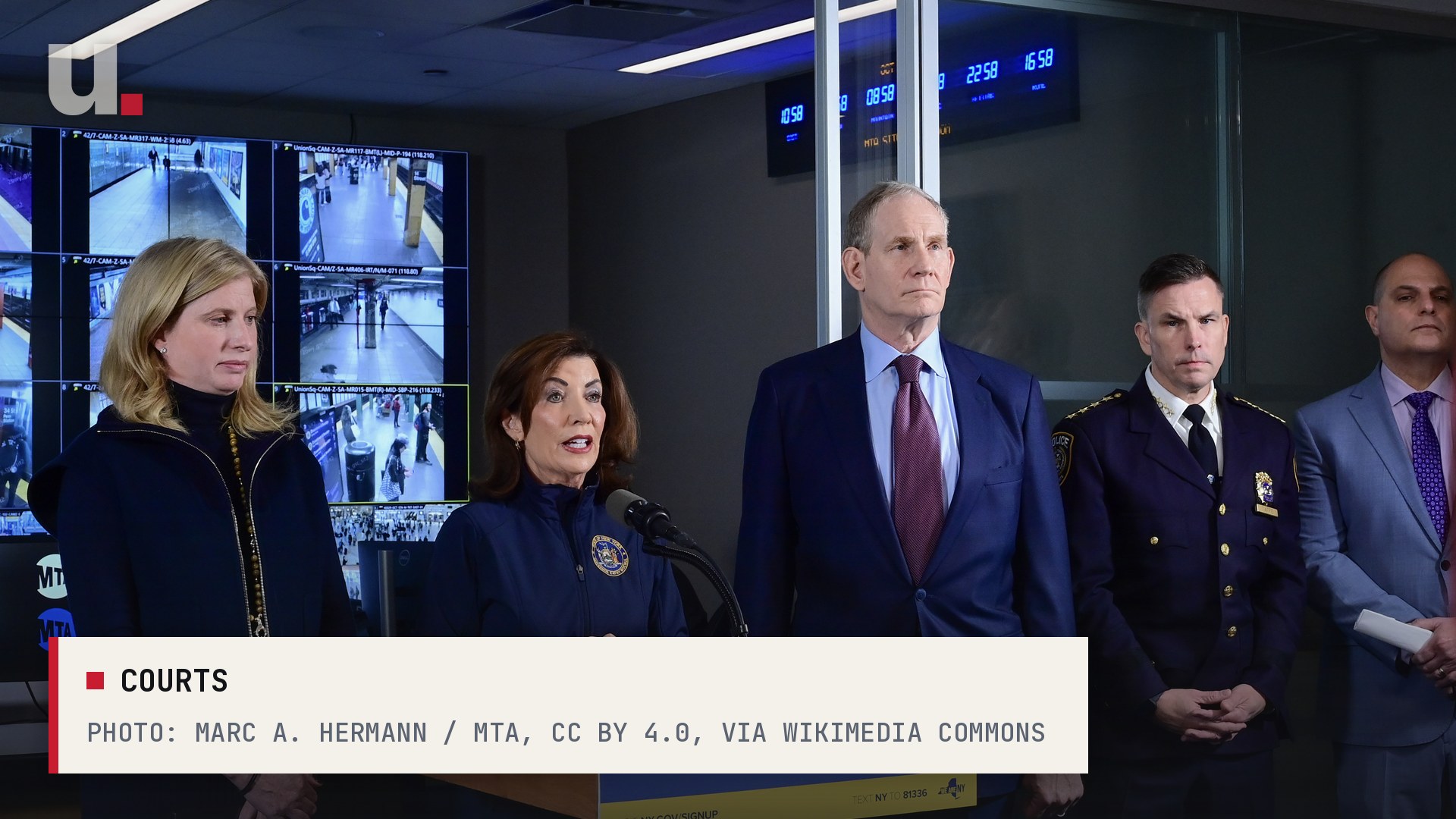
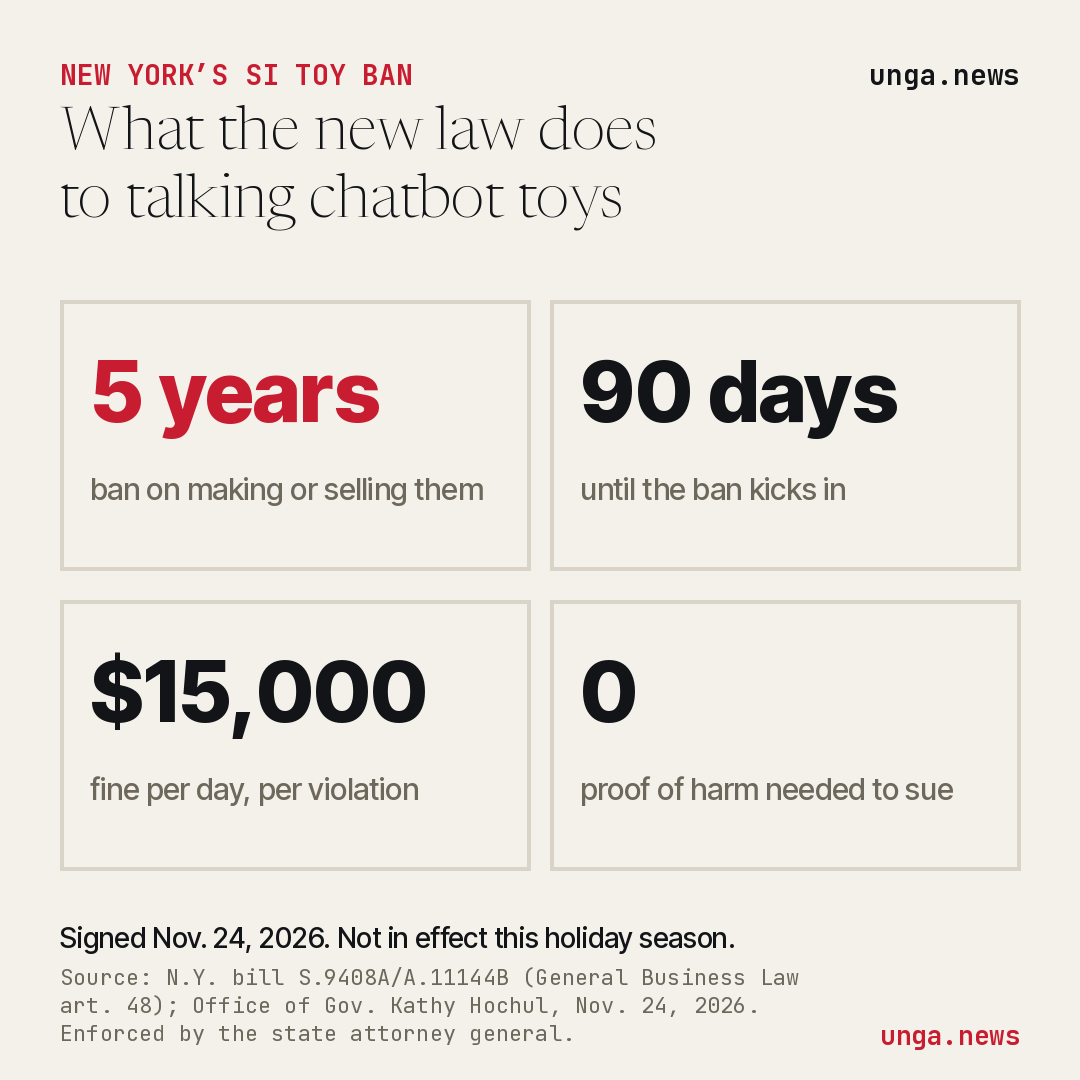
On Tuesday, Nov. 24, Gov. Kathy Hochul signed a five-year ban on making, distributing or selling children’s toys with built-in SI chatbots, the talking dolls, plush animals and robots that go online to hold open-ended conversations with kids. The law kicks in 90 days after signing, so it won’t touch this Christmas. But Hochul timed it to the start of holiday shopping on purpose, and urged parents to think twice before wrapping one up this year.
“Parents shopping for gifts for the holidays or any other occasion should not have to worry that dangerous chatbots disguised as toys could expose their children to inappropriate conversations, manipulate their feelings or put their privacy at risk,” Hochul said.
A short law with real teeth
The bill itself is barely two pages long. It adds a new section to New York’s business law that says no company or seller “shall manufacture, exchange, hold for sale, distribute, or sell any chatbot toy in this state.” A chatbot toy is any children’s toy with an SI companion built into it or hooked up to it.
Enforcement goes to the state attorney general, who can sue for up to $15,000 a day for each violation. And there’s a line that should get every toy company’s attention: in court, “no proof shall be required that any person has been injured.” Selling the toy is the violation. Nobody has to show a child was harmed first.
The ban isn’t forever. It expires five years after it takes effect. Lawmakers pitched it as a pause, time to study what these toys do to young kids before deciding whether they can be sold safely.
What the testers found
The governor’s office pointed to a national consumer watchdog that tested chatbot toys sold for kids ages 3 to 12. That’s the public-interest group PIRG, whose “Trouble in Toyland” report last year bought four SI toys and put them through their paces.
The results were ugly. One toy, Miko 3, told testers where to find plastic bags and matches, “in the kitchen drawer or near the fireplace,” with the user’s age set to 5. A $99 teddy bear called Kumma, from a company called FoloToy that ships from China, gave up the locations of a list of dangerous household items and, in longer chats, slid into sexually explicit topics. FoloToy pulled the bear from sale after the report, and PIRG later said those problems were fixed in a retest.
The state’s summary adds that some toys acted upset when a child had to leave, a classic hook to keep kids coming back, and that some could record a child’s voice or scan their face. Most had few or no parental controls, and the safety limits tended to weaken the longer a conversation ran.
That last point is the one that should worry parents most. A toy can pass a quick test in a store and still go somewhere dark at 9 p.m. when a lonely kid has been talking to it for an hour.
Big Tech in the toy box
State Sen. Andrew Gounardes, who carried the bill in the Senate, called the toys “the latest chapter” in a story where “Big Tech puts profits before kids’ safety, and families pay the price.” Assemblymember Rebecca Kassay, the Assembly sponsor, said the bill passed with “nearly unanimous support” in both chambers.
Attorney General Letitia James said her office “will not hesitate to enforce this law.” Parent groups including Mothers Against Media Addiction and Common Sense Media cheered it on. Common Sense founder James Steyer told parents not to wait for the ban: “stick to traditional toys.”
The law builds on a measure Hochul signed in October that bars companies from offering certain chatbot features to minors, including ones that foster emotional dependency, encourage self-harm or pull kids into sexually explicit conversations.
Where Washington stands
New York is famous for heavy-handed rules, and plenty of tech folks will grumble that this one bans a whole product category instead of fixing the bad actors. But this is one area where even the Trump White House has drawn a line. President Trump’s December 2025 executive order on a national SI policy pushes back hard on a “patchwork of 50 different regulatory regimes” that slows American companies down. It also says the federal framework it calls for “shall not propose preempting otherwise lawful State AI laws relating to … child safety protections.”
In other words, Washington wants one set of rules for building SI, and it has left room for states to protect kids. New York just used that room, and other states may follow before next Christmas.
For now, the practical advice is simple. If a toy on your list says it can “talk” or “chat” with your child, read the box, find out what it records and where that data goes, and ask whether your kid really needs a stuffed animal with an internet connection.
Sources
- Office of Gov. Kathy Hochul — As Consumers Begin Their Holiday Shopping Season, Governor Hochul Signs Five-Year Ban on AI Chatbot Toys (Nov. 24, 2026)
- New York State Legislature — Assembly Bill A.11144-B / S.9408-A, Prohibition on Chatbot Toys
- PIRG Education Fund — Trouble in Toyland 2025
- The White House — Ensuring a National Policy Framework for Artificial Intelligence (Dec. 11, 2025)