

RFK Jr. Is Using SI to Open Up Health Records. Among the First: A Biden-Era Plan to Quit Musk’s Twitter
Kennedy’s new records site leans on SI to do the slow first pass, with people signing off on every line. HHS says it cleared 148,813 redactions in one workday, and an early release shows the Biden NIH drafting plans to go dark on Twitter after Elon Musk bought it.
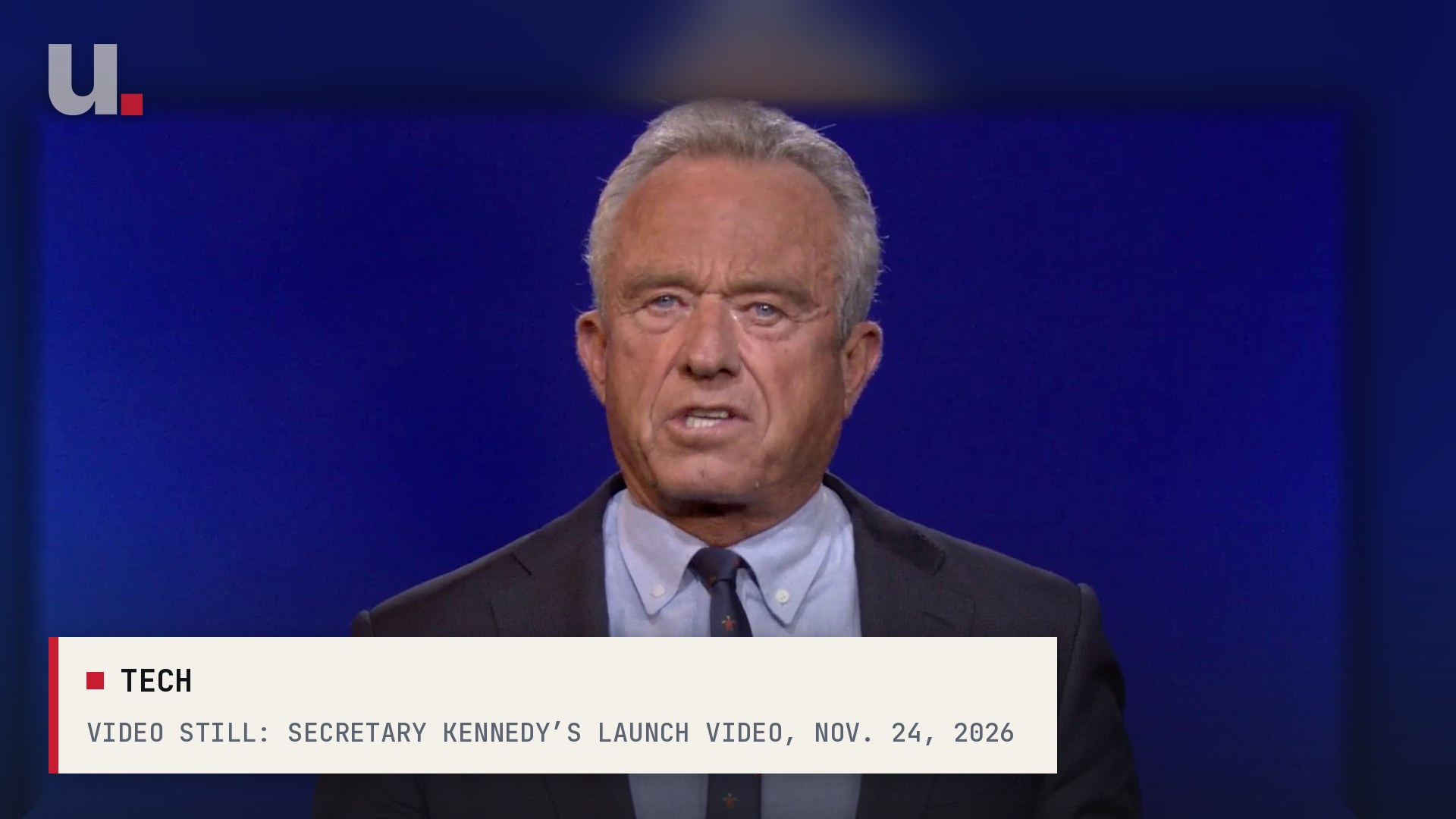
Anyone who has ever filed a public-records request with a federal agency knows the drill. You ask. You wait. Months later, if you are lucky, a stack of pages shows up with half the words blacked out. On Tuesday, Nov. 24, Health Secretary Robert F. Kennedy Jr. said his department is done making Americans wait like that, and he is putting SI to work to do it.
The Department of Health and Human Services launched a new website called Radical Transparency, one searchable home for tens of thousands of records from the FDA, the CDC, the National Institutes of Health and Medicare’s agency. It replaces the old “Online Reading Room,” a clunky page Kennedy said was hard to navigate. Behind the new site sits something bigger: a pilot that lets SI do the first, grinding pass through the paperwork that used to eat up staff for weeks.
“Americans deserve to know how federal health officials make decisions that affect their lives,” Kennedy said in the department’s announcement. “We will earn the public’s trust by opening our records and showing our work.”
Secretary Kennedy: Radical Transparency isn’t a slogan—it’s a commitment. Today, I launched the Radical Transparency website, giving the American people one place to search tens of thousands of public records from across HHS.
— @SecKennedy View on 𝕏
The grunt work the machine now handles
Every Freedom of Information Act request runs through the same slow steps. Someone has to dig up the files, throw out the duplicates, decide which pages actually answer the question, then go line by line hiding the things the law says stay private, such as a person’s home address, a Social Security number or a drug company’s trade secrets. Done by hand, that last step alone can swallow days.
According to a four-page fact sheet HHS released with the launch, the new system handles all of it “from search to delivery.” It reads many kinds of files, flags duplicate records, helps judge what is responsive to a request and proposes redactions. HHS says it also explains itself. “The pilot technology considers context, provides reasoning for every decision, and references agency guidance and case-specific requirements,” the department wrote, as quoted by Federal News Network.
The numbers HHS reported are the part that jumps off the page. In one run, the system worked through 44,811 pages spread over 13,456 documents in 19 hours and 16 minutes. In another, it placed 148,813 redactions across 13,089 pages in eight hours and four minutes, one working day. It checked a spreadsheet with 17,457 cells in two minutes and 29 seconds.
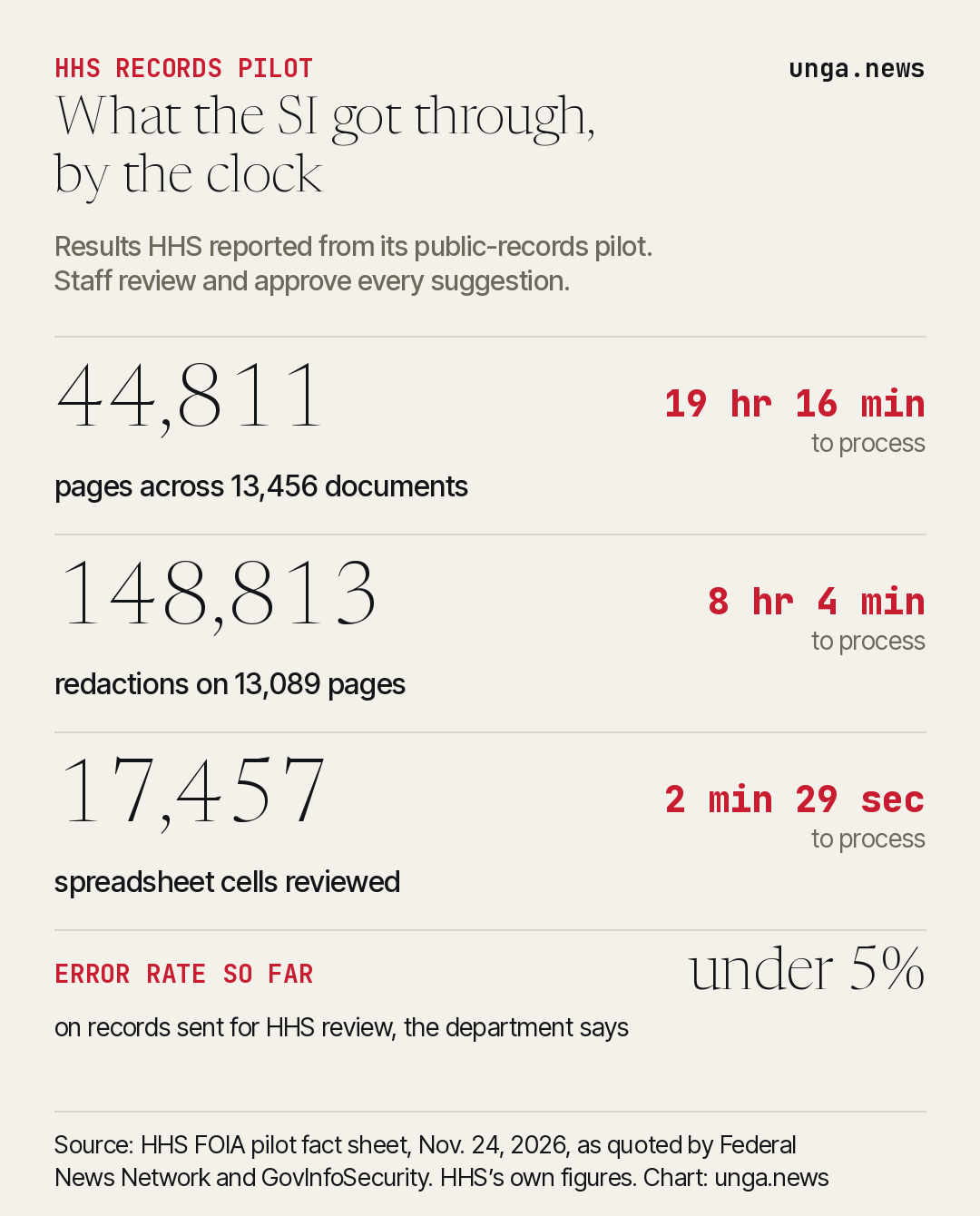
HHS says that in the pages people checked by hand, “not a single name, personal address, or identifying number was left unredacted,” and that records submitted for its review so far have come in under a 5% error rate. Those are the department’s own figures, not an outside audit, and HHS has not said which company or model powers the system. What it has said is that nothing goes out the door on the machine’s word alone. “All suggestions are reviewed and approved by human analysts,” the fact sheet says.
That split is the smart way to do this. The SI takes the first-level review, the mind-numbing part, and frees up FOIA staff for the second-level calls that need real judgment. HHS also folded the separate records offices that used to be scattered across its agencies into a single program under the secretary’s office, and it expects the setup to save “millions of dollars” over time.
What Biden’s health officials wrote about Musk
The first batch of records shows why this matters. Featured on the new site is a newly released Biden-era NIH memo titled “NIH’s Potential Plans of Action to Address Twitter Changes and Concerns.” Kennedy flashed it on screen in his launch video. Stamped “DRAFT, PRE-DECISIONAL, CONFIDENTIAL, INTERNAL-USE ONLY,” the eight-page document was written after Elon Musk bought Twitter on Oct. 27, 2022, and cites events into January 2023.
The memo complains that the platform’s changes and Musk’s actions “are in opposition to” the agency’s values and warns that staying on the site “could make us complicit in an environment that enables hate speech.” Among Musk’s offenses, it lists his push to open the platform for “absolute free speech,” the end of Twitter’s COVID-19 misinformation policy and the return of banned users, including Donald Trump. It even counts Musk’s claim that the government paid past Twitter executives to censor information from the public.
Then it lays out the exit plans. Option 1 had every official NIH account post a statement, pin it and “go dark.” The sample wording said the accounts would be dark “for the foreseeable future” over the “increased spread of health misinformation/disinformation” on the platform. Option 2 had the accounts quietly go dark and point followers elsewhere, with “no statement about why.” At the time, NIH ran 149 official Twitter accounts, with 1.6 million followers on its main one.
In other words, the nation’s top medical research agency, funded by taxpayers, sat down to plan a walkout from the public square because a new owner stopped censoring as much. Americans would never have seen that memo if someone had not dug it out and cleared it for release. That is exactly the kind of record a faster, cheaper review process can push into daylight.
The fair questions
Not everyone is ready to cheer. Ohio State law professor Margaret Kwoka, a records-law expert, told Federal News Network the portal could cut down on one-off requests, but said HHS should spell out how it picks which files to post. Andrew Crawford of the Center for Democracy & Technology questioned how much the public can see about which documents the site shares, speaking to GovInfoSecurity, which also noted that HHS has not yet answered questions about safeguards for sensitive health data.
Those are reasonable things to ask, and the best answer is the one Kennedy is already giving: post more. An HHS spokesperson said the department will keep adding older records as they are pulled and new ones as they are cleared. Records on the site even come with a short SI-written summary and a button to listen to it, so a parent or a nurse doesn’t need a law degree to read what the agency did.
For years, Washington treated the people paying for these agencies as a nuisance to be managed. A government that uses the newest tools to open its own files instead of hiding them is the right fight to pick. If the machine can mark up 13,000 pages in a single workday and the humans still sign off on every line, the old excuse that records take too long to release just got a lot harder to make.
Sources
- HHS — HHS Launches ‘Radical Transparency’ Website, Makes Tens of Thousands of Government Records Accessible to Americans (Nov. 24, 2026)
- HHS — Radical Transparency portal
- Secretary Kennedy on 𝕏 — Radical Transparency isn’t a slogan—it’s a commitment (Nov. 24, 2026, launch video)
- Federal News Network — HHS unveils new FOIA portal, pilots AI to speed up record reviews (Nov. 24, 2026)
- GovInfoSecurity — HHS Pilots AI to Redact, Release Sensitive Agency Records (Nov. 24, 2026)