

Rubio Says the Squeeze on Iran Is Working So Well That America Doesn’t Need to Bomb Again
At the G7 in Paris, the Secretary of State told allies the blockade and sanctions are draining Iran’s oil money and will only get worse for the regime, so major combat isn’t needed for now.
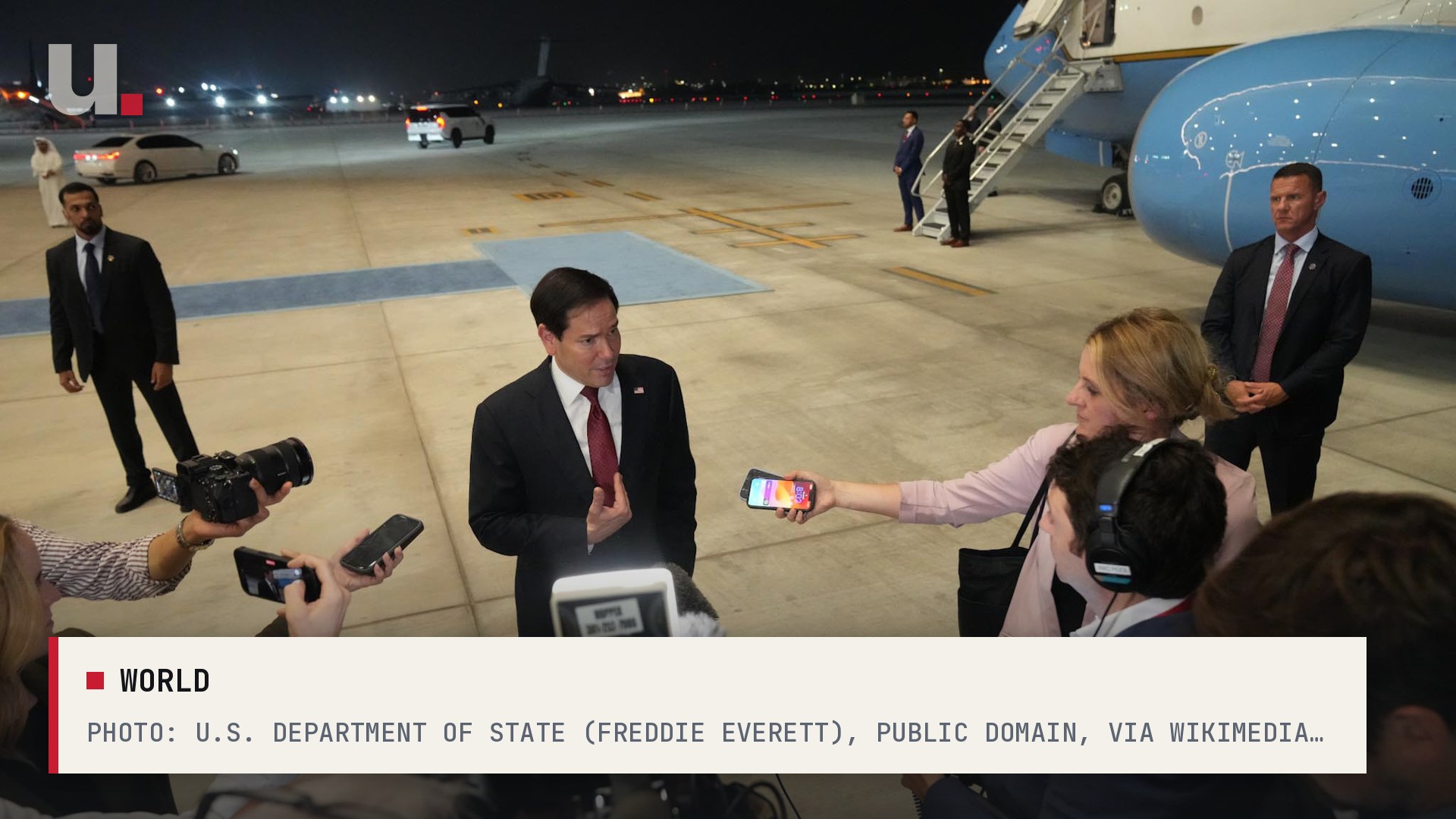
America has found a way to keep beating Iran without dropping another bomb, and Secretary of State Marco Rubio went to Paris to tell the rest of the free world exactly how it works.
Speaking to reporters after two days of G7 foreign ministers’ meetings, Rubio said he’d informed America’s partners that the U.S. economic campaign against the regime “is working so well that the President really doesn’t have any need to conduct major combat operations.” The naval blockade of Iran’s ports and the Treasury sanctions behind it, he said, “are doing devastation to their economy.” As he put it, “Never has Iran ever faced the inability to sell energy in the global market like they are today.”
That’s new. A day earlier, Rubio was calling Tehran’s peace demands ridiculous while the President talked about how fast American forces could knock out Iran’s bridges. In Paris, the message to allies shifted from what America could destroy to what it already is destroying without firing a shot: Iran’s ability to sell oil.
State Department on 𝕏 — Nov. 10, 2026: “SECRETARY RUBIO: The economic pain that is being inflicted on Iran right now, on that regime, is extraordinary. It compounds, it’s growing every day.”
— @StateDept View on 𝕏
Why he says this isn’t a stalemate
Reporters kept trying to pin one word on him. Stalemate. Status quo. Rubio refused it every time, and his reasoning is worth hearing out, because it’s the heart of the strategy.
“Status quo means that things are going to stay static,” he said. “They’re not; they’re going to continue to grow.” Sanctions, in his telling, don’t sit still. They stack. He pointed out that Iran still has “just a handful of barrels of oil left on the water” that slipped past the blockade during a brief ceasefire window. “Once that dries up, almost all of their oil revenue will dry up.”
Every time Tehran finds a new trick to sneak around the sanctions, Rubio said, Treasury Secretary Scott Bessent’s team and U.S. intelligence “keep closing those off.” The pressure, he said, will be worse for Iran “in a month and in two months and in three months than it is now.”
He put it about as plainly as a diplomat can: “Eventually you have to eat; eventually you have to be able to pay your own fighters and your own security forces.” And then the line that made the rounds: “Eventually the economic realities penetrate the skull of even the most radical lunatic.”
None of that means the military option is off the table. Rubio was careful there too. If Iran “crosses certain red lines,” he said, the U.S. military “stands ready to address it,” and he called it “the most capable military in the world.” And if the regime lashes out again at civilian infrastructure in the Gulf, “they’ll pay a terrible price.” The President said the same thing his own way a day earlier: military action “doesn’t seem to be a very necessary thing” right now, “but we’re locked and loaded.”
The oil is still moving, except Iran’s
The obvious pushback came from reporters asking about America’s Gulf partners. Aren’t their economies suffering while this drags on? Rubio’s answer was that the oil is getting through. On some nights, he said, shipments out of the Strait of Hormuz run at 80 to 85 percent of prewar levels, and the reason they aren’t at 100 percent is simple. “The only oil that’s not getting out consistently, through the Straits of Hormuz, is Iranian oil.”
The Revolutionary Guard is still firing “a couple drones a night trying to sink commercial vessels,” he said, and America will keep defending against them. That’s where he pressed the G7. America doesn’t get its oil from the Gulf, he noted, yet American sailors are the ones guarding the world’s tankers. He asked the Europeans to help protect shipping.
He called out the logic some allies use, offering ships only once there’s no risk of conflict. “But if there was risk of conflict, we wouldn’t need them,” he said. “So it’s kind of a catch-22.” Still, he said a couple of countries are “thinking about it.”
What a deal would take
Rubio was clear that Iran wants a deal. “Iran would love a deal,” he said. “The problem is the conditions they continue to place are absurd.” He also said that could change, and that’s the whole point of the squeeze.
Rubio’s response was to flip the script. Iran is demanding reparations, he said, when “they should be the ones paying reparations because they’re the ones that have destabilized the region.” Iran wants “pallets of cash,” which he said the President has made clear “is not going to happen.” If Iran wants peaceful nuclear power, he said, it can have a program “like many other countries around the world have.” What it can’t have is a bad deal. “If there’s a deal to be done, the President will be the first one to be in favor of it. But it’s not going to be a stupid deal.”
Qatar’s prime minister was at the White House the day before, then flew to Paris and joined talks on the G7 sidelines with European ministers and the Saudi foreign minister. The President came out of that meeting saying there was momentum toward ending the war.
The other war on the table
Rubio brought one more piece of news to Paris. The U.S.-brokered talks between Ukraine and Russia in Abu Dhabi, run by special envoy Steve Witkoff and Jared Kushner, looked “very productive,” he said, while cautioning that nothing would be solved “in the next 24 hours.”
He answered Europe’s long-running fear that Washington would cut a deal with Moscow over its head. “Well, Europe’s at the table,” he said, noting representatives from five European countries were in Abu Dhabi. The goal, he said, is eventually to widen the U.S.-Ukraine-Russia talks so Europeans sit at the table directly. Asked whether Russia is serious, he gave the honest answer: “That’s what we’re testing.”
Put the two together and you get a picture of how this administration likes to fight. In the Middle East, it’s choking the regime’s cash instead of sending in more jets, while keeping the jets ready. In Ukraine, it got both sides into the same room and is now pulling Europe in behind it. The G7 ministers meet again in December at Doral, and by then Rubio is betting Iran will have a lot less oil money and a lot more reason to talk.
Sources
- U.S. Department of State — Secretary of State Marco Rubio Remarks to the Press, Paris, Nov. 10, 2026
- State Department on 𝕏 — Secretary Rubio on the economic pain on Iran, Nov. 10, 2026
- AFP via Al-Monitor — Rubio sees ‘no need’ for major combat operations against Iran
- Reuters via The Straits Times — Rubio says no need for major combat operations against Iran given US economic campaign
- The Jerusalem Post — US economic campaign removes need for major combat against Iran, Marco Rubio says
- unga.news — Rubio Calls Iran’s Peace Demands ‘Ridiculous.’ Trump Says He Could Knock Down 38 Bridges in an Hour.