

Russia Threatens ‘Open War’ After America’s Ally Estonia Slams Its Border Shut Over a Sabotage Plot
Estonia says Russian military spies ordered an arson attack on a drone factory near its capital. Now every road crossing into Russia closes Dec. 1, and Moscow is warning of war.
Estonia says Russia’s military spies tried to burn down one of its drone factories. So the little Baltic country is doing what border hawks in America would recognize right away: it is shutting the gate. Moscow’s answer, delivered Monday, was to warn of “open war.”
Russia’s Foreign Ministry summoned Estonia’s top diplomat in Moscow and lodged a formal protest over Tallinn’s plan to close every road crossing between the two countries starting Dec. 1. “The Estonian diplomat was once again told that such provocative and extremely dangerous actions are on the verge of triggering open war with Russia,” the ministry said in a statement reported by Al Jazeera, AFP and Reuters. It called the country “Russophobic” and said Russia “reserves the right to take comprehensive political and diplomatic measures.”
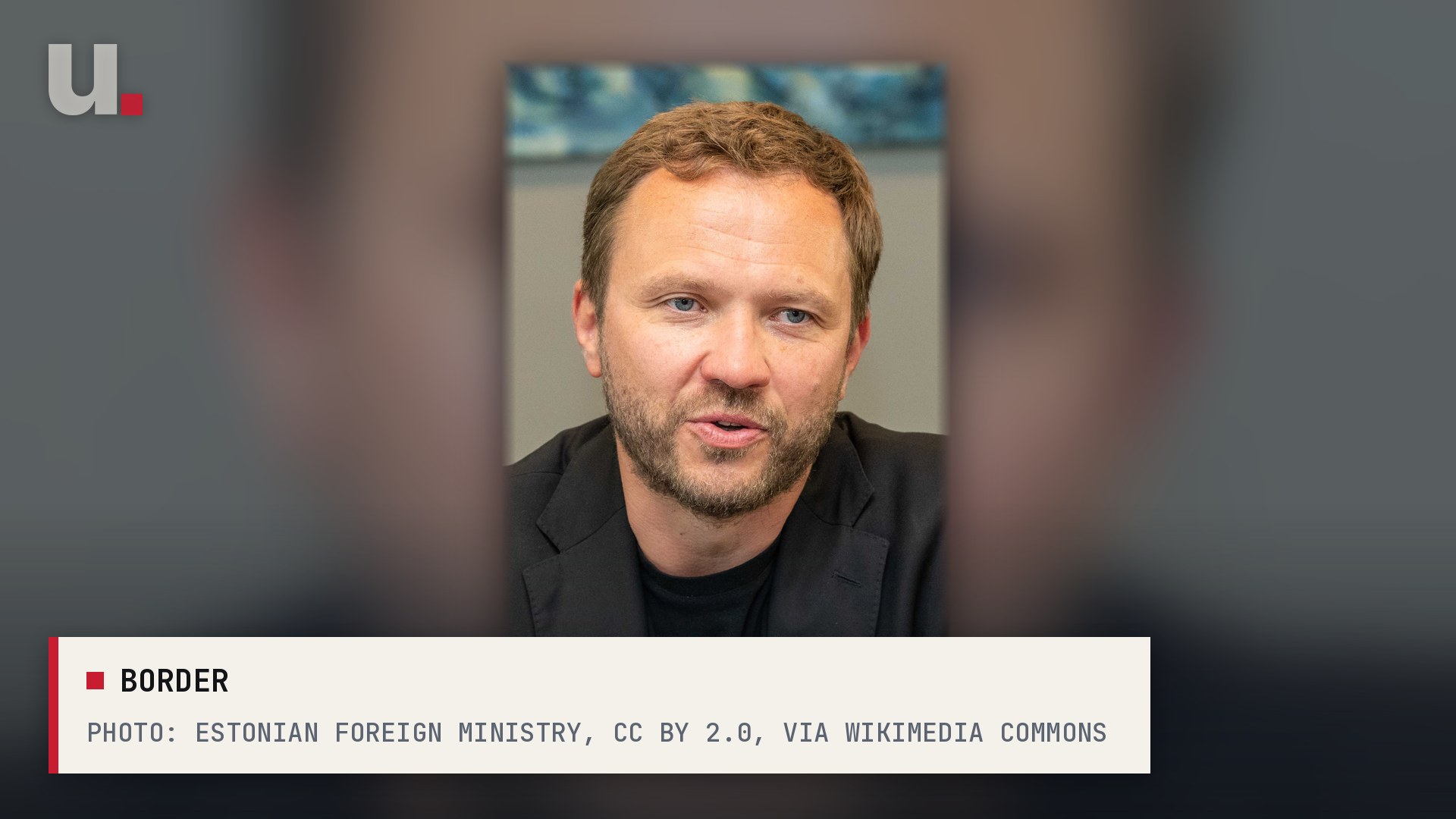
Estonia’s foreign minister, Margus Tsahkna, didn’t flinch.
Margus Tsahkna: Russia is flooding the airwaves with baseless accusations against Estonia to distract from its own actions undermining European security.
— @Tsahkna View on 𝕏
A drone plant, eight arrests and a closed gate
It started in the early hours of Nov. 14. Eight Latvian citizens were detained after trying to break onto the grounds of Threod Systems in Viimsi, just north of Tallinn, Estonia’s public broadcaster ERR reported. The company builds long-range reconnaissance and attack drones. Investigators said the group meant to set off an explosion and set the building on fire. Estonia’s Internal Security Service said the job was ordered by the GRU, Russia’s military intelligence agency. It was the second attempted arson at an Estonian defense company since August, when Tallinn-based Milrem Robotics was targeted. Russia denies any role.
Prime Minister Kristen Michal moved fast. “If Russia continues its hybrid operations in Estonia, and we know that Russian intelligence services exploit border crossings to exert influence over people, we must be prepared to reduce the risks we face,” he said the next day. Interior Minister Igor Taro put it more bluntly to reporters: “Russian security services are intimidating and trying to recruit our citizens who are travelling through our border checkpoint. This is something we cannot tolerate anymore.”
On Nov. 20 the government made it official. Government order No. 195 suspends traffic at all five road crossings, Narva-1, Narva-2, Koidula, Luhamaa and Saatse, from Dec. 1 for at least six months, according to the state’s crisis information page. The crossing points have folding gates that will simply swing shut, and fences are going up on the grounds to stop anyone walking around them. No buses. No crossing on foot. Estonians still inside Russia have been told to get home within weeks or risk not getting home by land at all.
Taro said earlier limits had already cut traffic “by more than 90 percent” from prewar levels, so the closure “directly affects few people,” mostly small operators who ferry people to Narva, sell spots in the queue or haul suitcases of goods across. One rail line stays open. The Narva rail crossing will keep carrying freight, because, as the government put it, it brings in “strategically important raw materials” for Estonia and the rest of Europe.
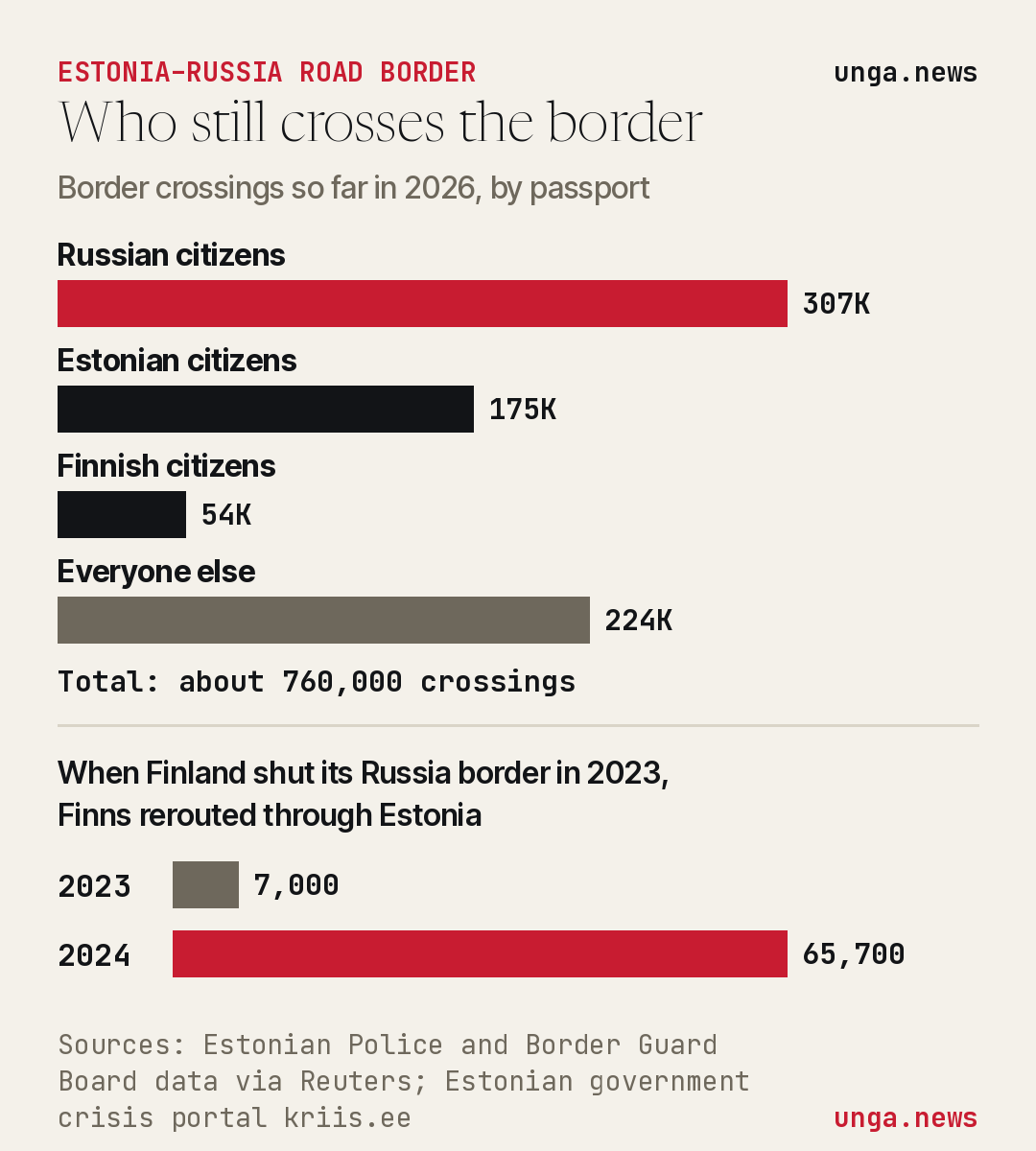
The traffic that is left tells its own story. Of roughly 760,000 crossings this year, Estonian police data show 307,000 were by Russian citizens, 175,000 by Estonians and 54,000 by Finns. The Finns are there because Finland already slammed its own Russian border shut in the fall of 2023. Estonia’s government says Finnish crossings through Estonia jumped from just over 7,000 in 2023 to almost 65,700 in 2024. Close one door and the traffic finds the next one. Tallinn expects the same to happen now, with more travelers shifting to Latvia and Lithuania.
Moscow’s list of grievances
Russia’s statement went far past the border. It accused Estonia of “tacitly” letting Ukrainian drones fly through its airspace to hit northwestern Russia, of trying to obstruct Russian cargo ships in the Baltic, of banning the transit of Russian and Belarusian grain, of moving against the Russian language and of threatening the Russian Orthodox Church. Spokeswoman Maria Zakharova had already called the border plan an attempt to “erect a new Iron Curtain under the false pretence of some sort of threat from the East.”
Estonia answered the drone charge flatly. “Estonia has never allowed, and will never allow, its territory to be used for military operations by another country,” its foreign ministry said.
Then Tsahkna listed what Russia has been up to lately. “Russian missiles have reached Polish territory, Danish security services have identified an assassination plot in Denmark orchestrated by Russian intelligence services, merchant vessels in the Black Sea are under constant threat from Russian attacks, and in Estonia, an arson attack targeting a defence industry company, planned on the orders of Russian military intelligence, was foiled,” he said in a foreign ministry statement. Early Tuesday, sharing his op-ed in Politico Europe, he wrote: “Russia cannot expect Europe to remain open while it uses that openness against us.”
Not everyone in Estonia loves the plan. The independent Russian outlet Meduza noted that Estonia’s president, Ülle Madise, and the mayor of Narva, a mostly Russian-speaking city right on the river border, disagreed with the government’s decision. Fair enough, but the price falls on a few queue-sellers and suitcase traders, and the people Tallinn says it is stopping are Russian spies and the locals they try to recruit.
The kind of ally America asked for
Moscow’s threats land on a country of about 1.3 million people that has done what Washington spent years begging Europe to do. NATO’s own estimates put Estonia’s 2026 core defense spending at 5.10% of its economy, one of the highest shares in the alliance and already past the 5% target allies signed up for at President Trump’s urging at the 2025 summit in The Hague. And when it caught what it says was a foreign spy service plotting sabotage on its soil, it didn’t form a commission. It closed the border.
NATO Secretary-General Mark Rutte said the alliance is watching Estonia, along with last week’s Russian missiles in Poland, and has options. “When it comes to the military domain, we will always make assessments of our deterrence and defence and make updates where necessary,” he said in Berlin. As a NATO member, Estonia is covered by the alliance’s mutual defense pledge, the very line Russia is now flirting with in official statements.
Moscow howled when Finland shut its border in 2023, too. Estonia is betting the howling changes nothing. On Dec. 1 the gates in Narva stay folded shut, and Russia finds out its loud words buy nothing from a neighbor that has stopped being afraid of them.
Sources
- Margus Tsahkna on 𝕏 — Russia is flooding the airwaves with baseless accusations (Nov. 23, 2026)
- Estonian Ministry of Foreign Affairs — Foreign Minister Tsahkna: Russia’s propaganda machine is trying to divert attention from its own actions (Nov. 23, 2026)
- Estonian Government (kriis.ee) — The suspension of border crossings at the Estonian-Russian road border crossing points
- ERR News — Estonia to close border crossings with Russia after GRU-linked sabotage attacks
- ERR News — Minister: Closing the border with Russia directly affects few people
- Al Jazeera — Russia threatens ‘hostile’ Estonia with ‘open war’
- The Independent — Estonia issues blunt response after Russia accuses it of letting Ukraine use airspace
- Meduza — Russia protests Estonia’s planned land border closure
- Margus Tsahkna on 𝕏 — Politico Europe op-ed on closing the border (Nov. 24, 2026)