

Senate Moves to End Six-Year Lawsuits That Stall Power Plants, Pipelines and Power Lines
Senators voted 62–21 Tuesday night to take up a permitting bill co-written by Utah’s Mike Lee. It would give opponents 150 days to sue instead of six years, and Trump backs it.
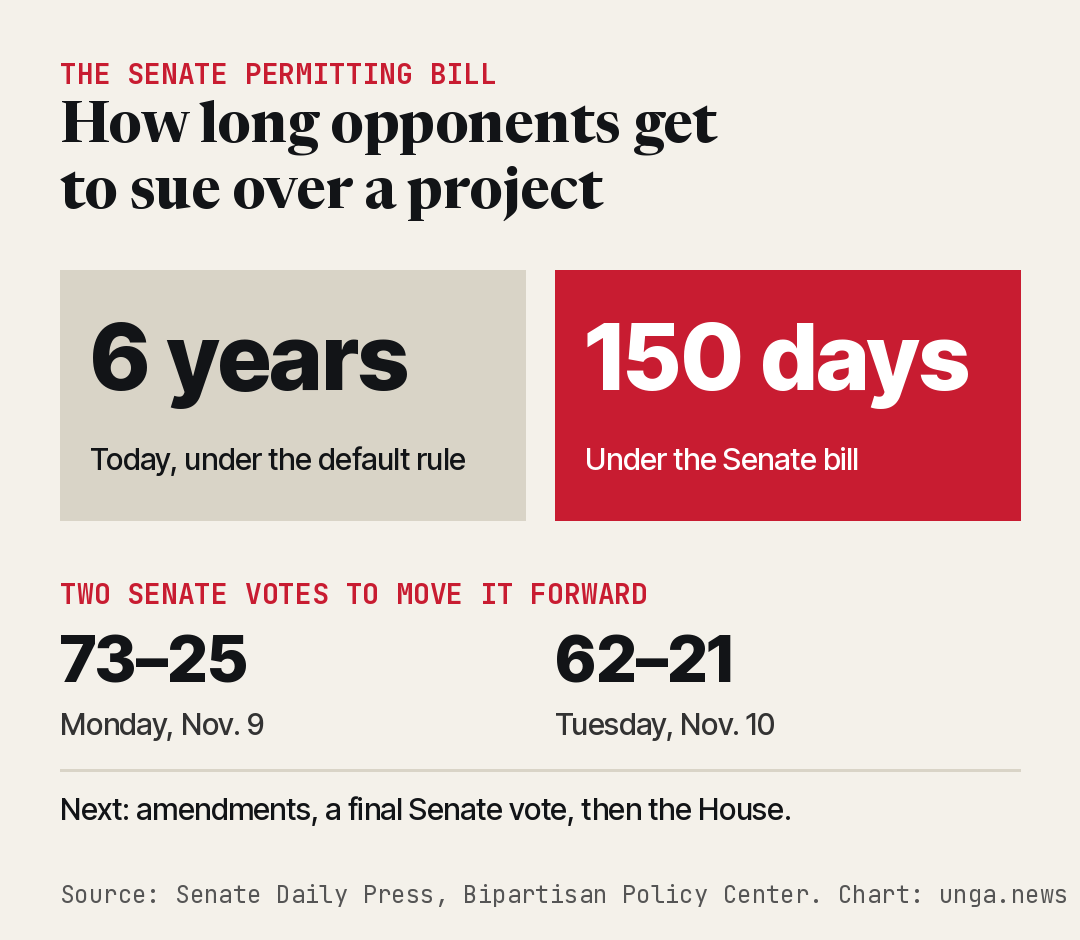
Here’s a fact that explains a lot about why power bills keep climbing. Under the rules most federal projects live under today, somebody who doesn’t like a new power plant, pipeline or transmission line can wait as long as six years to sue over it. By then the thing may be financed, built and running.
The Senate just took a big step toward ending that. At 9:02 p.m. Eastern on Tuesday, senators voted 62–21 to take up the permitting bill, formally called the Bipartisan American Affordability and Jobs Act. That came one day after a 73–25 vote to break a filibuster on the same measure. Two lopsided votes in two days is about as close to a sure thing as the Senate gets these days.
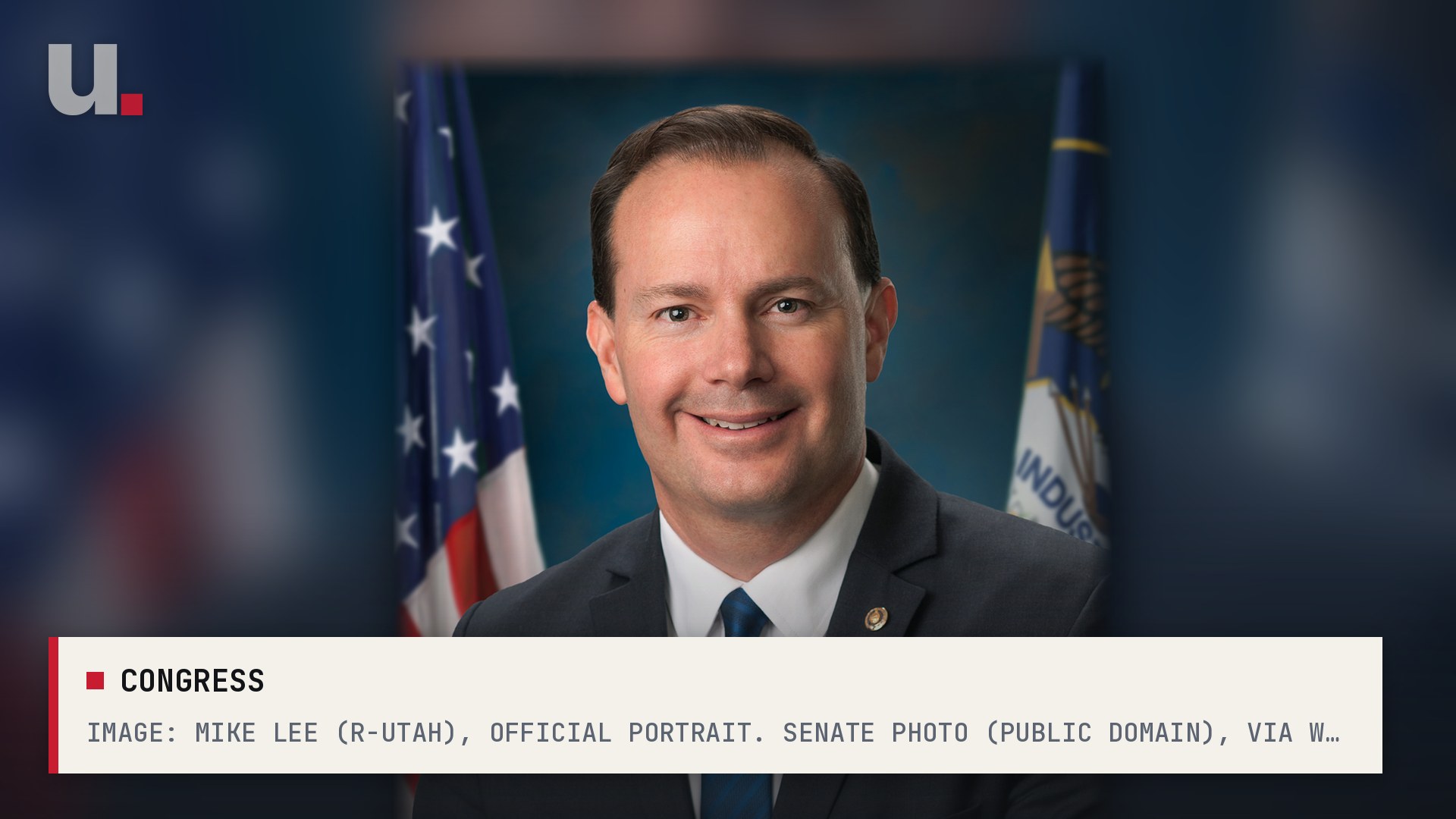
Utah’s own Mike Lee is one of the four senators who wrote it. He chairs the Senate’s energy committee and spoke on the floor Tuesday night just before the vote opened. His partners are Republican Shelley Moore Capito of West Virginia and Democrats Sheldon Whitehouse of Rhode Island and Martin Heinrich of New Mexico.
Six years to sue becomes 150 days
The heart of the bill is how long the lawyers get. The Bipartisan Policy Center explains that most challenges to federal permits run through a general law that gives people six years to file suit and lets a judge throw out a permit entirely. The Senate bill would cut that window to 150 days for challenges under the main environmental review law, starting the day the approval is made public.
It also narrows who can sue. You’d have to have raised your concern during the public comment period, and you’d have to show you were directly harmed. Challenges would go straight to a federal appeals court instead of starting at the bottom. And if a judge finds the government’s environmental paperwork came up short, the judge would generally send it back to be fixed instead of killing the project or halting construction.
Here’s why that matters to someone who has never read an environmental impact statement. Big projects are paid for years before they’re built. When builders and their lenders have to price in years of possible lawsuits, money costs more, and that cost ends up on your electric bill. The Bipartisan Policy Center notes the government wins most of these suits anyway. The delay itself is the damage.
A permit that stays a permit
There’s a second piece conservatives should like. Under the bill, once a project has every federal permit it needs, an agency generally couldn’t turn around and pull it, suspend it or quietly drag its feet to stop construction, according to the Congressional Research Service summary. There are exceptions for court orders, fraud, a builder breaking the law or the terms of the permit, and real threats to life or national security. If an agency breaks that promise, the builder could go to court and even recover part of its costs.
That’s a direct answer to the way whole industries have been jerked around when a new administration comes in and decides it doesn’t like what the last one approved. A deal ought to be a deal.
The bill also gives federal regulators more power to approve power lines that cross state lines when a state can’t or won’t act within a year, while keeping state review in place. Getting electricity from where it’s made to where it’s needed is one of the biggest bottlenecks in the country right now, especially with new data centers soaking up power.
Trump is in, with one big exception
The White House says the president “stands 100%” behind the bill, Axios reported. But Trump also said Monday, shortly before the first vote, that he won’t approve wind turbines, and that the bill was still subject to negotiation. That comment rocketed around the Capitol. Whitehouse, a Democrat, put out a statement saying the bill’s success depends on Trump’s people getting wind turbines “up and spinning” before final passage.
That’s the deal at the center of this whole thing. Democrats want more renewable energy built faster. Republicans want more oil, gas and other energy built faster, with less red tape choking economic growth. Both sides decided they’d rather have a faster system than keep fighting over a slow one.
Who voted no, and where it could still trip
Monday’s 73–25 vote drew 51 Republicans, with Mike Rounds of South Dakota the only GOP no. Twenty-one Democrats and independent Angus King of Maine joined them, while 23 Democrats and Bernie Sanders voted against, according to Axios. On Tuesday, the 21 no votes were Rounds, Sanders and 19 Democrats, including Ed Markey, Jeff Merkley and Patty Murray, the Senate Daily Press record shows. Seventeen senators missed the vote.
The fight now moves to amendments. A group of Democrats wants to strip out changes to the National Historic Preservation Act, which some tribes say would cut them out of decisions about energy projects in their communities, Bloomberg Government reported. Nevada Democrat Catherine Cortez Masto has said she’s against final passage unless that part comes out, and Republican Lisa Murkowski of Alaska is in a similar spot.
Then there’s the House. Progressive House Democrats have vowed to fight it, The Hill reported, and Minority Leader Hakeem Jeffries says he’s still reviewing it. With the lame-duck session running out of days, every amendment has to keep enough Democrats on board without losing Republicans.
Still, it’s worth pausing on what happened this week. In a Washington where almost nothing passes, a bill to stop endless lawsuits from blocking American energy just cleared two votes by wide margins, with a Utah senator holding the pen. If it survives the lame duck, the next power line near you might actually get built before your kids are grown.
Sources
- U.S. Senate Daily Press — Tuesday, November 10, 2026
- Axios — The path ahead for the permitting bill
- The Hill — Permitting reform bill advances closer to Senate finish
- Bloomberg Government — Permitting Measure Clears Another Procedural Hurdle in Senate
- Bipartisan Policy Center — Explaining the Senate Permitting Bill
- Congressional Research Service — BAAJA of 2026: Summary of All Sections