

Senate Votes 70–27 to Cut the Red Tape Keeping New Power Lines Stuck for a Decade
Schumer, Fetterman and most Republicans backed the final rewrite of the bipartisan build-faster bill. Trump says he’s “behind it 100 percent,” and a final vote is due before Thanksgiving.
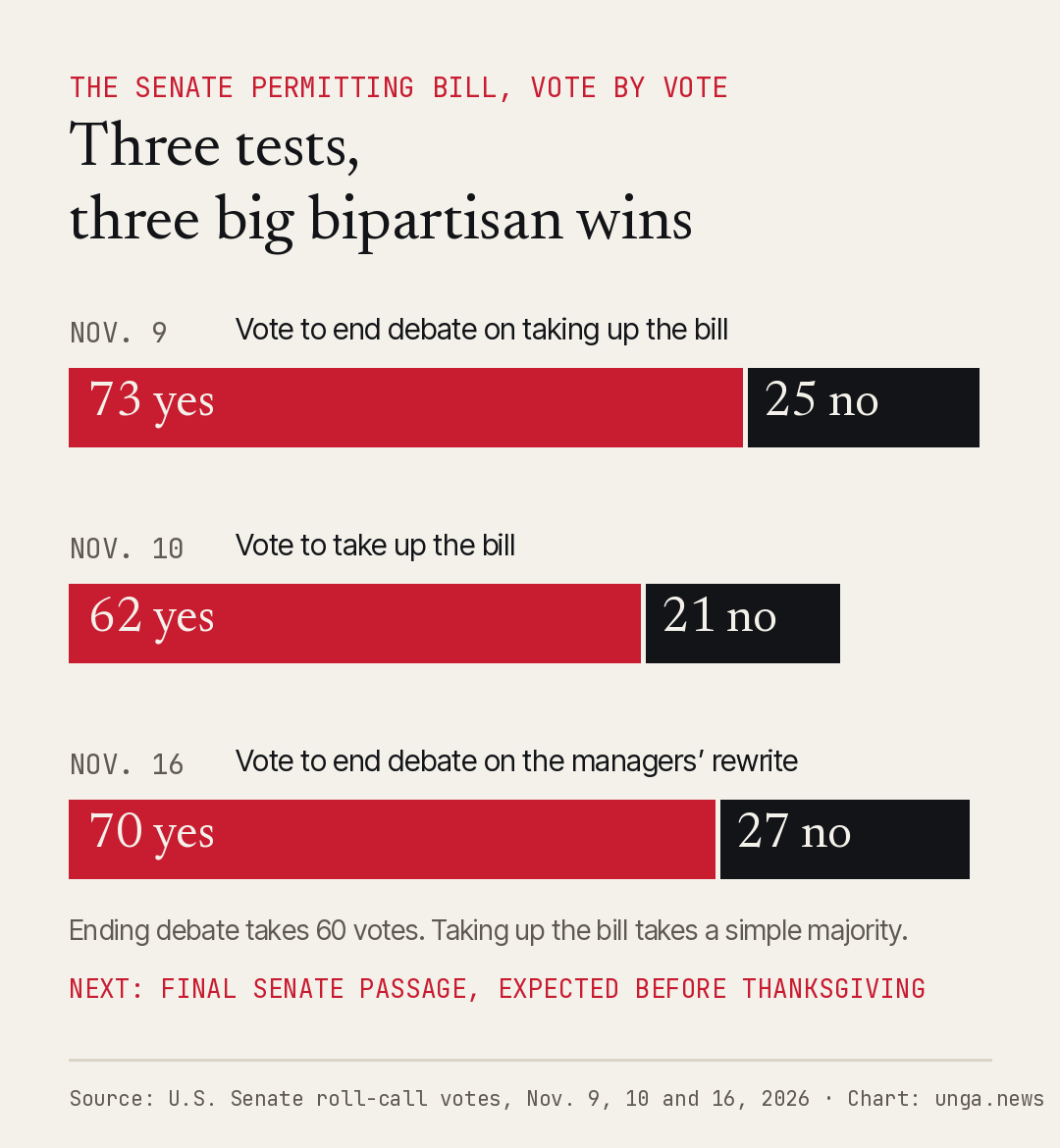
The Senate cleared the last big hurdle Monday night on the bill meant to stop power lines, mines and pipelines from rotting in paperwork for a decade. By a vote of 70 to 27, senators agreed to end debate on the final rewrite of the package, which sets up a vote on passing it before Thanksgiving. We covered the coalition behind this bill when the Senate took it up last week. Monday’s vote is the new part, and it was the one that could have gone sideways.
That’s because this round was about the actual text. The measure is a substitute amendment from Sen. Shelley Moore Capito of West Virginia, the Republican who chairs the Environment and Public Works Committee. It replaces the bill’s language with a managers’ version that tightens the sections on energy-hungry data centers and on tribal sovereignty, The Hill reported. Getting 70 senators to sign off on the final wording, not just on starting the conversation, is a far stronger signal than the first votes were.
Who crossed the aisle
The official roll call shows how wide the support runs. Senate Democratic Leader Chuck Schumer voted yes. So did Democrats Chris Coons of Delaware and John Fetterman of Pennsylvania, plus Maine independent Angus King. On the other side, two Republicans voted no: Josh Hawley of Missouri and Mike Rounds of South Dakota. Ashley Moody, Chris Murphy and Jim Risch didn’t vote.
It’s the third time in a week the bill has cleared a test with room to spare. On Nov. 9 the Senate voted 73 to 25 to end debate on taking it up, and on Nov. 10 it voted 62 to 21 to actually take it up. Ending debate in the Senate takes 60 votes. This bill keeps landing at 70 or better.
What the bill actually does
Strip away the procedure and the goal is simple: let America build things again. The package would speed up construction of energy, mining and infrastructure projects and limit the environmental lawsuits and reviews that drag them out under the Clean Water Act, the Endangered Species Act, the National Environmental Policy Act and the National Historic Preservation Act, according to The Hill.
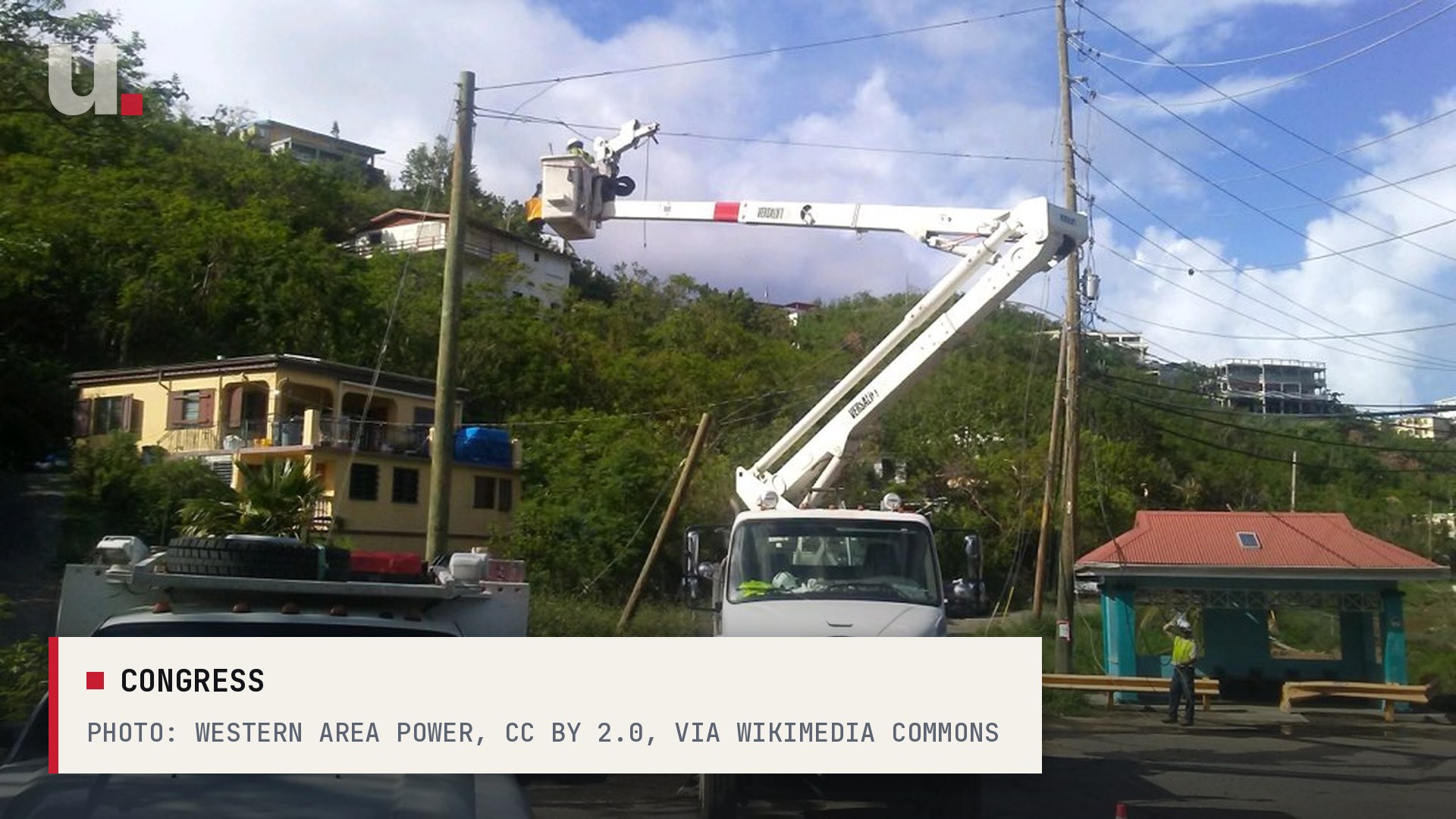
The biggest promise is on the grid. Building a new high-voltage transmission line can take 10 years or longer under current law. Supporters say this bill could cut that to five or six. It would also tell the Federal Energy Regulatory Commission to set deadlines for utilities to upgrade their lines and put in newer technology when the benefits outweigh the costs.
That matters to anyone paying a power bill. Demand is climbing, much of it from SI data centers, and new power plants are useless if there are no lines to carry the electricity to homes. The managers’ changes aim squarely at that problem by putting tougher provisions on data centers into the text. Monday’s 70-vote margin says the coalition of oil, solar and labor groups behind the bill is holding.
The rewrite also lets a tribal or state government agency serve as the “lead agency” that runs a project’s review, instead of leaving that job only to Washington. And it makes clear that projects financed through two federal loan programs for transportation and railroads still qualify for the faster process.
The White House is all in
President Trump has made clear he wants this on his desk. “We’re behind it 100 percent,” he told reporters last week, and The Hill reported he’s expected to sign it if it gets there. Asked whether he’d help Speaker Mike Johnson round up House Republicans, Trump said, “We may see.” That’s a president putting his weight behind a deal both parties can claim.
Where it can still snag
The final Senate vote isn’t locked. Some Democrats who voted to start debate, including Sen. Catherine Cortez Masto of Nevada, have threatened to oppose final passage unless changes are made, and Cortez Masto wants the section touching the National Historic Preservation Act stripped out. It also isn’t clear whether senators will get to offer more amendments before the final vote.
The House is the bigger test. Energy and Commerce Committee Chairman Brett Guthrie, a Kentucky Republican, wants changes to address grid reliability. And a bloc of progressive Democrats, including Reps. Jared Huffman, Adelita Grijalva, Summer Lee, Melanie Stansbury and Rashida Tlaib, are lined up against it on conservation grounds.
The Senate’s next floor session was scheduled for 10 a.m. Eastern on Tuesday, with the first vote at 2:15 p.m. Washington has argued about how slowly this country builds for most of my lifetime. Seventy senators just voted like they’re finally tired of it.
Sources
- U.S. Senate — Roll call votes, 119th Congress, 2nd session
- The Hill — Senate advances permitting reform package to speed energy and mining
- The Hill — Senate clears hurdle for bipartisan permitting reform package
- Northgate News — Senate advances Capito permitting substitute with 70–27 cloture vote
- unga.news — Oil Drillers, Solar Companies and Big Labor All Want This Senate Bill to Build Faster