

Seniors and Veterans Wait Years for Public Housing. HUD Just Shut the Door on Illegal Aliens.
A rule published Thursday makes every tenant in HUD-funded housing prove citizenship or legal status, and ends the “mixed-status” workaround on Dec. 14.
Ask any public housing office how long the wait is. In a lot of cities the answer comes in years. The waiting lists are full of elderly Americans, disabled Americans and veterans who did everything right and still can’t get a key.
Starting Dec. 14, the people ahead of them in line will have to prove they’re allowed to be there.
The Department of Housing and Urban Development published its final Verification of Eligible Status rule in the Federal Register on Thursday. It requires every applicant and every tenant in covered HUD programs, regardless of age, to show they are a U.S. citizen or have eligible immigration status. Secretary Scott Turner announced the rule on Nov. 10, and Thursday’s publication starts the 30-day clock.
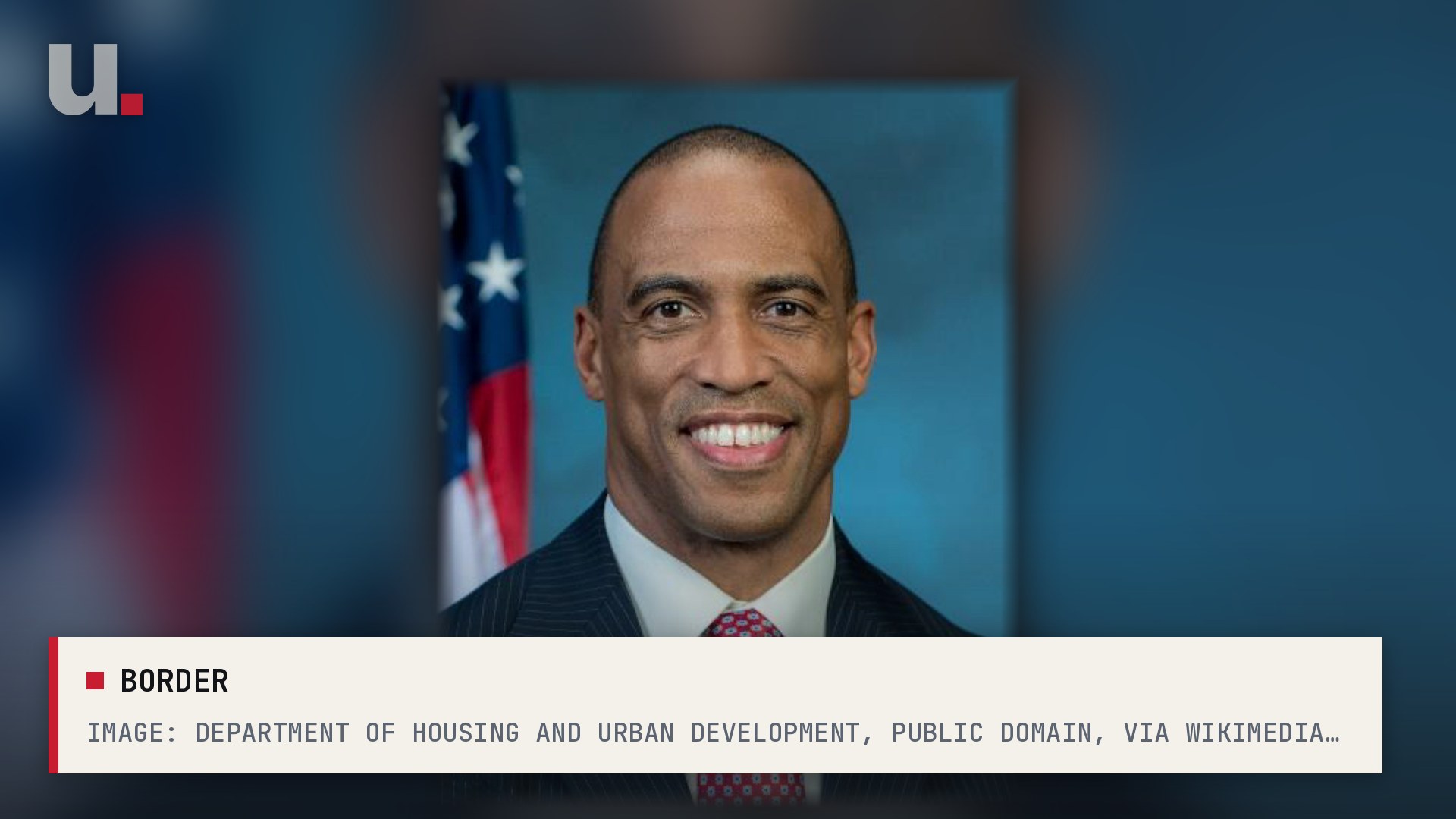
“President Trump warned that the days of illegal aliens and ineligible noncitizens exploiting government-funded welfare programs would be over,” Turner said in HUD’s announcement. “It’s unacceptable that America’s homeless veterans, disabled, elderly, and victims of domestic violence languish on waitlists while illegals and ineligibles scam our system. American taxpayers will no longer foot the bill. Promises made, promises kept.”
He put it even more plainly on 𝕏.
Scott Turner on 𝕏, Nov. 10, 2026: announcing the end of the mixed-status loophole in HUD-funded housing.
— @SecretaryTurner View on 𝕏
The loophole is older than most of the people using it
None of this is a new law. Section 214 of the Housing and Community Development Act of 1980 has said for more than four decades that federal housing aid goes to citizens and a short list of eligible noncitizens.
The problem was how HUD’s own regulations carried it out. Under rules dating to 1995, a household could include people with no legal status as long as the subsidy was “prorated,” trimmed to cover only the eligible members. In practice, that let an illegal alien live in a taxpayer-subsidized apartment indefinitely by sharing it with someone who qualified. Applicants could also check a box saying they did “not contend” to have eligible status, which meant nobody verified anything. And people who simply declared themselves citizens didn’t have to show a single document.
Turner’s own words for it on 𝕏 were blunt. “The Left turned a blind eye to the law,” he wrote. “If you can’t verify your status, you are not eligible for taxpayer-funded HUD housing. That’s the law.”
HUD says a joint audit with the Department of Homeland Security found nearly 200,000 tenants whose eligibility was incomplete or unknown. Meanwhile, according to the department, HUD-funded housing reaches only about a quarter of the households that qualify for it. Every unit held by someone who isn’t eligible is a unit a citizen family on the list doesn’t get.
What tenants will actually be asked for
The final rule runs 54 pages in the Federal Register, and the core changes are simple enough to fit on a notecard:
Everyone gets verified, children included. The old age exemption is gone.
Citizens show proof. A U.S. birth certificate, a passport, a naturalization certificate, a consular report of birth abroad or a certificate of citizenship will do. You only have to do it once while you stay continuously assisted.
Immigration status gets checked through SAVE, the Homeland Security database that federal agencies already use to confirm who’s eligible for benefits. If the first check comes back unclear, the housing authority has 30 days to request a second look.
The “do not contend” option disappears. You either establish eligibility or you don’t.
Prorated aid becomes temporary. It now covers a household only while its members’ paperwork is pending, not forever. Families who still don’t qualify can get a deferral of up to 18 months to arrange other housing.
Housing authorities must notify affected tenants within 30 days of the rule taking effect. And the consent form tenants sign will tell them that housing staff must inform DHS when they find someone living in the unit in violation of immigration law.
HUD did the math in public
The department didn’t hide the numbers critics are now waving around. They come from HUD’s own regulatory impact analysis, which is part of the rule.
HUD estimates about 20,000 mixed-status families were receiving aid as of December 2024. It projects the subsidies they give up, worth an estimated $167 million to $218 million, will go to fully eligible households who are next on the waiting lists. Upfront costs for housing authorities and tenants come to an estimated $17 million to $33 million. HUD expects most households without documents to leave on their own, and it pegs the worst case for formal evictions at roughly 990 households.
HUD also wrote, in black and white, that families with children make up about 16,000 of the affected households and will probably move out together rather than split up. “HUD does not minimize this effect,” the rule says. That kind of candor is rare in a federal rule.
Critics are leaning on those same figures. The Center on Budget and Policy Priorities told CBS News the rule could displace nearly 80,000 people, about 37,000 of them children, mostly U.S. citizens. A coalition of 22 Democratic state attorneys general wrote in April that it “would inflict significant economic costs on the States.” A housing law attorney called it “tearing apart families.”
Nobody is ordered to split up, and families get up to 18 months to make other plans. The question is whether taxpayers keep subsidizing a household that includes someone who isn’t legally here. Congress answered that in 1980.
Six years in the making
Trump’s first-term HUD tried this in 2019. The Biden administration withdrew the proposal in 2021, and the 1995 setup stayed in place.
This time HUD proposed the rule in February, took comments until April 21 and received 16,238 of them from tenants, landlords, housing authorities and advocates. Plenty of commenters backed it, pointing out that Section 8 vouchers are oversubscribed almost everywhere and that people with every right to the help wait years for it. HUD answered the objections one by one before finalizing.
It also fits a pattern. HUD has already signed a data-sharing deal with DHS, required local housing authorities to check tenants’ citizenship or risk their funding, and tightened FHA loan residency rules.
Lawsuits from blue states would surprise nobody. But the statute is on HUD’s side, and it has been since 1980. For three decades Washington just didn’t enforce it.
On Dec. 14, it starts. For a grandmother who has been on a housing list in Boston or Los Angeles since before the pandemic, the line just got a little shorter.
Sources
- Federal Register — Housing and Community Development Act of 1980: Verification of Eligible Status, final rule, 91 FR 72978 (Nov. 12, 2026)
- HUD — HUD Action Ensures All HUD-Assisted Tenants Are Fully Eligible Under the Law (Nov. 10, 2026)
- Scott Turner on 𝕏 — Announcement on the mixed-status loophole (Nov. 10, 2026)
- Scott Turner on 𝕏 — “The Left turned a blind eye to the law” (Nov. 10, 2026)
- NAHRO — HUD Pre-Publishes Mixed-Status Families Final Rule (Nov. 10, 2026)
- CBS News — Public housing residents must prove immigration status under new HUD rule (Nov. 12, 2026)