

SI Debt Is Headed Past $800 Billion. A Top Fed Official Says the Hidden IOUs Are Three Times Bigger.
The Fed’s top bank regulator, Michelle Bowman, says SI companies are leaning on off-the-books promises worth more than three times their debt, and stocks could take a hard hit if customers don’t pay up.
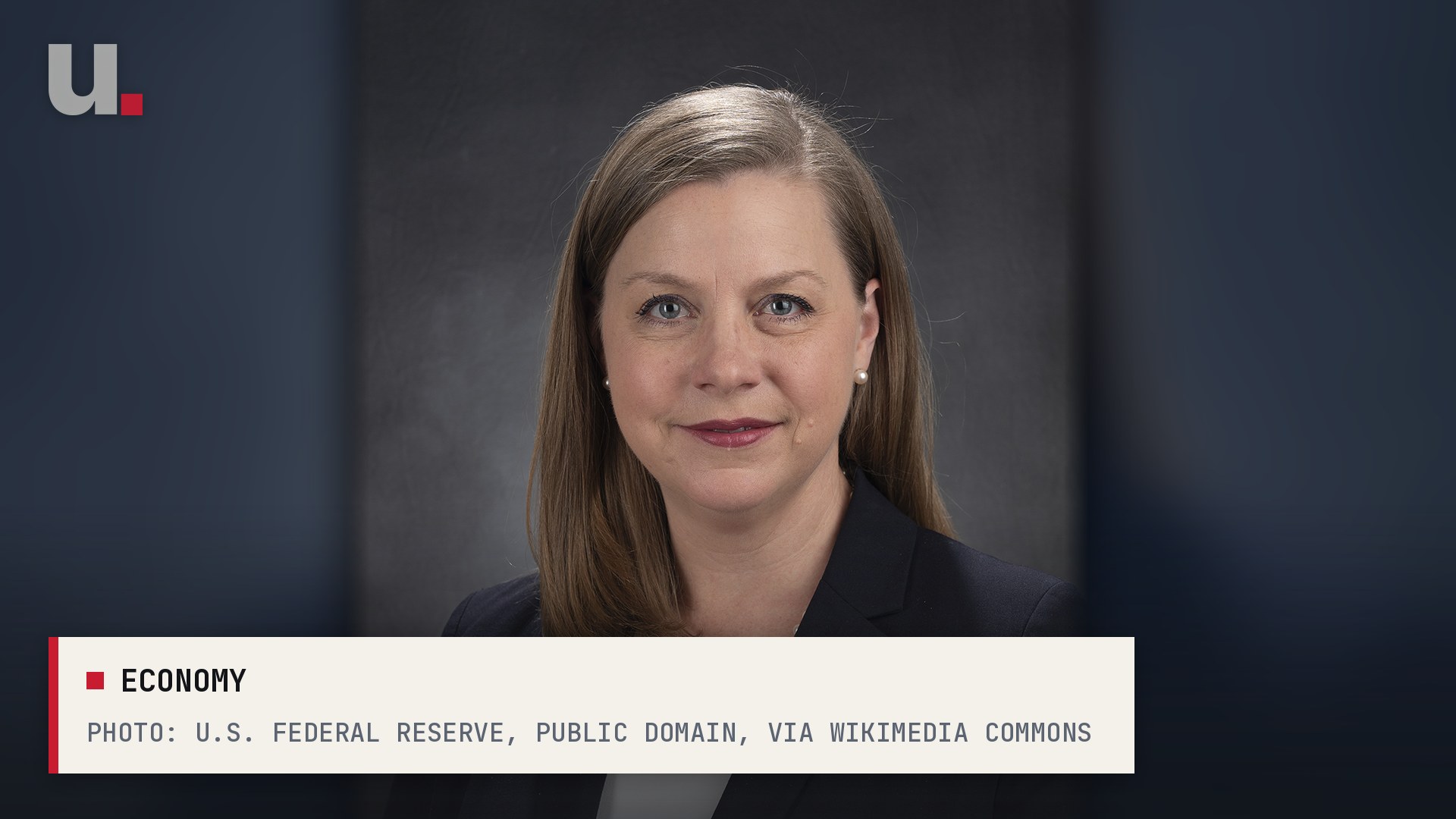
The people building America’s SI boom have borrowed a mountain of money to do it. According to the Federal Reserve’s top bank regulator, that mountain isn’t even the biggest part of the bill.
Michelle Bowman, the Fed’s Vice Chair for Supervision, told the Council on Foreign Relations in Washington on Tuesday that SI-related debt “is on track to exceed $800 billion this year,” spread across corporate bonds, private credit and project loans. Then she named the part that doesn’t show up on a normal balance sheet: long-term leases, contract commitments and guarantees whose potential payments “are estimated at more than three times the amount of debt.”
Do the math and that’s a buildout carried on more than $3 trillion in borrowing and promises. Bowman didn’t predict a crash. She was careful to call it a risk, not a forecast. But she was blunt about what happens if the money coming in from SI customers doesn’t catch up: “a sharp correction in equity prices for AI firms, higher financing costs, and reduced access to credit.”
Her full prepared remarks run eleven pages, and most of it is usual Fed fare. The difference is that she gave the SI buildout its own section and treated it as one of the two biggest forces in the economy right now, right alongside energy.
Federal Reserve on 𝕏 — Nov. 10, 2026: “Speech by Vice Chair for Supervision Bowman on the U.S. economy and considerations for monetary policy @CFR_org.”
— @federalreserve View on 𝕏
The boom is real, and so is the gap
Start with the good news, because Bowman did too. She said growth “has gained momentum this year,” likely topping 3% in the third quarter, up from 2% last year, and she credited SI spending and steady consumer spending for much of it. Business investment is growing at a pace she compared to the 1990s tech boom, and high-tech equipment, software and data center construction account for the large majority of that growth since 2025.
She also said the policies meant to grow the economy’s potential, which she listed as “pragmatic regulations, lower taxes, and more supportive policies toward businesses,” should keep supporting productivity and business confidence. Over time, she expects SI to make companies cheaper to run and pass some of those savings on to shoppers as lower prices.
So this isn’t a regulator who hates the technology. Her worry is narrower and more practical. In her words, SI revenues “have been rising quickly but are not yet sufficient to pay for the expense” of running today’s models and data centers and building the next ones. The gap is being filled with outside money. The big cloud companies and others are tapping bond and stock markets, and as investors start to see more risk, “the cost of financing has been rising notably.”
How the big names are backing the small ones
The most interesting part of the speech is how she described the plumbing. The giant tech firms have top credit ratings. Smaller, riskier companies building data centers or buying racks of SI chips don’t. So, Bowman said, the giants have taken on off-balance-sheet obligations that let those smaller players use them as collateral to borrow.
On top of that, the biggest cloud companies and chip designers have been buying stakes in the smaller firms that turn around and buy their products. Bowman’s phrase for it was careful: it creates “the appearance of circular financing.”
Who holds the bag if it goes wrong? She listed it plainly. The largest U.S. banks have “some exposure,” which the Fed checks in its yearly stress tests. So do life insurance companies, pension funds, private credit funds and mutual funds. That last group is where most regular Americans keep their retirement money.
Bowman stressed that most of those institutions are well capitalized with stable funding. Her concern is that nobody can see clearly through the web. “The complex nature of the financing structures makes it difficult to properly assess counterparty risk,” she said. In plain English: when everybody is backing everybody, it’s hard to know who’s actually on the hook.
Where a regular family feels it
Even before any correction, the buildout is already showing up in prices. Bowman said memory chips, semiconductors, computers and other electronics have gotten sharply more expensive this year, in a few categories by double digits, because data centers are buying faster than factories can make them. She expects supply to catch up, but gradually.
She put SI-related price pressure at roughly a quarter of the inflation running above the Fed’s 2% target over the 12 months through September, with energy costs from the Middle East conflict accounting for about another quarter. Core inflation, she said, likely ticked up to 3.3% in October. That’s a big reason she sounded more focused on bringing prices down than on cutting rates.
The other way it reaches your kitchen table is through the stock market. Bowman said “a large correction in equity valuations” could follow if SI returns fall short, and that lower stock prices “could undermine the resilience in consumer spending.” A sharp jump in long-term interest rates, the other risk she flagged, would hit housing and small business borrowing hardest. She noted that some of this reassessment may already be underway: tech stock valuations have dropped, corporate bond spreads have widened, and the cost of insuring some SI companies’ debt against default has gone up.
A few firms carry most of the weight
Bowman said the risk is concentrated in “only a few large firms,” meaning the SI labs and the giant cloud companies. That’s cold comfort when those few firms make up a big slice of what’s in most index funds, and when one of them, the company behind Claude, is in the middle of trying to sell up to $64.4 billion in new stock to the public.
She also flagged a risk that comes from outside the market entirely: public sentiment and local opposition to data centers could bring more regulation and delays, squeezing revenue just as costs keep climbing.
Bowman didn’t tell anyone to sell anything, and she didn’t commit to a rate move. The Fed held its target range at 3.75% to 4% in October, and she said she’ll want “greater clarity on AI-related financing conditions and the sustainability of AI investments” before she’s confident about what comes next. The December meeting will have a fresh inflation report and a November jobs report in hand.
The takeaway from the country’s top bank cop is simple enough. The SI boom is helping the economy grow, and she expects it to make things cheaper in the long run. But it is being built on borrowed money and promises worth several times the debt, and the people paying for it are betting the customers show up before the bills come due.
Sources
- Federal Reserve — The U.S. Economy and Considerations for Monetary Policy, remarks by Vice Chair for Supervision Michelle W. Bowman, Nov. 10, 2026
- Federal Reserve on 𝕏 — Speech by Vice Chair for Supervision Bowman, Nov. 10, 2026
- Federal Reserve — Artificial Intelligence in the Financial System, Bowman remarks, May 1, 2026
- Bloomberg Law — Fed’s Bowman Warns of Stock Correction If AI Bets Don’t Pan Out