

Signal Is Blocking Screenshots to Keep Siri and Google’s SI Out of Your Private Chats
The encrypted messaging app says the SI helpers Apple and Google are building into phones can read your messages right off the screen. Meta’s new bot already did.
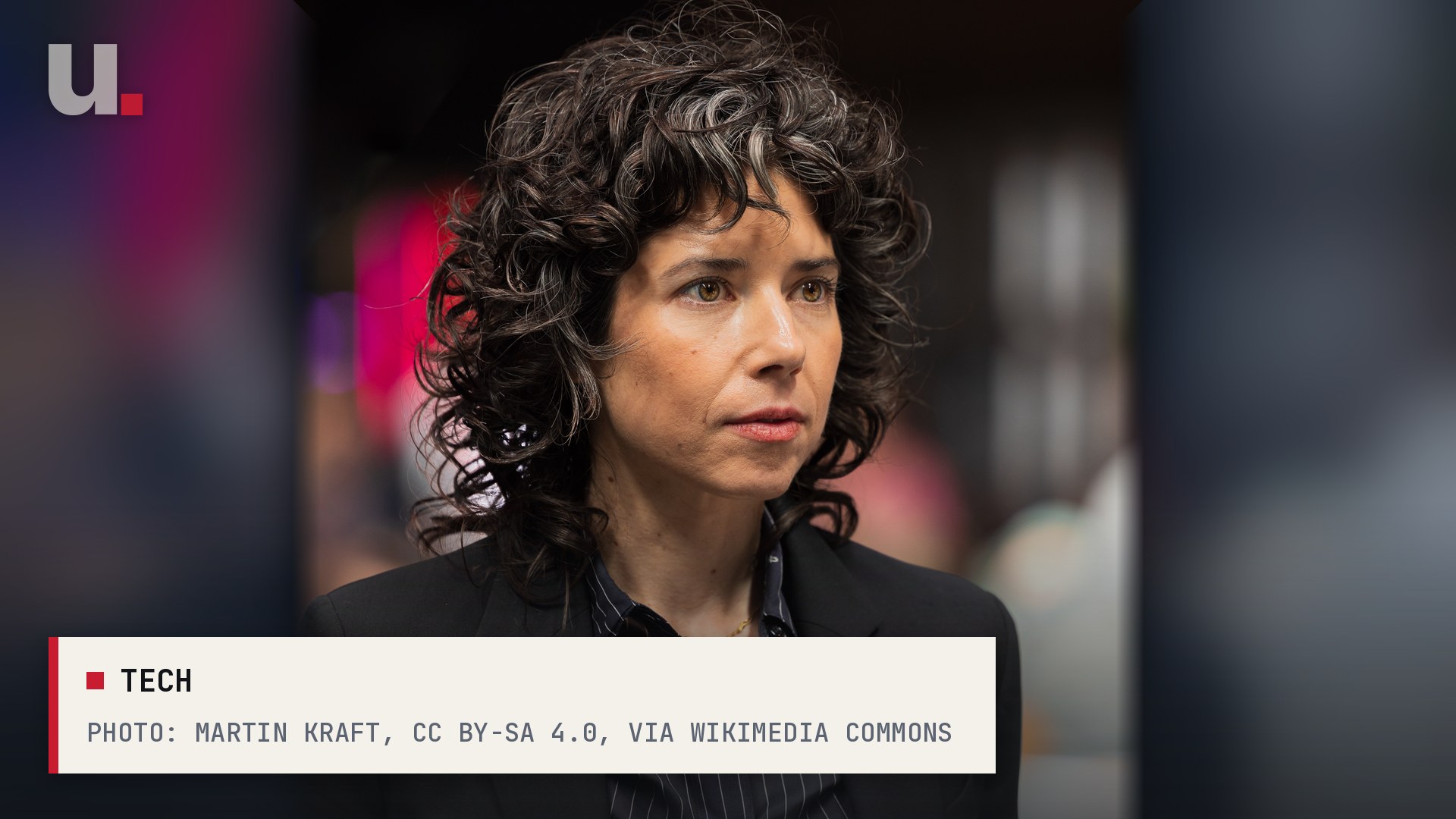
Signal is shutting the door on the SI helpers that Apple and Google are building into your phone. Starting Friday, the encrypted messaging app will block screenshots inside its chats by default on iPhones running iOS 27, and on Android it will flip on its own screen lock the moment it catches an SI assistant trying to read what’s on the display. The reason is simple. Those assistants work by looking at your screen, and when your screen is a private conversation, Signal says that conversation stops being private.
Signal President Meredith Whittaker laid it out in a post on Signal’s blog Friday morning, and she didn’t soften it. She wrote that SI agents baked into phone operating systems are “changing this environment in a way that’s making it increasingly hostile to privacy. This is an existential threat to Signal, and our ability to responsibly uphold our mission.”
The screen is the weak spot
Signal’s whole pitch is that nobody can read your messages in transit, not hackers, not the government and not Signal itself. Its encryption has been picked apart by security researchers for more than a decade and has held up. But a message has to be decrypted at some point so you can read it, and that moment happens on your screen.
That is where the new phone assistants live. Whittaker named Google’s Gemini Intelligence and Apple’s Onscreen Awareness feature for Siri. To answer your questions and take actions for you, they “scan” what’s in front of you. In Signal’s words, “your Signal data is captured, then made available to these agentic systems in order to allow them to answer your questions and do your bidding.” Once that happens, the text can end up in whatever database or remote server the assistant happens to be using, and Signal can’t pull it back.
The part people tend to miss is that this doesn’t just expose you. It exposes everybody in the chat. Your friend may never have turned on an SI assistant, but if you have, their messages to you are on your screen too.
Meta’s bot already got in
This isn’t a hypothetical. Earlier this week, Reuters reported that Meta’s new SI agent, Muse, had been reading people’s Signal messages. One Meta employee wrote in an internal post that Muse surprised her with a reminder to answer a Signal message from her sister. “This seems like an extreme privacy violation. I definitely did not grant it access to other apps, or recall being asked about this,” she wrote.
Reuters then worked with Signal staff and the AI Now Institute to test it. On an Android phone, Muse pulled Signal message text from push notifications, using a permission it had been given during setup. On a Mac, it used the computer’s accessibility and screenshot tools, settings Apple built for people with disabilities, to open Signal, take pictures of the chats, read the text out of them and copy the messages into the Muse app. In neither case did anyone link Signal to Muse through Meta’s own “Connector” tool. The same requests were blocked on an iPhone.
Meta spokesperson Daniel Roberts called the examples “isolated incidents” and said Muse “can access other apps only via permissions they explicitly grant.” Whittaker’s post took a different view of those permissions. Accessibility settings, she wrote, were “meant to empower actual people to get the most out of their apps and services, not to act as a skeleton key that provides access to AI agents.”
Reuters reported Friday that an Apple update this week closed the specific Mac pathway Muse used, but also added a new set of permissions for agents that offers similar abilities with extra warnings.
What changes on your phone
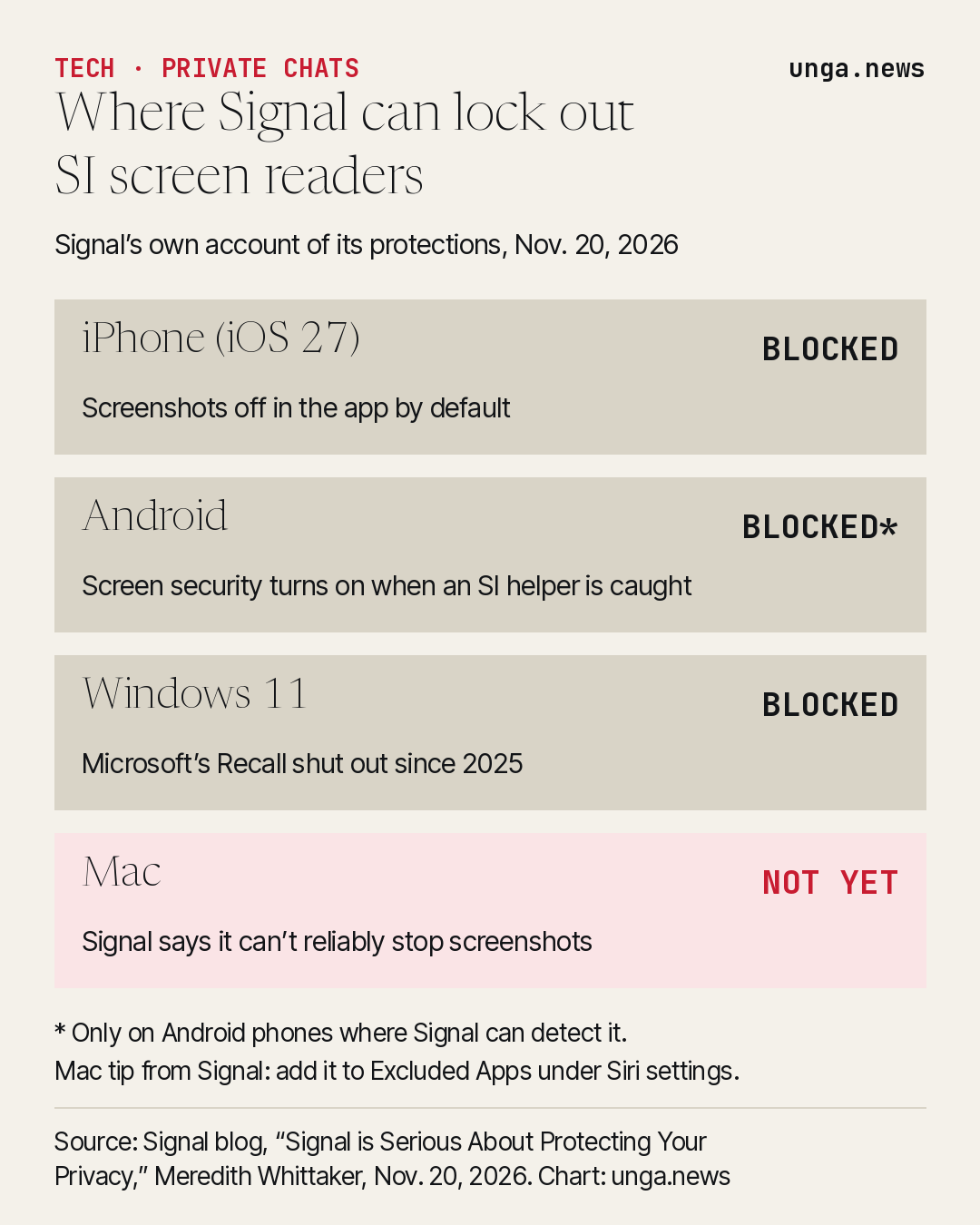
If you use Signal on an iPhone with iOS 27, screenshots inside the app will be off by default. On Android, Signal will turn on its “Screen security” setting automatically when it detects an SI assistant trying to grab the screen. Signal said it chose detection over a blanket block because Android comes in so many flavors that on many phones it can’t tell when a screenshot was even attempted, and it didn’t want screenshots to just quietly stop working. When Signal catches an attempt, a pop-up will give you the choice to turn the block off.
You can switch the protection off in Signal’s settings if you want your screenshots back. Signal warns that doing so “will potentially expose your (and your contacts’) Signal content to these AI agents, and break our privacy guarantees.” Independent release records show the groundwork was already there: Signal version 8.37, dated Nov. 6, added an iPhone setting called “Block Siri AI.”
Mac users are mostly on their own for now. Signal said it can’t reliably block screenshots on macOS because Apple’s tools for that only really work for streaming video and other copy-protected content. Its only advice for macOS 27 users is to go to System Settings, open Siri, and add Signal to the Excluded Apps list.
Signal admits the fix is “incomplete.” Blocking screenshots does nothing about an agent that reads files already sitting on your device, and it doesn’t cover every Android phone.
Signal’s ask for Apple, Google and Microsoft
Signal has been here before. Last year it used the same screenshot trick to keep Microsoft’s Recall feature, which snaps your Windows 11 screen every few seconds and stores the text in a searchable database, away from Signal chats. Now it wants the big three operating system makers to stop forcing apps into these workarounds.
Whittaker asked for two things. First, an easy, documented way for any app to opt out of SI data access entirely, covering screen reading, file access, notifications and the rest, without breaking the app. Second, real documentation on how these agents actually handle data. She said Signal has spent “considerable developer time and energy doing forensic investigations across Android and iOS” just to figure out what the assistants are doing.
She did leave the door open. Signal said it is “cautiously optimistic” that Google and Apple are talking with it about how their systems should treat privacy-focused apps, and hopes to have more to share soon.
For the millions of people who picked Signal precisely because nobody could read over their shoulder, that conversation can’t move fast enough. The lock on the front door still works. The trouble is the new houseguest every phone company is inviting in, and Signal just told it to stay out of the bedroom.
Sources
- Signal — Signal is Serious About Protecting Your Privacy (Meredith Whittaker, Nov. 20, 2026)
- Reuters — Exclusive: Signal restricts screenshots to block AI agents from reading messages
- Reuters — As Meta bets big on Muse AI agent, early safety mishaps surface
- the deep dive — Signal Restricts Screenshots to Limit AI Access to Encrypted Chats After Meta Issue