

Tesla’s Big Electric Trucks Start Hauling Freight Out of Oakland’s Busy Shipping Port
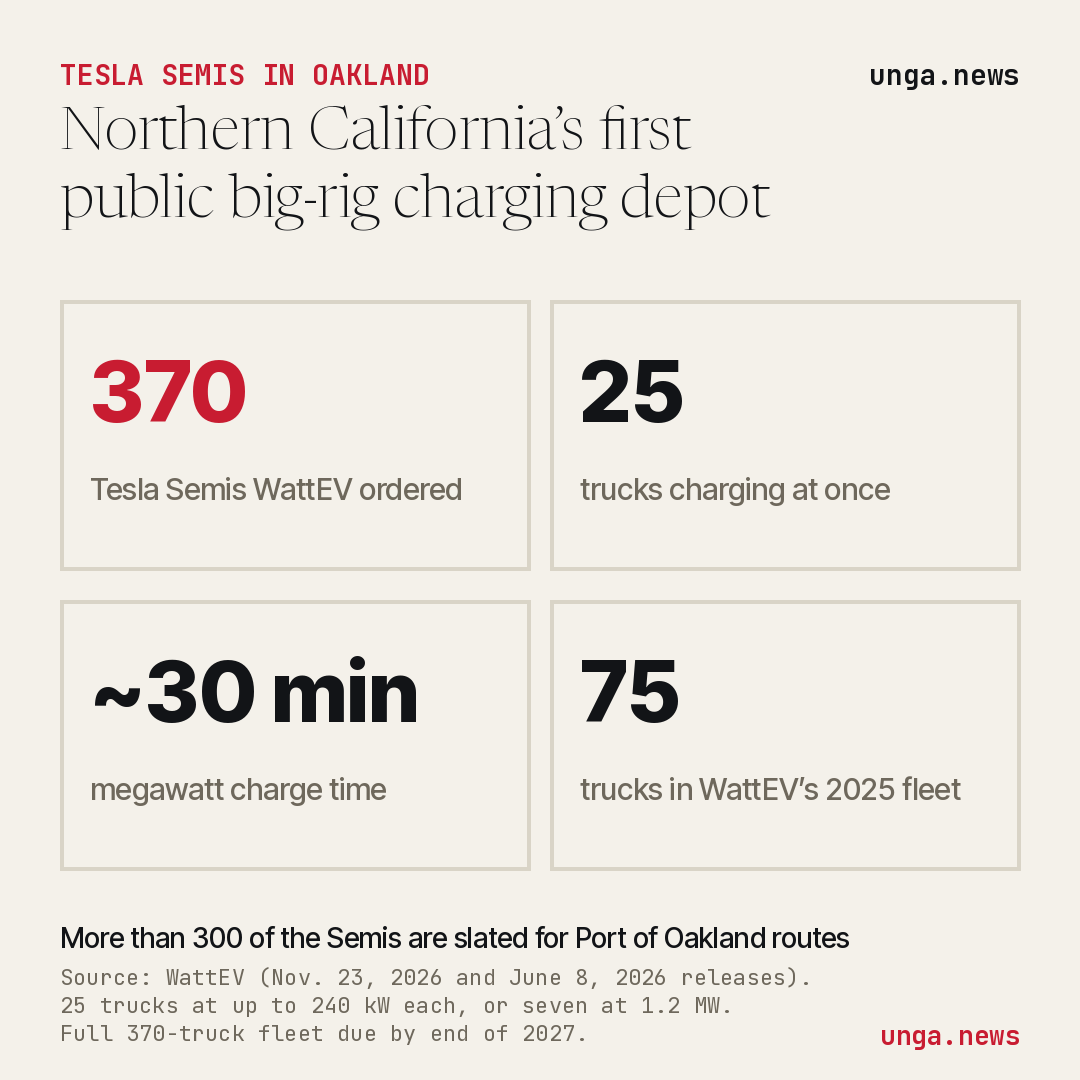
A trucking company that shopped around picked Tesla’s Semi, ordered 370 of them, and just opened Northern California’s first public big-rig charging stop at the Port of Oakland.
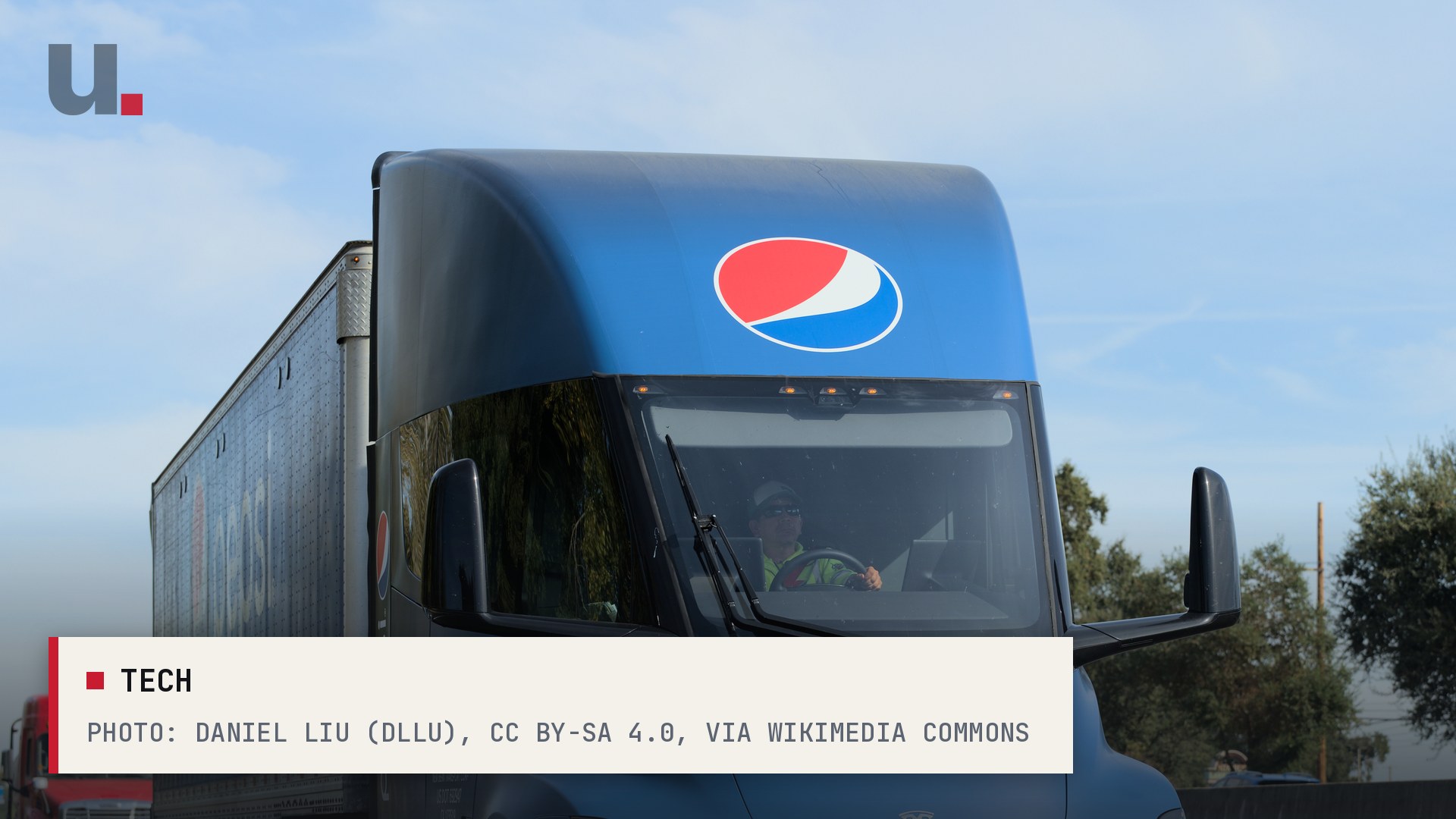
Tesla’s electric big rig just rolled into one of the busiest freight hubs on the West Coast, and the company running it says the trucks are already cheaper to fuel per mile than diesel.
On Monday, Nov. 23, the trucking company WattEV opened a public charging depot for heavy trucks at the Port of Oakland and put the first of its new Tesla Semis to work hauling freight around the Bay Area. According to WattEV’s announcement, it’s the first public depot of its kind in Northern California, and more than 300 Semis are slated to run out of it on routes from the port to Sacramento, the Central Valley, Nevada and beyond.
That makes Oakland the first real test of Tesla’s truck at port scale in the northern half of the state. Most of the charging built for big rigs so far has been clustered in Southern California, around Long Beach and the Inland Empire. Truckers hauling containers out of Oakland have had nowhere public to plug in a heavy electric truck.
Why a trucking company picked Tesla
WattEV didn’t pick the Semi on a whim. Back in June, the company announced an order for 370 Tesla Semis, which it called the largest single electric truck deployment in California. CEO Salim Youssefzadeh said the company chose Tesla “based on cost, performance and availability after issuing a public request for proposals.” In plain English: WattEV shopped around, and Tesla won on price, on the truck itself and on being able to actually deliver.
The first 50 trucks were scheduled to start arriving this year, with the full fleet running by the end of 2027. For scale, WattEV’s whole electric fleet in Southern California was 75 trucks in 2025. This one order is roughly five times that.
The pitch to truckers is simple money. Youssefzadeh said in June that diesel prices “will continue to be a decisive factor in fleet procurement decisions,” and that WattEV can “deliver goods at better economics compared to diesel today.” Monday’s release went further, saying the energy cost per mile for the new Semis is lower than for comparable diesel trucks at current fuel prices.
“We’re proud to be working with partners like the Port of Oakland, the Bay Area Air District, Tesla and the California Air Resources Board to be able to offer truckers in Northern California an electric transportation ecosystem that will blow away traditional diesel freight hauling,” Youssefzadeh said at the opening.
A fill-up in about half an hour
The biggest knock on electric big rigs has always been time. A trucker who sits for hours waiting on a charger isn’t making money. WattEV says the Oakland depot is built for megawatt charging, the highest-power charging built for big trucks, which cuts a charging stop to 30 minutes or less, close to what it takes to fuel a diesel rig.
The site can charge 25 medium and heavy trucks at the same time at up to 240 kilowatts each, or seven trucks at the full 1.2 megawatts. In June, WattEV said its Tesla megawatt chargers can add about 300 miles of range to a Semi in roughly 30 minutes.
Power comes from PG&E through a program the utility calls Flex Connect, which it says hooks projects to the grid faster by squeezing more out of existing lines instead of waiting years for upgrades. “Electric trucks are coming to the Port of Oakland, and PG&E is proud to help power them,” said Madeline Silva, who heads PG&E’s Bay Area region.
Who chipped in
This isn’t a purely private build. The Bay Area’s air-quality regulator gave WattEV a $5 million grant in 2024 for the Oakland site and later helped it secure a $4.1 million loan through a state-backed loan guarantee. The regulator’s April write-up described a 36-charger project with 7.2 megawatts of total power and said it expected the site open to fleets by March 25, 2027. WattEV beat that date by about four months.
State money in freight projects is fair game for scrutiny, and California has a long record of pushing mandates on truckers before the trucks were ready. But the difference here is that the operator says the numbers work at the fuel pump, not just on a regulator’s spreadsheet. If Tesla’s truck really does haul freight for less per mile than diesel, carriers won’t need to be forced into it.
Port of Oakland Executive Director Kristi McKenney called the depot progress in “transforming how our industry moves goods to and from the Oakland Seaport.” The port starts celebrating its 100th anniversary next year.
Eight depots and counting
Oakland is WattEV’s eighth heavy-truck charging depot in California. The others are at the Port of Long Beach, Bakersfield, San Bernardino, Gardena, Vernon, Oxnard and Fresno. In June the company said it had depots planned in Stockton and Sacramento as well, and about 15 more sites in development as it eyes a push beyond California into long-haul routes nationwide.
WattEV’s June release also said its Southern California fleet had passed 7 million freight miles since the company started. That’s real-world mileage on real loads, the kind of track record fleet owners want to see before they bet a business on a new kind of truck.
For Tesla, Oakland is a showcase. The Semi was unveiled in 2017 and spent years facing skeptics who doubted an electric truck could haul a full load far enough or charge fast enough to matter. Now a trucking company that ran a public bidding process chose it over the field, ordered hundreds, and is putting them on some of the busiest freight lanes in the country.
The next test is whether the trucks hold up day after day hauling containers out of the port and over the hills to Sacramento and Nevada. If they do, the doubters are going to have a much harder case to make.
Sources
- WattEV via GlobeNewswire — WattEV’s Port of Oakland charging depot and new electric trucks bring cost parity with diesel to fleets (Nov. 23, 2026)
- WattEV — WattEV to Deploy 370 Tesla Semis! (June 8, 2026)
- Bay Area Air District — Air District advances zero-emission trucking in East Oakland