

The BBC Called It ‘Mostly Peaceful.’ Marseille Counted 30,000 Looters.
The broadcaster says it was just giving context. France's own officials, and a weekend that ended in curfews, tell a different story.
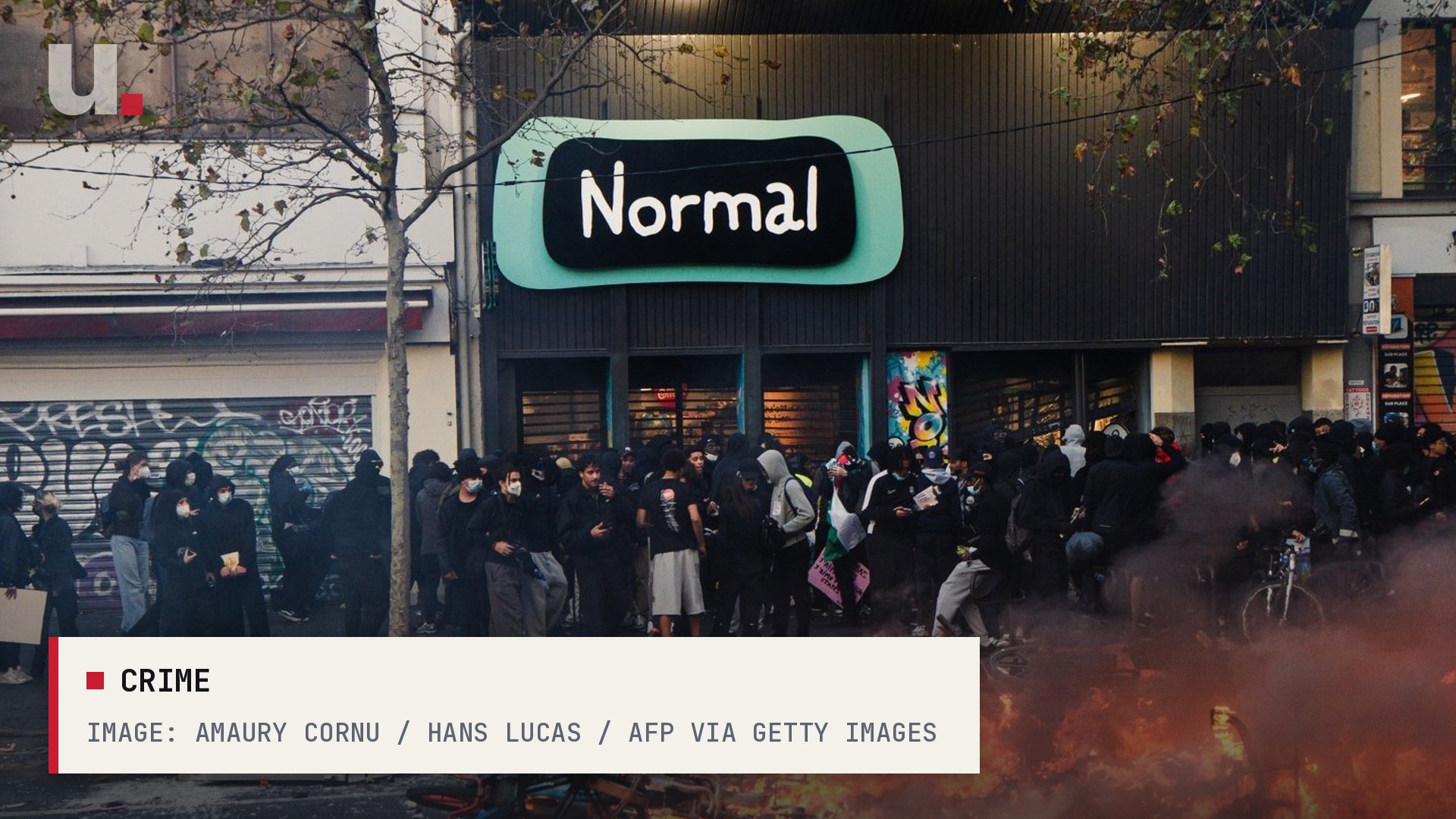
Sunday night on the BBC's News at Ten, anchor Jane Hill opened with the toll: "Across the country, nearly a thousand police officers and firefighters were injured. The Interior Ministry says nearly 2,400 people were arrested." Then the broadcaster handed off to its Paris correspondent, James Waterhouse, Fox News reported.
His first verdict on the weekend: "In Paris and beyond, half a million people had filled cities across France to protest over the future of their country. They were mostly peaceful, but as we saw in the capital, in the wings were those who wanted to take advantage of the disorder."
On screen as he said it were burning cars and masked men fighting police.
“They were mostly peaceful.” BBC Paris correspondent James Waterhouse, as footage of burning cars aired (Visegrád 24)
— @visegrad24 View on 𝕏
Americans have heard this one
The phrase landed with a thud because it already has a history. On Aug. 25, 2020, CNN put the words "FIERY BUT MOSTLY PEACEFUL PROTESTS AFTER POLICE SHOOTING" on screen while its correspondent stood in front of a building in flames in Kenosha, Wisconsin, as Lead Stories confirmed. It has been a punchline ever since.
Six years later, the BBC said it again. Social media users were quick to mock it, and Breitbart, Fox News and others ran with the comparison.
The BBC's defense
To be fair, the broadcaster has an answer. "No one watching, reading or listening to BBC News coverage of the France protests and riots can be in any doubt as to what was happening – there is coverage of the fires, the looting and violence," a spokesperson told Fox News. The statement added that "several hundred thousand people were on the streets in peaceful protest, and those carrying out the violence and looting were a small fraction of that number."
Measured by head count, that may be true. The AP also reported that hundreds of thousands of people marched peacefully. But a fire marshal could truthfully say most of a building didn't burn. Nobody would lead with that while the roof is still smoking.
What France's own officials said
Waterhouse also told viewers that "few believe" the damage was done by "genuine protesters," pinning it on "an opportunistic minority who came in and sought to rob and cause carnage." France's interior minister described something more organized. Laurent Nuñez said violence broke out from the very start of the gatherings, sometimes before the marches had even set off, instead of rioters slipping in along the way, Le Figaro reported. "Pour moi, c'est le révélateur de leur détermination et du niveau de violence qui était le leur" (to me, it reveals their determination and the level of violence they brought), he said.
Nor was it a small group waiting "in the wings." In Marseille alone, the regional police prefecture counted more than 30,000 looters at the peak, including 8,000 rioters, actu.fr reported. Against that, the prefecture said it had 434 local police officers and 240 riot police on duty for the day, plus later reinforcements.
By Monday, Nuñez had offered his resignation after saying police "lost control," and Macron had refused it, according to AFP. Prime Minister Sébastien Lecornu ordered partial curfews in Paris, Lille, Lyon and other cities and would not rule out a state of emergency. Justice Minister Gérald Darmanin said 2,513 people had been taken into custody, and at least 3,000 shops were damaged.
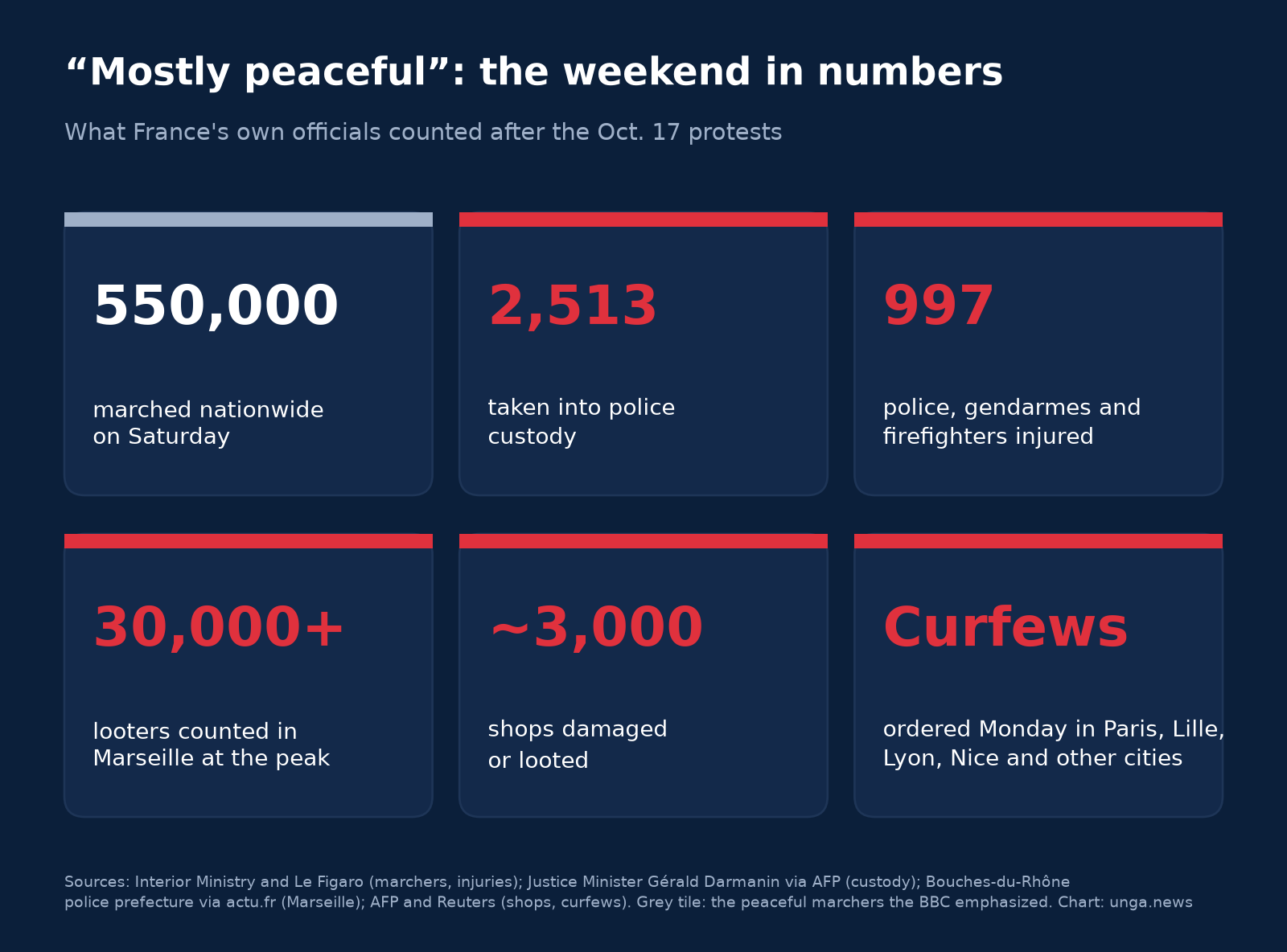
Countries don't impose curfews after a mostly peaceful weekend.
Why it stings more at the BBC
The BBC isn't just another channel. British households that watch live TV must buy a licence that costs £180 a year as of April, per GOV.UK, and most of that money funds the BBC. Viewers who are made to pay for the coverage tend to judge it harder.
The network is also still recovering from a credibility hit. Last November, Director General Tim Davie and BBC News chief executive Deborah Turness both resigned after a Panorama documentary spliced parts of President Donald Trump's Jan. 6, 2021 speech, the BBC reported. Trump's $10 billion defamation suit over that edit is still moving through federal court in Miami, per Bloomberg Law.
So when Reform UK deputy leader Richard Tice posted his reaction Monday, it found a ready audience. More than 3,000 people liked it within hours:
The BBC is broken. Calling the riots in France “mostly peaceful” tells you everything you need to know. Reform will scrap the TV licence fee. (Richard Tice)
— @TiceRichard View on 𝕏
The words matter
Separating marchers from looters is part of honest reporting. Most of the people in those streets did not steal a thing, and they deserve to have that said.
But order matters too. Leading with "mostly peaceful" on a night when nearly a thousand police and firefighters had been hurt and Limoges's historic town hall had burned isn't context. It's cushioning. The facts were right there on the BBC's own screen, behind its own correspondent. The words just didn't match them.
Sources
- Fox News — BBC calls France protests 'mostly peaceful' as footage shows rioters torching cars, battling police
- Breitbart — BBC Claims French Riots Were 'Mostly Peaceful' While Showing Country on Fire
- Lead Stories — Fact Check: CNN DID Use The Chyron 'Fiery But Mostly Peaceful Protests After Police Shooting'
- Le Figaro — « Le dispositif n'était pas sous-dimensionné », défend Laurent Nuñez
- actu.fr — 17 octobre à Marseille : plus de 30.000 pilleurs dénombrés par les autorités
- AFP — France announces curfews as government grapples with unrest
- AP — How France's worst rioting in years erupted
- Reuters (via Investing.com) — France imposes curfews in parts of Paris, other cities after weekend of riots
- BBC News — Tim Davie and Deborah Turness resign over Trump documentary edit
- GOV.UK — Cost of TV licence fee set for 2026/27
- Bloomberg Law — Judge Threatens Trump With Sanctions to Testify in BBC Lawsuit
- X (@TiceRichard) — Richard Tice on the BBC's France coverage
- X (@visegrad24) — BBC correspondent James Waterhouse: 'They were mostly peaceful'