

The Company That Controls Elvis’s Name Is Suing an SI App That Has Him Singing New Songs.
A federal lawsuit says Suno copied the King’s voice and lets paying users make “new” Elvis tracks, using a Tennessee law named after him. Eminem’s publisher sued the same day over 269 songs.
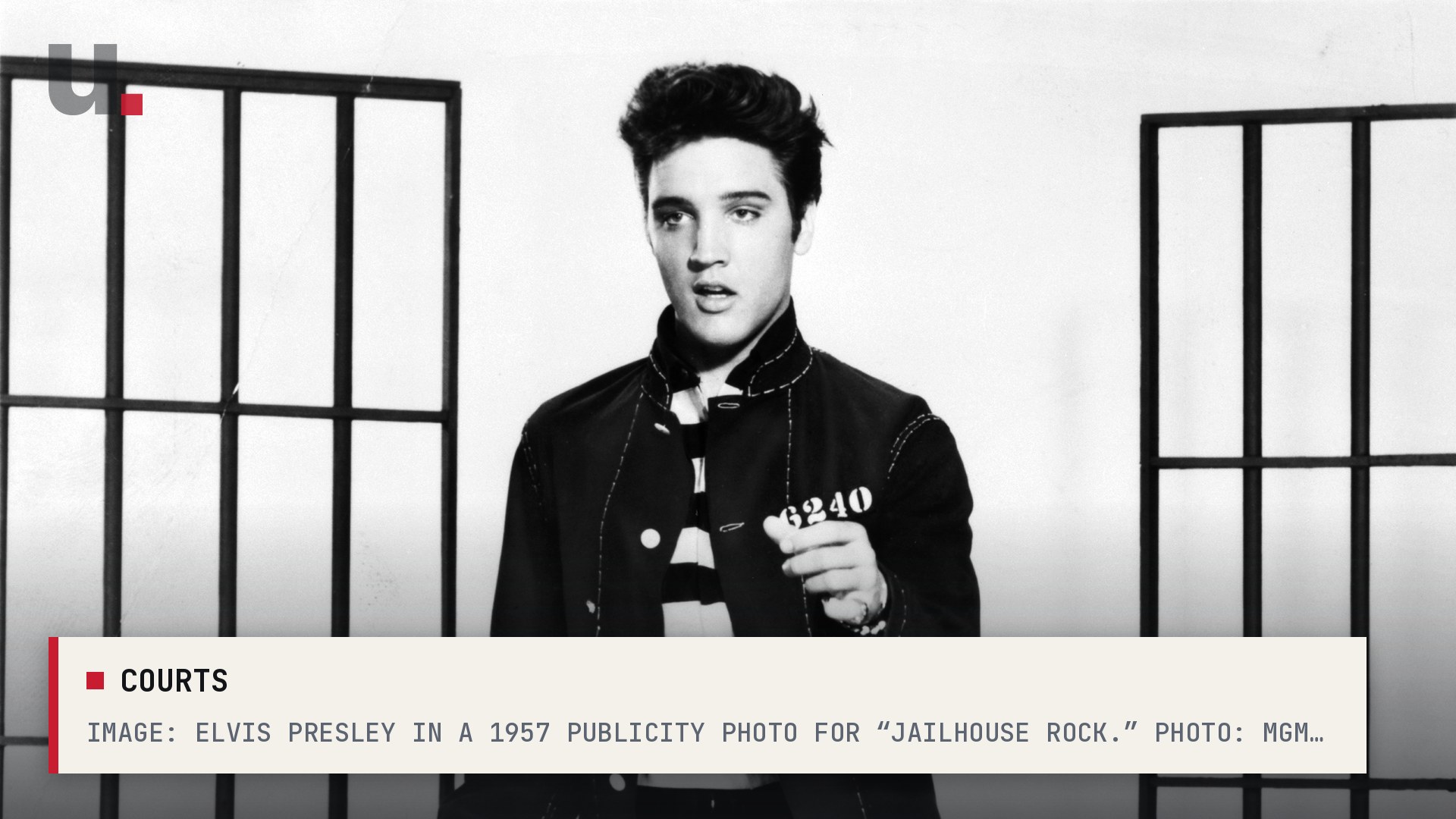
Elvis Presley died in 1977. On an SI music app called Suno, he is still putting out new songs.
That is the heart of a 51-page lawsuit filed Friday in federal court in San Francisco by Elvis Presley Enterprises, the company that controls the King’s name and image, along with the music publishers that own many of his hits. They say Suno copied Elvis’s voice and his songs without asking or paying, and lets anyone with a subscription crank out more.
“The next Elvis won’t pick up a guitar,” the complaint warns. “Suno’s ravenous race to the bottom aims to make human creativity obsolete, coldly replicating without a license in seconds what takes years to learn.”
How it works, according to the lawsuit
Suno lets people type a few words and get back a finished song, vocals and all. The company says it bans prompts that name real artists. The lawsuit says that ban is a sham.
As recently as Oct. 7, the complaint says, a user typed in nothing but a few lyrics: “I am rockin this rockabilly like E L V I S P R E S L E Y / Thank ya thank ya very much I ain’t shy / He has left the building / But he is still the King.” Suno spit out two tracks called “He Is Still The King,” each with what the lawyers call “a copy of Elvis’ unmistakable and iconic voice” over a rockabilly beat.
The filing points to an 84-song “Elvis” playlist on Suno’s site and a playlist called “Elvis Remakes” with titles like “Return To Sender - Elvis Presley.” One Suno version of “Can’t Help Falling in Love” draws a comment from a listener: “I definitely thought Elvis was on this track.” The lawyers also say paying users can save a “voice” and reuse it, and that one track says it was “Made from” a saved voice labeled “Elvis.”
The Elvis law
The suit leans on a Tennessee law passed in 2024 and named after the King himself: the ELVIS Act, short for Ensuring Likeness, Voice, and Image Security. It makes it illegal to copy a singer’s voice with SI without permission. The complaint says Tennessee asked Elvis’s rights holders before using his name for the law, “something Defendant Suno, Inc., … does not know how to do.”
The lawyers also accuse Suno of copying millions of songs to train its system, partly by “stream ripping,” or pulling audio off YouTube and paid music sites with tools built to get around their locks.
Eminem’s publisher piles on
The same day, Eight Mile Style, the Michigan company that owns 269 of Eminem’s songs, including “Lose Yourself” and “The Real Slim Shady,” filed its own suit against Suno in the same court. It asks for up to $150,000 for each song, which adds up to $40.35 million, according to Variety and the filing. Eminem himself is not a party.
Suno’s answer
“Suno exists to help people create new, original music, not to trade on anyone’s name or likeness, and we prohibit any unauthorized use of an artist’s work,” spokeswoman Cat McCormack told The Verge. “We do not allow prompts for specific artists’ names and songs and work with third-party providers to screen uploaded audio files and lyrics for potential misuse.”
Suno is big money. The complaint says it has more than 100 million users and over 2 million paying subscribers, raised more than $400 million at a $5.4 billion value, and expects to reach $1 billion in yearly sales by 2028. Basic paid plans cost about $10 a month.
Why it matters beyond Graceland
Elvis is still a business that feeds a lot of families. The complaint says Graceland draws about 600,000 visitors a year, employs upward of 500 people and brings an estimated $200 million or more a year into Memphis.
If a computer can sing like Elvis for $10 a month, it can sing like your favorite local singer too, and that singer has no army of lawyers. That is why the case matters: the first courts to rule on suits like these will decide whether a voice belongs to the person, or to whoever copies it first.
None of the claims has been tested in court yet. Suno also faces a similar suit filed in September by country singer Jason Isbell and other artists.
Sources
- U.S. District Court, N.D. California — Elvis Presley Enterprises, LLC et al. v. Suno, Inc., No. 3:26-cv-13398, complaint, Nov. 6, 2026
- Justia Dockets — Elvis Presley Enterprises, LLC et al. v. Suno, Inc. docket
- Variety — Elvis Music Owners, Eminem Publisher File Sprawling New Lawsuits Against AI Music Generator Suno, Nov. 7, 2026
- The Verge — Elvis and Eminem rights holders are suing Suno
- Copyright Now — Eight Mile Style v. Suno, No. 3:26-cv-13399 (N.D. Cal.)