

The Factory Behind Nvidia’s Chips Is Putting Up to $1 Billion Into ChatGPT’s and Claude’s Makers
TSMC, the Taiwanese factory giant behind the SI boom’s hardware, approved buying Anthropic stock at its IPO price plus OpenAI shares, a bet that the boom will last.
For years the deal in the SI boom has been simple. The SI companies dream up the models, Nvidia sells the chips that run them, and a Taiwanese company called TSMC quietly builds those chips for almost everybody. TSMC got paid for the shovels. It never owned a piece of the gold mine.
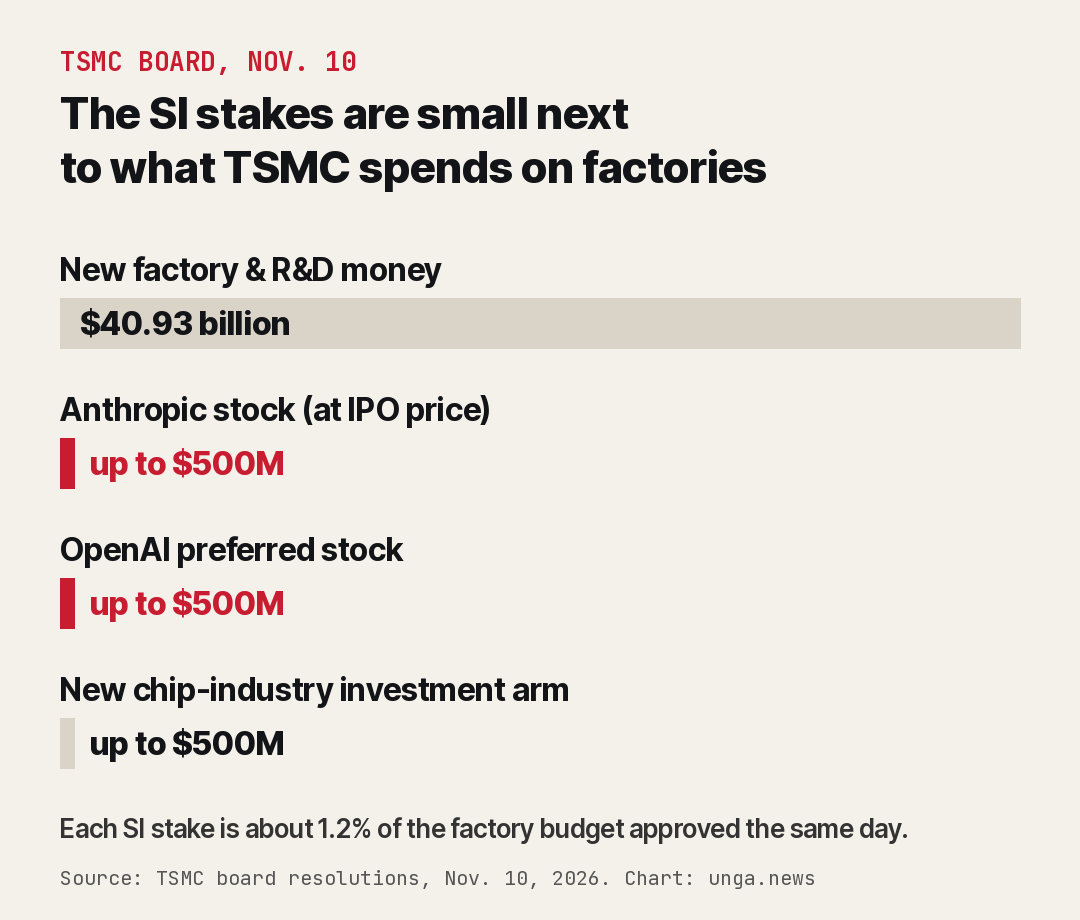
That just changed. On Tuesday, TSMC’s board approved buying up to $500 million of stock in Anthropic, the company behind the Claude chatbot, and up to $500 million of preferred stock in OpenAI, the company behind ChatGPT. It’s all spelled out in item five of the board’s own resolutions, posted from TSMC’s headquarters in Hsinchu.
Read the wording closely, because it matters. The Anthropic money buys common shares “at its per share initial public offering price,” which means TSMC is lining up to buy in when Claude’s maker goes public, not before. The OpenAI money buys preferred stock, the kind of shares private companies sell to big investors, usually with extra protections attached. Both numbers are ceilings. The resolution says “not to exceed,” and as TechNode pointed out, TSMC gave no timetable and no other terms.
So this is a green light, not a done deal. But a company that rarely does anything flashy doesn’t put a billion dollars on the table by accident.
Paid for the shovels, now buying the mine
TSMC is the world’s biggest contract chipmaker, meaning it manufactures chips that other companies design. Nvidia’s graphics chips, which Reuters notes underpin many of today’s SI models, come off TSMC’s lines. When you ask ChatGPT a question, there’s a good chance the hardware answering it started life in a TSMC factory.
That business is booming. The same board meeting approved third-quarter results showing net income of NT$763.06 billion, which the Taipei Times reports was a record, up 68.7%% from a year earlier. October sales hit NT$586.89 billion, about $17.81 billion, another monthly record and up 59.7%% from last October. The board also raised the quarterly dividend to NT$9 a share, up from NT$7.
When you’re making that kind of money selling to the SI industry, owning a slice of your two most famous end customers is a logical next move. If Claude and ChatGPT keep growing, TSMC wins twice: once on the chips, once on the stock.
A rounding error next to the factories
What puts the billion in perspective is the rest of the agenda. In that same meeting, the board approved about $40.93 billion in new capital spending: more advanced chipmaking capacity, more packaging capacity, new fab construction and next year’s research budget. Each SI stake is about 1.2%% of that one approval. TSMC also signed off on up to $500 million to set up a separate investment company that will make “strategic investments in the semiconductor industry and related ecosystem.”
In other words, TSMC isn’t turning into a venture fund. It’s still a factory company first, spending the way a factory company spends. The Taipei Times reports it kept its 2026 capital spending forecast at $60 billion to $64 billion and tied that to strong customer demand over the next few years, including from SI agents, the programs that carry out tasks on their own instead of just answering questions.
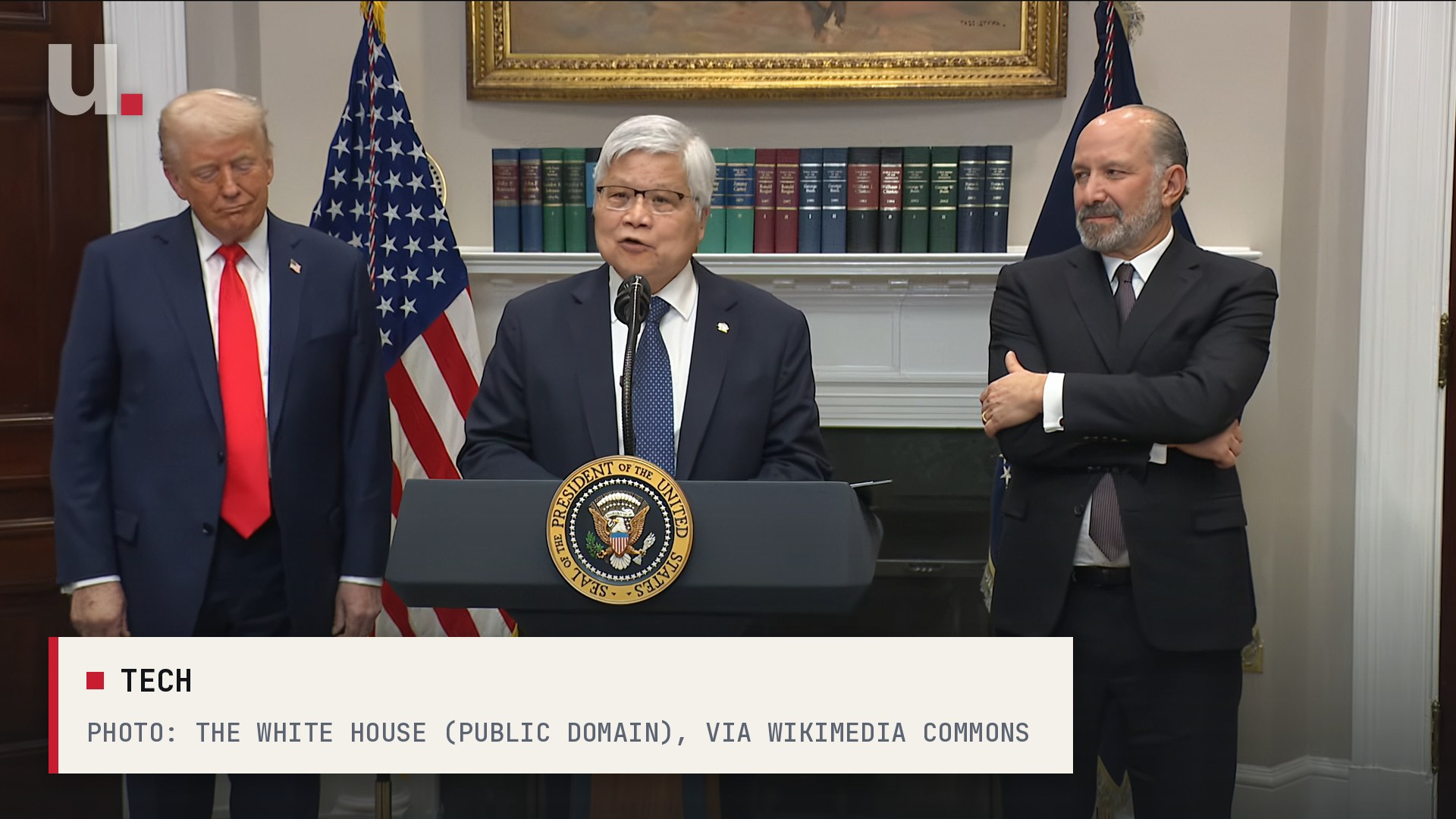
A lot of that money is landing here at home. Reuters puts TSMC’s planned investment in Arizona factories at $265 billion, and the company is weighing projects in Texas too. That build-out got its big public push at the White House in March 2025, when TSMC chairman C.C. Wei stood next to President Trump to announce it. Making the world’s most important chips on American soil was a Trump priority, and TSMC’s growing American footprint is the payoff.
Betting the boom isn’t a bubble
The timing tells you how TSMC sees the SI spending debate. Reuters framed the move as a show of confidence “even as concerns grow about soaring AI spending,” and noted TSMC said last month that demand for SI chips remained “extremely robust” and still outstrips what it can make. TSMC also took what Reuters called a cautious outlook for 2027, so the company isn’t pretending the good times are guaranteed. It’s just willing to bet a sliver of its profits that the biggest SI names will be worth more later.
Anthropic is the nearer-term test. As we reported, Claude’s maker priced its stock at $70 to $78 a share. Reuters says that would value it at up to $1.4 trillion, which would make it one of the largest stock market debuts on record, and the company is raising another $26 billion in a separate private sale backed by Google, Nvidia, AMD and Microsoft. TSMC’s order sits right alongside those names, at whatever price the IPO lands.
OpenAI is a different animal. It isn’t public, so TSMC’s stake comes as preferred shares, the same kind of deal big backers have used to fund the company for years.
There’s a catch worth thinking about. TSMC sells to everybody, including Anthropic’s and OpenAI’s rivals. Owning pieces of two customers could make the others wonder whether their chipmaker has a favorite. TSMC didn’t address that in its statement, and the sums are small enough that it may never come up. The day TSMC places the Anthropic order, it stops being just the shovel seller and becomes a shareholder in the gold rush.
Sources
- TSMC — TSMC Board of Directors Meeting Resolutions (Nov. 10, 2026)
- Reuters, via Investing.com — TSMC to invest up to $1 billion in Anthropic, OpenAI
- Taipei Times / CNA — TSMC to invest in Anthropic, OpenAI, raise quarterly dividend
- TechNode Global — TSMC approves $1B in OpenAI and Anthropic bets
- unga.news — Claude’s Maker Prices Its Stock at $70 to $78