

The FBI Froze $17 Billion in Scam Money and Shut Down 29 Overseas Scam Towns
More than 800 people are charged in a crackdown aimed at the callers who rob grandparents, from fake jury duty threats run out of Georgia prisons to forced-labor scam compounds in Asia and Africa.
For years, the call came from a number that looked official and a voice that sounded scared for you. You missed jury duty. There’s a warrant. Pay the fine today or deputies come to your door. On Tuesday, the Justice Department said some of those calls were coming from inside Georgia prisons, and it laid out what eight months of hunting the people behind them has produced.
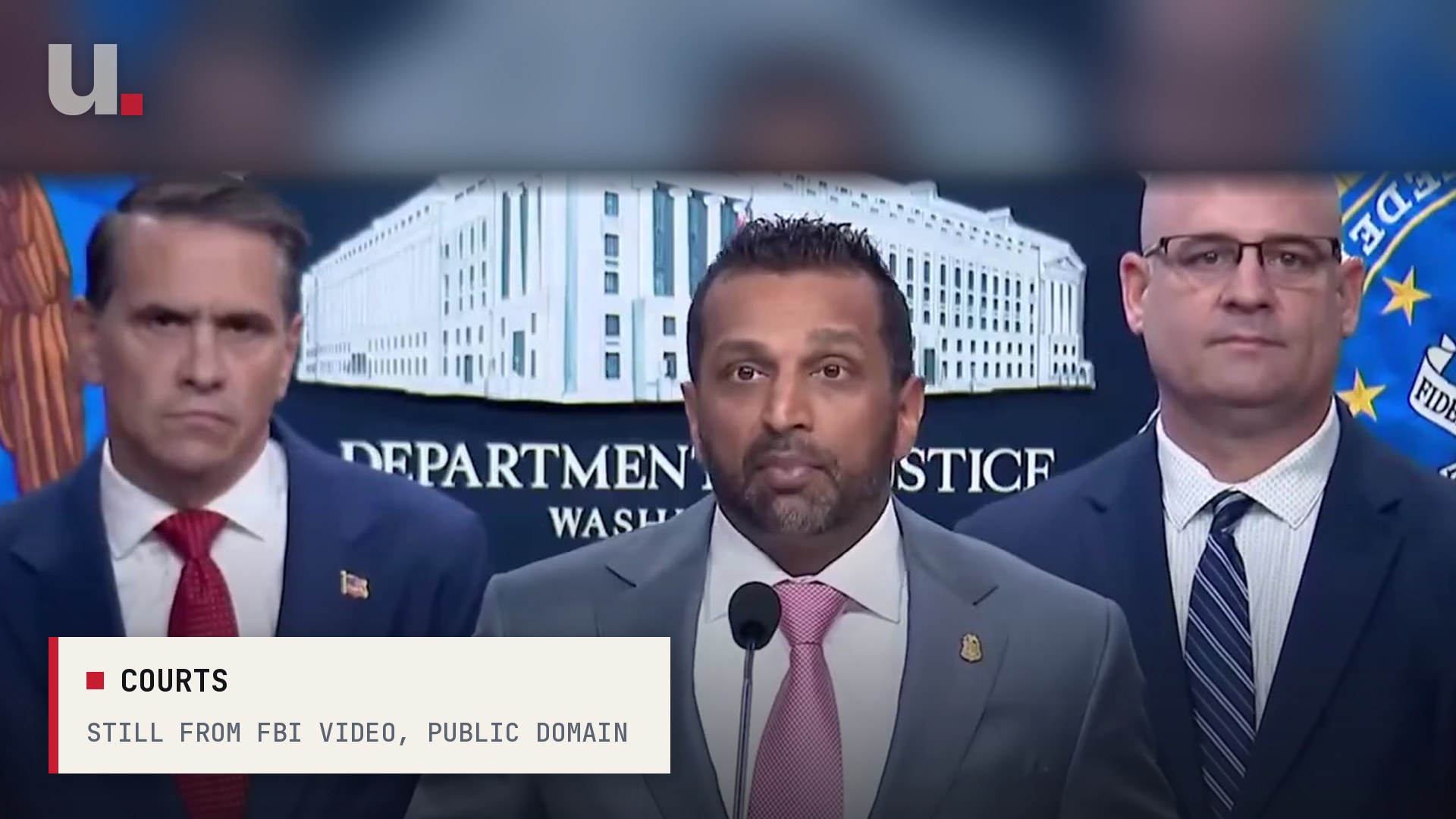
Attorney General Todd Blanche and FBI Director Kash Patel stood together at the department’s headquarters to announce what they called the largest anti-scam enforcement surge in history. Since President Trump signed Executive Order 14390 on March 6 ordering a government-wide crackdown on predatory schemes, federal prosecutors have brought more than 400 cases against more than 800 defendants in 85 federal districts, according to the Justice Department’s release. Thirty defendants were extradited to face charges in American courtrooms.
Blanche told reporters the department has “recovered over $8 billion in intended loss for victims,” and he wasn’t shy about the scale. “This is the largest anti-scam enforcement surge in history,” he said, according to the C-SPAN recording.
Towns built to rob Americans
The biggest numbers came from the FBI. Operation Blackout, the bureau’s global push against scam centers, has restrained nearly $17 billion in illicit money, seized more than 14,000 phones, computers and other devices, and helped take apart more than 29 scam compounds in Asia, Africa and the Middle East, the release says.
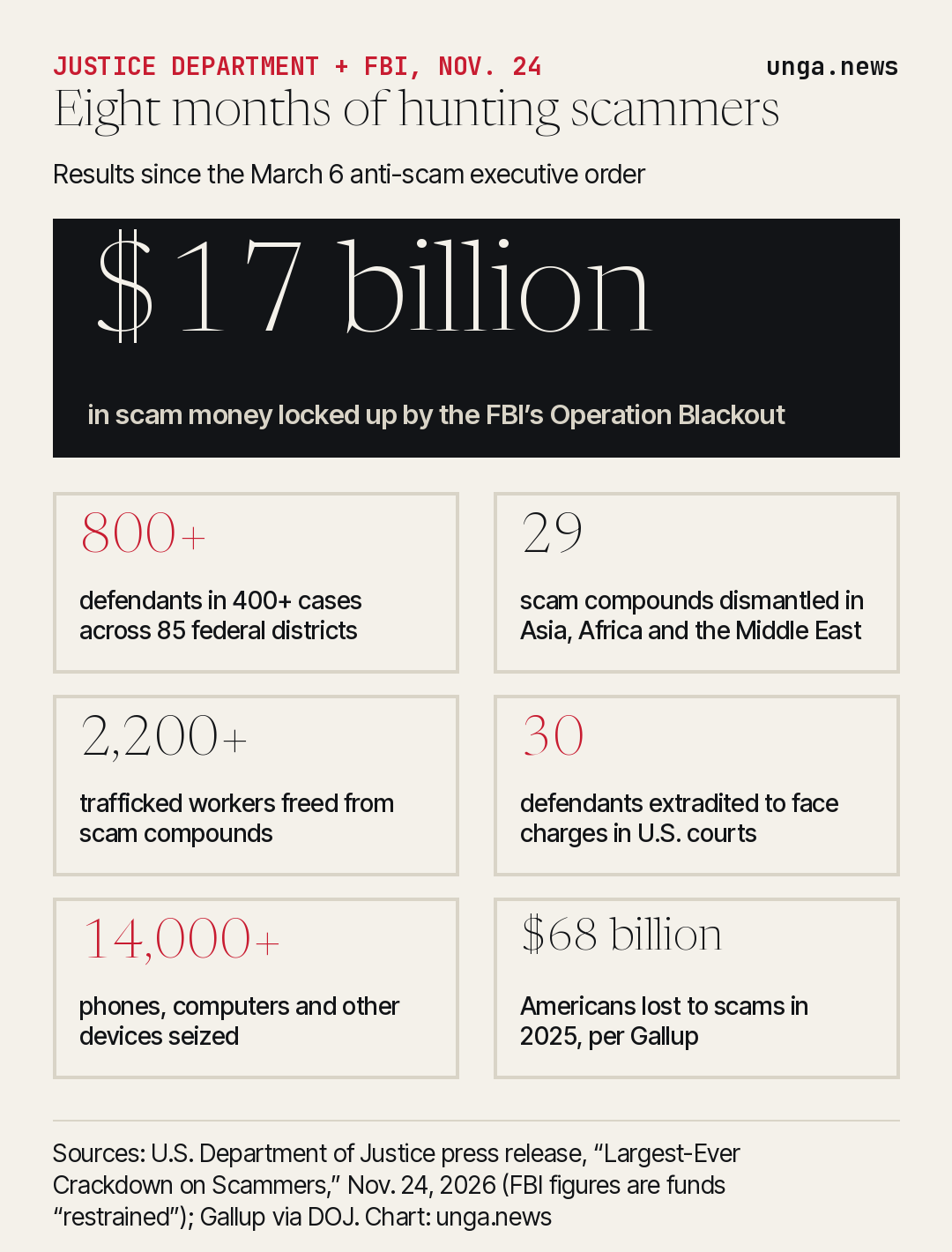
If you’ve never heard of a scam compound, Patel explained it plainly. “These are literal towns where they force people into forced labor, traffic them, and then have them perpetrate this illicit activity against the American people,” he said in the FBI’s video of his remarks. The workers typing those romance messages and fake crypto pitches are often victims themselves, lured abroad with job offers and then locked in. The FBI says it helped free and send home more than 2,200 of them.
Patel said the 29 compounds “no longer exist,” and he put it on 𝕏 the same way.
FBI Director Kash Patel: 29 scam compounds across four continents no longer exist. Under the leadership of @POTUS and @AGToddBlanche, alongside @TheJusticeDept and our interagency and international partners, this FBI is dismantling criminal syndicates around the world that prey on the American people.
— @FBIDirectorKash View on 𝕏
The bureau says Blackout led to federal charges against more than 50 scam bosses and operators, and FBI help let foreign police arrest or detain more than 320 more overseas. When the scammers got squeezed out of Southeast Asia, Patel said, they moved to Africa and the Middle East. The FBI followed them.
Stopping the wire before it goes out
Arrests after the money is gone only do so much for a widow who already wired her savings to a fake bank officer. So the FBI has also been calling people before they lose it. Patel said the bureau directly warned more than 11,000 Americans they were being targeted and prevented more than $690 million in potential losses. The release credits the FBI’s Operation Level Up with more than $143 million in prevented losses since the March order alone, plus more than $350 million in assets frozen by the bureau’s Recovery Asset Team.
Patel said at the podium that about 77 percent of the people the FBI reached didn’t know they were being scammed. That’s the part that should stick with anyone who has an aging parent. The best con artists don’t look like con artists.
The problem is huge. Gallup estimates Americans lost $68 billion to scams in 2025, and 10 percent of adults said they or someone in their household got hit last year, the department noted. The schemes run from crypto “investment” pitches to sextortion of teenagers to callers pretending to be the IRS, the bank or the sheriff.
From prison cells to Peru
The cases filed just in the past month read like a tour of the whole racket. Prosecutors charged 14 people in three indictments in the Georgia jury duty scheme, run by current and former prison gang members on smuggled cell phones, and 17 more in state court for sneaking those phones behind the walls. Federal postal inspectors seized three websites the inmates used and pointed them to a government seizure banner.
Others charged this month include a Mexico-based list broker accused of selling the names and phone numbers of elderly Americans to dozens of scammers, a Peruvian call center accused of telling Spanish-speaking Americans they’d be arrested or deported unless they paid for English lessons, a dozen defendants, several of them Jamaican nationals, accused of running a sweepstakes scheme against seniors, and a Nigerian man extradited from Britain for allegedly targeting American service members to steal their military pay. As always, an indictment is an allegation, and every defendant is presumed innocent.
Other agencies piled on. Homeland Security Investigations made more than 300 arrests and recovered or froze more than $120 million. The Secret Service restrained more than $200 million and knocked 1,780 scam domains offline. The FCC on Nov. 19 voted to let prisons jam contraband cell phones for the first time. FCC Chairman Brendan Carr pointed to Jared Johns, a veteran who took his own life after inmates extorted and threatened him, as the reason.
FTC Chairman Andrew Ferguson said the Trump FTC has returned almost $3 billion to Americans harmed by fraud. His message to scammers: “You are living on borrowed time.”
A different kind of tough on crime
Conservatives have spent years asking why Washington chases parents at school board meetings while grandmothers get cleaned out by call centers in Cambodia. This is what an answer looks like. Scams are the crime most Americans are likeliest to meet in their own kitchen, and the people running them have counted on distance, bad phone lines and foreign borders to keep them safe.
Blanche says the surge isn’t over. “The unprecedented results of this surge are just the beginning,” he said in the release. The department is also asking families to use the holidays to “Share Your Scam Story” with each other, since a five-minute talk at Thanksgiving dinner may save more money than any seizure warrant.
Patel’s line was simpler. “If you target Americans, justice will find you.” Eight months in, 800 defendants and 29 empty compounds say he means it.
Sources
- U.S. Department of Justice — Justice Department Announces Largest-Ever Crackdown on Scammers, Targeting Over 800 Defendants to Protect Americans from Fraud (Nov. 24, 2026)
- FBI — Director Patel Describes Successes of Operation Blackout (video, Nov. 24, 2026)
- FBI Director Kash Patel on 𝕏 — “29 scam compounds across four continents no longer exist.”
- U.S. Department of Justice on 𝕏 — Thread: the largest anti-scam surge in history
- C-SPAN — Attorney General Todd Blanche Announces Justice Department Crackdown on Cyber-Enabled Scams (Nov. 24, 2026)