

Trump Has Over 100 Picks Waiting and Seven Weeks Left. Conservatives Have the Constitution on Their Side.
The Senate is grinding through President Trump’s nominees before Democrats take over Jan. 3. House conservatives want a 10-day break instead, so Trump can fill jobs on his own for a year.
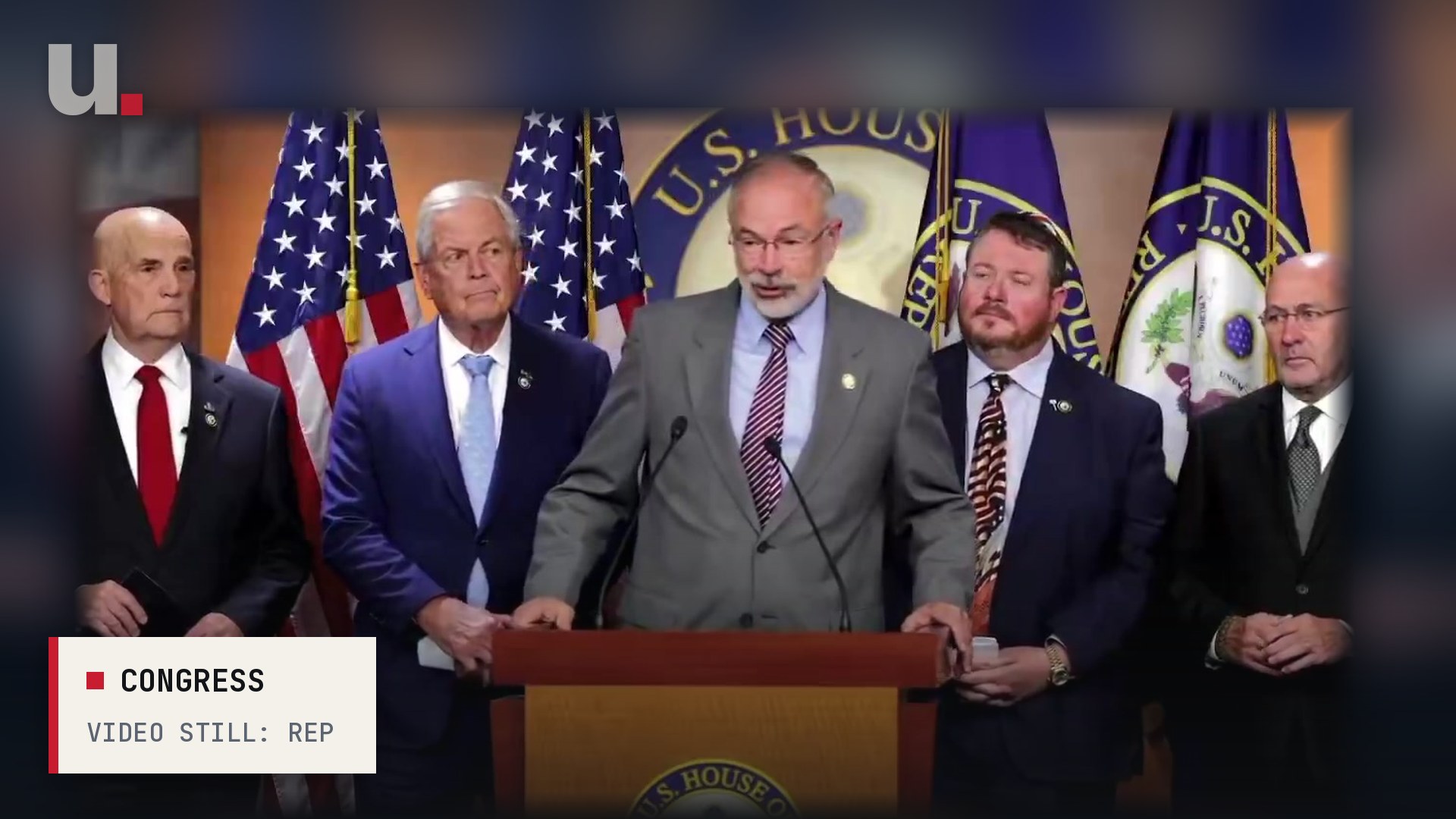
The Senate comes back to work Monday at 3 p.m. with a stack of President Trump’s nominees on its desk and seven weeks left before Democrats take the gavel on Jan. 3.
Trump laid out the stakes himself on Nov. 9. “Very important for the U.S. Senate to confirm all of our pending 161 Nominations, including 25 Federal Judges,” he wrote on Truth Social. Senate Republicans answered with a resolution, obtained by Fox News Digital, to “maximize the 54 days we have with congressional majorities, to confirm every judicial nominee and every executive nominee that the conference approves of.”
Majority Leader John Thune promised longer days and more votes. “That means extending the calendar here, the number of days we’re here, the number of hours we’re here, the number of votes we may end up taking,” he said. As of last Tuesday, 23 judicial nominees and nearly 100 executive branch picks were still waiting.
The first week put points on the board. On Thursday the Senate confirmed Gregory Carl Cook as a federal trial judge in Alabama on a 49–27 party-line vote and cleared procedural votes on two appeals court picks, Daniel Domenico for the Tenth Circuit and Anna St. John for the Fifth. That brought this Congress’s confirmed federal judges to 58, according to the Administrative Office of the U.S. Courts. Then, at 4:52 p.m. Thursday, the chamber adjourned until Monday afternoon, according to the Senate’s own floor log.
Sen. Kevin Cramer of North Dakota spent his Sunday making the case for speed. “What we need to do is make sure that every nominee for a lifetime judgeship, either on the federal district court, or more importantly, even the circuit courts of appeals, we need to get them confirmed,” he said on “The Cats Roundtable” radio show.
A shortcut written in 1787
House conservatives have a second idea, and it comes straight out of the Constitution.
At a Freedom Caucus press conference on Wednesday, Chairman Andy Harris of Maryland told the Senate it can either work every remaining day or step out of the way. “If they don’t want to spend all 52 days, that’s fine. Let’s take a 10-day recess so the president can make some recess appointments that can last for a year,” Harris said, adding that they would run “through the first year of Democrat rule.”
Rep. Andy Harris on 𝕏, Nov. 11, 2026: “52 calendar days remain in the 119th Congress, and there is no time to waste.”
— @RepAndyHarrisMD View on 𝕏
Article II of the Constitution gives the president “Power to fill up all Vacancies that may happen during the Recess of the Senate, by granting Commissions which shall expire at the End of their next Session.” A pick installed in December would serve until the end of the Senate’s next session, about a year, with no confirmation vote. That is a year of Trump’s people running agencies while a Democratic Senate sits on his nominations.
Fellow caucus member Keith Self of Texas put the mood more bluntly in a clip the caucus posted Thursday: “NO PACKING UP EARLY!” His list: codify Trump’s border policies, no amnesty, pass the SAVE America Act and “get as many of @POTUS’ nominees through as possible.”
Reagan used it 232 times
For most of modern history this was routine. Ronald Reagan made 232 recess appointments, George W. Bush made 171 and Bill Clinton made 139, according to counts by the Congressional Research Service. George H.W. Bush made 78 in a single term. Even Barack Obama, fighting a Republican Senate, made 32.
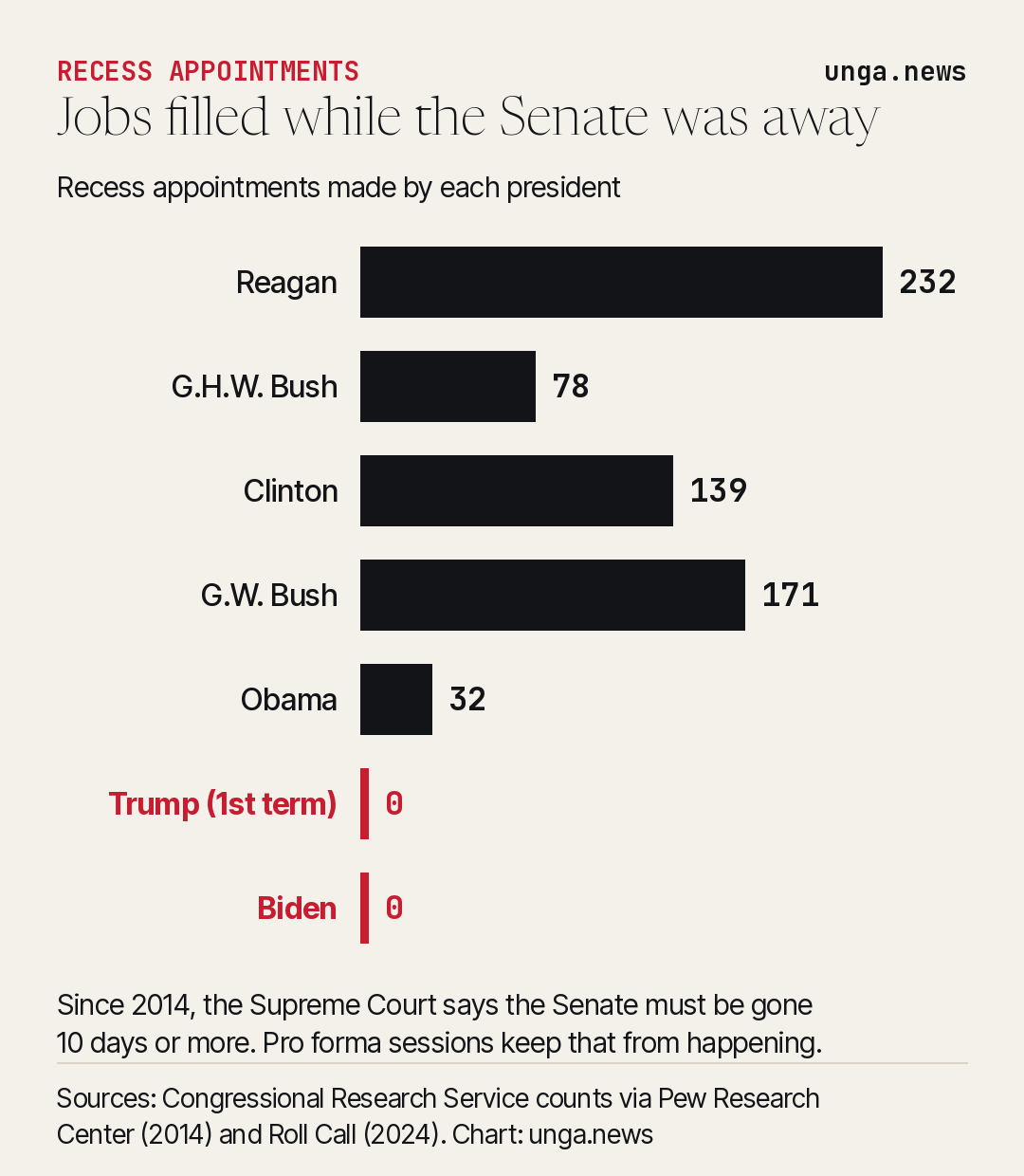
Trump made none in his first term, and neither did Joe Biden. The reason is a Senate habit called the pro forma session: a senator gavels in for a few seconds every three days during a break, so the chamber never technically leaves. In 2014 the Supreme Court ruled unanimously in NLRB v. Noel Canning that a break shorter than 10 days is too short for recess appointments. The Senate kept that routine going all fall, holding pro forma sessions through the campaign break that ended Nov. 9.
The Constitution also says neither chamber can adjourn for more than three days without the other’s consent. Right now Republicans run both, so for the next seven weeks the decision is entirely theirs. After Jan. 3, it won’t be.
The clock on Jan. 3
That date is why both camps are pushing. Under Senate rules, nominations that are neither confirmed nor rejected when a session ends go back to the president. Any pick left on the calendar in late December would have to start over in front of a Democratic majority. Senate Democrats are already planning to use Congress’s power of the purse against the Iran war effort, according to Fox News, so nobody should expect them to wave Trump’s nominees through.
The two paths aren’t really rivals. A confirmed judge serves for life, which is why Thune and Cramer want the judicial picks pushed through the regular way. A recess appointment is temporary, but it can keep an agency staffed with Trump’s choice for a year instead of leaving the job empty or in the hands of a career holdover. Harris framed it as an either-or: stay in session and confirm as many as possible, or adjourn long enough for the president to act.
No formal answer to the 10-day request has come from Senate leadership. Monday at 5:30 p.m., senators will vote to confirm Domenico to the Tenth Circuit and to move ahead on a permitting bill that Trump backs. Every confirmation that clears this month is one less job a Democratic Senate gets to hold hostage next year, and every one that doesn’t is a job the Constitution says the president can still fill himself, if the Senate gives him 10 days.
Sources
- Rep. Andy Harris on 𝕏 — Freedom Caucus lame-duck plan press conference video (Nov. 11, 2026)
- House Freedom Caucus on 𝕏 — Rep. Keith Self: “NO PACKING UP EARLY!” (Nov. 12, 2026)
- Red, White and True News — Freedom Caucus Demands 10-Day Senate Recess So Trump Can Make Recess Appointments (Nov. 13, 2026)
- U.S. Senate Daily Press — Floor log, Thursday, November 12, 2026
- Fox News — Senate Republicans plan 54-day blitz to push Trump’s agenda before Democrats seize power (Nov. 11, 2026)
- Just the News — Trump pushes Senate to confirm his outstanding nominees before the end of the year
- The Hill — Confirming judges tops GOP’s lame-duck agenda: Kevin Cramer
- Pew Research Center — Obama lags his predecessors in recess appointments (2014)
- Roll Call — Trump and recess appointments: A procedural and legal quagmire (2024)
- Congressional Research Service — Recess Appointments: A Legal Overview
- Senate Democratic Caucus — Schedule for pro forma sessions and Monday, November 9, 2026 (Sept. 30, 2026)