

Trump Offered Fed Governor Lisa Cook a Hearing on Her Firing. She Says She Won’t Show Up.
The Supreme Court let Cook keep her seat because she hadn’t had a fair chance to answer the mortgage allegations. Now her lawyer says she’ll skip the Dec. 14 hearing meant to give her one.
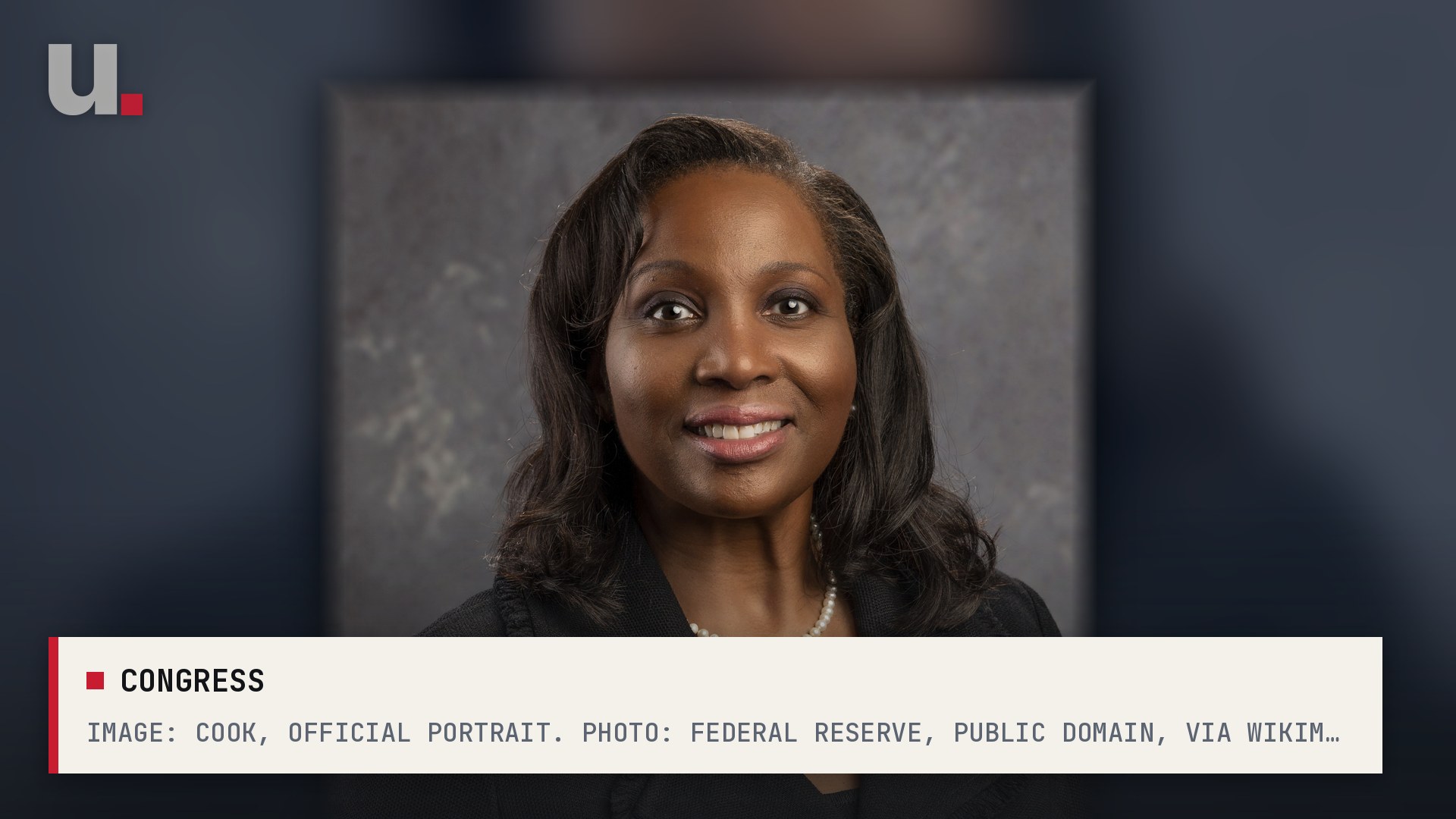
President Trump gave Federal Reserve Governor Lisa Cook what the Supreme Court said she never got: a formal hearing, with a date, a panel and a chance to answer the mortgage allegations against her. On Tuesday, her lawyer said she won’t show up.
Cook will not take part in the Dec. 14 hearing before the White House committee weighing whether there is legal “cause” to remove her, her attorney Abbe David Lowell wrote, according to Axios. Lowell called the process “a façade designed to obscure a predetermined decision to fire Governor Cook,” and the Washington Post reported she won’t appear unless Kevin Hassett, the president’s top economic adviser, leaves the panel.
How we got here
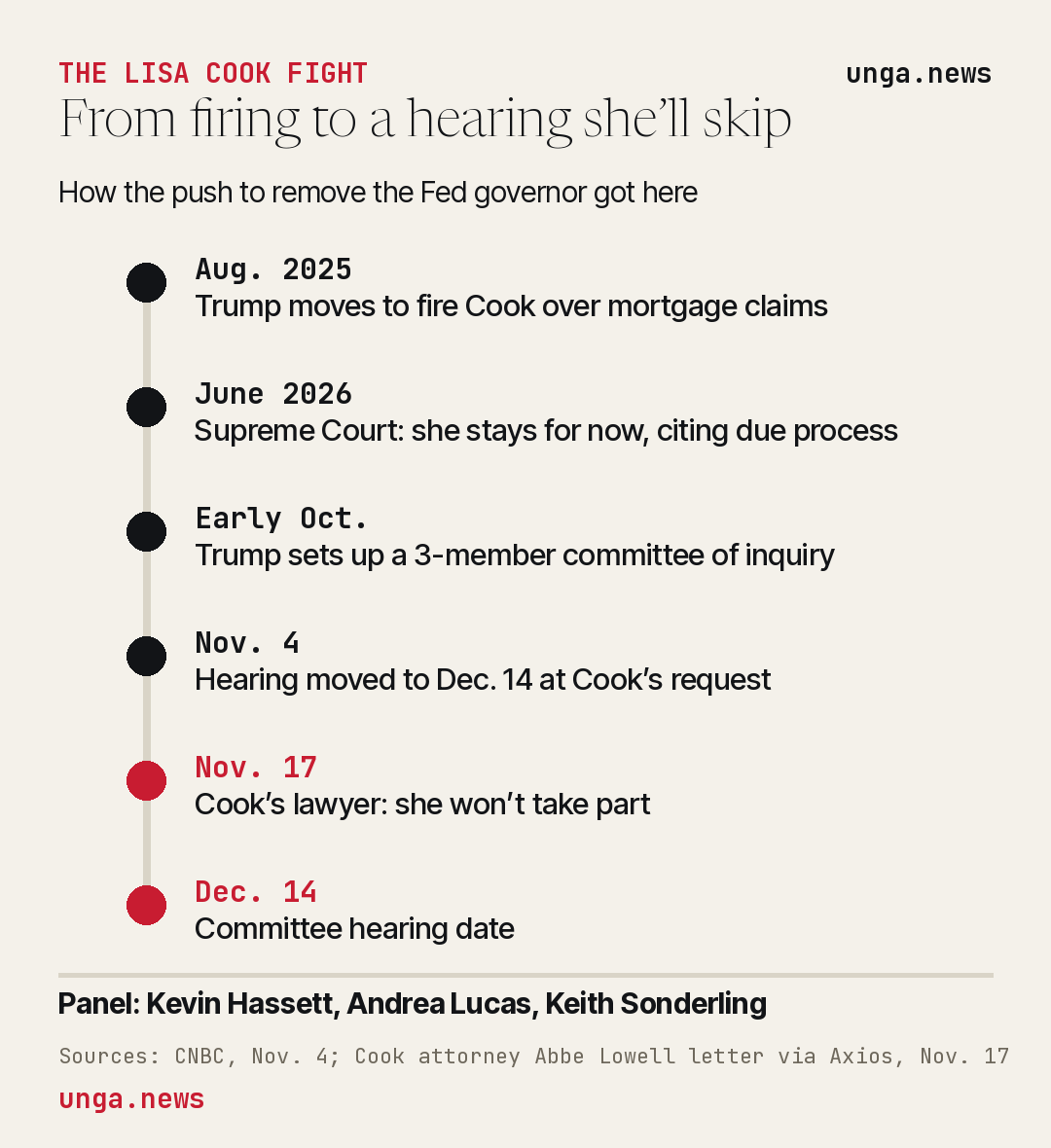
Trump tried to fire Cook in August 2025 over allegations that she made false statements on mortgage paperwork. She sued. In June, the Supreme Court kept a lower-court order in place that lets her stay on the Fed board while her lawsuit plays out. The justices did not decide whether a president can ultimately remove a Fed governor. They said she could stay because she had not been given due process to fight the firing, CNBC reported.
Trump answered that in early October with exactly what the ruling pointed to. He set up a “committee of inquiry” to investigate whether Cook made false statements related to “one or more mortgage instruments” and to report back whether there is “cause” for removal under the federal law the Court cited. The panel has three members: Hassett, Equal Employment Opportunity Commission Chair Andrea Lucas, and Office of Government Ethics Director Keith Sonderling.
The hearing was first set for early November. It was moved to Dec. 14 at Cook’s own request, a White House official told CNBC. Lowell had said the hearing couldn’t happen until December at the earliest because Cook would be in Europe for financial and monetary policy meetings.
Her side’s argument
Lowell’s letter makes three main points. First, he says Cook “has no legal obligation to participate in an unfair hearing” and, as a Fed governor, “has a duty to the Federal Reserve to decline to participate in any proceeding that would undermine the institution’s unique status and independence.” Second, he objects to Hassett sitting on the panel, noting that Hassett has publicly said Cook should step down. Third, he says the White House asked Cook to hand over evidence for her side while not giving her lawyers equal access to evidence the government says it already has.
“You seek only to manufacture ‘cause’ for a predetermined removal outcome,” Lowell wrote. Cook denies any wrongdoing. In her lawsuit she argues the mortgage claims are a pretext and that the real reason is her refusal to back the lower interest rates Trump wants. The White House did not immediately respond to Axios’s request for comment.
Why skipping could backfire
Here is the problem with walking away. Cook won in June on one argument: she hadn’t been given a fair chance to answer the charges. The White House has now offered a hearing and even moved the date to suit her travel schedule. When the person demanding due process turns it down, it gets harder for her lawyers to keep telling judges she was never given any.
CNBC noted that the committee may be designed to show the Supreme Court that Cook has now received due process. If she doesn’t show, the panel could still meet and report its finding to Trump. A court reviewing a later firing would then have a record of a hearing that was offered, rescheduled at her request and declined.
Lowell’s objection to Hassett is the strongest card in her hand. Courts take bias claims seriously, and a panelist who has already said she should go makes an easy target in a brief. But the question the law asks is whether there is cause, and an adviser’s opinion doesn’t change what the mortgage records say. The other two members, Lucas and Sonderling, lead the federal agencies that handle job-discrimination and government-ethics complaints.
The Fed seat itself
Even a win for the White House leaves a hard job. Axios pointed out that Democrats take control of the Senate in January, which means any replacement for Cook would have to get through a Democratic majority. That gives the administration a reason to move before the calendar flips and gives Cook’s team a reason to slow everything down. Asking for a later date and then declining to attend does both.
The mortgage allegations themselves have never been tested in a hearing. Dec. 14 was supposed to be that moment. Cook’s side would rather argue about the referee than the facts, and the committee now has to decide whether to proceed without her.
Sources
- Axios — Fed governor Lisa Cook will skip White House tribunal on her firing
- The Washington Post — Fed official Lisa Cook refuses to attend White House firing hearing, citing bias
- CNBC — White House panel delays hearing on Fed’s Lisa Cook to Dec. 14