

Trump Shut the Border. The Census Now Counts 530,000 Fewer Mexican-Born Residents in a Single Year
New Census data released Thursday show the immigrant population grew by just 174,000 in 2025, after 2.4 million the year before. The Latin American-born population fell by 463,000, and newer Census survey data point to an outright drop of about 790,000 by March 2026.
The border flood didn't just slow down under President Trump. In the government's own numbers, it started running backward.
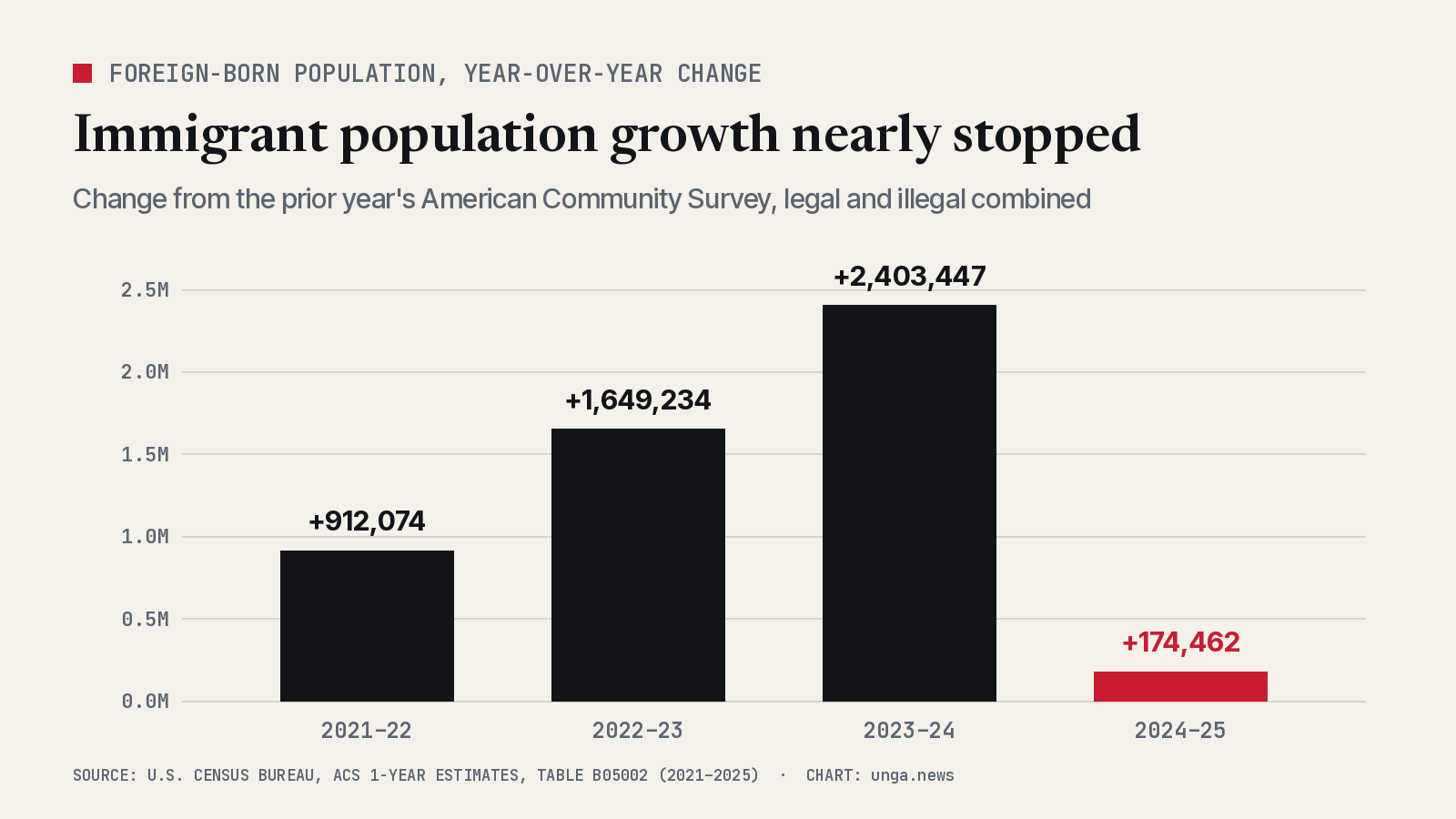
The Census Bureau released its 2025 American Community Survey on Thursday, the biggest yearly survey of who lives in America. It counts 50,409,320 foreign-born residents, legal and illegal combined. That is only 174,462 more than the 2024 survey found.
The year before, the same count jumped by 2,403,447. The year before that, by 1,649,234. Growth fell by more than 90% in a single year.
Half a million fewer from Mexico
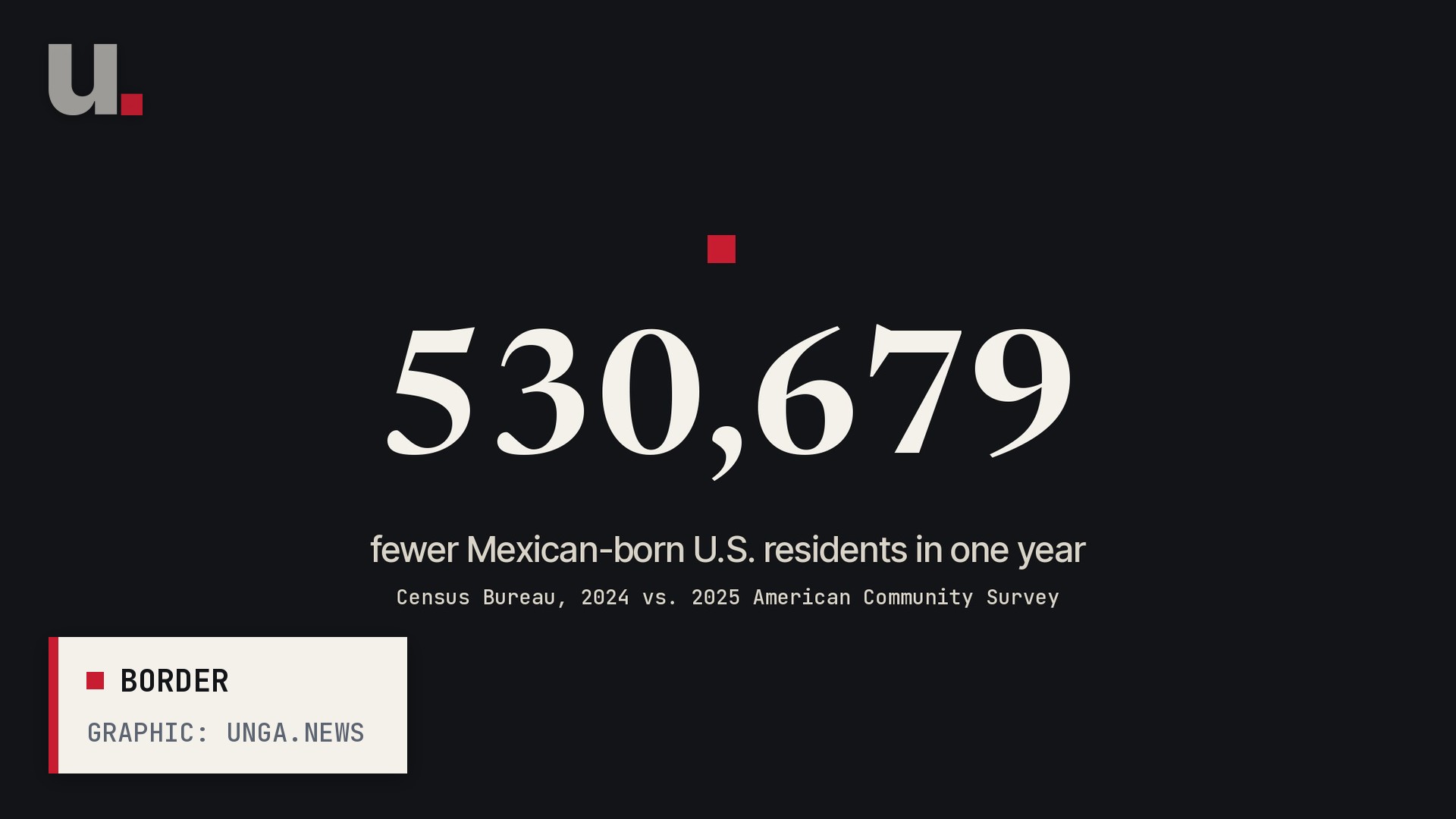
The headline number hides the real story, which is where people came from. The Census birthplace table shows 10,613,032 Mexican-born residents in 2025, down 530,679 from 11,143,711 a year earlier.
It wasn't just Mexico. Residents born in Guatemala fell by 129,258 and those born in Honduras by 127,864. El Salvador dropped 50,831 and Haiti 45,342. Across all of Latin America, the foreign-born population fell by 462,662, to 25.3 million.
Those are the countries that have long supplied most of the illegal crossings at the southern border. A person's birthplace doesn't change when they get a green card or become a citizen, so a drop like this means fewer people from those countries are living here, not that they changed paperwork.
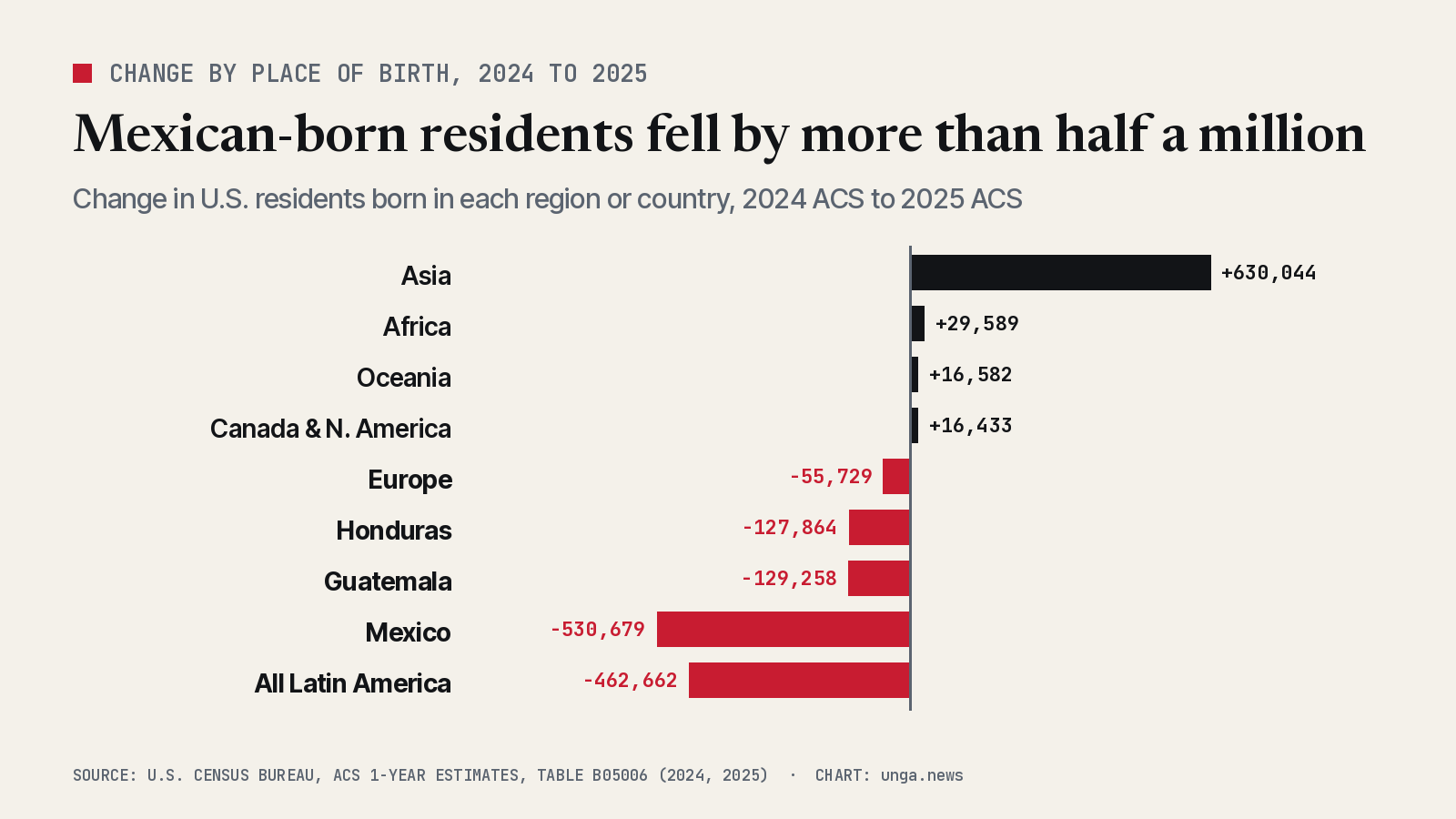
Other groups still grew. The Asian-born population rose by 630,044, led by India (up 232,903). South American-born residents rose by 270,385, and the Cuban-born by 110,249. Asia is now the main source of immigrant growth, and Central America and Mexico are shrinking.
Fewer noncitizens, more new citizens
The survey also splits immigrants by citizenship. The number of foreign-born noncitizens fell from 24,396,883 to 23,230,747, a drop of 1,166,136. At the same time, naturalized citizens rose by 1,340,598, to 27,178,573.
Some of that shift is people becoming citizens, which is the legal path working the way it should. But the overall total barely moved, and that only happens when far fewer new people arrive.
And this is the early data
The ACS is collected over the course of the year, so it only captures Trump's first months back in office. The Center for Immigration Studies, which reviewed the release Friday, says it reflects the population around mid-2025.
Newer Census numbers go further. According to the center's Steven Camarota, the Census Bureau's March 2026 Current Population Survey supplement shows the foreign-born population fell by about 790,000 from March 2025 to March 2026. The monthly version of the survey from this summer shows a drop of about 590,000 from a year earlier.
That is not a slowdown. That is the first real decline in years.
The fine print
Census surveys come with a margin of error. For the total foreign-born count it is about 205,000 either way, so the 2025 total is close to flat with 2024. The Mexico drop, about 530,000 with a margin of roughly 130,000, is well outside it.
According to an analysis by the Cato Institute, part of the giant 2024 jump came from Census updating its population weights to catch up with the Biden-era border surge that its earlier estimates had undercounted. Either way, the surge that the old numbers missed is over, and the newest ones show it going into reverse.
Think of it like a bathtub. For four years the faucet ran wide open. Trump shut it off, and now the water line is finally starting to fall.
Sources
- U.S. Census Bureau — Just Released: 2025 ACS 1-Year Estimates (Oct. 29, 2026)
- U.S. Census Bureau — Table B05002: Place of Birth by Nativity and Citizenship Status, ACS 1-Year Estimates (2021–2025)
- U.S. Census Bureau — Table B05006: Place of Birth for the Foreign-Born Population in the United States, ACS 1-Year Estimates (2024, 2025)
- U.S. Census Bureau — Table S0504: Selected Characteristics of the Foreign-Born Population, 2025 ACS 1-Year
- Center for Immigration Studies — New American Community Survey Shows Slowdown in Foreign-Born Growth through Mid-2025 (Steven A. Camarota, Oct. 30, 2026)
- Cato Institute — US Immigrant Share Growing at the Slowest Pace Since the 1960s
- Breitbart News — Trump's Policies Shrink Migrant Population in the U.S. (Oct. 30, 2026)